A quiet southwest Michigan town is learning the hard way that the future of artificial intelligence does not just live in code and algorithms. It hums. It whines. It seeps through drywall at two in the morning. And for many people in Dowagiac, that noise has turned the promise of high tech investment into an around the clock burden. In response, residents have brought a federal class-action lawsuit alleging that the constant data center noise has made everyday life intolerable.
What is unfolding there is one of the first major legal tests of what happens when hyperscale AI and digital infrastructure move right next to existing neighborhoods. The outcome will shape how data centers are sited, regulated and engineered in the United States, and it will influence how communities everywhere negotiate with companies building the physical backbone of AI.
How Dowagiac became an AI infrastructure flashpoint
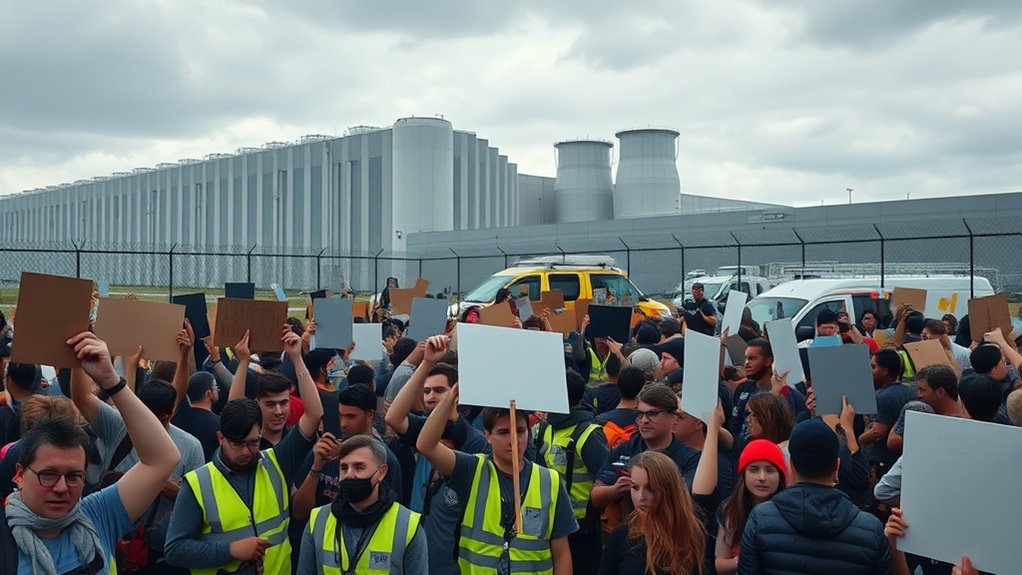
The facility at the center of the dispute is a roughly 30 megawatt data center in Dowagiac operated by Alliance Cloud Services LLC, a subsidiary of Hyperscale Data Inc. The company converted a former industrial complex at 415 East Prairie Ronde Street into a high density computing site that has been used for digital asset mining and high performance computing workloads, with local officials and media more recently describing it as part of the broader AI and cloud ecosystem. The recent protests against AI data centers highlight growing public discontent with grid strain and potential blackouts.
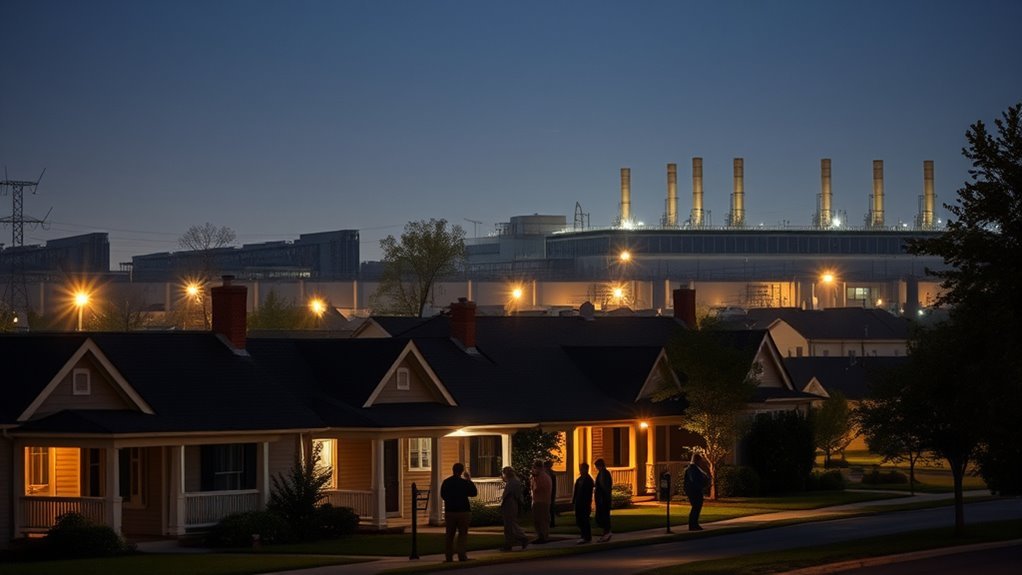
Two nearby homeowners filed a federal lawsuit in late May in the United States District Court for the Western District of Michigan, seeking to represent an estimated 1300 residential properties within one mile of the site. The complaint alleges that since operations ramped up in 2022, the facility has emitted continuous industrial noise that invades surrounding homes and yards at all hours.
Local reporting describes a constant engine like or vacuum like sound, sometimes characterized as a high pitched whine, that residents can hear even with windows closed and televisions on. Nearby homeowners say their own measurements often show noise levels around the low sixties in decibels outside their homes, with occasional peaks reported into the upper seventies. For context, that is roughly the sound of steady conversation or a busy office, but sustained without relief day and night.
City officials have acknowledged the problem in tangible ways. The Dowagiac mayor has said the company was cited for exceeding permissible levels under the local noise ordinance, and the controversy has pushed the city to revisit how its rules treat continuous industrial sound from data centers.
The lawsuit in plain language
The case against Alliance Cloud Services is structured as a proposed federal class action on behalf of owner occupants and renters living within a one mile radius of the data center. At its core, the complaint argues that the facility has created a private nuisance and that the operator has acted negligently by failing to contain the noise generated by dense banks of servers and their cooling systems.
Court filings and media summaries emphasize several key points.
- The plaintiffs claim that the noise has physically invaded their properties on countless occasions, substantially interfering with everyday use and enjoyment of their homes and yards.
- They allege that Alliance Cloud Services did not implement adequate soundproofing or acoustic barriers to capture or absorb the noise before it left the site.
- They seek damages for loss of use and enjoyment of property and potential harm to property values, as well as injunctive relief requiring meaningful noise mitigation.
Attorneys involved in the case describe it as one of the first class actions in the country focused specifically on noise from a large scale data center serving AI and digital asset workloads. That positioning is important. If the plaintiffs win meaningful relief, the Dowagiac dispute could become a reference case for communities facing similar facilities.
What residents say is happening on the ground
Interviews and local coverage paint a consistent picture of how this sounds and feels inside the neighborhood.
Residents describe a chronic mechanical drone that never really stops, with subtle fluctuations but no true quiet. Some say the noise is noticeable inside their bedrooms, even with windows shut, and that it can overpower normal indoor sounds like televisions or conversations. Families report rearranging routines, avoiding parts of their yards, and relying on white noise machines or earplugs just to sleep.
Several neighbors frame the issue as less about occasional loud events and more about a constant low to mid level hum that wears people down over time. Health concerns raised in local coverage include difficulty sleeping, stress, headaches and the mental fatigue that comes from never having a truly quiet moment at home.
There is also a financial angle. Plaintiffs and their attorneys argue that the noise and the stigma associated with the facility have damaged property values, making it harder to sell homes or enjoy the benefits of what were previously quiet residential streets. In a small city like Dowagiac, where homes often represent a large share of household wealth, that perceived loss carries real weight.
How the operator is responding
Alliance Cloud Services and its parent Hyperscale Data have pursued a mix of legal, technical and community strategies.
On the technical side, the company has installed additional sound barriers and other mitigation measures around cooling equipment, and it has said publicly that it is working to reduce noise while keeping the facility operational. The CEO has appeared at local meetings to emphasize that the firm wants to be a good neighbor and is open to ongoing dialogue with residents. The company has also set up dedicated contact channels for community feedback.
At the same time, reports indicate that Alliance Cloud Services has offered to purchase certain homes that are most affected by noise, which some residents interpret as a way to relieve pressure case by case without fundamentally changing how the facility operates. For people who want to stay in their homes and keep their community intact, selling is not seen as a satisfying solution.
Most importantly from a trust perspective, residents say that the mitigation steps taken so far have not produced consistent, meaningful relief. Some report temporary improvements followed by a return to familiar noise levels, or reductions that still leave sound levels well above what they consider reasonable for a residential area.
The expansion question and why AI changes the stakes
One reason this case is attracting national attention in the AI world is that the Dowagiac facility is not static. Local and industry reporting indicates that Hyperscale Data is planning a significant expansion, with one widely cited analysis describing a potential scale up from about 30 megawatts to as much as 340 megawatts over time. The company has acquired dozens of additional acres for future buildout.
That expansion is framed in part around the rising demand for AI and high performance computing capacity, which requires dense racks of servers and substantial cooling infrastructure. The more compute that is packed onto a site, the more equipment runs at high load, and the more noise must be cooled, ventilated and managed.
Historically, large data centers were often placed in industrial zones with wide buffers, or in rural areas where land was cheap and neighbors relatively distant. Over the past decade, the economics have shifted. Operators now seek sites with existing transmission infrastructure, access to diverse power sources, favorable zoning, and good network connectivity, which often means repurposing older industrial or commercial properties that sit closer to established neighborhoods.
Dowagiac is a case study in this new geography of AI infrastructure. A legacy industrial property has been turned into a high intensity compute site, but the acoustic footprint has spilled beyond what residents expected when they bought into those neighborhoods.
Noise as a hidden externality of AI
From a broader AI infrastructure perspective, noise is an under appreciated externality, similar to water use and grid strain.
Modern data centers already face scrutiny for their electricity consumption and climate impact. The Dowagiac dispute shows that even when power is available and emissions are managed, other environmental and social factors can become binding constraints. If a data center cannot operate without making life miserable for nearby residents, its social license is weak, no matter how advanced the AI workloads inside.
This case also highlights a gap between zoning rules designed for traditional factories and the reality of twenty four hour digital infrastructure. Many municipal codes treat data centers as generic industrial or commercial uses and assume that basic decibel limits will be enough. Continuous mid level noise that never ceases can fall into a gray area, especially if standards were written with sporadic loud events in mind.
As more AI compute is deployed, especially in regions eager for economic development, communities will need more nuanced frameworks that account for the distinctive acoustic profile of data centers. That may include separate limits for night time noise, rules for tonal or low frequency sound, and requirements for initial acoustic modeling and ongoing monitoring.
What this means for operators, regulators and communities
For technology and infrastructure leaders, Dowagiac is a warning that noise mitigation cannot be an afterthought.
Facilities that rely heavily on air cooled systems and large fan arrays are especially prone to the kind of tonal whine and steady hum residents describe. There are engineering options that can reduce these impacts, such as more aggressive acoustic enclosure designs, careful placement of equipment relative to homes, and a shift toward liquid cooling that can lower both energy use and sound in some configurations. Those choices, however, add cost and complexity, especially if they are retrofitted after the fact rather than baked in from the start.
For regulators, this lawsuit demonstrates how quickly local politics can escalate when residents feel ignored. Citations, code updates and public meetings followed in relatively short order once complaints intensified. If the federal class action gains traction and results in significant remedies, other cities and counties are likely to look closely at their own ordinances and permitting processes for AI and cloud computing facilities.
For communities, the Dowagiac experience underscores the importance of engagement early in the siting and design process. It is far easier to negotiate setbacks, design constraints, and monitoring commitments before a facility is built than to unwind a noisy operation that has already sunk substantial capital into a site.
What to watch next
Several inflection points will determine how much influence this case ultimately has.
Courts will decide whether the lawsuit can proceed as a class action representing all residents within the proposed one mile radius, which would significantly raise the stakes for Alliance Cloud Services.
Any early rulings on nuisance and negligence claims, even at the motion stage, will be closely read by lawyers and policymakers watching how traditional legal concepts are applied to AI era infrastructure.
Local politics will also matter. If Dowagiac tightens noise rules in ways that constrain future expansion, that could become a model for other municipalities, or a cautionary tale that pushes operators back toward more isolated sites. Conversely, if the company delivers verifiable, sustained noise reductions, it might demonstrate a path for retrofitting existing data centers without abandoning dense sites altogether.
More broadly, expect investors and large cloud and AI providers to pay attention. Persistent community conflicts introduce real project risk. As capital flows into AI infrastructure, operators that can demonstrate strong acoustic, environmental and community performance will have an advantage in securing permits and maintaining stable operations.
The bigger takeaway
The Dowagiac noise battle is not simply a local zoning dispute. It is an early signal of how AI’s physical footprint will collide with lived experience in the places where people sleep, raise children and build wealth through their homes.
The lesson for the AI industry is straightforward. Compute does not exist in a vacuum. It hums, it draws power, it uses water, and it changes the character of the neighborhoods where it lands. Leaders who treat those impacts as central design constraints rather than afterthoughts are more likely to build infrastructure that is both technically impressive and socially sustainable.
The lesson for communities is
Conclusion
The lawsuit over a noisy AI data center in Dowagiac Michigan is a preview of the conflicts that will surface as artificial intelligence infrastructure moves deeper into ordinary neighborhoods. It shows in very concrete terms that the future of AI is not just about algorithms and chips but about sound walls power lines and quality of life on quiet residential streets.
A small town at the center of the AI buildout
Dowagiac is a city of about six thousand people in southwest Michigan that until recently was better known for manufacturing and agriculture than for advanced computing. That changed when Alliance Cloud Services a subsidiary of Hyperscale Data opened a thirty megawatt data center at 415 East Prairie Ronde Street in early 2022 offering high performance computing and digital asset mining services.
Residents say the arrival of the facility brought an almost continuous mechanical roar into their homes. The sound has been described as a high pitched whine like a vacuum cleaner in the living room and a jet engine like hum that never stops. For many neighbors the problem is not only that the noise is loud but that it is constant day and night leaving little opportunity for relief.
Two homeowners living near the site filed a proposed federal class action in May 2026 on behalf of residents within one mile of the data center a zone that the complaint estimates includes about 1300 homes. The lawsuit argues that the facility emits unreasonable and excessive noise that physically invades nearby properties and interferes with the use and enjoyment of homes while also depressing property values.
Local officials have acknowledged the problem. Dowagiac mayor Patrick Bakeman has said the company was cited for violating the city noise ordinance which limits sound levels in residential areas to 65 decibels during the day and 55 at night. One resident who regularly measures the sound reports typical readings around 61 decibels with peaks up to 78 which would exceed the nighttime limit by a wide margin. In response to mounting complaints the city council recently amended its noise rules to address data center operations more directly.
What residents say life is like next to the data center
Neighbors describe a slow erosion of everyday freedoms. Residents report that they no longer open windows on summer evenings because the constant drone makes it impossible to relax or hear birds or conversation in the yard. Some say they have largely abandoned outdoor spaces where they once hosted barbecues or watched children play because the sound dominates the background at all hours.
At a public meeting in late June hosted by the law firm leading the class action residents elaborated on their concerns pointing to the noise and also mentioning fears about possible water contamination from the site. The complaint and community testimony frame the situation not simply as annoyance but as a form of pollution that intrudes into private property day after day with potential long term effects on mental and physical health.
The lawsuit stresses that these impacts are not inevitable. It argues that properly designed and maintained facilities can use soundproofing and other engineering solutions to keep noise within acceptable levels at the property line and that Hyperscale Data failed to implement adequate mitigation despite knowing how disruptive the hum had become.
How the company is responding
Hyperscale Data and Alliance Cloud Services maintain that they want to be good neighbors and that they are working to address concerns. The company has indicated it is consulting with experts on noise reduction and has in some cases offered to buy homes from residents who feel they can no longer live comfortably near the facility.
From the company perspective the data center represents significant investment and potential economic benefits. High capacity computing sites can bring construction jobs ongoing technical roles and added tax revenue to small communities that are eager for new sources of growth. The firm is also seeking to expand the Dowagiac operation to support more artificial intelligence workloads which would deepen its role in the regional tech ecosystem.
The tension comes from the fact that both sides can point to legitimate interests. Residents see a change that was never part of the social contract of their neighborhood and feel that the burden of twenty four hour industrial noise has been pushed onto them without meaningful consent or compensation. The company sees a project that has complied with permitting processes and local rules and worries that being forced to shut down or radically reconfigure the site could threaten its business model and future AI plans.
Part of a wider pattern in Michigan and beyond
The Dowagiac dispute is not an isolated case. Across Michigan and the wider Midwest communities are confronting the physical footprint of data centers that power modern cloud services cryptocurrencies and AI systems.
In Saline Township another Michigan community residents have fought a proposed seven billion dollar data center project backed by major investors over fears that it would raise energy costs contaminate groundwater and radically transform the rural landscape. That battle became complex enough that the township was sued both by the developer and by some residents who wanted to sell land for the project before a settlement imposed limits on water use and required infrastructure investments.
Beyond Michigan a large AI focused data center built by Microsoft in Mount Pleasant Wisconsin is facing a separate federal class action from neighbors who say the facility emits relentless noise likened to a freight train or constant hum. The complaint attributes the sound to diesel generators and cooling equipment while Microsoft argues that the worst noise came from cooling fans during startup and has since been resolved.
Taken together these cases reveal a new front line in the expansion of digital infrastructure. For years data centers could be tucked into industrial parks or remote sites where few people noticed the rumble of generators and the rush of air through cooling towers. With AI driving demand for more capacity and low latency connections operators are placing more facilities near existing communities where grid connections fiber routes and workforce availability are stronger.
Why AI data centers are especially challenging for communities
Artificial intelligence workloads are unusually demanding in terms of power and cooling. Training and running large models requires dense racks of servers and accelerators that generate substantial heat which must be removed continuously to keep equipment within safe operating limits. That in turn drives constant use of chillers cooling towers and fans which are among the main sources of the mechanical hum residents report in Dowagiac and in Wisconsin.
Because AI applications often run around the clock in support of global services there are fewer opportunities to schedule noisy operations only during daytime hours when they might be less disruptive. Backup generators and other resilience systems add another layer of sound risk during testing or outages. As more firms chase AI growth these design choices are being replicated across new build sites which makes the underlying issue systemic rather than isolated.
The business incentives also complicate mitigation. Building thicker walls installing advanced acoustic dampening or relocating equipment can be expensive and in some cases may reduce usable floor space or complicate maintenance. Operators must weigh these costs against tight construction timelines and competitive pressure to bring AI capacity online quickly. When communities have weak ordinances or little experience negotiating with data center developers residents may find that comfort and health considerations are not fully integrated into project plans.
Legal questions and regulatory gaps
The Dowagiac lawsuit leans on classic nuisance and negligence theories arguing that the data center creates noise levels that would be offensive to individuals with ordinary sensibilities and that the company failed to take reasonable steps to prevent offsite impacts. Courts have long recognized that excessive noise can constitute a private nuisance in residential areas but there is still limited case law specifically focused on modern AI or cryptocurrency facilities.
If the residents succeed the case could encourage more aggressive enforcement of local noise ordinances and inspire new zoning categories tailored to data centers and other persistent noise sources. Municipalities might require independent acoustic studies before approving AI infrastructure or mandate specific decibel limits at property lines along with periodic monitoring. Insurance and financing arrangements for new data centers could start to incorporate stronger risk assessments around community noise exposure.
If the company prevails on the grounds that it complied with existing regulations and took reasonable actions to mitigate sound the outcome might signal to operators that thorough documentation and incremental improvements are enough to withstand legal challenges. That would place more responsibility on cities and counties to update their policies rather than on firms to exceed current standards voluntarily. Either way the case is likely to influence how lawyers planners and engineers think about the intersection of AI computing and community welfare.
Implications for technology companies and policymakers
For technology firms the immediate lesson is that community relations are now a critical part of AI infrastructure strategy. Residents in Dowagiac complained that they could not get clear answers from the company and felt shut out of decisions that affected their daily lives. In an era when trust in large technology platforms is already strained visible disregard for local concerns can create reputational damage that ripples across markets and regulators.
Companies that plan AI data centers in populated areas will need robust engagement plans including early disclosure of potential noise impacts transparent sharing of monitoring data and genuine opportunities for residents to shape mitigation measures. Offering relocation packages or property buyouts as Hyperscale Data has reportedly done is a last resort that may be necessary in some cases but does not substitute for thoughtful design that prevents harm in the first place.
Policymakers meanwhile face a balancing act. AI infrastructure is increasingly viewed as strategic with potential to attract high quality jobs and position regions at the forefront of emerging technologies. Yet the Dowagiac and Saline Township battles show that unchecked growth can erode public support especially if benefits are diffuse but harms are concentrated around a few streets and families.
To maintain legitimacy governments will need clearer frameworks that define acceptable environmental and social impacts for AI related projects. That includes not only noise but also power demand water consumption and land use change. As legal disputes surface those frameworks need to evolve quickly drawing on lessons from early cases such as the Michigan lawsuits and the challenges around Microsoft facilities in Wisconsin.
Looking ahead
The Michigan residents lawsuit over nonstop data center noise is ultimately a test of how society will govern the physical footprint of artificial intelligence. It shows that as AI systems scale the most pressing questions may be about quality of sleep property rights and the right to quiet rather than model architectures or benchmark scores.
In the near term more communities are likely to face similar conflicts as operators pursue new AI campuses and retrofit older facilities for high intensity workloads. Some projects will move ahead with negotiated sound limits and strong mitigation others will end up in court when residents feel that promises have not been kept. The outcomes of early cases will shape where future data centers are sited how they are engineered and how costs and benefits are shared.
Over the longer horizon the hope is that acoustic design and community protection become standard components of AI infrastructure just as cybersecurity and energy efficiency already are. If developers planners and residents can move from reactive battles to proactive planning AI growth can be aligned more closely with livable neighborhoods and local priorities. The Dowagiac case is an uncomfortable but necessary step in that learning process and its resolution will be watched closely far beyond Michigan reddit