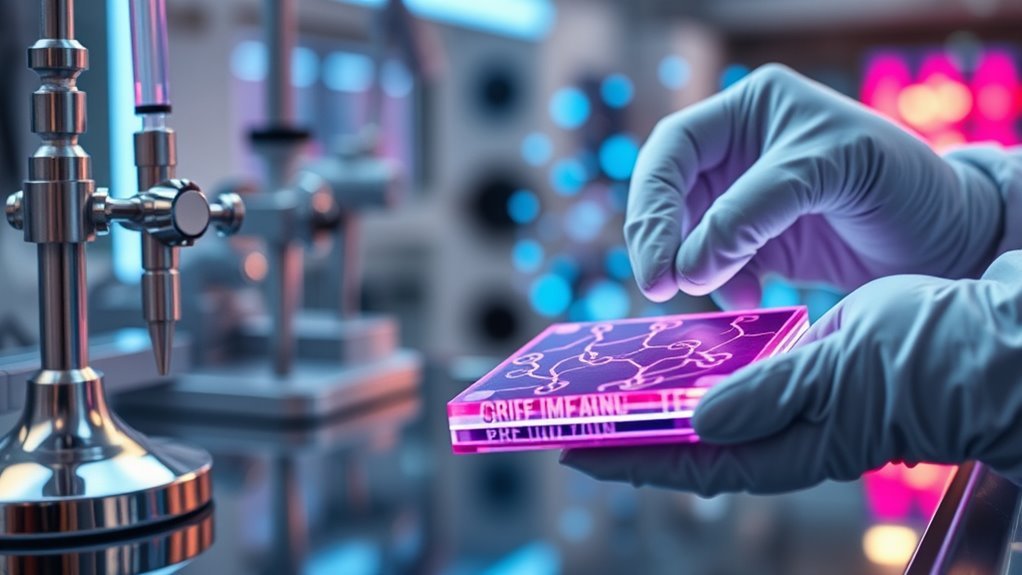

CRISPR proteins are moving from single purpose molecular scissors to an adaptable operating system for biology, and that shift matters right now because precision gene editing is crossing from lab benches into real clinical trials, agricultural pipelines, and industrial bioprocesses. At the same time, AI guided design tools like the conceptual Claude Fable 5 are starting to influence how new CRISPR proteins are imagined, tested, and optimized, raising practical questions about safety, delivery, and governance that cannot be ignored. Recent NIH-funded work on Al3Cas12f has demonstrated that an engineered RKK variant can achieve over 80% editing efficiency in human cells while remaining compact enough for delivery by adeno-associated virus vectors, illustrating how miniature nucleases could make targeted in vivo gene therapies more practical. Furthermore, the reliance on circular financing in the tech sector highlights the interconnected risks associated with funding ambitious biotech projects.
Frequently Asked Questions
How Does Claude Fable 5 Differ From Previous AI Models Used in Biology Research?
Claude Fable 5 marks a turning point in how powerful foundation models are used in biology research because it combines very strong scientific reasoning with unusually aggressive safety controls for biological information. In practice, that means it can outperform specialist systems on some advanced tasks, yet will simply refuse or reroute a large share of biology prompts that earlier models would have tried to answer directly.
From specialist biology models to foundation systems
For most of the past decade, artificial intelligence in biology has been dominated by specialist tools. Early systems focused on single problems such as protein structure prediction, molecular docking, or sequence-based function annotation. These models were powerful inside their narrow domains but could not read papers, reason across experiments, or connect lab protocols with molecular design decisions.
Over the past few years, large foundation models have begun to change that by learning general language and reasoning while also absorbing vast amounts of biomedical text and data. These models can summarize literature, critique experimental designs, and propose new hypotheses in a way that looks far closer to a human scientist than a traditional statistical model. Claude Fable 5 sits at the leading edge of this shift, as Anthropic’s most capable publicly available model and part of a new tier the company calls Mythos class.
A shared Mythos architecture with different roles
A key difference between Fable 5 and previous biology-oriented models is architectural. Fable 5 and Claude Mythos 5 share the same underlying foundation system, which Anthropic positions above its Opus line in overall capability. Mythos 5 is the research-facing sibling with fewer constraints and is already being used inside Project Glasswing and other partnerships to accelerate work in molecular biology, protein engineering, and drug design.
Internal reports indicate that Mythos 5 can outperform dedicated protein language models on tasks such as predicting adeno-associated virus capsid packaging, a problem directly relevant to gene therapy research. In blinded comparisons, scientists have preferred Mythos 5 molecular biology hypotheses over those from earlier Opus class models by a substantial margin, with preferences around four out of five cases in some evaluations.
Fable 5 uses that same foundation but is hardened for public deployment. Benchmark aggregators rank it at or near the top among dozens of large models on overall capability scores, including challenging reasoning and computer use tests. On biomedical benchmarks like MedQA and PubMedQA, Fable 5 achieves very high accuracy on the subset of questions it is allowed to answer, often reaching the mid to high ninety percent range when refused items are excluded. At the same time, its raw scores before accounting for refusals can look worse than some predecessors because the model declines many more items in sensitive domains.
This design differs from older practice where users might interact with entirely separate models for general tasks versus biology or cybersecurity. Anthropic now uses a single foundation architecture that can be configured for different safety regimes, rather than maintaining completely distinct biology-only systems alongside public models.
Safety first for biological information
The most dramatic way Fable 5 differs from previous biology AI models is how rarely it is willing to answer direct biology questions. Anthropic has wrapped the model in a multi-layer content classifier that inspects every prompt before generation begins and looks specifically for high-risk categories such as biology, cybersecurity, chemistry, model distillation, and frontier AI development.
When the classifier detects patterns associated with high-risk biological content, the request does not simply fail. Instead, it is automatically routed to Claude Opus 4.8, a strongly safety-tuned model that performs a second, more context-aware evaluation of intent and potential harm. If Opus judges the request to be safe and sufficiently benign, it answers. Otherwise, it either refuses or asks for clarifying details, and Fable 5 itself never touches the content.
Biological queries are the most commonly flagged category. The safeguards watch for prompts involving pathogen properties and transmissibility, gain of function style experiments, detailed toxin mechanisms, synthesis or cultivation protocols for microorganisms, and lab procedures that might be relevant to regulated agents. This reflects Anthropic’s public framing of biological misuse as a severe, potentially irreversible risk that deserves special treatment, consistent with its earlier work on biorisk-focused deployment guards for the Opus family.
Community experiments give a sense of how far this goes. One analysis of Fable 5 behavior on biology-related exam questions found refusal rates around ninety-seven percent on some advanced benchmarks, with entire subfields such as medical genetics seeing complete refusal. Other benchmark summaries note that biology and health scores simply are not reported for Fable 5 because so many items are declined under its default safety settings.
Compared with many earlier models used in biology research, including general-purpose language models and specialist molecule generators, this is unusually strict. Safety evaluations of legacy generative chemistry tools have found cases where models readily propose candidate structures with concerning toxicity profiles, underscoring how limited safety conditioning often was in the previous generation of systems. Fable 5 flips that default. It starts from the assumption that anything touching sensitive biology needs deeper review and prefers refusal over speculative assistance when intent is ambiguous.
How Fable 5 performs on biology tasks
Despite these heavy safeguards, Fable 5 remains technically strong on biology tasks in controlled settings. A recent study evaluated Fable 5 on multiple biomedical benchmarks, including text-based exams and multimodal tests that combine images such as histology slides with clinical reasoning. When analysis focused on the scored subset of questions that passed safety filters, Fable 5 matched or exceeded every other model tested, including internal predecessors like Opus 4.6 and 4.8 as well as external baselines.
On multimodal challenges, Fable 5 led outright on most tasks. On one of the hardest expert-level benchmarks in the study, which demands specialist reasoning across complex medical imagery and text, Fable 5 surpassed all comparison models by a clearly separated margin even when refusals were counted against it in the denominator. Other independent reviews that include biology-oriented tasks, such as BioMysteryBench, also show Fable 5 surpassing Opus 4.8 by several percentage points, signaling genuine gains in scientific reasoning ability.
Anthropic and external partners have begun using the Mythos class system in real-world drug discovery pilots. Reports suggest these models can cut candidate design cycles by about an order of magnitude, compressing what previously took months into timelines closer to weeks in some cases. In internal use, scientists report that Mythos level models generate molecular biology hypotheses that are both novel and experimentally tractable, enough that several have already advanced to laboratory testing.
The crucial nuance is that much of this high-end performance currently lives behind trusted access programs and restricted deployments. Mythos 5 is not broadly available, and Fable 5 itself falls back to Opus 4.8 for most biology and chemistry requests under normal settings. That makes Fable 5 very different from earlier biology models that were simply exposed to users without such layered gating, even if they were technically less capable.
Implications for researchers, businesses, and regulators
For biology researchers, Claude Fable 5 represents both a major opportunity and a constraint. On the opportunity side, it offers a unified foundation model that can read papers, connect concepts across disciplines, and propose concrete experimental ideas, while also delivering specialist-level performance on biomedical benchmarks when it is allowed to respond.
In institutions that gain access to Mythos 5 or to less restricted variants of Fable 5, this can translate into faster target discovery, more systematic exploration of protein design spaces, and richer cross-talk between computational teams and bench scientists.
On the constraint side, most public users will encounter a model that is extremely cautious about biology. Everyday questions about virology, pathogen properties, or lab methods are more likely to be declined or redirected than answered fully, even when the user’s intent is benign. This can frustrate researchers who expect open-ended exploratory dialogue but instead receive narrow, high-level responses. It may also push some users toward less capable but more permissive models, which could ironically reduce overall safety if those alternatives lack strong guardrails.
For businesses building tools on top of Fable 5, the safeguards become part of the product design. Companies cannot assume they can simply plug Fable 5 into an automated workflow for protocol generation or simulation guidance. They need to design around refusals, incorporate their own domain-specific checks, and build interfaces that steer users toward safe, high-level use cases such as literature synthesis, experimental critique, and risk-aware hypothesis brainstorming.
Regulators and policymakers are watching this architecture closely because it demonstrates one concrete approach to managing dual-use risk in powerful models. Anthropic’s decision to route most sensitive biology queries to a more constrained model, alongside high refusal rates in public benchmarks, shows that strong technical safeguards are possible without halting scientific benefit entirely. This approach could influence emerging standards for how advanced models are deployed in fields with serious safety implications, from synthetic biology to chemical engineering.
A balanced view of risks and opportunities
Claude Fable 5 and its Mythos sibling highlight a broader tension in AI for biology. On one hand, there is clear evidence that these systems can accelerate research and outperform earlier models on complex biological tasks when carefully evaluated. On the other hand, the same capabilities could lower barriers for misuse if powerful models freely answered detailed questions about pathogens, toxins, or lab protocols, which is precisely why Anthropic has leaned into aggressive safeguards.
For now, the result is a two-tier world. A small set of trusted institutions gain access to the full strength of Mythos class biology reasoning under close oversight, while most public users interact with a highly capable model that often steps back from detailed biological guidance. Whether this strikes the right balance will depend on how the safeguards are tuned over time, how transparent Anthropic and its partners remain about failure modes, and how well external oversight keeps pace with rapid technical progress.
Researchers and practitioners should treat Fable 5 not as a magic laboratory assistant, but as a powerful reasoning tool embedded in a safety framework. Its strengths lie in synthesizing knowledge, stress testing designs at a conceptual level, and revealing unexpected connections across fields. Its limits appear when questions edge toward operational detail that could affect real-world biological risk. Understanding that boundary and designing workflows around it will be essential for responsible use.
The next phase of biology AI will likely be defined by models like Claude Fable 5 that merge state-of-the-art scientific intelligence with equally serious safety engineering, and by the choices institutions make about who gains access to the most unrestricted versions and under what conditions.
What Training Data Ensured Claude Fable 5 Avoids Harmful or Unsafe Biology Outputs?
Claude Fable 5 avoids harmful or unsafe biology outputs mainly through a set of dedicated safety classifiers and a routing system that moves sensitive prompts to Claude Opus 4.8, not through a single specialized biology training dataset. Public documentation describes broad filtering and post-training safety layers for cyber, biology, and chemistry queries, while explicitly avoiding the disclosure of any standalone biology safety corpus.
Why biology safety in Fable 5 matters now
Powerful language models can already summarize complex virology papers, outline lab workflows, and connect scattered experimental details in ways that are genuinely useful to scientists but potentially useful to bad actors as well. Anthropic positions Fable 5 as its most capable publicly available model in the Mythos class, and at this level of reasoning ability even seemingly benign biology assistance can lower the barrier for misuse. That is why the company chose to launch Fable 5 with unusually aggressive protections around life sciences content and to accept significant inconvenience for ordinary users rather than leave gaps in biological safety.
The training data story and what is known
Anthropic does not publish a detailed breakdown of the training data used for Fable 5, but it is clear from the broader Claude ecosystem that the model is built on large-scale corpora and synthetic data similar to earlier Claude generations. Like other frontier models, Fable 5 is likely trained on a mixture of public internet material, licensed or partnered data, and synthetic examples, followed by fine-tuning on curated instructions and safety-related supervision, although the company stops short of confirming precise sources or proportions.
Crucially, the official Fable 5 and Mythos 5 announcement and related technical write-ups focus on the safety architecture on top of the trained model rather than on any special biology-only training set. Anthropic describes classifiers that watch for cybersecurity, biology, and chemistry and distillation requests, and it explains fallback behavior and data retention policies, but does not mention a custom corpus that exists purely to teach Fable 5 how to refuse biological assistance. Taken together, the available documentation supports the conclusion that filtered general-purpose training data is a baseline, yet the real biology safety work happens in separate systems wrapped around the model.
Safety classifiers and supervised data on high-risk queries
The most important mechanism keeping Fable 5 from answering harmful biology questions is a set of safety classifiers trained to recognize risky content in several domains. Anthropic states that requests related to cybersecurity, biology, and chemistry and attempts to distill the model’s capabilities for training other systems are automatically flagged by these classifiers. When a classifier activates, the request is routed away from Fable 5 and handled by Claude Opus 4.8, which has more mature and conservative safety tuning.
Technical guidance for developers describes the classifier output explicitly, including a field that labels categories such as cyber and bio and reasoning extraction. These categories are fired when prompts mention lab methods, molecular mechanisms, or other life science content, capturing far more than obvious bioweapon design queries. While Anthropic does not publish the underlying supervision dataset, business coverage and independent testing indicate that the classifiers are trained on high-risk biology, chemistry, and cyber prompts as well as more benign queries that help define the boundary between acceptable education and dual-use assistance.
The supervision data here is not the same as the base model training data. Instead, it appears to consist of labeled examples of dangerous and safe content that teach the classifiers where to draw the line, which is then enforced at runtime by gating access to Fable 5 whenever a prompt is judged risky. This is consistent with Anthropic’s earlier practice of using specialized safety classifiers to block biological assistance long before Fable 5 was released.
Routing and fallback to Opus 4.8
For users, the most visible part of this safety design is the fallback to Claude Opus 4.8 whenever a biology-related query is detected. Anthropic explains that if Fable’s classifiers see content touching cybersecurity, biology, and chemistry or distillation, the response is automatically handed to Opus and users receive a notification that this has occurred. Coverage of the launch notes that Fable will hand the conversation to the weaker model as soon as it detects a biology or chemistry question, even when the topic is routine or benign.
Developer documentation confirms that automated safety checks run on every request to Fable 5 and that these checks block or reroute prompts that fall into the cyber or bio categories. External analyses describe the biology and chemistry track as very broad and conservative at launch, with most life science prompts falling back and Anthropic stating that it intends to narrow this over time. Some articles note that the company openly admits the net is overly wide right now and that many ordinary cancer and vaccine questions trigger safety measures.
From a safety perspective, this fallback architecture is a form of risk segmentation. Fable 5 remains available for general reasoning tasks but is effectively fenced off from high-risk domains, while Opus 4.8 carries the burden of answering biology questions under stricter, better-understood controls. That design leverages the existing safety profile of Opus and allows Anthropic to move cautiously as it learns how users interact with Mythos class models in sensitive areas.
Data retention and monitoring as safety training inputs
Another important piece of the safety story is how Anthropic treats user data when running Fable 5. The company has introduced a thirty-day retention policy for all traffic on Mythos class models, including Fable 5, across its own products and partner platforms. Documentation stresses that this data is retained for safety monitoring only, not for training new Claude models or product analytics. Every instance of human access to this stored data is logged, and in almost all cases, it is deleted after thirty days.
Even though this retained traffic is not used directly to train Fable 5, it is plausibly a key input for improving the safety classifiers and policies that sit around the model. When real-world prompts reveal new patterns of risky biology queries or unexpected false positives, that information can be fed back into safety systems to refine category boundaries and reduce both underblocking and overblocking. From a safety engineering standpoint, this kind of closed-loop monitoring is at least as important as the original training corpus when the goal is to prevent harmful biology outputs over time.
Evidence of overblocking and its connection to safety data
Early user reports show how aggressively these systems behave in practice. Community discussions describe Fable 5 refusing to answer almost any biology question, from basic cell biology to normal medical research topics and even everyday health content. One summary of refusal behavior notes false positives on subjects such as neuroinflammatory diseases, medical imaging, nutrition writing, and even a shopping list for pulled pork, all swept up by the biology and chemistry safeguards.
Media coverage echoes this pattern, documenting cases where simple questions like what mitochondria are or how mRNA vaccines work lead to fallback or refusal messages. Anthropic itself warns users that Fable 5 has safety measures that flag messages on most cybersecurity or biology topics and acknowledges that the system currently errs on the side of overblocking. These behaviors are strong evidence that the safety classifiers have been trained on broad and conservative datasets and that their thresholds are set deliberately low to capture any content that might inch toward dual use.
How much of biology safety is in the training data versus the wrapper
The question of what training data ensures safe biology behavior invites a clear distinction between the base model and the safety wrapper. On the base side, Fable 5 almost certainly has general knowledge of molecular biology, immunology, and virology because those topics are pervasive in public text and scientific literature. That knowledge, by itself, is not made safe simply by removing a handful of obviously dangerous examples from the corpus.
Instead, the publicly described mechanisms that actually prevent harmful outputs are all post-training systems. Fable has classifiers tuned on supervised datasets of high-risk cyber, biology, and chemistry queries, extensive runtime monitoring, and a routing layer that hands risky prompts to a different model. The combination of these elements is what blocks lab protocols, pathogen manipulation strategies, and other concrete how-to content that could uplift malicious capability.
It is also telling that Anthropic is preparing alternate configurations of Fable 5 that relax biology safeguards for vetted life science researchers, while keeping stronger guarantees for the general public. That would be very difficult to achieve purely by swapping base training corpora. It makes more sense if the biology safety model is modular, centered on classifiers and policy, allowing Anthropic to maintain one safety wrapper for ordinary use and another for professional contexts where more helpful biology assistance is acceptable.
Implications for businesses, researchers, and regulators
For businesses adopting Fable 5, the key takeaway is that biology safety is enforced through runtime control and routing, which means the model may refuse or downgrade answers in ways that feel abrupt when workflows touch medical or scientific content. Teams building tools for healthcare, biotech, or pharmaceutical use need to anticipate fallbacks to Opus 4.8 and design interfaces that can explain these transitions to users without eroding trust.
For researchers, Fable 5 illustrates both the promise and the frustration of safety-first deployment. The model likely has strong ability to reason about experimental design and interpret papers, but current safeguards block even introductory biology prompts, limiting its utility in labs and classrooms. Anthropic’s plan to offer loosened configurations to selected life science professionals signals a move toward tiered access that could become a common pattern across the industry.
For regulators and policymakers, Fable 5 offers an early glimpse of what aggressive biological risk management looks like in practice. Automated classifiers, conservative thresholds, data retention for safety monitoring, and explicit fallback to a safer model form a package that could serve as an example for future guidelines on high-risk capabilities. The fact that Anthropic publicly concedes the overblocking problem and commits to narrowing the net while keeping strong protections in place shows both the difficulty of calibrating these systems and the importance of iterative refinement.
What we still do not know
Despite the growing documentation, substantial gaps remain in the public record. Anthropic does not disclose the exact datasets used to train Fable 5, nor the specific supervision corpora behind the biology and chemistry classifiers. We also lack detailed metrics on false positive and false negative rates for bio safety filters, beyond anecdotal reports and rough comments about broad coverage.
These uncertainties matter. Without a clearer picture of how safety classifiers are trained and evaluated, it is difficult for independent experts to assess whether protections are truly robust against sophisticated misuse or whether they mainly block obvious queries. At the same time, there are understandable reasons for limited transparency, including the risk that detailed disclosure could itself serve as a map for people trying to evade safeguards.
Forward-looking takeaways
Claude Fable 5 shows that protecting against harmful biology outputs in frontier models is less about finding a perfect training dataset and more about building strong safety systems around a powerful general-purpose model. Filtered training data provides a baseline, but the real work happens in supervised classifiers, conservative thresholds, runtime routing, and continuous monitoring of real-world usage.
Over time, expect Anthropic and its peers to refine these biology safety wrappers, narrow false positives that frustrate ordinary users, and introduce more granular access tiers for professional contexts, all while keeping strict protections against dual-use assistance. For now, anyone working with Fable 5 should assume that biology queries will be treated as high risk by default and design their applications and oversight processes accordingly.
Who Can Access Claude Fable 5 for Designing Custom CRISPR Tools and Experiments?
The question of who can use Claude Fable 5 to design custom CRISPR tools goes right to the heart of how powerful AI models are being managed in high risk areas like biology. As of mid 2026, Fable 5 is broadly available again to many Claude users worldwide, yet its most sensitive biology capabilities remain tightly constrained and routed away from general access. That distinction matters for anyone hoping to use the model for real experimental design rather than high level brainstorming.
Why CRISPR and Fable 5 are a sensitive combination
CRISPR has moved from a laboratory breakthrough to a mainstream tool in just over a decade, enabling precise genome edits in microbes, plants, animals and increasingly in clinical research. Custom CRISPR constructs, delivery systems and experimental workflows are now central to modern genomics and translational biology. AI models that can design guide sequences, simulate off target effects or propose protein engineering strategies sit right at the frontier of both scientific opportunity and biosecurity risk.
Claude Mythos and Fable 5 were introduced as Anthropic’s most capable models to date, explicitly positioned as systems that could perform complex reasoning and multistep planning across domains that include biology and chemistry. At the same time, Anthropic has been unusually direct in warning that these capabilities could be misused to facilitate large scale cyberattacks or enable construction of dangerous biological agents, which is why both models were wrapped in strict safety policies from day one.
That basic tension explains why access for custom CRISPR design is being handled very differently from access for everyday coding or writing work.
How access to Claude Fable 5 works today
After a temporary global suspension in June driven by a United States government export control directive, Anthropic redeployed Fable 5 at the end of June and made it available again across the Claude Platform and related products for users around the world. Fable 5 can now be called through Claude web and desktop interfaces, Claude Code, Claude Cowork and enterprise seats, with usage governed by subscription allowances and per token credits depending on the plan.
Pricing for direct use is fixed at ten dollars per million input tokens and fifty dollars per million output tokens across both Fable 5 and Mythos 5.
From a security standpoint though, Fable 5 is explicitly configured as a safeguarded model. Its documentation describes robust classifiers for biology and cybersecurity that watch every request and block or divert any query that crosses defined risk thresholds. When a request is flagged in these domains, Fable 5 typically refuses to answer or falls back to Claude Opus 4.8, Anthropic’s next most capable generally available model, which is tuned to provide safer responses in high risk categories.
This means that a typical user, even a serious developer or scientist on a paid plan, cannot simply prompt Fable 5 to design CRISPR constructs, iterative protein engineering campaigns or detailed experimental pipelines. In practice, biology queries that look like operational wet lab planning are either blocked outright or receive significantly limited high level guidance. The same safety posture applies whether Fable 5 is accessed through Anthropic’s own platform or cloud providers such as managed model hosting services.
On top of this technical gating, Anthropic has mandated thirty day data retention on all traffic for these advanced models, even for enterprise customers that previously negotiated zero retention terms. The company stresses that this data is not used for training but rather for safety monitoring and defense against novel jailbreaks, including potential attempts to weaken biological safeguards. That requirement underscores how seriously the firm treats the risk of misuse.
In short, Fable 5 is widely accessible, but the version of Fable 5 that everyday users see is not a tool for operational CRISPR experiment design. It is a highly capable general model with a locked down interface whenever a request touches dual use biology.
Who actually gets custom CRISPR design capabilities
The more autonomous biology capabilities, including sustained protein and nucleic acid design loops, are reserved for Mythos class deployments and selected trusted partners rather than the general developer population. Anthropic’s public statements describe Claude Mythos 5 as essentially the same underlying model as Fable 5, but with cyber safeguards lifted for a small group of cybersecurity partners and with plans to lift biology and chemistry safeguards only for select researchers under a broader trusted access program.
Although the company has not published a detailed roster of participants, the emerging picture is a biology trusted access cohort that looks very different from a typical open developer community. It is made up of private life science laboratories, academic genomics groups, translational research institutes and early stage biotechnology startups that are willing to operate under stringent governance and continuous misuse monitoring. Access is tied to formal agreements, strong identity verification and clear research purposes rather than casual experimentation.
These partners are the ones positioned to receive versions of Mythos with biology restrictions relaxed enough to support genuine CRISPR design and analysis work. Under that arrangement, Mythos can help build complex experimental plans, refine construct libraries or run multistep reasoning loops over the many sources of risk in genome editing projects, while Anthropic retains technical and procedural controls to catch dangerous trajectories. The model is thus used as a powerful research assistant inside tightly supervised programs rather than as a freely available lab automation engine.
For most researchers outside this vetted cohort, even those with paid Claude access, designing CRISPR tools through Anthropic models still means operating within the safer bounds of Opus 4.8 and the safeguarded version of Fable 5, where the outputs are constrained and often kept at a conceptual level.
Why Anthropic is drawing this line
Historically, major AI releases in coding and text generation have followed a pattern of rapid broad access with relatively light guardrails, followed by iterative safety updates once risks become clearer. In biology, the trajectory has already been more cautious. Earlier years saw public language models give surprisingly detailed wet lab guidance, which triggered a wave of academic and policy work on dual use risks and eventually more conservative behavior in mainstream systems.
Anthropic is trying to avoid repeating that cycle with Fable 5 and Mythos 5. By bundling strong classifiers, mandatory data retention and strict role based access for high risk domains, the company is essentially building safety policy into the infrastructure itself. The specific decision to reserve autonomous protein and CRISPR design tools for a small trusted cohort rather than for everyone with an API key is a direct expression of that philosophy.
There are clear benefits to this approach. It allows cutting edge genomics projects in well governed settings to leverage the full power of Mythos while significantly reducing the chance that individual actors or lightly supervised teams could appropriate the same capabilities for harmful purposes. It also gives Anthropic and regulators a narrower surface area to monitor for misuse, since high risk biology applications are concentrated among known entities.
The tradeoffs are equally real. Independent scientists, smaller labs and open science communities may find themselves excluded from the most advanced biology features, even if their motives are entirely constructive. Innovation could tilt toward institutions that qualify for trusted access, potentially reinforcing existing inequities in research funding and infrastructure. There is also the challenge of defining and maintaining the boundaries of the cohort over time, especially as CRISPR moves further into clinical and industrial domains and more organizations seek advanced AI support.
What this means for developers and researchers right now
For technology teams and businesses, the practical message is straightforward. If you are a typical Claude user working through Pro, Team or enterprise plans, you can experiment with Fable 5 today, but you should not expect it to function as a turnkey CRISPR design engine. Biology and chemistry remain treated as hardcoded restricted areas with non overridable safeguards, and detailed experimental design requests are likely to be blocked or softened.
If your organization is a private life science lab, academic genomics center, translational institute or biotech startup with a clear need for advanced AI in experimental planning, the path to operational CRISPR tools runs through Anthropic’s trusted access program and Mythos class deployments rather than standard Fable 5 access. That path entails deeper due diligence, ongoing monitoring and explicit alignment with biosecurity norms, but it also provides a way to responsibly tap into capabilities that are intentionally kept out of general circulation.
For the wider ecosystem, the current arrangement is an early example of what tiered access to frontier models may look like in other sensitive sectors, from synthetic biology to autonomous cyber operations. As models grow more capable, businesses and regulators are likely to see more separation between what the general public can do and what vetted cohorts are able to unlock under strict oversight.
Key takeaways and what to watch next
Access to Claude Fable 5 for custom CRISPR design is not something the average developer or scientist can simply turn on with a subscription. General users get a powerful but safeguarded model whose biology queries are constrained and often routed to safer alternatives. The full experimental design capabilities remain reserved for Mythos deployments inside a vetted biology trusted access cohort that is subject to Anthropic governance and misuse monitoring.
Over the next few years, the important questions will be how that cohort evolves, how transparent its governance becomes, and whether similar access patterns emerge across the AI industry. The balance between open innovation and biosecurity will be shaped not only by model architectures, but by these access decisions and the trust frameworks that surround them. For now, anyone working at the intersection of AI and genome editing needs to plan around a future in which the most powerful tools are available, but only within carefully constructed and closely watched channels.
How Are Intellectual Property Rights Handled for Ai-Designed CRISPR Proteins Created With Fable 5?
Intellectual property rights for CRISPR proteins that are designed using Fable 5 largely track existing rules for human engineered biotechnology inventions, rather than creating a special category just for AI outputs. Synthetic variants of CRISPR systems and their therapeutic applications can be patented when researchers provide experimental evidence and show that the designs are not obvious to a skilled scientist, but the inventors named on those patents must always be human beings who significantly contributed to the conception and reduction to practice of the invention.
Why this matters right now
CRISPR has moved from a basic research tool to the backbone of a growing therapeutic industry, and the arrival of powerful AI platforms like Fable 5 is accelerating that shift by making complex protein designs routine. At the same time, patent offices are updating their guidance on AI assisted inventions to clarify who can be named as an inventor and what kinds of outputs remain patentable. The result is a period where scientific capability is racing ahead while legal practice is catching up, and teams using Fable 5 need clear answers about how rights are allocated between human researchers, institutions and AI providers.
The core message from recent legal developments is that AI assistance does not change the fundamental structure of patent law. AI systems are treated as tools, even when they are deeply embedded in the inventive process, and inventorship analysis still focuses on specific human contributions. For CRISPR work, this means that what matters most is how researchers frame problems, interpret Fable 5 outputs, select candidates, design experiments and ultimately demonstrate that a particular engineered protein does something new and useful in the world.
From early CRISPR patents to AI assisted design
When CRISPR first emerged as a gene editing technology, patent debates revolved around priority, scope and the boundary between natural phenomena and human engineered inventions. Courts and patent offices made clear that the naturally occurring CRISPR system itself is not patentable, because it is a product of nature rather than human ingenuity.
What could be patented were specific engineered components and methods that harness CRISPR, such as modified Cas proteins, delivery systems and particular therapeutic applications that demonstrate practical use.
That distinction is directly relevant to Fable 5. Fable 5 may search enormous design spaces and propose novel CRISPR protein sequences, but the patentable subject matter is still the engineered proteins and methods that human teams choose, refine and validate. Recent guidance on AI assisted inventorship underscores that AI assisted inventions are not categorically excluded from patent protection, as long as a natural person has made a significant contribution to the conception of what is claimed. In other words, the law still looks for human ingenuity even when AI is involved.
What counts as inventorship when Fable 5 is involved
Patent offices have now published detailed guidance on how to analyze inventorship in projects that rely heavily on AI, including sophisticated systems used for molecule and protein design. Across these documents, one principle is consistent. Only natural persons can be inventors, and AI systems cannot be listed as inventors or joint inventors under current law.
The inventorship analysis focuses on whether one or more researchers made a significant contribution to the conception of at least one claimed aspect of the invention, judged against the full scope of what the patent claims. Recognizing a problem and asking an AI model for solutions is not enough on its own.
Nor is simply running validation experiments on AI output without adding any creative insight beyond routine testing. However, a person who designs Fable 5 workflows for a specific problem, selects or adjusts training data, sets constraints, interprets the model outputs and uses those outputs as building blocks for an inventive concept can be a proper inventor, provided those contributions are not trivial compared to the claimed invention.
Recent revisions to United States guidance emphasize that there is no special or heightened inventorship standard for AI assisted inventions. The same criteria apply whether or not AI tools are used, and the key question is always whether human contributors meet the established legal test for inventorship. AI is explicitly described as a tool rather than a potential inventor, which confirms that Fable 5, however advanced, does not itself hold or receive inventorship rights.
Patentability of Fable 5 designed CRISPR proteins
For teams using Fable 5, the main patent opportunities lie in novel CRISPR protein variants and their associated methods of use. Patent offices have consistently allowed patents on human engineered components that use the natural CRISPR system, as long as they do not fall into excluded categories such as inventions that contravene public order or morality.
In practice, this means that if Fable 5 proposes a protein sequence that yields unique functional properties, and researchers can demonstrate those properties experimentally in a way that is not obvious from the prior art, they can seek patents on the sequence, structure function relationships, and therapeutic or diagnostic uses. The AI origin of the sequence does not disqualify it from patentability, and recent guidance explicitly confirms that AI assisted inventions are eligible for patents when they satisfy standard requirements such as novelty, inventive step and utility.
However, patent examination will still ask whether the claimed invention would have been obvious to a skilled person, even given the existence of AI tools. If Fable 5 is essentially automating well known design rules and the resulting variant looks like a routine optimization, the application may struggle to show real inventiveness. The fact that it emerged from an AI pipeline is not, by itself, evidence of a non obvious leap.
Who owns what in typical Fable 5 projects
Ownership of patents on Fable 5 designed CRISPR proteins usually follows established patterns in research and biotech commercialization. The inventors named on a patent are natural persons who meet the legal test for inventorship, but the patent rights themselves are often assigned to their employer or sponsor, such as a university, research institute or company, under existing employment and collaboration agreements.
In a typical academic setting, faculty and students who significantly contribute to the invention are listed as inventors, while the university holds the patent and manages licensing or spinout formation. In industry, inventors are usually employees, and the company owns the rights as part of their employment contracts.
Joint development agreements and consortia can create more complex ownership structures, especially when multiple institutions contribute different parts of the inventive process, such as model development, experimental validation and clinical translation.
Fable 5 as a platform brings in another layer. The company that develops and maintains Fable 5 will generally own the underlying model, algorithms and training infrastructure, which are separate from the patents on specific CRISPR proteins and therapeutic methods that users may file. Contracts between Fable 5 and its users typically clarify how rights are allocated to outputs, how confidential information is handled and whether any restrictions apply to filing patents on designs generated by the system. The precise allocation can vary by business model, which makes careful agreement drafting essential.
How the AI model and data are protected
While patents focus on specific CRISPR proteins and applications, the Fable 5 model itself is usually protected through a mix of trade secrets, copyright and, occasionally, patents on underlying methods. Legal commentary on AI inventorship emphasizes that the AI system is treated as an instrument, and this perspective naturally extends to how companies think about protecting their models.
The source code, model weights, training data curation strategies and proprietary workflows behind Fable 5 are often kept confidential and guarded as trade secrets. This approach allows the developer to avoid public disclosure requirements that come with patents, while maintaining a competitive edge.
In some cases, general algorithms or architectures used in the platform may be patented, but there is growing recognition that rapid iteration and secrecy often provide stronger protection for core AI assets than traditional patents for software and models.
For users, this means that access to Fable 5 is governed by contractual terms and licenses, not by being listed as inventors on the AI model itself. Their intellectual property lies in what they do with the tool, not in owning the tool, unless they have negotiated special rights or joint development arrangements.
Open questions and evolving risks
Even though guidance on AI assisted inventorship is increasingly detailed, important questions remain open, especially for complex biotech projects. Legal analyses note that determining who made a significant contribution can be difficult when multiple researchers and AI workflows interact across long projects.
Disputes may arise if one person mainly designs and trains an AI system, another primarily interprets the outputs, and a third leads experimental validation. The revised guidance highlights that existing case law still controls how joint inventorship is determined, which can be challenging to apply in AI heavy contexts.
For Fable 5 designed CRISPR proteins, there are also practical risks around data provenance and training. If the model was trained on proprietary sequence data or confidential structures without appropriate rights, downstream users could face challenges to the legitimacy of their inventions or claims. Regulatory expectations around transparency are also rising, particularly in sensitive areas like human gene editing, which could lead to future requirements that disclose AI involvement or model characteristics in more detail.
Another unresolved area is how courts will treat obviousness in an era where AI systems can rapidly propose thousands of variants. If it becomes routine for skilled practitioners to use platforms like Fable 5, some categories of protein optimization may be treated as expected outputs of standard tools rather than inventive steps. This could gradually raise the bar for what counts as sufficiently non obvious in CRISPR design, and teams will need to focus on genuinely surprising or functionally transformative results.
Practical implications for labs and companies using Fable 5
For research groups, the central practical point is that inventorship starts with careful documentation of human contributions. Teams should record who framed the problem, who designed and tuned Fable 5 workflows, who selected candidate designs, and who chose and interpreted experiments, because these are the kinds of contributions that matter in an inventorship analysis.
Institutions should update their internal policies and collaboration agreements to address AI assisted design explicitly. That includes clarifying ownership of AI era inventions, setting expectations around data use and confidentiality, and being explicit about rights to file patents on AI generated proteins.
Legal departments will increasingly need to coordinate with computational biology and machine learning units to understand how tools like Fable 5 fit into existing intellectual property strategies.
For Fable 5 itself and similar platforms, strong governance and transparency around training data, model updates and output use rights will be important to build trust. Regulators and courts are signaling that AI usage is acceptable in invention, but they remain focused on human accountability and clear chains of responsibility. Companies that anticipate these expectations and bake them into their products, contracts and documentation are likely to face fewer IP disputes and policy surprises.
Looking ahead
The story of Fable 5 designed CRISPR proteins is part of a broader shift in how invention happens. AI systems are moving from support tools to central creative instruments, yet the legal framework still insists that intellectual property rights ultimately belong to humans and institutions that organize and direct research.
Over the next few years, more case law will likely emerge around AI assisted biotech inventions, clarifying gray areas such as joint inventorship in complex AI workflows, the treatment of obviousness in dense design spaces and the role of data provenance in challenging patent validity.
In parallel, best practices will evolve in universities, startups and pharma companies for documenting human contributions, drafting fair contracts and integrating AI platforms without undermining future patent rights.
For teams using Fable 5 today, the practical takeaway is straightforward. Treat Fable 5 as a powerful instrument that expands human design capacity, not as a separate legal actor. Focus on generating clearly documented, experimentally supported CRISPR inventions that reflect genuine scientific insight. When that happens, existing patent and inventorship rules are flexible enough to recognize and protect the resulting intellectual property, even in an era where much of the heavy lifting is done by AI.
What Regulatory Approvals Might Be Required Before Using These Ai-Designed CRISPR Proteins Clinically?
Artificial intelligence is starting to reshape how gene editing tools are discovered and optimized, and that shift is forcing regulators to think carefully about how these new molecules reach patients. AI designed CRISPR proteins promise more precise editing and faster development cycles, but every step from lab bench to bedside passes through demanding approval pathways that were originally built for classic gene therapy rather than algorithm generated editors. Understanding those pathways now is crucial for any team hoping to move AI driven CRISPR into real clinical use.
From early gene therapy to AI designed editors
Regulation of gene therapy has evolved over decades of scientific breakthroughs and painful setbacks. Early gene therapy trials in the nineteen nineties and two thousands exposed serious safety risks, including insertional mutagenesis and severe immune reactions, which led authorities in Europe and the United States to build strict frameworks for products that modify the genome.
When the first advanced therapy medicinal products entered the European market, lawmakers responded with a dedicated regulation that treats gene therapy, somatic cell therapy and tissue engineered products as a special class with centralized oversight at the European Medicines Agency. In parallel, the United States Food and Drug Administration placed gene therapy under the Center for Biologics Evaluation and Research with a focus on biologics licenses and long term safety monitoring.
CRISPR brought a new level of precision to genome editing, and regulators have already had to adapt to trials using CRISPR based interventions for blood disorders and inherited blindness. AI designed CRISPR proteins are the next step in this progression. Instead of relying only on naturally occurring Cas enzymes or simple rational design, developers are now using machine learning to generate or fine tune editors with specific performance profiles, from reduced off target activity to improved delivery.
That added layer of algorithmic innovation does not replace the traditional regulatory steps, but it does raise new questions about how to prove safety, quality and consistency.
How Europe is likely to classify AI designed CRISPR
In the European Union, CRISPR systems used to edit patient cells are generally treated as gene therapy medicinal products within the broader category of advanced therapy medicinal products. These products are governed by a specific regulation that requires any such medicine to obtain a marketing authorization through the centralized procedure at the European Medicines Agency, rather than through national agencies.
For AI designed CRISPR proteins, sponsors should expect the same classification, since the core feature is the use of recombinant nucleic acids to regulate, repair, replace or delete a genetic sequence in humans.
One practical consequence is that developers cannot simply apply for authorization country by country. They must prepare a single comprehensive dossier that covers quality, non clinical data and clinical evidence, and submit it to the relevant EMA committees for evaluation and opinion. Existing EMA guidelines on gene therapy and on investigational advanced therapy products already set out detailed expectations for manufacturing controls, characterization of the editing system, potency assays and biodistribution studies, and these will apply equally to AI optimized editors.
Crucially, the AI component does not remove the obligation to validate the final protein as a biological product. Regulators will still expect robust analytical data on sequence, structure, stability, off target profile and functional performance in relevant models, even if those properties were predicted in silico. Over time, authorities may add explicit expectations for documenting how the algorithms were trained, how design choices were made and how bias or errors in training data were controlled, but the legal classification remains rooted in the gene therapy and advanced therapy framework.
Clinical trial authorization and ethics in Europe
Before an AI designed CRISPR protein reaches the market, it will almost certainly be tested in early clinical trials. In Europe those trials require authorization from national competent authorities, even though the product class itself is overseen centrally by EMA.
Sponsors must submit full clinical trial applications that include investigational product information, the trial protocol, risk mitigation strategies and evidence that manufacturing meets appropriate standards for advanced therapies.
Ethics approval is a separate and critical step. Genome editing interventions demand careful review by ethics committees that assess the informed consent process, risk benefit balance, inclusion and exclusion criteria and long term follow up commitments, particularly when edits are permanent or may affect germline cells.
Many European countries also maintain registries or reporting obligations for gene therapy and genome editing trials, which help track safety signals and promote transparency across the system.
For AI designed CRISPR proteins, ethics committees are likely to pay special attention to how algorithm driven design choices are explained to participants, how uncertainty around off target effects is managed and how data from ongoing monitoring will be shared. Experience from earlier gene therapy trials and from initial CRISPR studies will inform these discussions, but the novelty of AI designed editors will add another layer of scrutiny.
Environmental risk assessments and GMO rules
A distinctive feature of European regulation is the intersection between advanced therapy law and environmental protection. Many gene therapy products contain or consist of genetically modified organisms as defined in separate legislation, and their authorization triggers an environmental risk assessment alongside the usual evaluation of quality, safety and efficacy.
EMA has issued scientific guidelines that spell out how sponsors should identify potential harmful effects of GMO containing medicines, estimate the likelihood of those effects and propose risk management measures before placing products on the market.
Recent work by European authorities has tried to streamline how environmental risk is assessed for advanced therapies across both clinical trial applications and marketing dossiers, aiming for a more consistent interpretation of GMO risks among member states.
For example, dedicated guidance now addresses investigational products composed of human cells modified with or without viral vectors, outlining conditions under which the risk to the environment can be considered negligible in authorized clinical trials.
AI designed CRISPR proteins do not escape these rules. If the product contains recombinant nucleic acids or uses viral vectors to deliver the editing machinery, developers will need to prepare an environmental risk assessment that aligns with the deliberate release directive and related technical annexes, and submit it as part of the centralized marketing application and, increasingly, as part of clinical trial applications for GMO medicines.
Even when regulators conclude that risk to public health or the environment is negligible, sponsors must still implement measures to minimize any foreseeable negative environmental impacts during trial conduct and product use.
This combination of advanced therapy regulation and GMO law means AI driven design must be paired with very traditional documentation about how the product behaves outside the patient, from handling and disposal in clinical centers to potential shedding or persistence in the wider environment.
Quality, non clinical and long term follow up expectations
EMA has adopted detailed guidelines for investigational advanced therapy products that will shape the development path for AI designed editors. These documents emphasize that quality data for gene therapy should cover identity, purity, potency, stability and characterization of both the active substance and the finished product, with particular attention to the vector system, the gene cassette and the target cells.
Non clinical packages are expected to address pharmacodynamics, toxicology, biodistribution and persistence of the genetic modification, often using relevant animal models and in vitro systems.
For AI designed CRISPR proteins, sponsors will need to show that the algorithmically generated changes do not introduce unexpected toxicity or immunogenicity, and that off target editing remains within acceptable bounds.
That will likely require new analytical tools to detect rare editing events and to compare AI optimized editors with more familiar versions. Regulators may become especially interested in comparative studies that show whether AI design genuinely reduces risk compared with conventional editors, or whether it mainly improves efficiency.
Long term follow up is another pillar. Experience from past gene therapy products has taught regulators that serious adverse effects can emerge years after treatment, particularly when edits are permanent and affect stem cell populations.
As a result, marketing authorization conditions for advanced therapies often include post authorization safety studies, patient registries and periodic benefit risk reviews that extend well beyond routine pharmacovigilance. AI designed editors will fit into this model, but sponsors should anticipate that the novelty of their design may prompt more conservative follow up plans, perhaps including extended genomic monitoring in treated tissues.
United States pathways for AI designed CRISPR proteins
In the United States, AI designed CRISPR products that edit human cells for therapeutic purposes are generally treated as gene therapy biologics. They would be reviewed by the Center for Biologics Evaluation and Research within the Food and Drug Administration, with the ultimate goal of obtaining a biologics license application approval.
Before reaching that stage, developers must open investigational new drug applications, submit detailed manufacturing and non clinical data, and secure clearance to begin first in human trials.
The United States framework leans heavily on Good Manufacturing Practice, standardized potency assays and clear characterization of the editing machinery and its delivery system. Sponsors are expected to demonstrate consistency across batches, robust control of impurities and reliable storage and transport conditions, all of which become more complex as AI driven design tweaks variants or introduces new editor families.
As in Europe, ethics review and institutional oversight for genome editing trials are central, and long term safety follow up, sometimes extending over many years, is often a condition for approval.
One area where AI may receive special attention in the United States is transparency. Reviewers are likely to ask how models were trained, what datasets were used, how version control is managed and how changes in algorithms are reflected in chemistry manufacturing and control documentation.
Because biologics licenses are tied to well defined products and processes, any future adaptation of the editor through AI will probably need supplementary filings or updated comparability data.
Devices, manufacturing and pharmacovigilance considerations
Beyond core authorizations, AI designed CRISPR proteins will intersect with device, manufacturing and safety monitoring requirements that can materially affect timelines and costs. Many genome editing interventions rely on delivery systems such as viral vectors, lipid nanoparticles or ex vivo cell processing platforms.
These may fall under medical device or combination product regulations, adding another layer of assessment and quality control.
Manufacturing standards for advanced therapies are already demanding, emphasizing contamination control, robust release testing and traceability of donor material when cells are edited ex vivo. AI driven design could actually help by enabling more predictable and easier to scale editor constructs, but it might also introduce variability if algorithms continuously propose new versions.
Regulators will expect sponsors to lock down specific product configurations and maintain strict comparability whenever changes are introduced.
Pharmacovigilance for gene therapy and CRISPR products is more intensive than for many conventional medicines. Companies must implement systems to collect and analyze adverse events, manage risk minimization measures and update product information as knowledge evolves.
AI designed editors will likely be subject to enhanced safety monitoring, and authorities may encourage or mandate participation in shared registries that pool data across similar interventions to detect rare but serious events.
Why all of this matters for AI and biotech strategy
For technology and biotech companies, the regulatory landscape is not just a hurdle but a strategic constraint that shapes which AI designed CRISPR projects are viable. The need for centralized marketing authorization in Europe, biologics licenses in the United States, GMO environmental assessments, ethics approvals and long term follow up plans means that moving an AI generated editor into the clinic demands significant capital, interdisciplinary expertise and long timelines.
Compared with earlier waves of gene therapy, AI adds potential advantages and novel risks. On the opportunity side, algorithmic design can reduce the number of iterations needed to reach a safe and effective editor, support personalization for specific mutations and optimize delivery strategies.
On the risk side, regulators will worry about opaque decision making, data quality in model training, and the possibility that AI will generate sequence variants whose behavior is not fully understood. Companies that treat regulatory engagement as a core design constraint rather than an afterthought will be better positioned to show that their AI tools are enhancing, not undermining, safety and reliability.
There is also a broader societal dimension. Public confidence in genome editing depends on trust that both the biological tools and the algorithms behind them are subject to rigorous independent scrutiny. Clear regulatory pathways, transparent documentation and open data from post marketing surveillance can help build that trust.
If AI designed CRISPR proteins are approved through respected processes and monitored carefully, they may accelerate acceptance of both gene editing and AI in medicine. If shortcuts or opaque practices lead to safety incidents, they could set back both fields for years.
Key takeaways and what to watch next
The path to clinical use for AI designed CRISPR proteins will look familiar in many respects. In Europe they will likely be classified as gene therapy advanced therapy medicinal products, face centralized EMA marketing authorization, require national clinical trial approvals, ethics review and GMO related environmental risk assessments, and be subject to demanding guidelines on quality, non clinical packages and long term follow up.
In the United States they will enter established gene therapy biologics pathways, with investigational new drug applications, biologics license reviews and strengthened post approval safety monitoring.
What is new is the expectation that developers will explain not only what their editor does, but how AI contributed to its design and how that contribution is controlled and documented.
Over the next few years, regulators are likely to refine guidance for investigational advanced therapies, update environmental risk procedures for GMO medicines and clarify expectations for algorithmic transparency and change management in AI supported biologics.
For teams building these technologies, the practical message is simple even if the execution is challenging. AI should be treated as part of the regulated product life cycle from the start, not as an invisible layer behind the scenes.
Companies that integrate regulatory thinking into their AI design pipelines, share data and experiences with authorities, and invest early in long term safety infrastructures will be best placed to turn AI designed CRISPR from promising code into trusted clinical reality.
Conclusion
Artificial intelligence is starting to do something that once sounded almost science fictional. It is not just using existing CRISPR tools more efficiently. It is designing entirely new CRISPR proteins that rival or surpass what evolution has produced, and models like Claude Fable 5 sit right at that frontier. The result is a realistic possibility that future gene editing systems will be safer, more precise, and more versatile than the natural enzymes that launched the CRISPR revolution, with direct consequences for medicine, agriculture, and biotechnology.
How we got from bacterial scissors to AI designed editors
CRISPR began as a bacterial immune system, where CRISPR Cas proteins and guide RNAs work together to recognize and cut foreign genetic material. The first widely adopted tool, the SpCas9 nuclease, was essentially borrowed from nature and repurposed for editing human and other genomes, enabling targeted insertions, deletions, and point mutations. Those natural nucleases were powerful but imperfect, with issues such as off target cuts, limited sequence recognition windows, and immune responses in patients.
Over the past decade, researchers answered some of those limitations by engineering variants, base editors, and prime editors derived from natural CRISPR systems, mostly by tweaking existing proteins rather than inventing entirely new ones. As datasets describing CRISPR systems grew to include more than a million operons, machine learning became an obvious next step for finding patterns and suggesting new variants. The early wave of AI in CRISPR focused on tasks such as predicting off target risks and optimizing guide RNAs, but the work now moving into view goes further. It uses generative models to create new CRISPR proteins from scratch, rather than just scoring or adjusting what nature already made.
What makes the Claude Fable 5 era different
Claude Fable 5 is part of Anthropic’s latest generation of large models, built on the same foundation as Claude Mythos 5 but configured with stricter safeguards for general use. Anthropic has demonstrated that Mythos class models, when combined with protein design and bioinformatics tools, can complete entire drug design workflows for multiple protein targets, accelerating the process by about ten times and often matching or surpassing expert human performance. In those internal studies, the model selected binding sites, orchestrated design tools, and recovered from failed attempts without human intervention, yielding strong candidate molecules for nine out of fourteen protein targets.
Although Claude Fable 5 is gated for biology related queries in its public configuration, Anthropic has begun a trusted access program that relaxes biology and chemistry restrictions for a very small group of vetted life science organizations, while retaining strong cybersecurity controls. That configuration effectively turns Fable class systems into domain focused copilots for protein and genome engineering, under close governance rather than open access. Taken together, these developments position models like Fable 5 as orchestrators and designers in advanced wet lab workflows, including CRISPR protein design, rather than just as smart search engines or coding assistants.
Proof that AI designed CRISPR proteins already work
Several independent research programs now show that fully AI designed CRISPR style nucleases can be both functional and competitive with natural enzymes. One landmark example is OpenCRISPR 1, a Cas9 like gene editor created by Profluent using large language models trained on vast CRISPR datasets. In that work, machine learning generated millions of novel Cas9 like sequences, from which researchers identified candidates that were hundreds of mutations away from any known natural protein yet still assembled into active gene editors in human cells. OpenCRISPR 1 not only functioned in human genome editing but in some tests displayed higher on target activity than SpCas9 while offering dramatically reduced off target editing, including examples like PF CAS 182 with about ninety five percent lower off target indel rates compared with SpCas9.
Plant focused teams extended this platform into PAiD, a plant optimized AI designed editors suite that uses OpenCRISPR 1 as a backbone for robust genome modification in crops. These editors were tuned specifically for plant cells, showing that AI designed nucleases are not limited to human therapeutics but can be adapted across species and agricultural contexts. Other groups have used deep learning guided design to create AI generated nucleases that work with base editing modules, further expanding the repertoire beyond simple cut and paste editing toward precise nucleotide conversions.
A separate line of work led by Jennifer Doudna and colleagues uses hybrid AI strategies to design synthetic RNA guided nucleases based on the minimal TnpB family, yielding SynTnpB proteins that retain or exceed the activity of their natural counterparts. In that program, researchers identified key residues that must remain fixed from evolutionary analysis, then combined those constraints with inverse folding models to generate new protein sequences whose three dimensional structures matched desired designs. Many of the AI designed SynTnpB nucleases showed strong activity in multiple cell types, in some cases surpassing natural enzymes in efficiency and maintaining specificity. Taken together, these results offer strong evidence that AI can now produce artificial CRISPR associated proteins that are both structurally plausible and experimentally potent.
How Fable class models fit into this emerging ecosystem
The research portfolios around OpenCRISPR 1, SynTnpB, and PAiD illustrate what powerful generative models can do when carefully integrated with biological datasets and validation pipelines. Claude Fable 5 operates at a similar level of capability, particularly in orchestrating multi step scientific workflows and reasoning over complex structural and sequence data. In Anthropic’s internal protein design studies, Mythos 5 served as the high capability engine, while Fable 5 embodies the same core system with stricter policy and safety layers, showing that these models can navigate experimental design choices that once required specialist training and years of experience.
The likely near term role for Fable class systems in CRISPR protein design is as an integrated partner in the loop. They can propose candidate sequences constrained by evolutionary and structural information, select appropriate predictive tools for folding and binding, and triage which designs merit costly experimental validation. As trusted access programs mature, Fable 5 could become the interface that life science teams use to explore entirely new CRISPR Cas architectures while still respecting institutional safety policies, ethical guidelines, and regulatory requirements. This relationship is less about handing control to AI and more about compressing the slow, iterative design and analysis phases that currently limit how quickly new nucleases can reach the lab bench.
Opportunities across medicine, agriculture, and industry
If AI designed CRISPR proteins become reliable tools, the impact on medicine would be profound. Higher fidelity nucleases that combine strong on target activity with drastically reduced off target effects, as seen in OpenCRISPR 1 and related variants, would make in vivo therapies more acceptable to regulators and clinicians who worry about unintended mutations. Synthetic nucleases tailored to specific tissue environments or immune profiles could reduce adverse reactions, expand the range of treatable conditions, and allow repeated dosing where current gene therapies may need to be one time interventions.
In agriculture, platforms such as PAiD point toward CRISPR systems optimized for plant genomes, enabling rapid development of crops that are more resilient to climate stress, pests, and diseases without relying on traditional transgenic techniques that can face public resistance. AI generated plant editors could be tuned for polyploid genomes, difficult loci, or complex traits that involve subtle regulatory changes rather than large gene knockouts. Industry and synthetic biology applications could benefit from nucleases engineered for compatibility with automation friendly workflows, custom PAM recognition patterns, and integration with base or prime editing modules, allowing the construction of bespoke cell factories that produce chemicals, materials, or biologics with high efficiency.
From a business perspective, models like Claude Fable 5 and the research around AI designed nucleases create a new competitive terrain. Companies that built their pipelines on natural CRISPR variants may find that their intellectual property is challenged by entirely novel protein families generated through AI, requiring new frameworks for patenting and licensing sequences that are machine generated but experimentally validated. At the same time, firms that invest early in trustworthy AI guided protein design may shorten development cycles, reduce costs, and open new therapeutic or agricultural markets, while still needing to demonstrate strong safety, transparency, and oversight to win public and regulatory trust.
Risks, governance, and the role of safeguards
The same capabilities that make AI designed CRISPR proteins exciting also raise serious concerns. A system that can design potent genome editors and suggest experimental conditions is inherently dual use. It can be used to correct disease causing mutations or to design tools that could be misused for harmful biological interventions. Anthropic’s decision to ship Fable 5 with conservative guards that block most biology and chemistry queries for general users illustrates that leading labs recognize this risk and are choosing restricted deployment and close monitoring over unrestricted release.
Misunderstandings in the public narrative already show why clear communication matters. Commentators have sometimes portrayed Mythos 5 as a biology specific model, when in reality Anthropic positions it primarily for cyber defense through Project Glasswing, while biological applications are handled through a separate program based on Fable 5 with adjusted safety settings. That nuance is important because it signals that responsible providers are segmenting capabilities and access, rather than giving any single group unconstrained control over powerful tools for protein and genome design. For trustworthy progress, technical safeguards need to be accompanied by institutional review, transparent reporting of experiments, and attention to equitable access so that benefits are not confined to a few well resourced labs or countries.
There are also scientific uncertainties. Predictive models and generative systems can suggest sequences that look promising in silico but fail or behave unexpectedly in cells or organisms. Even AI designed nucleases that perform well in early tests need extensive characterization of off target profiles, long term effects, and interactions with diverse genetic backgrounds before they can be considered safe for therapeutic use. Experts in bioinformatics, structural biology, and clinical research will need to work closely with AI teams to build validation pipelines that catch failure modes early and prevent overconfidence in computational designs that have not yet earned empirical trust.
What to watch next
Over the coming years, several signals will reveal whether AI designed CRISPR proteins and models like Claude Fable 5 are truly reshaping genome editing rather than simply extending current trends. First, the pace and quality of peer reviewed publications will matter. The initial demonstrations of OpenCRISPR 1, SynTnpB, and PAiD mark an important inflection point, but sustained evidence across labs, organisms, and editing modalities is needed to show that AI generated nucleases are broadly reliable tools rather than one off achievements.
Second, the way regulators respond will determine how quickly these technologies reach patients and farmers. Agencies that become conversant with AI guided design and set clear evidence standards for safety and efficacy can encourage innovation while maintaining protections, whereas vague or outdated rules may slow progress or push work into less regulated jurisdictions. Third, the governance practices around models like Fable 5 will set precedents for how society balances access and control. Trusted access programs, strong auditing, and international coordination will likely be necessary to ensure that next generation CRISPR systems are used to broaden health and food security rather than to deepen inequities or introduce new risks.
Finally, there is a cultural dimension. Scientists, developers, and the public will need to adjust to a world where some of the most important biological tools were never seen in nature but were instead proposed by models trained on vast digital records of life. The willingness to embrace synthetic yet well validated nucleases, the scrutiny applied to their development, and the stories told about them in media and education will all shape whether this technology is viewed as a trustworthy extension of human ingenuity or as something to resist. The trajectory of AI designed CRISPR proteins and systems like Claude Fable 5 will depend as much on that shared judgment as on any single technical breakthrough. reddit








2 comments
Comments are closed.