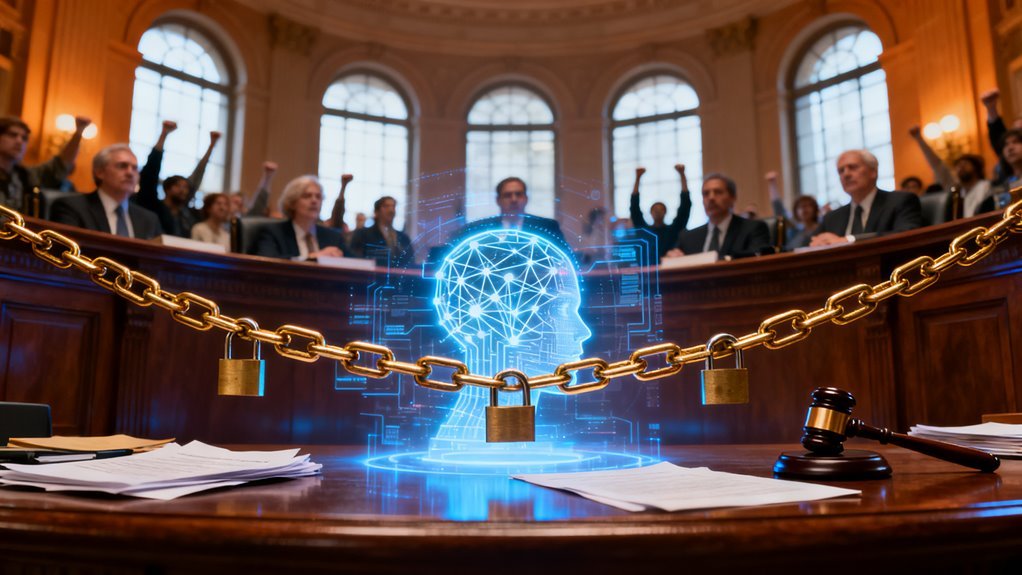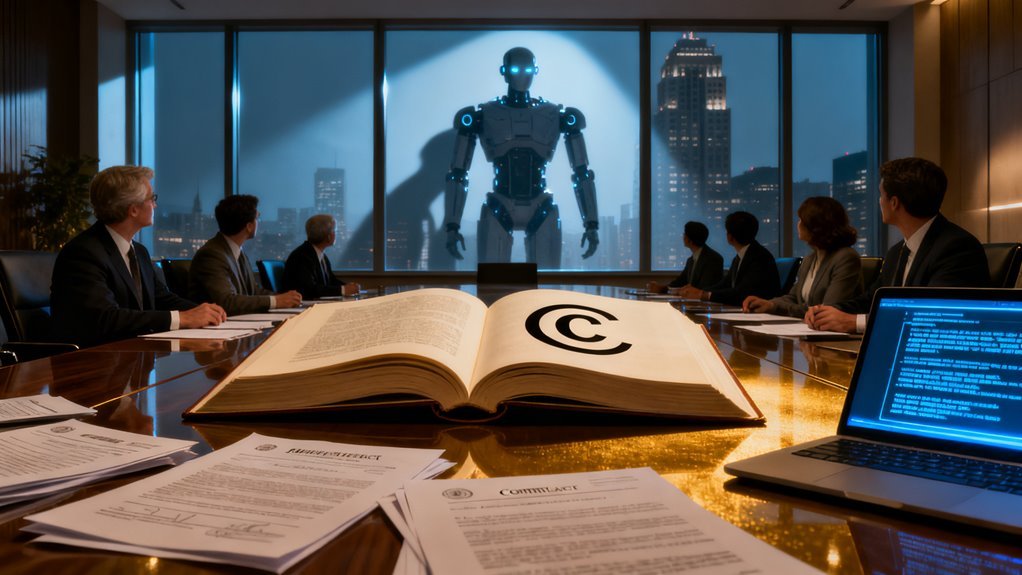

The publishing industry is fighting the last war. While authors, agents and trade organizations pour enormous energy into copyright battles against AI companies, a far more consequential shift is unfolding beneath the surface, one that no amount of litigation will stop.
Yes, the lawsuits matter. The Authors Guild’s case against OpenAI, the class actions targeting Google and Meta, the defensive contract language now showing up in publishing agreements across the industry. These are legitimate efforts to protect intellectual property and establish legal precedent around unauthorized training use. But they address only the question of how AI was built, not what AI is becoming. And that second question is where the real disruption lives.
The Copyright Fight Is a Rearguard Action
The publishing world’s fixation on copyright is understandable. Books are the core product. Training data scraping feels like theft. Courts will eventually sort out the legal boundaries, and some of those rulings may deliver meaningful wins for creators. The New York Times lawsuit against OpenAI has already demonstrated that large language models can reproduce copyrighted material with uncomfortable precision, which strengthens the case for compensation frameworks.
But here is the problem. Even if authors win every single copyright case, even if new licensing regimes channel billions back to creators, the competitive threat from AI generated content does not disappear. It intensifies. The legal victories would actually accelerate the development of models trained exclusively on licensed or synthetic data, removing the last friction point that slowed publishers from embracing AI tools themselves.
Publishing executives privately acknowledge this. Several major houses have already experimented with AI assisted editing, translation, summarization and even drafting. Penguin Random House, HarperCollins and others have updated contracts to address AI, but the language focuses almost entirely on rights and permissions rather than the strategic reality that AI systems are getting genuinely good at producing readable prose.
The Quality Gap Is Closing Faster Than Most People Admit
Two years ago, AI generated fiction was obviously synthetic. Flat characters, repetitive phrasing, weird tonal shifts that any careful reader could spot. That is no longer reliably the case. Claude, GPT 4o and Gemini can produce genre fiction, particularly romance, thriller and science fiction, that passes casual reader inspection. Nonfiction is even further along. Business books, self help guides, technical documentation and reference material can now be generated at a quality level that would have required a competent ghostwriter just 18 months ago.
Amazon’s Kindle Direct Publishing platform has already seen an explosion of AI generated titles. Reports from late 2024 indicated thousands of new listings per day from accounts with suspiciously prolific output. Amazon introduced disclosure requirements, but enforcement remains weak and the economic incentive structure overwhelmingly favors volume.
This is not a hypothetical future problem. It is a present market reality that the industry’s copyright focus has largely obscured.
Who Actually Loses Here
The authors most vulnerable are not the ones filing lawsuits. Bestselling novelists with established audiences and brand recognition will continue to command advances and reader loyalty. The real casualties are midlist authors, debut writers and the vast ecosystem of freelance nonfiction writers whose work occupies the space where AI quality is already competitive.
Consider the economics. A traditional nonfiction book might cost a publisher $50,000 to $150,000 in advances, editing, design and production. An AI assisted or AI generated equivalent could reach comparable quality for a fraction of that cost, delivered in weeks rather than months. For publishers facing margin pressure, the math becomes difficult to ignore regardless of how the copyright cases resolve.
Genre fiction faces similar dynamics. Readers consuming three or four romance novels a week are optimizing for volume and familiar narrative patterns, precisely the territory where AI excels. The emotional depth and genuine surprise of exceptional human storytelling still exceeds what models produce, but “exceptional” is the key word. Most commercially published fiction is competent rather than extraordinary, and competent is exactly where AI has arrived.
What the Industry Is Overlooking
The most consequential oversight is strategic. Publishing has treated AI primarily as a legal adversary rather than a structural transformation. Compare this to how the music industry responded to digital distribution. The initial reaction was lawsuits against Napster and individual file sharers. The lasting solution was Spotify, Apple Music and entirely new business models that the litigation alone never produced.
Publishing needs its Spotify moment, not a streaming platform necessarily, but a genuine reckoning with how value creation changes when the marginal cost of producing readable content approaches zero. What becomes more valuable in that world? Curation, taste, authentic human perspective, cultural authority, community. These are things publishers theoretically provide but have underinvested in for decades.
The Authors Guild and similar organizations deserve credit for fighting on behalf of creators. But fighting for fair compensation from AI training is a different project than preparing authors for a market where AI is a direct competitor on the shelf. Both matter. Only one is getting serious attention.
Where This Goes Next
Expect the copyright cases to produce mixed results over the next 12 to 24 months. Some settlements, some favorable rulings, probably a legislative framework emerging in the EU before the US. These outcomes will shape licensing economics but will not reverse the capability trajectory.
The more interesting question is whether traditional publishers will begin openly using AI in their production pipelines and how transparent they will be about it. The pressure to do so is mounting. Smaller independent publishers and self publishing operations are already there. The major houses will follow, initially in areas like translation, abridgment and supplementary content, eventually moving closer to the core creative product.
For authors, the strategic imperative is building what AI cannot replicate: distinctive voice, genuine expertise earned through lived experience, and direct relationships with readers. The writers who thrive will be those who understand that copyright protection is necessary but insufficient. The real defense is irreplaceability, and that requires a fundamentally different conversation than the one the industry is currently having.
Publishing’s war with artificial intelligence has entered its most litigious chapter yet, and nearly every major battle is being fought on the same narrow strip of legal terrain: who owns what. That focus makes sense. Copyright is the economic backbone of the entire industry, and when companies like Google, OpenAI, and Microsoft feed hundreds of thousands of copyrighted books into their training pipelines without permission, the infringement questions are obvious and urgent.
But the industry’s near total fixation on intellectual property is quietly obscuring a set of risks that could reshape authorship, creative markets, and the economics of publishing far more profoundly than any court ruling on fair use.
The real threat to publishing isn’t piracy — it’s irrelevance in a market machines can flood overnight.
Where the Law Actually Stands
The legal framework in the United States is surprisingly clear on at least one question. Copyright protects original works of human authorship. If a machine produces text without meaningful human creative involvement, that text does not qualify for protection.
The U.S. Copyright Office reinforced this position in 2023 and went further in its Part 2 report on AI, concluding that existing statute is sufficient to address AI assisted works and that no new legislation is needed at this time.
That determination carries practical weight for publishers and authors right now. Works that blend human and AI generated content can still receive copyright protection, but only if the human contribution involves genuine creative selection, coordination, or modification.
Anyone filing for registration through the Electronic Copyright Office system must disclose which portions were produced by AI and which were authored by a person. Get this disclosure wrong, whether through carelessness or intent, and the registration’s validity is at risk. For an industry built on the enforceability of copyright, that is not a minor procedural footnote.
Contracts Are Catching Up, Slowly
The Authors Guild has moved faster than most industry bodies to address the contractual gap. Its model publishing clauses now explicitly cover AI training, text data mining, and machine learning use cases.
The central principle is straightforward: publishers cannot authorize the use of an author’s work for AI training without separate, explicit consent. Authors, in turn, must warrant that their manuscripts are free of infringing AI generated material.
This is a meaningful step, but it also reveals how reactive the industry’s posture has been. These clauses treat AI related rights as a distinct category, separate from traditional print and digital exploitation rights.
That distinction is correct and necessary. But the clauses are largely defensive instruments designed to prevent unauthorized use. They do not address what happens when AI systems become sophisticated enough to generate commercially viable prose that competes directly with the work of human authors, not by copying it, but by producing something functionally equivalent.
The Litigation Wave and Its Limits
The lawsuits tell a similar story. Hachette Book Group, Cengage Learning, and Elsevier have all sued Google over alleged unlawful use of copyrighted books to train its Gemini models.
A coalition of authors has taken aim at Microsoft for reportedly using roughly 200,000 books without authorization. The authors allege that Microsoft’s AI generates output mimicking their syntax and themes, effectively reproducing the distinctive qualities of their creative works without consent. Class actions against OpenAI and Microsoft allege systematic scraping of protected texts on a massive scale.
These cases are important. If courts find that ingesting copyrighted books for model training constitutes infringement rather than fair use, the financial and operational consequences for AI companies would be enormous.
Licensing regimes could emerge. Revenue sharing models could follow. The precedent would ripple across every creative industry.
But here is what the litigation does not touch. Even if publishers win every single case, even if AI companies are forced to license every book they train on, the underlying capability of these models does not diminish. The AI Price War in the broader tech landscape highlights the competitive pressures driving down costs for generative systems.
A language model trained on licensed data can still produce text that competes with human authored books. The copyright fight is about compensation for past and present use of existing works. It says almost nothing about the competitive threat posed by AI systems going forward.
What the Industry Is Overlooking
The gap in the conversation is not subtle. It is structural. Nearly all of the organized energy in publishing, from legal strategy to contract language to lobbying, is directed at the question of whether AI companies can use copyrighted books as training data.
Almost none of it is directed at the question of what happens to the market for human authored books as AI generated content becomes cheaper, faster, and increasingly indistinguishable from professional writing.
Consider the economics. A midlist author might spend a year producing a novel. An AI system, once trained, can generate a manuscript length text in hours.
The quality difference today is real and significant, but the trajectory is clear. Every major foundation model release from OpenAI, Google, Anthropic, and Meta has narrowed the gap in prose quality, narrative coherence, and stylistic range.
Amazon’s Kindle Direct Publishing platform has already seen a flood of AI generated titles, some of which are difficult to distinguish from traditionally authored work without close reading.
This is not a hypothetical future problem. It is already reshaping the bottom of the market. Self published nonfiction, genre fiction, and short form content are the first categories feeling the pressure.
The effects will move upmarket as model capabilities improve.
The Fair Use Question Will Not Resolve the Deeper Tension
Much of the legal debate centers on whether training AI models on copyrighted works qualifies as fair use under U.S. law. The four factor test, which considers the purpose and character of the use, the nature of the copyrighted work, the amount used, and the effect on the market for the original, will drive the outcome.
Google has historically prevailed on fair use arguments, most notably in its decade long fight with Oracle over Java APIs, but the scale and commercial nature of generative AI training may push courts toward a different conclusion.
Even so, fair use rulings operate within a framework designed to balance access with protection. They are not designed to address the broader displacement risk that emerges when AI systems can perform a function previously reserved for human expertise.
Copyright law can determine who owes whom for training data. It cannot determine whether human authorship retains its economic value in a market saturated with machine generated alternatives.
What Comes Next
Several dynamics are worth watching closely.
First, licensing deals between publishers and AI companies are likely to accelerate regardless of how litigation plays out. The economic logic favors settlement. AI companies want legal certainty and access to high quality training data.
Publishers want revenue. The terms of these deals, particularly around exclusivity, pricing, and the right to create derivative works, will shape the industry’s relationship with AI for years.
Second, the disclosure requirements around AI generated content in copyright registration are likely to tighten. The Copyright Office has signaled a willingness to enforce transparency, and as AI generated text becomes more common in published works, the pressure to draw clear lines will intensify.
Expect more granular guidance on what constitutes “meaningful human input” and what does not.
Third, the Authors Guild and similar organizations will need to expand their focus beyond rights protection. The contractual frameworks being developed today are necessary but insufficient.
The industry needs to grapple with market structure questions: how to differentiate human authored work in a crowded marketplace, how to build consumer trust in authorship claims, and how to preserve the economic viability of professional writing as production costs for AI generated content approach zero.
Finally, the regulatory environment outside the United States matters enormously. The European Union’s AI Act and its copyright directive take a different approach to text and data mining, with opt out mechanisms for rights holders and stricter transparency requirements for AI developers.
As global publishing operates across jurisdictions, the interaction between U.S. and EU frameworks will create compliance complexity and strategic opportunity in roughly equal measure.
The Uncomfortable Truth
The publishing industry’s instinct to fight on copyright grounds is correct but incomplete. Winning the intellectual property battle is necessary to ensure that authors and publishers are compensated when their work feeds the training of commercial AI systems.
But compensation for past use does not guarantee future relevance. The harder question, and the one the industry has barely begun to address, is how human authorship competes in a world where machines can produce passable prose at negligible cost.
That question will not be answered in court. It will be answered in the market, in the choices readers make, in the business models publishers adopt, and in the cultural value society assigns to the act of human creation.
The legal fights underway today are important. They are also, in the long run, the easier part of the problem.