

The Real Shift in AI Is Not Intelligence. It Is Independence.
For years, the conversation around artificial intelligence centered on capability. Could a model write better code? Could it summarize a legal document? Could it generate an image that looked convincingly real? Those questions mattered, but they belonged to a specific era, one defined by tools that waited for instructions and returned outputs for humans to evaluate. That era is ending faster than most organizations realize.
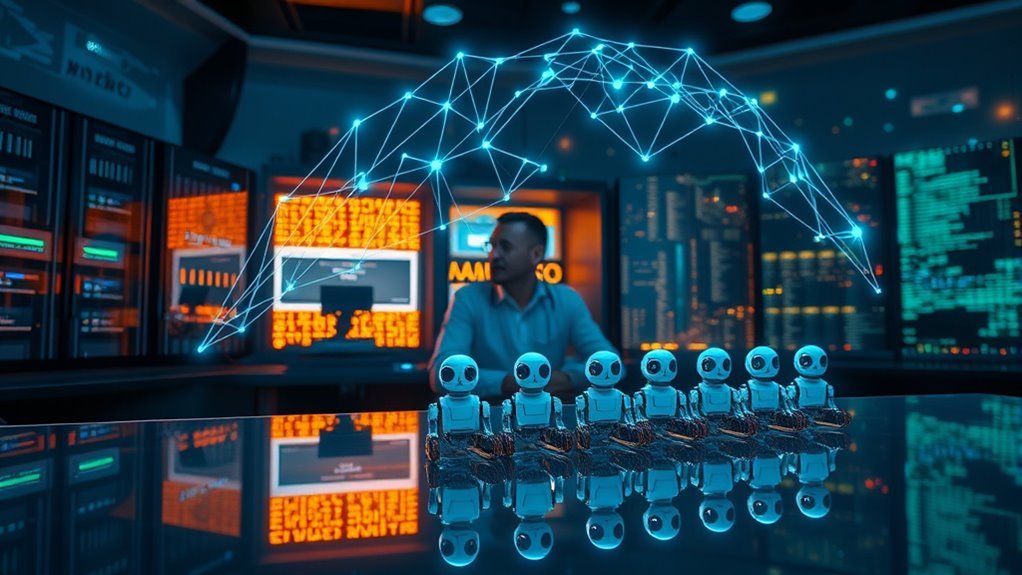
What is replacing it looks fundamentally different. AI systems are no longer sitting idle between prompts. They are operating as persistent agents inside enterprise workflows, perceiving their environments, making sequential decisions, executing tasks across multiple applications, and correcting their own mistakes without a human ever entering the loop. This is not a marginal upgrade to chatbot technology. It represents a structural change in how software operates inside businesses, and it carries implications that extend well beyond the engineering teams building these systems.
From Copilot to Coworker
The distinction between AI as a tool and AI as an autonomous agent is not semantic. It is architectural. A tool responds to a single request and delivers a single output. An agent operates within what engineers call a state machine, a structured framework where the system tracks where it is in a process, decides what to do next, evaluates outcomes, and loops back when something goes wrong.
Think of the difference between asking a language model to draft an email and deploying an agent that monitors incoming customer support tickets, classifies them by urgency, pulls relevant account data from a CRM, drafts context-aware responses, routes edge cases to the right human team, and logs every action for compliance purposes. The second scenario involves dozens of decisions, multiple integrations, and real time adaptation. No single prompt gets you there.
This is where agentic AI sits today. Companies like Salesforce, ServiceNow, and Microsoft are embedding agent architectures into their platforms. OpenAI, Anthropic, and Google are all building the reasoning infrastructure that makes this possible. The race is no longer about who has the best foundation model. It is about who can operationalize intelligence inside the messy, interconnected reality of enterprise software.
Why Now and Not Two Years Ago
Several forces converged to make this moment possible. The first is reasoning quality. Models from late 2022 and early 2023 could generate fluent text, but they struggled with multi-step logic, sequential planning, and reliable self-evaluation. The latest generation of models from OpenAI, Google, and Anthropic have improved dramatically on these dimensions. Chain of thought prompting, tool use, and function calling have matured from research experiments into production-ready capabilities.
The second force is infrastructure. Orchestration frameworks like LangChain, CrewAI, and Microsoft AutoGen have given developers practical scaffolding for building multiagent systems. These frameworks handle the plumbing that makes agent coordination possible: memory management, tool selection, inter-agent communication, error handling, and human-in-the-loop checkpoints when needed.
The third, and arguably most important, force is economic pressure. McKinsey research suggests that up to 50 percent of current work activities across industries are technically automatable using existing multiagent approaches. When interest rates are high, headcount is expensive, and growth expectations remain aggressive, the business case for autonomous workflows stops being theoretical.
What This Actually Changes
The practical impact breaks down across several layers.
For enterprise technology teams, the shift to agentic systems changes the nature of integration work. Instead of building point-to-point connections between applications, teams now need to design orchestration layers where agents can discover tools, request permissions, and coordinate with other agents. This is closer to building an operating system than wiring together APIs.
For software vendors, the competitive landscape is being redrawn. Products that cannot expose their functionality to AI agents will lose relevance. The API economy, which already reshaped SaaS over the past decade, is entering a new phase where the primary consumer of your API may not be a human developer but an autonomous system making decisions in milliseconds.
For workers, the picture is more nuanced than most headlines suggest. Routine, rules-based tasks are the first to be absorbed. But agents also create new categories of work. Someone needs to design agent workflows, define guardrails, audit decisions, handle exceptions, and manage the governance layer that prevents these systems from doing things they should not do. The net effect on employment will vary dramatically by industry, role, and geography.
The Governance Gap Nobody Wants to Talk About
Here is where the conversation gets uncomfortable. Most organizations adopting agentic AI are doing so without adequate governance frameworks. When a human uses a chatbot, accountability is clear. The human made the decision. When an agent autonomously processes a refund, escalates a security incident, or modifies a database record, the accountability chain becomes blurry.
Regulatory bodies in the EU, through the AI Act, and in the United States through sector-specific guidance from agencies like the SEC and FDA, are beginning to address this. But the regulatory frameworks are designed for a world where AI assists humans, not one where AI acts independently. That gap will widen before it closes.
The companies that get governance right early will have a significant competitive advantage, not because regulators demand it, but because enterprise customers will refuse to deploy agent systems they cannot audit, explain, and control. Trust is the real bottleneck for adoption, not technology.
Who Benefits, Who Loses, and What People Are Missing
The immediate winners are platform companies and infrastructure providers. Microsoft, with its deep Copilot integration across Office, Dynamics, and Azure, is positioned to capture an enormous share of enterprise agent spend. Salesforce is making a similar bet with Agentforce. NVIDIA benefits regardless of which software layer wins, because agent workloads are computationally intensive.
Startups building vertical agent solutions for specific industries, think healthcare administration, legal discovery, logistics coordination, have a window of opportunity. But that window will narrow as platform companies expand their own agent ecosystems.
The losers, at least in the medium term, are companies selling workflow automation that depends on rigid, rule-based logic. Traditional RPA vendors face an existential challenge. Agents that can reason, adapt, and self-correct make brittle automation scripts look like relics from another era.
What most people are overlooking is the compounding effect. A single agent automating a single process is useful. A network of agents coordinating across departments, learning from shared context, and optimizing entire value chains is transformative. We are at the beginning of that compounding curve, and the distance between where we are now and where this leads in three to five years is easy to underestimate.
The Road Ahead
The transition from experimental AI tools to autonomous workflows will not happen overnight, and it will not happen evenly. Heavily regulated industries will move slower. Companies with clean data architectures will move faster. Organizations that invested in API-first strategies over the past decade will find themselves better prepared than those still running on legacy monoliths.
But the direction is clear. AI is graduating from an assistant you consult into an actor that operates. That changes the economics of labor, the architecture of software, the meaning of integration, and the requirements for trust. The companies, developers, and policymakers who understand this shift for what it is, not an incremental improvement but a structural transformation, will be the ones who shape what comes next.
Under the surface of every major platform shift happening right now sits a technical reality that most coverage glosses over. The architecture driving this transformation is not about better chatbots or smarter autocomplete. It is about agentic AI systems built to perceive their environment, develop plans, execute actions, and then evaluate whether those actions actually worked. That feedback loop changes everything about how software operates inside an organization.
Think of these systems as reasoning engines running inside structured state machines. They do not simply generate a response and move on. They execute multi-step workflows, check their own outputs against defined criteria, adjust course in real time, and maintain awareness of what is happening across the broader process. Gartner has started framing these as generative workflow systems, a label that captures something important. The generative part is not the point. The workflow orchestration is. These systems dynamically coordinate processes across enterprise applications, stitching together actions that previously required a human to bridge the gap between one software tool and the next.
The generative part is not the point. The workflow orchestration is.
What makes the current moment genuinely different from earlier waves of automation is the shift toward multiagent architectures. Instead of a single AI model doing one thing well, organizations are deploying architectures comprising hundreds or even thousands of specialized agents. Each one handles a narrow function. Collectively, they communicate with internal databases, external APIs, and each other to complete end-to-end processes that used to require entire teams of people following rigid procedures. This is not theoretical. It is the emerging standard for serious enterprise automation, and it makes the robotic process automation tools that dominated the last decade look like duct tape.
The numbers back this up. McKinsey’s research suggests that as much as 50 percent of enterprise workflows can be automated with current AI capabilities. That is not a projection about some future model. That is an assessment of what today’s technology can handle if organizations actually deploy it. Real world results are already showing up in specific domains. Generative AI agent orchestration has cut legacy code modernization timelines nearly in half, a task that has historically been one of the most painful, expensive bottlenecks in enterprise IT. A May 2025 PwC survey confirms the momentum, finding that 79% of organizations already run AI agents in production environments.
But the more interesting trajectory is where this leads. No-code platforms were supposed to be the great democratizer. Now practitioners are already talking about “no-task” paradigms, where autonomous systems do not need anyone to define the task structure at all. The system figures out what needs to happen, breaks it into steps, and executes. If that sounds like a jump, consider how quickly we moved from prompt engineering being a novelty to agents booking flights and filing expense reports without human input. The pace of capability expansion in agentic systems is compressing timelines that the industry expected to play out over years.
What this creates, in practical terms, is something closer to a digital nervous system. Autonomous workflow orchestration connects processes from end to end, replacing the brittle, rule-based automation that broke every time someone changed a form field or updated an API endpoint. The old approach required constant maintenance because it encoded specific steps. The new approach encodes goals and lets the system figure out the steps, which means it adapts when conditions change rather than failing silently.
The organizational consequences are already forcing difficult conversations in boardrooms. Technology leaders across industries are building human-AI collaborative models that go well beyond using AI as a productivity supplement. The structural shift is toward what some are calling skills-centric organizations, where AI workers and human teams co-operate across enterprise domains. That language matters. It is not about AI helping humans do their jobs. It is about redefining what constitutes a team member and what constitutes a task.
For technology professionals watching this unfold, the strategic question has moved past adoption. Nobody serious is still debating whether autonomous workflows will become standard. The open question, and the one that will determine winners and losers over the next several years, is governance. How do you architect oversight for systems that dynamically decide what to do? How do you audit a process that was never explicitly defined by a human? How do you assign accountability when an agent network makes a decision that crosses departmental or even organizational boundaries?
These are not hypothetical concerns. They are the engineering and policy challenges that will define the next phase of enterprise AI. The companies that solve governance well will scale these systems with confidence. The ones that do not will either move too slowly and lose competitive ground, or move too fast and face the kind of failures that erode trust in the technology itself. Either outcome reshapes markets. The middle ground is disappearing fast.







3 comments
Comments are closed.