
The White House Just Redefined How America Governs AI, and Most People Missed the Real Story
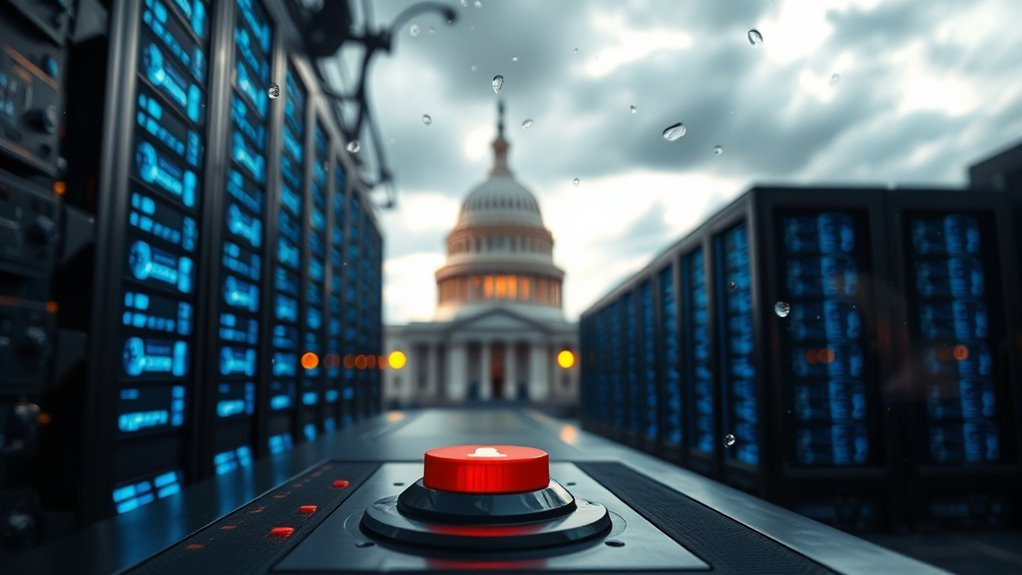
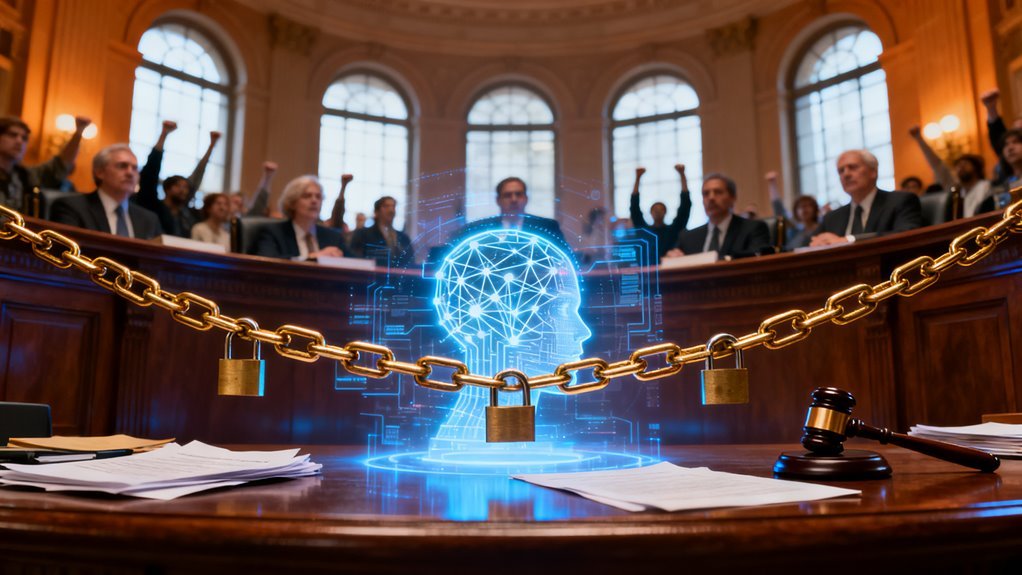
Washington’s latest move on artificial intelligence looks, at first glance, like another round of voluntary commitments from the same handful of companies that have been making voluntary commitments since 2023. Look closer and something genuinely different is happening. The Biden and now Trump era tension between regulating AI and winning the AI race has produced a framework that is neither regulation nor deregulation. It is something new: a federal endorsement system that uses market incentives instead of legal mandates to shape how frontier models reach the public.
The framework establishes a structured review process where AI developers can submit their most capable models for classified government benchmarking before public deployment. In exchange, companies receive what amounts to a federal seal of approval and, critically, preferred access to government procurement pipelines. No company is required to participate. But the incentives are designed so that not participating carries its own cost.
What Actually Changed
Previous White House efforts on AI safety relied on public pledges. The voluntary commitments secured in July 2023 from OpenAI, Google, Anthropic, Meta, Microsoft, Amazon and Inflection AI were essentially promises to watermark AI generated content, share safety research and conduct internal red teaming. Those commitments had no enforcement mechanism, no verification process and no tangible reward for compliance.
This new framework adds teeth through economics rather than law. Government procurement represents an enormous market. Federal agencies spent more than $10 billion on AI related contracts in the last fiscal year, and that number is climbing rapidly. Telling AI labs they can fast track access to that spending by voluntarily submitting to pre-release evaluation changes the calculus entirely. It transforms safety review from a cost center into a business development advantage.
The classified benchmarking component is particularly significant. By conducting evaluations under national security classification, the government can test models against sensitive threat scenarios, including biosecurity risks, cyber offense capabilities and weapons design knowledge, without publicly revealing the specific failure modes it discovers. This addresses a genuine tension that has plagued open safety research: publishing detailed capability evaluations can itself serve as a roadmap for misuse.
Why This Approach, Why Now
Two forces converged to produce this specific framework at this specific moment.
The first is China. The competitive dynamics of frontier AI development have made any proposal that could slow American labs politically toxic in Washington. Mandatory pre-deployment licensing, the approach favored by parts of the European Union, has essentially zero support among either party in Congress right now. The administration needed something that could credibly claim to advance safety without adding delays to deployment timelines.
The second force is the rapid consolidation of real capability at the frontier. A year ago, the gap between the most capable models and everything else was relatively narrow. Today, the distance between GPT-4 class systems, Claude 3.5, Gemini Ultra and the next tier has widened considerably. The number of organizations capable of building genuinely frontier models is small enough that a framework targeting them specifically is actually feasible. You cannot regulate ten thousand developers this way. You can work directly with six or eight.
This also explains the timing relative to the broader regulatory landscape. The EU AI Act is moving into its implementation phase. China has already imposed its own generative AI regulations. The United States has been the notable holdout among major AI powers, relying on executive orders that carry limited durability. This framework represents the administration’s bet that a procurement-linked incentive structure can accomplish what legislation has not.
Who Benefits, Who Loses
The immediate winners are the largest AI labs. OpenAI, Anthropic, Google DeepMind and a small number of others have the resources, the security infrastructure and the institutional relationships to navigate a classified federal review process. For them, this framework is a competitive moat disguised as a safety initiative. Every model that passes government benchmarking earns not just reputational credibility but tangible commercial advantage in one of the fastest growing procurement markets in the world.
Smaller AI companies and open source developers face a different equation. The framework is voluntary, so it does not directly restrict their ability to ship products. But it creates a two-tier market. Models with government endorsement will carry implicit trustworthiness that unendorsed models lack. Enterprise buyers, already cautious about AI liability, will gravitate toward endorsed options. Over time, this dynamic could informally standardize what “safe enough” means in ways that favor incumbents.
The open source community should watch this carefully. Nothing in the current framework prevents open weight model releases. But if government endorsed models become the de facto standard for sensitive applications in healthcare, finance, defense and critical infrastructure, the practical market for uncertified alternatives narrows. This is not a ban. It is a gravitational pull.
What People Are Overlooking
Most coverage has focused on whether voluntary frameworks work. That debate, while valid, misses the more interesting structural question: what happens when the federal government becomes a ratings agency for AI models?
Financial markets offer an instructive parallel. Credit rating agencies like Moody’s and Standard & Poor’s operate as private entities, and their ratings are technically opinions rather than regulations. Yet their assessments became so embedded in institutional decision making that they effectively function as gatekeepers. A similar dynamic could emerge here. If federal benchmarking results influence not just procurement but also insurance underwriting, corporate governance standards and downstream regulatory expectations at the state level, the “voluntary” label becomes somewhat academic.
There is also the question of what classified benchmarking actually measures. The government’s evaluation criteria are not public. Labs that submit models will receive feedback, but the specific thresholds for passing or failing remain opaque. This creates an information asymmetry that favors the government’s priorities, which may not always align with what independent safety researchers consider most important. National security concerns and broad societal risks from AI are related but not identical, and a framework optimized for the former may underweight the latter.
The Competitive Intelligence Dimension
Something rarely discussed in public: submitting a frontier model for classified government evaluation means giving federal agencies deep access to that model’s capabilities and limitations before anyone else sees them. For AI labs, this is a trade with real costs. The intelligence community gains early insight into what the next generation of commercial AI can do. That knowledge has strategic value far beyond safety evaluation.
Labs will weigh this carefully. Anthropic, which has positioned itself as the safety-first frontier lab, is a natural early participant. OpenAI, with its deepening ties to government through Microsoft’s defense contracts, has strong incentives to engage. Google, already embedded in federal cloud infrastructure, will likely follow. The more interesting question is whether any lab declines to participate and what message that sends.
Where This Goes Next
Three developments to watch in the next twelve to eighteen months.
First, expect pressure to extend this framework beyond frontier models. Once a benchmarking infrastructure exists, the temptation to apply it more broadly will be significant. Fine-tuned models, domain-specific applications and AI agents that take autonomous actions could all eventually fall within scope. The framework’s voluntary nature makes expansion politically easier than it would be for formal regulation.
Second, watch for international coordination attempts. If American labs are submitting to federal review and European labs are complying with the EU AI Act, there will be growing pressure to create mutual recognition agreements. The alternative is a fragmented global landscape where the same model requires different safety certifications in different jurisdictions. That fragmentation would be expensive and could slow deployment in ways that the current framework is specifically designed to avoid.
Third, pay attention to what happens with procurement data. Once the government begins systematically evaluating frontier models, it will accumulate a dataset of comparative capability assessments that has no private sector equivalent. How that data is used, shared or classified will shape the information landscape around AI safety for years.
The Bigger Picture
Strip away the policy specifics and this framework reveals something important about where AI governance is heading globally. The era of purely voluntary commitments is ending. The era of comprehensive legislation, at least in the United States, has not begun and may never arrive in the form that advocates originally envisioned. What is emerging instead is a middle path built on institutional incentives, market access and information control rather than explicit mandates.
Whether that path leads to meaningfully safer AI development depends on execution details that remain unclear. A well-run benchmarking program with rigorous standards could catch dangerous capabilities before they reach the public. A poorly run one could become a rubber stamp that gives false comfort while the most consequential risks go unaddressed.
For now, the framework exists as architecture without much content. The walls are up but the furniture has not arrived. What fills those rooms over the coming months, which labs participate, what standards are applied, how results are communicated and whether any model actually fails a review, will determine whether this becomes a genuine inflection point in AI governance or another well-intentioned Washington initiative that fades into background noise.
The smart money says it will land somewhere in between. And in a policy space defined by extremes, that might be exactly what the moment requires.
The United States now has something it has never had before: a structured, federal level process for reviewing the safety of advanced AI models before they reach the public. But the most consequential word in that entire framework is “voluntary.” And depending on where you sit in the AI ecosystem, that single word is either a pragmatic masterstroke or a dangerous abdication of responsibility.
The most powerful word in America’s new AI safety architecture isn’t “safety.” It’s “voluntary.”
A series of interconnected policy actions throughout the first half of 2026 assembled what amounts to a national AI safety architecture. An executive order in early June laid the groundwork by directing modernization of government IT systems and hardening federal defenses against AI enabled cyberattacks. By August, the White House had completed a voluntary oversight framework that gives frontier AI developers a formal channel to submit models for government cybersecurity evaluation before public release. A companion document released back in March provided legislative recommendations urging Congress to create a unified federal regulatory regime that would override the growing tangle of state level AI rules.
Taken as a package, this is the most comprehensive attempt by any U.S. administration to define the government’s relationship with frontier AI development. But the architecture tells a very specific story about the philosophy driving it, and understanding that philosophy is essential to understanding where this is all headed.
The Deliberate Choice Not to Regulate
The most revealing aspect of this framework is what it deliberately avoids. There is no new federal AI agency. There is no mandatory pre-deployment review process. There is no licensing requirement for training large models. Instead, the administration opted for what officials describe as a “light touch” approach that channels oversight through existing sector specific regulators and leans heavily on industry led standards.
This is not accidental. It reflects a calculation that the competitive dynamics of the AI race, particularly with China, make restrictive regulation too costly. The administration has essentially decided that the greater risk lies in slowing American AI development rather than in under-regulating it. Whether that calculation proves correct will likely be debated for years.
For context, compare this with the European Union’s AI Act, which entered its phased enforcement period in 2025 and imposes mandatory requirements on high risk AI systems, including conformity assessments before market placement. The philosophical gap between Washington and Brussels has never been wider. Europe chose binding rules enforced by dedicated authorities. The U.S. chose structured conversations backed by nothing more than reputational incentive.
What the Voluntary Review Process Actually Looks Like
The centerpiece of the August framework deserves close examination because the details matter more than the headlines suggest.
Under this system, developers of frontier AI models can submit their systems to the federal government days before public launch. The government then runs those models through a classified benchmarking system designed to assess cybersecurity capabilities. Models that pass evaluation can be distributed to federal agencies and select partners through what appears to be a vetted pipeline.
Several things about this design are worth noting. First, the benchmarking system is classified, which means outside researchers and civil society groups cannot independently verify what the government is actually testing for or how rigorous those tests are. This creates a transparency problem that the AI safety research community will almost certainly push back against.
Second, the incentive structure is cleverly designed even if it lacks legal teeth. Companies that participate get something valuable: a de facto government endorsement of their model’s security posture, plus potential access to federal procurement channels. For a company like Anthropic or OpenAI that sells heavily into enterprise and government markets, that stamp of approval carries real commercial weight. For a smaller lab or an open source project, the calculus is entirely different.
Third, the framework covers pre-deployment and post-deployment engagement, which suggests the government is building something closer to an ongoing relationship with frontier labs rather than a one-time checkpoint. Officials from the Office of the National Cyber Director presented drafts directly to companies in private meetings, a process that looks less like rulemaking and more like negotiated partnership.
The Pre-emption Play Is the Sleeper Story
While the voluntary review framework grabbed most of the attention, the March policy document’s recommendation to Congress may ultimately prove more consequential. The administration explicitly urged lawmakers to create a unified federal AI regulation regime that would pre-empt state level rules.
This is the sleeper story. Over the past two years, states have moved aggressively to fill the federal vacuum on AI governance. California’s proposed legislation around frontier model safety, Colorado’s AI discrimination law, and various state level deepfake and transparency requirements have created exactly the kind of regulatory patchwork that large technology companies find operationally painful and strategically threatening.
A federal pre-emption framework would effectively reset the board. Companies would deal with one set of rules instead of fifty. But it would also strip states of the ability to impose stricter protections, which is why consumer advocacy groups and state attorneys general are likely to oppose pre-emption fiercely.
The political dynamics here are tricky. Federal pre-emption of state AI laws does not map neatly onto traditional partisan lines. Business oriented Republicans generally favor it, but states’ rights arguments cut the other direction. Democrats who support stronger AI regulation might prefer state experimentation to a weaker federal floor. Getting pre-emption legislation through Congress will require threading a very narrow needle.
Who Benefits and Who Gets Left Out
The architecture of this framework creates clear winners. Large frontier AI labs with the resources and legal sophistication to engage with federal review processes stand to benefit most. The voluntary system essentially offers them a competitive moat: government validated safety credentials that smaller competitors cannot easily replicate. If you are Anthropic, Google DeepMind, or OpenAI, this framework formalizes a direct line to the government that reinforces your position at the top of the market.
Defense and intelligence adjacent AI companies also come out ahead. The classified benchmarking pipeline and the distribution channel for vetted models to federal agencies looks like it could become a significant procurement pathway over time.
The entities with more reason for concern are open source AI developers, academic researchers, and smaller startups. The framework’s emphasis on engagement with “leading AI developers” and its reliance on classified evaluation tools creates an inherently exclusive process. Open source models, by their nature, do not have a corporate entity that sits in White House meetings and submits systems for pre-launch review. The framework does not appear to account for the decentralized way that open source AI actually develops and deploys.
Civil liberties organizations face a mixed picture. The inclusion of child safety protections and privacy measures, particularly age assurance requirements and tools for managing minors’ digital environments, addresses long standing advocacy priorities. But the overall reliance on voluntary cooperation rather than enforceable standards gives these groups limited leverage if companies choose not to participate.
The NIST Foundation and What It Signals
One technically significant detail is the incorporation of the NIST AI Risk Management Framework into the safety protocols for critical infrastructure operators. This is not a new development exactly. NIST published its AI RMF in January 2023 and has been iterating on it since.
But embedding it formally into a presidential policy package elevates it from a voluntary technical reference to something closer to a de facto national standard. For companies operating in critical infrastructure sectors like energy, healthcare, financial services, and telecommunications, this effectively makes the NIST AI RMF the baseline expectation for AI risk management, even without a formal legal mandate. Moreover, the risks associated with AI agent incidents are rapidly increasing, necessitating strict adherence to these frameworks.
Sector specific regulators now have a concrete framework to point to when they examine how organizations under their jurisdiction are managing AI risk. The practical effect is that compliance teams at large enterprises should be treating the NIST AI RMF as required reading if they are not already.
Energy Policy as AI Policy
Buried in the legislative recommendations is a detail that speaks to how thoroughly AI has reshaped infrastructure planning: streamlined permitting for energy intensive data centers. This is the administration acknowledging what the industry has known for over a year.
The biggest constraint on AI scaling is not algorithmic. It is electrical. The power demands of training and inference for frontier models have turned energy policy into AI policy. Microsoft’s deal with Constellation Energy to restart Three Mile Island’s Unit 1 reactor, Amazon’s nuclear investments, and the scramble for grid capacity near major data center clusters have made this one of the defining business stories in AI.
By including permitting reform in an AI safety framework, the administration is signaling that it views energy access as a national security issue tied directly to AI competitiveness.
What Comes Next
Several things are worth watching closely in the months ahead.
First, adoption rates for the voluntary review process will be the most important early signal. If all major frontier labs participate, the framework gains legitimacy through practice even without legal force. If one or two significant players decline, the entire edifice weakens.
Second, Congressional action on pre-emption will determine whether the patchwork of state AI laws solidifies into a permanent feature of the regulatory landscape or gets replaced by a federal standard. The lobbying battle on this front is already intense and will only escalate.
Third, the classified nature of the government’s benchmarking system will face scrutiny. At some point, the AI safety research community will demand transparency about what exactly is being tested and whether the evaluations are sufficiently rigorous. A classified system that nobody outside government can audit is a hard sell to researchers who have spent years arguing that AI safety requires open, reproducible evaluation methods.
Fourth, the international dimension cannot be ignored. The gap between the U.S. voluntary approach and the EU’s mandatory framework creates real friction for companies operating globally. It also raises questions about whether international AI governance standards can converge when the two largest democratic technology economies have chosen fundamentally different philosophies.
Fifth, the government’s parallel effort to stand up an AI cybersecurity clearinghouse for vulnerability management could become the operational backbone that gives the voluntary framework real substance, providing a centralized mechanism for identifying and addressing AI-specific security flaws across both public and private sectors.
What we are watching is the U.S. government attempting to build trust based AI governance at exactly the moment when the technology is advancing fast enough to make trust difficult to verify. The framework is sophisticated, politically astute, and carefully designed to avoid alienating the industry it seeks to oversee.
Whether it is sufficient to manage the actual risks of frontier AI systems is a question that no voluntary framework can answer on its own. The answer depends entirely on whether the companies at the center of this technology choose to treat safety as a genuine priority or merely as a compliance exercise they can opt into when convenient.
That distinction will define the next chapter of AI governance in America. And right now, nobody can say with certainty which way it will go.