Demis Hassabis Takes New Top AI Role at Google
Google just made one of the most consequential leadership changes in its history, and it has nothing to do with search.
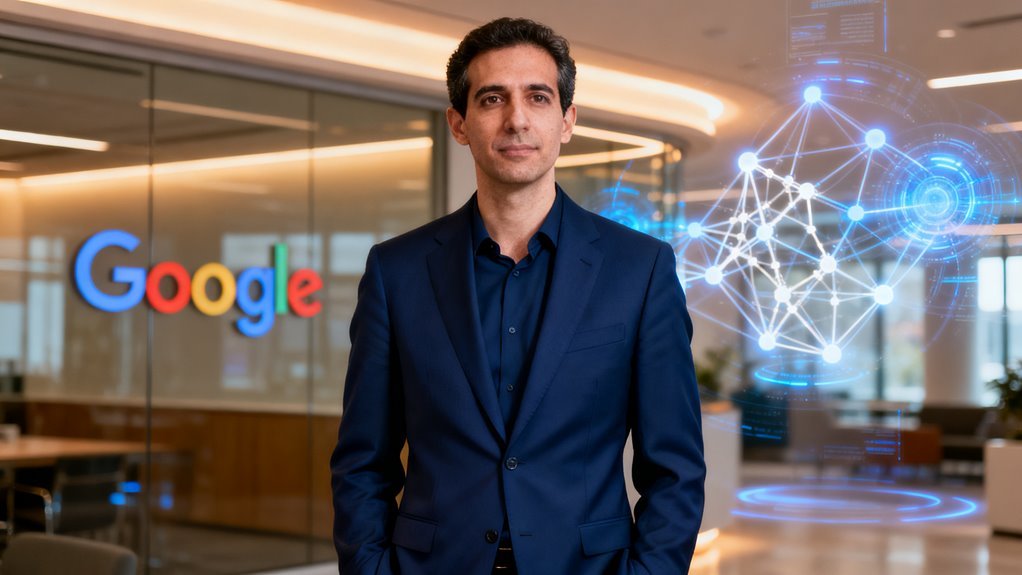
Demis Hassabis, the co-founder of DeepMind who built the lab that cracked protein folding and defeated the world champion at Go, is stepping up to become Chair of Google DeepMind and Chief Scientist of Alphabet. On the surface, this looks like a promotion. Look closer, and it reveals something more interesting about where Google thinks the real value lies in its AI bet.
The shift means Hassabis will no longer run daily operations. Instead, he is moving into a role explicitly focused on long-term scientific goals, with the pursuit of Artificial General Intelligence sitting at the center of that mandate. Koray Kavukcuoglu, a longtime DeepMind veteran who has led much of the technical research behind Gemini, steps in as Senior Vice President of Google DeepMind, reporting directly to Sundar Pichai. Jeff Dean, who served as Google’s Chief Scientist and was once considered the soul of the company’s engineering culture, is leaving the company entirely.
That last detail deserves attention. Dean was not a figurehead. He was instrumental in building the infrastructure that powers modern machine learning, from TensorFlow to the TPU chips that give Google its computational edge. His departure signals that Google is consolidating its AI leadership around the DeepMind lineage rather than maintaining a dual power structure between Brain and DeepMind, a tension that existed since the two groups merged in 2023.
What This Really Means
There is a pattern in how large technology companies handle their most important research leaders. When someone gets elevated to “Chief Scientist” or given a title with the word “Chair” in it, the cynical reading is that they are being kicked upstairs. Moved away from the levers of power so that someone more operationally minded can ship products faster.
But that reading does not hold here. Hassabis won the Nobel Prize in Chemistry last year for AlphaFold. He is not being sidelined. He is being freed.
Google appears to be making a deliberate bet that the most valuable thing Hassabis can do is not manage headcount and product timelines. It is to think about what comes next after large language models plateau. The creation of a dedicated role focused on AGI research, with Alphabet-level authority rather than just Google DeepMind-level scope, suggests the company believes the path to transformative AI requires someone operating above the quarterly rhythm of product releases.
Kavukcuoglu, meanwhile, inherits the harder job in many respects. He has to keep Gemini competitive against OpenAI’s GPT models, manage the integration of AI across Google’s product suite, and maintain research output, all while his predecessor is working on problems that may not pay off for years.
The Broader Industry Signal
This restructuring arrives at a moment when every major AI lab is grappling with the same question: how do you balance the pressure to commercialize current models with the need to pursue fundamental breakthroughs?
OpenAI essentially split itself in two to answer this, creating a for-profit arm and maintaining its research mission (however imperfectly). Anthropic has tried to bake safety research into its commercial DNA from the start. Meta keeps Yann LeCun in a Chief AI Scientist role while FAIR operates somewhat independently from the product teams building Llama into Instagram and WhatsApp.
Google’s answer is now the clearest it has ever been. The company is creating an explicit separation between the person responsible for pushing the frontier of what AI can do and the person responsible for turning today’s AI into revenue. Both roles report to Pichai, but they pull in fundamentally different directions by design.
Whether this works depends on something that is notoriously difficult to manage inside large corporations: protecting a long-term research vision from the gravitational pull of short-term business needs. Hassabis will have the title and the mandate. The real test is whether he will have the sustained resources and institutional patience that AGI-scale research demands.
Why Jeff Dean’s Exit Matters More Than It Seems
Dean’s departure is the part of this story that will probably get the least coverage and deserves the most. For over two decades, he represented a particular tradition at Google, one where engineering excellence and scientific curiosity coexisted within the same person, applied directly to products that billions of people used.
His exit means Google no longer has a senior technical leader whose identity is rooted in the original Google Brain culture. The company’s AI future now runs entirely through the DeepMind lineage. That is not inherently good or bad, but it is a decisive choice. DeepMind’s intellectual tradition is rooted in reinforcement learning, neuroscience-inspired architectures, and a particular vision of how intelligence works. Google Brain brought a different sensibility, one more focused on scalable systems and practical machine learning tooling.
Consolidating around one intellectual tradition always carries risk. It sharpens focus, but it can also narrow the aperture of what a research organization considers worth exploring.
Looking Forward
The most important question this restructuring raises is not about org charts. It is about timelines. By giving Hassabis an AGI-focused mandate at the Alphabet level, Google is implicitly communicating that it believes transformative AI is close enough to warrant this kind of structural commitment. Not five-year-plan close. Close enough that the person working on it needs to be untethered from everything else, right now.
That conviction, more than any product launch or benchmark result, may be the most significant signal Google has sent about where it thinks the AI field is heading.
Google just made the kind of move that only makes sense if you understand what’s really happening in the AI race. On the surface, Demis Hassabis giving up day-to-day control of Google DeepMind looks like a demotion. It isn’t. It’s closer to the opposite.
Hassabis didn’t lose power. He traded the grind for something rarer: freedom to shape what comes next.
The reshuffle announced on August 5, 2026 splits Hassabis into two roles: Chair of Google DeepMind and Chief Scientist of Alphabet, a position that didn’t exist until now. Koray Kavukcuoglu, his longtime deputy, takes over operational leadership as Senior Vice President. Jeff Dean, one of the most respected names in the history of Google engineering, is out entirely.
That last detail is the one people should pay attention to.
What Actually Changed
Hassabis built DeepMind into arguably the most important AI research lab in the world. AlphaFold solved protein structure prediction, a problem that had stumped biologists for half a century, and it won him a Nobel Prize in Chemistry in 2024. Under his leadership, DeepMind produced Gemini, the model family now central to Google’s entire product strategy. The man has nothing to prove operationally.
But running a research organization at Google’s scale means sitting in meetings about compute allocation, managing headcount, dealing with product integration timelines, and navigating internal politics with other Google divisions. That’s the work Kavukcuoglu now inherits.
Hassabis gets something far rarer: permission to think longer term, with the authority to act on it. The Chief Scientist of Alphabet title is specifically designed to span the entire company, not just DeepMind. That’s a meaningful distinction.
It means Hassabis can influence AI direction at Waymo, at Verily, at Google Cloud, at whatever Alphabet cooks up next. He described it on X as a chance to focus on accelerated scientific breakthroughs, which sounds like corporate speak until you remember this is the person who actually delivered on that exact promise with AlphaFold. Hassabis has said he has dedicated his life to achieving Artificial General Intelligence, making this new role a natural extension of that mission. This shift aligns with the growing emphasis on AI transparency laws that address public concerns about synthetic content.
The Kavukcuoglu Appointment Tells You Something
Kavukcuoglu isn’t a placeholder. He has been at DeepMind since 2013 and held the CTO and Chief AI Architect titles before this promotion. He reports directly to Sundar Pichai, not through an intermediary.
That reporting line matters because it signals Google wants DeepMind’s operational leader to have a direct seat at the table when product and infrastructure decisions get made. This is the structure of a company preparing to ship AI faster.
Kavukcuoglu handles the execution. Hassabis handles the science and strategy. Neither has to compromise for the other’s priorities.
Jeff Dean’s Departure Is the Real Surprise
Dean was Google’s most senior technical figure for years, the person whose contributions to distributed systems, TensorFlow, and the Transformer architecture’s environment made modern AI possible at Google. His exit as part of this reshuffle hasn’t gotten nearly enough attention.
Reading between the lines, the simplest explanation is consolidation. Google had too many senior AI leaders with overlapping influence. When you create a Chief Scientist role that coordinates AI research across all of Alphabet, someone else’s territory shrinks.
Dean may have decided the new map didn’t have enough room, or Pichai may have decided it for him. Either way, losing that depth of institutional knowledge is not trivial.
The Isomorphic Labs Connection
One angle that hasn’t been discussed enough is what this means for Isomorphic Labs, the Alphabet drug discovery company Hassabis founded and still runs as CEO. With fewer operational obligations at DeepMind, he now has more bandwidth to bridge the gap between fundamental AI research and pharmaceutical applications.
Hassabis has repeatedly said he wants to use AI to cure disease. That’s not hyperbole from him. The AlphaFold work was literally step one of that plan.
The new structure essentially lets one person sit at the intersection of Alphabet’s most advanced AI capabilities and one of the most commercially valuable applications of that technology. If Isomorphic delivers a genuine drug discovery breakthrough in the next few years, this reorganization will look prescient.
Why This Matters Beyond Google
Axios compared this to the Sam Altman situation at OpenAI in 2023, but the comparison only works at the most superficial level. That was chaos. This is architecture.
What Google is actually doing is something no other major AI company has tried: formally separating the scientific visionary role from operational execution at the highest level, then giving the visionary cross-company authority. OpenAI doesn’t have this structure. Anthropic doesn’t. Meta doesn’t.
Still, the risk is real. Dual leadership arrangements can create ambiguity. Kavukcuoglu needs genuine autonomy to run DeepMind effectively, and Hassabis needs to resist the temptation to second guess from the chairman’s seat.
The history of technology companies is littered with “strategic advisor” roles that either became rubber stamps or sources of friction. The bet Google is making is that Hassabis is too valuable to lose and too important to waste on scheduling meetings.
Given what he’s accomplished, that bet looks reasonable. Whether it pays off depends on execution, and execution is now someone else’s job.