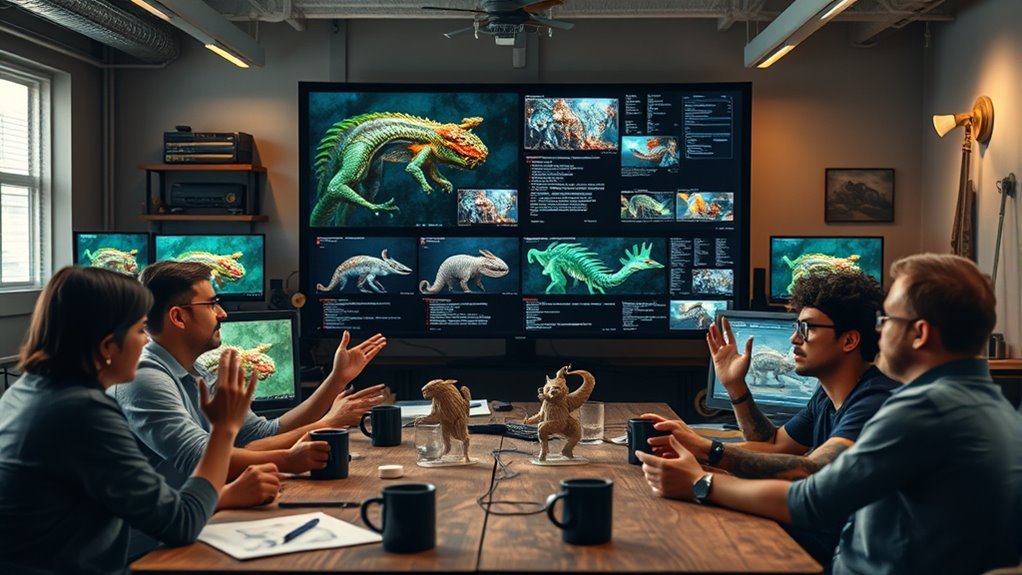

Drawing a sharp line in the sand, Palworld developer Pocketpair has formally rejected generative AI in its games and publishing ventures, arguing the technology is incompatible with the studio’s values and long‑term audience trust. Communications director and publishing head John Buckley characterizes generative AI as a short‑lived trend that lacks viability for making meaningful games, positioning the studio against automated content pipelines. Company policy rules out projects built around what Buckley calls “big AI stuff,” grouping the technology with NFTs and Web3 concepts that Pocketpair views as misaligned with its philosophy and audience expectations. This stance is framed not as a temporary caution but as a zero‑tolerance approach for using generative systems in core content production.
Uncompromising on authenticity, Pocketpair rejects generative AI, NFTs, and Web3 as incompatible with meaningful games
Pocketpair’s publishing division extends that philosophy beyond its internal projects to the wider indie ecosystem. Founded in early 2025, the division supports game developers as a partner that offers funding and practical assistance while maintaining creative independence. Launched to help external studios bring their games to market, the label explicitly courts developers committed to traditional, artist‑driven production methods. Submission guidelines bar titles that rely on generative AI, NFTs, or Web3 structures as central pillars, signaling that automated asset creation and speculative blockchain mechanics fall outside the company’s definition of credible game design. Instead, the division prioritizes projects that showcase individual artistic vision, handcrafted assets, and clear human authorship, treating those qualities as a core value proposition for players wary of algorithmic content.
The commitment to human artistry is closely tied to Pocketpair’s public defense of Palworld’s development process. After the game’s breakout success, online commentators accused the studio of using generative AI for creature designs and environmental assets, echoing broader industry fears about plagiarism and synthetic art. Pocketpair responded with repeated statements that all Palworld assets were produced by human artists, stressing that generative tools played no role in creating creatures, environments, or other core content. Buckley has pointed to prior legal reviews clearing the game of infringement, arguing that the controversy stemmed from misinformation rather than any actual reliance on AI.
The backlash nevertheless proved formative for Pocketpair’s current posture. Studio leaders describe the dispute as a costly distraction that forced them to publicly document their workflows and debunk speculation, reinforcing an internal consensus that generative AI undermines perceived artistic authenticity. In their messaging, AI‑generated assets are framed as “fake” or hollow compared with work created directly by artists, a distinction Pocketpair now highlights in marketing and publishing announcements. Human‑made visuals and designs are actively promoted as a premium feature, used to differentiate the studio’s titles and partners from games built on automated content pipelines.
Market sentiment plays a central role in Pocketpair’s reasoning. Buckley cites player feedback and discourse as evidence that core gaming audiences reject AI‑generated assets, viewing them as a shortcut that erodes trust in studios and the products they release. Pocketpair presents its refusal to engage with generative AI, NFTs, or Web3 as a straightforward way to align with that audience, protect its artists, and maintain a clear standard of authenticity across development and publishing.