Adobe’s experimental iOS camera app Project Indigo has introduced an AI Photo Critic as part of the July 20, 2026 “AI Playground” update, aimed at supporting mobile‑first photography workflows. Positioned as an experiment separate from Lightroom and Photoshop, the feature gives a subset of iPhone users structured feedback immediately after capture.
Overseen by computational photography pioneer Marc Levoy, the initiative explores how generative and evaluative models can guide everyday shooting rather than only post‑processing.
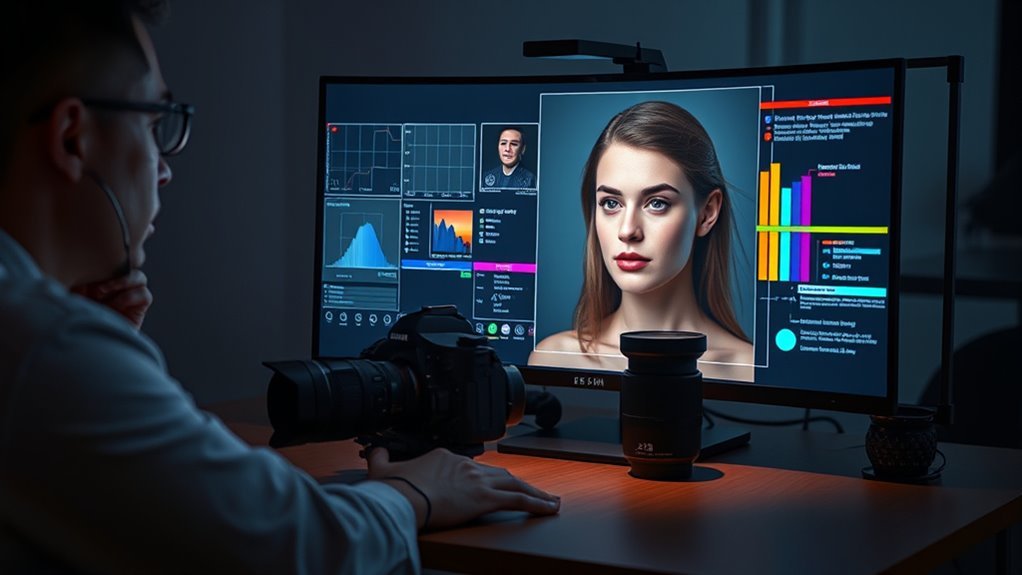
The AI Photo Critic evaluates each image along four axes: framing, lighting, colors, and emotional impact, mirroring the language and priorities of professional reviews. Rather than assigning scores, it generates concise textual descriptions that call out both strengths and weaknesses in composition, exposure balance, and color usage. A typical critique might praise clean subject separation while noting clipped highlights or distracting edge elements, then articulate how these issues affect the image’s emotional tone.
Critiques dissect framing, light, color, and emotion, turning technical analysis into actionable, story-driven guidance
The emphasis on narrative feedback is intended to help photographers understand why a frame works or fails, not simply whether it passes a numerical threshold. Critiques are directly coupled to suggested actions, closing the loop between analysis and improvement.
After reviewing a photo, the system can recommend specific Lightroom‑style adjustments such as exposure, contrast, or color temperature changes, or propose a reshoot with a different angle, subject distance, or background simplicity. These recommendations are generated by a vision‑language pipeline that interprets scene content before producing natural‑language guidance tailored to the image.
Under the hood, Adobe is using Google’s cloud‑hosted Gemini Nano Banana model instead of its own Firefly engine, tuned here for low‑latency evaluation rather than heavy generative synthesis. The cloud‑backed design requires an active internet connection but allows more computationally intensive reasoning than would be practical entirely on‑device.
The Photo Critic is embedded in Project Indigo’s capture and review flow, appearing moments after the shutter is pressed so that photographers can respond while still in front of the scene. A companion guidance mode operates in the viewfinder, flagging potential framing problems, uneven lighting, or background clutter before the shot is taken.
When a critique references exposure or color, the interface surfaces matching controls, enabling users to adjust sliders like exposure, contrast, and white balance without leaving the review context. Edited images are currently constrained to roughly 2K resolution to prioritize responsiveness and keep round‑trip analysis times short on mobile networks.
AI Photo Critic ships alongside AI Playground tools including category‑based object removal for distractions like people, vehicles, wires, and trash, depth‑of‑field simulation, style transfer, and a prompt‑driven Custom Edit workspace. Within Project Indigo, these tools are presented as a sandbox for educating users about framing, lighting, and other photography nuances.
Together, these features turn Indigo into a testbed for Adobe Research ideas such as reward models that judge edits like human critics and policy‑driven mappings from critique language to parameter changes. Access remains limited, underscoring that Indigo is a laboratory for Lightroom‑class capabilities rather than a product.