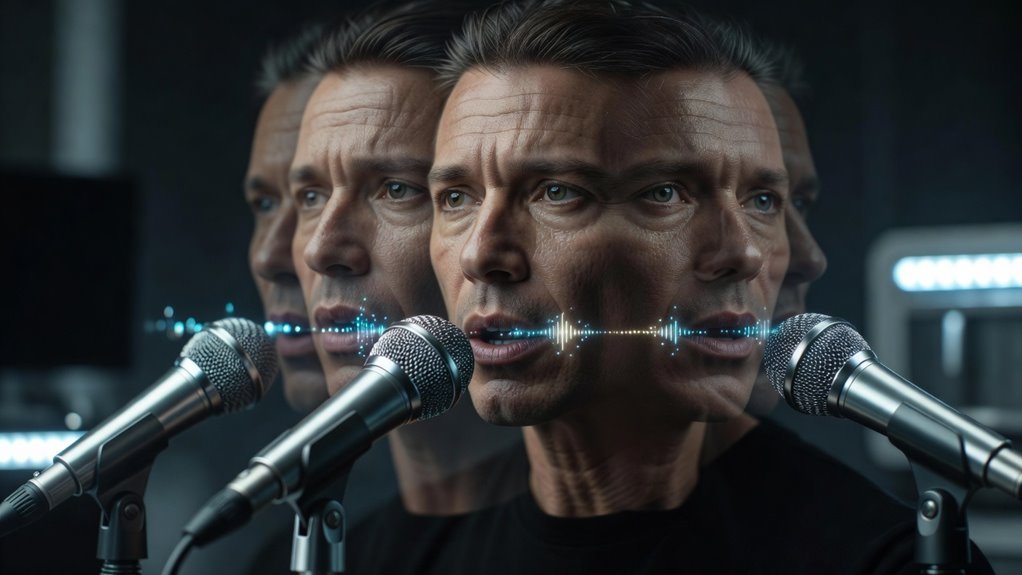

The moment synthetic voices stop sounding synthetic, trust in everything from a phone call to a brand campaign begins to tilt. Voice cloning has quietly crossed that threshold. What once required a studio session and custom modeling work can now be done from a few minutes of audio on a laptop, sometimes from scraps of speech pulled off a podcast or a video stream. For a technology that sits at the intersection of identity, security and media, that shift is not a minor upgrade. It is a structural change in how speech itself participates in the digital economy.
At its core, voice cloning is a pattern recognition problem. Models ingest recorded speech from a specific person and learn the acoustic fingerprint of that voice, including pitch range, timbre, accent, pacing and characteristic emphasis. Once that fingerprint is encoded, the system can generate new sentences in the target voice that person has never spoken. Consumer platforms now ask for roughly one to five minutes of clean audio captured in a quiet environment and turn it into an instant clone good enough for everyday narration or chatbots. More sophisticated deployments in film, localization or virtual assistants may train on thirty minutes or more of material to capture subtle variations in tone and emotion across different contexts. In each case, quality is governed less by the sheer length of the recording than by diversity and cleanliness of the input, which determine how well the model can generalize beyond the original lines.
The performance envelope has expanded faster than many security teams anticipated. Commercial providers are reporting similarity scores above ninety five percent when comparing cloned output to reference recordings, covering accent, timing and overall vocal color with a level of fidelity that is hard to distinguish for untrained listeners. Newer architectures are not only reproducing the obvious characteristics of a voice but also picking up micro level cues such as breathing patterns, conversational pauses and small shifts in emotional tone. For professionals in voice acting and audio production, that means synthetic speech that feels spontaneous rather than mechanical, with natural hesitations and emphasis baked into the model.
On the cutting edge, research and open source projects are demonstrating convincing clones from reference clips measured in seconds, not minutes, which raises the stakes for anyone whose voice already lives in public archives. A short interview or a social media video can be enough to create a usable imitation.
The most visible applications look benign, even helpful. Cloned voices scale narration across product videos, e-learning platforms and corporate training without booking studio time for every revision. Global companies use the technology to keep a consistent brand voice across dozens of languages, relying on voice to voice conversion to map a spokesperson’s pacing and intonation onto localized versions that still sound recognizably like the original identity. Creators with large back catalogs can repurpose old work in new formats, while people who have lost their voice to illness can regain a personalized way to speak through assistive devices. Many platforms wrap these capabilities into creator tools that provide free AI voice cloning with limited monthly audio, making it easy to trial voice quality, languages, and controls before subscribing.
In practice, these systems are starting to populate media streams with digital stand-ins, synthetic voices that occupy the same slots as human performers and are almost impossible for ordinary listeners to reliably identify.
The strategic significance sits behind those surface level use cases. Voice is a biometric marker, a trust signal and a commercial asset all at once. As cloning becomes commoditized, each of those roles is under pressure. Authentication systems built around voice recognition are now exposed to attack from models that can be guided by a few stolen seconds of speech. Customer service interactions are moving into a world where both sides may be synthetic, with brands deploying cloned voices for consistency and fraudsters using similar tools to impersonate customers, executives or authority figures.
The deeper risk is cognitive. People have already begun to internalize the idea that images and video can be faked. Once the same instinct applies to speech, the persuasive power of a phone call, press conference or emergency alert erodes in ways that are hard to reverse.
What changed over the past few years is not only model quality but accessibility. Earlier work in text to speech depended on bespoke datasets measured in hours and was largely confined to labs, major tech companies and a handful of specialized vendors. The rise of general purpose generative models from players such as OpenAI, Google, Meta and others normalized the idea that powerful synthesis would eventually touch all media types.
Startups focused on audio seized that opening, building platforms that accept short samples and collapse the time from recording to usable clone from days to minutes. The availability of open source implementations pushed the frontier further, putting experimental voice cloning into the hands of hobbyists and smaller teams who can run the models on consumer hardware. Voice is now part of the same broader trend that brought text generation, image creation and video synthesis into mainstream workflows.
For businesses, the implications cut in both directions. On the opportunity side, voice cloning promises a genuine productivity gain. Marketing teams can adapt campaigns to local markets quickly. Product leaders can embed natural sounding audio into interfaces without maintaining a roster of voice actors. SaaS providers can offer white label conversational agents with bespoke voices tuned to different brands.
Those advantages are not theoretical. Enterprises are already contracting voice vendors for global localization, branded assistants and automated training content, and the economics compare favorably to hiring and managing human talent at scale. At the same time, boards and security leaders need to treat synthetic voice as part of their risk register. AI conversations pose risks such as voice phishing, impersonation during high value transactions and fake internal announcements are all more plausible in a world where an attacker’s primary bottleneck is access to a short clip of someone speaking.
Regulators and policymakers are still catching up. Many legal frameworks around identity theft and fraud were drafted for a world where the main threats came from forged documents or stolen passwords, not realistic synthetic media. Some jurisdictions have begun to explore consent requirements for voice cloning, disclosure rules for synthetic content and obligations for platforms hosting cloned voices.
Industry groups are discussing provenance technologies, such as watermarking or cryptographic signatures embedded into audio to signal that a clip was generated rather than recorded. These approaches echo emerging standards in synthetic images and video, but audio presents extra challenges. Watermarks must survive compression, mixing and post production, and enforcement depends on broad adoption across tools from large platforms and smaller vendors.
Looking ahead, voice cloning is likely to move from a discrete product category into a foundational capability baked into many systems. Multimodal models that handle text, vision and audio simultaneously will treat voice as just another controllable parameter, switching between cloned identities in response to context.
Customer service bots may choose one voice for routine interactions and another for sensitive scenarios. Entertainment platforms will refine tools for creating synthetic performers that persist across projects, with licensing models that resemble those used for popular characters or franchises. Over several years, this could reshape labor markets in voice acting, localization and parts of broadcasting, while also forcing governments and enterprises to rethink how they confirm that a given utterance came from a specific human.
The overlooked question is not whether voice cloning is good or bad, but how society will adapt to a reality where authentic and synthetic speech share the same channels. For technology leaders, the task is to treat voices as data as well as identity, manage them with the same discipline applied to other sensitive assets and build products that assume synthetic audio is part of the environment rather than an exception. That mindset will decide who benefits from this wave and who is blindsided by it.
Conclusion
As synthetic voices move from novelty to infrastructure, they are quietly rearranging how institutions and individuals decide what is real. Digital humans built from a few minutes of captured speech now pass casual scrutiny in customer support calls, internal meetings and family conversations. What once demanded physical presence or a verifiable recording can be convincingly simulated from scraps of audio lifted from a podcast, a video interview or a voicemail. The familiar instinct to trust a voice on the line or a clip in a chat thread is no longer a safeguard. It is a liability.
This is not just a technical milestone. It is a shift in the basic circuitry of trust. Courts, banks, contact centers, social platforms and governments have all relied on the idea that voices carry identity in a way that is hard to fake. That premise is collapsing faster than the policies built on top of it. Disclosure rules, watermarking schemes and detection products are racing to catch up, yet they still sit on the periphery of most real world workflows. In practice, voice remains an assumed truth in many high stakes interactions, even as attackers learn to weaponize cloned speech for fraud, harassment and influence operations.
The result is a world where authenticity can no longer be treated as a passive property of media. It becomes an active, collaborative process. Businesses will need to build verification into everyday protocols, not just forensic investigations. Teams will normalize call backs over trusted channels, in app confirmations and cryptographic signing of critical instructions. Consumers will learn to treat emotionally charged voice messages with the same skepticism they use for suspicious links. Regulators will discover that consent, disclosure and liability frameworks built for traditional recordings do not map cleanly onto synthetic voices that are cheap, mobile and infinitely reusable.
Over the next few years, competitive advantage will depend on who can adapt to this reality fastest. Companies that continue to treat audio as self authenticating will be picked off by increasingly convincing impersonation attacks. Those that invest in layered verification and clear internal norms will blunt the impact and earn trust precisely because they refuse to take any voice at face value. In that sense, the rise of nearly undetectable digital humans is forcing a long overdue reset. Authenticity is no longer something content either has or lacks. It is a continuous negotiation among creators, platforms, institutions and end users, grounded in process rather than perception.