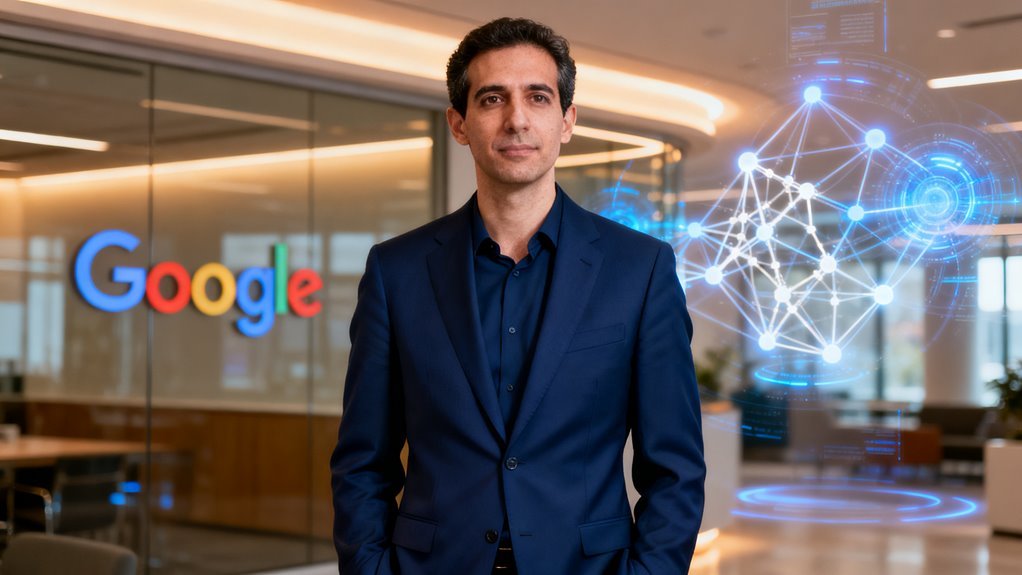

Claude Fable 5 and its sibling Mythos 5 mark a genuine inflection point for how laboratories design and run experiments, not just how scientists read papers or summarize data. After a decade of large language models circling around science as glorified search tools, these systems push directly into the core of experimental workflows, from hypothesis generation to autonomous protein design loops. Together, these models integrate enhanced safety mechanisms with high-end performance in long-term reasoning, software engineering, and scientific research workflows. Notably, federal safety evaluations are crucial in ensuring AI-generated material meets public health standards.
Claude Fable 5 and Mythos 5 move AI from passive search to active, autonomous engines of experimental design
How we got to this moment in AI for science
For most of modern experimental science, progress has depended on a familiar pattern. A team reads the literature, designs an experiment, runs it, then spends weeks interpreting results, updating models and designing the next round. The bottlenecks have always been synthesis of complex information and the tedious mechanics of lab work.
The first wave of general purpose language models began to chip away at the reading burden. They could summarize papers and answer basic questions, but short context windows and weak quantitative reasoning limited their use in serious research. Long documents had to be chunked. Experimental histories were fragmented across tools and notebooks.
Claude Fable 5 was introduced in June 2026 as Anthropic’s flagship general release model, built on the Mythos 5 foundation and hardened with safety guardrails for broad use. Independent comparisons suggest that it reaches around 93 percent on GPQA Diamond, a demanding graduate level science reasoning benchmark, and around 60 percent on SciCode for scientific computing tasks. Combined with a context window that stretches to millions of tokens, Fable 5 can ingest entire project archives in one go, including full text papers, protocols, assay data and simulation logs, while still maintaining coherent multi step analysis.
In parallel, Anthropic developed Mythos 5 as a restricted version of the same underlying model, tuned and tooled for cyber defense and advanced biology and chemistry under dedicated access programs. Internal testing reports that Mythos class models can run largely autonomous design loops for protein and drug discovery, with performance that starts to rival experienced human teams.
Claude Fable 5 as the reasoning engine of next generation labs
What differentiates Fable 5 from earlier general models is not only scale but the way it maintains structure across very long contexts. Instead of treating each prompt as an isolated conversation, Fable can hold onto project wide state, revisit earlier decisions and keep track of open questions over millions of tokens of text and data.
In practical terms, that means a lab can embed full experimental histories, prior negative results, and ongoing data streams into a single context and still receive consistent stepwise recommendations for the next experiments. The model can read dense methods sections, interpret charts and figures, perform quantitative checks, and then tie those findings back to the active project plan.
Benchmarks offer one lens on that capability. On GPQA Diamond, which tests graduate level scientific reasoning across domains, Fable 5’s reported score around 93 percent places it near the top of publicly known systems. On SciCode, focused on scientific computing in Python, a score around 60 percent signals practical competence with the numerical side of experimental analysis. These are not magic numbers, but they indicate that the model can usually navigate complex scientific questions, especially when researchers scaffold its reasoning with well structured prompts and clear tasks.
In the lab, Fable 5 is already being used for literature synthesis, hypothesis generation, target analysis and biomarker research, all within the standard API without triggering sensitive routing. Importantly, this includes not only summarizing what is known but extracting claims, evidence, metrics and caveats from dense research articles and aligning them with ongoing experimental plans to suggest which experiments should happen next.
Mythos 5 and the acceleration of protein and drug design
Where Fable 5 shines as a reasoning engine, Mythos 5 represents the more aggressive frontier of autonomous experiment execution, particularly in protein and drug design. Under internal testing, Anthropic’s protein design experts report that Mythos 5 accelerated parts of the drug design process by roughly an order of magnitude in their pipelines.
In a widely discussed experiment, Mythos 5, equipped with protein design and bioinformatics tools, tackled 14 diverse protein targets spanning immune checkpoints, growth factor signaling, neurodegeneration, muscle disease and structurally challenging cases, all without human intervention. The system selected binding sites, chose and ran design tools, recovered from workflow failures and ultimately delivered strong candidate designs for 9 of those targets, a hit rate around 64 percent.
That result does not mean the model has solved drug discovery. The candidates still need rigorous experimental validation, and internal benchmarks can be biased by the way tasks are defined. The study was run by the model’s creators and has not yet undergone independent peer review. But from a process perspective, tenfold acceleration in some pipeline steps is significant, especially in early stage design and screening.
Beyond pure design, Mythos 5 reportedly produces novel molecular biology hypotheses that scientists preferred about 80 percent of the time over proposals from earlier Opus class models in blinded comparisons. In at least one case, a mechanism for an Escherichia coli protein proposed by Mythos was later corroborated by an independent lab working on the same problem. That combination of speed, breadth and occasional originality is what has captured attention in biotech circles.
It is also important to understand the access structure. Fable 5 is the general release model with full safety guards enabled. Mythos 5 is primarily described as a cyber defense focused version used in collaboration with the United States government under Project Glasswing, while biology and chemistry capabilities are offered through a separate Trusted Access Program that relaxes some guards for vetted partners. That layered structure is one of the ways Anthropic tries to manage risk, but it also means that most commercial teams will experience the biology features through Fable 5 rather than directly through Mythos.
Self driving laboratories and multi agent AI systems
These models sit inside a broader movement toward self driving laboratories, where automated platforms handle sample preparation, measurement and data acquisition, while AI systems manage planning and analysis.
Research on vision based modules such as the Localization, Inspection and Reasoning system, or LIRA, shows how targeted reasoning components can guide robotic workflows, localize samples, inspect experimental setups and adapt procedures in real time. Studies on cognitive multi agent systems in chemistry and materials discovery indicate that agent reasoning capacity is often the critical factor, reducing quantitative errors in complex tasks by more than 85 percent when properly designed.
Together, these advances suggest that autonomous labs are limited less by robotics and more by the quality of the reasoning modules that decide what to do next. Claude class models are well suited to those higher level roles. In a multi agent architecture, Fable 5 can act as the planner and analyst, recommending parameter sweeps, diagnosing failed workflows, and performing meta scientific analysis of which hypotheses are worth testing.
Other agents can schedule experiments, interact with lab management systems and watch for operational constraints such as instrument availability or reagent shelf life. The same principles extend to online and human participant studies. AI agents can coordinate recruitment, provide real time assistance during tasks, monitor engagement and administer follow up surveys, all while Fable 5 or similar models run ongoing analysis and adjust protocols based on early signals.
Proper oversight and ethics review remain essential, but the mechanics of running adaptive experiments at scale become much more tractable.
How this shifts practice for scientists and companies
For research organizations, the immediate implication is a shift in how human expertise is deployed. With Fable 5 handling much of the literature synthesis, chart interpretation and statistical cross checking, scientists can spend more of their time on conceptual framing, experimental creativity and validation strategy.
In drug discovery pipelines, Mythos class models can absorb the repetitive loops of protein design, leaving teams to focus on deciding which targets matter and how to design robust assays. There is a business angle as well. Companies that integrate these systems into their lab infrastructure stand to compress cycle times and reduce the cost per hypothesis tested.
Internal reports of tenfold acceleration in parts of the design pipeline are eye catching not only for scientists but for executives who think in terms of portfolio throughput. At the same time, the need for reliable data pipelines, security reviews and governance frameworks becomes more pressing. A model that can autonomously run a protein design loop can also autonomously make mistakes at scale.
Cyber defense applications add a further layer of complexity. Mythos 5’s deployment through Project Glasswing for defensive analysis of cyberattacks shows how the same reasoning abilities that drive experimental design can be repurposed for incident response and threat modeling. That convergence of scientific and security roles raises questions about shared infrastructure, cross domain risks and how to audit systems that operate across sensitive domains.
Risks, limitations and the path to trustworthy use
From a trust perspective, there are several points that careful teams should watch.
First, many of the most striking performance claims for Mythos 5 and Fable 5 still come from internal studies or partner pilots rather than broad independent validation. Benchmarks like GPQA Diamond and SciCode provide standardized tests, but they do not capture the full complexity of an actual laboratory environment. Real world performance will depend on the quality of experimental design, calibration of tools, data hygiene and human oversight.
Second, safety routing already plays a role. Reports describe how biology, chemistry, cybersecurity and model distillation prompts sent to Fable 5 can be quietly routed to older models such as Opus 4 point 8 when safety classifiers flag them as sensitive. That is a reasonable mitigation, but it means teams need to understand when they are interacting with Fable versus when they are effectively working with a downgraded system, especially for regulated workflows.
Third, access controls matter. The Trusted Access Program for Biology and similar initiatives limit the most capable configurations to vetted partners that pass risk reviews. This is reassuring from a misuse standpoint, but it also creates a divide between well resourced organizations that can obtain these capabilities and smaller labs that may be left with more constrained tools. The history of scientific instrumentation shows that such gaps can widen over time unless there are deliberate efforts to democratize safe capabilities.
Finally, there is the human factor. Even if a model can maintain coherent reasoning across millions of tokens, scientists must remain accountable for experimental choices. The temptation to accept AI generated hypotheses or design suggestions without sufficient skepticism is real, especially when the system has a track record of occasional breakthroughs. Building institutional cultures that treat AI as a powerful collaborator, not an oracle, will be essential.
What to watch in the coming years
For readers of AiFlowNews, a few concrete signals will indicate whether Claude Fable 5 and Mythos 5 are living up to their promise.
Look for independent replications of the reported tenfold accelerations in protein design workflows and the nine out of fourteen strong drug candidates from fully autonomous runs. Third party validation in different disease areas and with different toolchains will tell us how general those gains really are.
Watch the evolution of self driving lab platforms that integrate long context reasoning models with robotic hardware and multi agent orchestration. The most interesting developments will likely come from labs that combine vision modules, planning agents and models like Fable in tightly coupled loops, rather than treating AI purely as an external consultant.
Pay attention to regulatory and ethical frameworks around AI driven experimentation, especially in clinical and human participant studies. As these systems take on more responsibility for choosing what gets tested and on whom, oversight bodies will need new guidelines that account for algorithmic decision making.
Finally, keep an eye on how tools like Perplexity Sonar position themselves relative to models such as Fable 5. As search and reasoning systems converge, the line between reading the literature and designing the next experiment will blur, and the platforms that manage this transition with transparency and robust evaluation will be the ones that earn lasting trust.
If there is one takeaway, it is that Claude Fable 5 and Mythos 5 are less about replacing scientists and more about reshaping the texture of scientific work, compressing tedious loops, amplifying hypothesis generation and demanding new standards of oversight and validation as autonomous experimentation moves from demos into daily practice.
Frequently Asked Questions
How Does Claude Fable 5 Protect Sensitive Experimental Data and Researcher Intellectual Property?
Claude Fable 5 arrives at a moment when experimental science is colliding with frontier AI and that makes data protection and researcher intellectual property a core requirement rather than a nice to have. Researchers want the power of a cutting edge model, but they also need clear answers to a simple question: what happens to my data and my ideas when I send them to this system.
From early cloud AI to safety covered models
In the first wave of cloud based AI tools, many platforms quietly logged prompts and outputs and often reused that data to train future models. That pattern quickly created tension for scientists and companies who were sharing unpublished results, proprietary methods, and protected health or genomic data.
Claude Fable 5 sits in a newer class of what Anthropic calls covered models, where safety monitoring and data governance are treated as first class features rather than fine print. These models, including Fable 5 and Mythos 5, are subject to a mandatory thirty day retention period for prompts and outputs across both Anthropic properties and major cloud platforms that host the models. This shift matters because it makes data handling predictable and auditable, even when the model is accessed through third party services.
At the same time, Fable 5 is wrapped in a dense safety stack. Anthropic pairs the model with separate classifier systems that watch every interaction for patterns of misuse, including offensive cybersecurity tasks, sensitive biology or chemistry work, and attempts to distill the model into a rival system. These classifiers can block or reroute risky requests to a weaker model and they are one reason why some data must be retained for a limited window.
Core protections for sensitive experimental data
Encryption and infrastructure controls
Claude Fable 5 is designed to run within an environment where data is encrypted at rest and in transit using modern cryptography and transport protocols. The user provided description mentions AES 256 encryption at rest and TLS 1.2 or newer in transit, which aligns with common best practice for protecting research data held in cloud storage and moving across networks.
AES 256 is a symmetric block cipher that processes data in fixed size blocks using a large key and is widely regarded as suitable for high value institutional data.
Beyond encryption, organizations typically deploy Fable 5 inside infrastructure that follows security control frameworks such as SOC 2 and ISO 27001. These frameworks emphasize controlled access to systems, change management, incident response, and continuous monitoring, all of which matter when an AI model touches experimental pipelines and lab data.
While public Fable 5 documentation focuses more on safety classifiers and retention than on audit certifications, it is clear that Anthropic expects enterprise customers to embed the model within their existing compliance programs rather than treat it as a consumer tool.
Role based access, SSO, and fine grained control
For research teams, one of the biggest risks is uncontrolled sprawl: many people with broad access to models and data, and very little visibility into who did what. Claude Fable 5 is intended to be used with role based access control and modern identity tools such as single sign on so that permissions follow a researcher’s role and affiliation rather than ad hoc accounts.
Role based access control assigns permissions to roles like principal investigator, postdoctoral researcher, lab technician, or security engineer rather than to individuals, which simplifies management and makes it easier to restrict who can send sensitive datasets or proprietary protocols to the model.
In practice, this means an institution can allow only certain groups to use Fable 5 on regulated data or intellectual property, while others are limited to synthetic or already published material. Access governance blueprints for AI environments increasingly recommend these patterns, combining RBAC, environment segregation, and quotas to keep experimental work separate from production systems and personally identifiable information.
Single sign on ties those roles to the institution’s identity provider so departing staff lose access automatically and internal approvals can be enforced before someone is granted high risk capabilities. Together, SSO and RBAC help ensure that the only people who can see or use a team’s most sensitive prompts and outputs are those who genuinely need that access for their research.
How data retention and review actually work
Thirty day retention with a safety purpose
The most controversial part of Claude Fable 5 for many researchers is the mandatory thirty day data retention period. Every prompt sent to Fable 5 and every output generated by the model is stored for thirty days for trust and safety purposes. This applies across Anthropic’s own interfaces and across cloud platforms such as AWS, Google Cloud, and Microsoft services that host Fable 5.
During that window, Anthropic runs automated safety classifiers over the retained content to look for misuse patterns that are hard to detect in a single prompt, such as coordinated jailbreak attempts, distillation campaigns aimed at cloning the model, or interactions that resemble state sponsored attacks. This is where the historical context matters.
Earlier models often relied mainly on training time safeguards and static policies. Fable 5 represents a move toward active monitoring and defense in depth, where independent systems watch live traffic and respond to emerging threats in near real time.
Anthropic’s public statements and technical explanations are explicit on one key point. Data retained from Fable 5 and other covered models is not used to train new models and not used for any purpose beyond security and safety. For research groups worried about intellectual property leakage into future foundation models, this commitment is central. It means an unpublished experimental design or a novel algorithm described to Fable 5 is not quietly folded into the training corpus for Claude 6.
After thirty days, the data is automatically deleted in almost all cases, with limited exceptions when content must be held longer for an ongoing safety investigation or to comply with law. That limited retention window strikes a compromise between researchers who would prefer zero storage forever and safety teams who need enough history to detect sophisticated misuse.
Logged and constrained human review
Any system that stores powerful prompts can create anxiety about human access, and Fable 5 is no exception. Public descriptions of the model’s safety architecture make clear that Anthropic employees can view some retained interactions, but only under strict conditions and through limited tooling.
Human review is restricted to a small group of approved reviewers who can only access conversations that are flagged as potentially involving serious harm, such as advanced cyber offensive activity or high risk biological work. Access happens through specialized interfaces that prevent exporting, copying, or downloading of conversation data, which reduces the risk that sensitive experiments or proprietary methods might leak through screenshots or bulk exports.
Every case of human access is logged in what Anthropic describes as a tamper resistant audit log. That audit trail is important for institutional trust because it allows enterprise customers to later verify if and when their traffic was viewed and for what purpose. Eligible organizations can go further by enabling customer managed encryption keys and access transparency logs, which give them more control over how their data is protected and more visibility into any access events.
Protecting researcher intellectual property in practice
For experimental scientists, the practical question is whether these controls are enough to safely use Claude Fable 5 for real work. The answer depends on the specific field and risk tolerance, but there are several implications worth unpacking.
First, the commitment not to use research prompts or outputs for model training substantially reduces the risk that a novel experimental design, proprietary dataset, or unpublished paper draft will diffuse into the broader AI ecosystem. Unlike some consumer facing tools that explicitly reserve the right to train on user content, Fable 5’s policy gives researchers a clearer boundary between their intellectual property and the model’s evolution.
Second, the combination of encryption, enterprise grade infrastructure, RBAC, and SSO means institutions can treat Fable 5 more like a secure analytical service and less like a public website. When deployed within a well governed AI landing zone, access to sensitive experiments can be limited to specific projects and teams, with logs and quotas to prevent accidental oversharing.
Third, mandatory retention introduces both benefits and risks. On the benefit side, Anthropic’s safety monitoring can catch dangerous misuse of Fable 5 and protect the broader research community from being associated with high harm activities that route through the same infrastructure. On the risk side, some institutions will remain wary of any central store of their experimental prompts, even for thirty days, especially in fields like drug discovery, advanced materials, or defense related work. For those teams, the availability of customer managed keys and detailed access transparency becomes a critical mitigating factor.
Historical experience suggests another caution. Strong policies and technical safeguards are necessary but not sufficient. Long term trust will depend on whether Anthropic consistently adheres to these commitments and how it responds when incidents occur. The presence of audit logs and external standards like SOC 2 and ISO style controls gives customers tools to hold the provider accountable, but that accountability only matters if institutions actively review logs, ask for evidence, and incorporate AI usage into their own governance processes.
What this means for the future of experimental AI
Claude Fable 5 points toward a future where frontier AI systems are wrapped in increasingly sophisticated governance layers that are designed with high stakes users in mind. The safety classifiers and thirty day retention policy show how model operators are balancing two pressures at once: the need to prevent serious misuse and the need to respect the privacy and intellectual property of legitimate users.
For technology leaders, the model illustrates that powerful capabilities will come with non negotiable data governance requirements. The era of unchecked zero retention frontier models may be closing, at least for systems with significant dual use risk. For businesses and research institutions, that means planning for AI integration must include careful consideration of retention windows, human review policies, audit logging, and encryption key management rather than focusing only on accuracy and speed.
For society, Fable 5’s design underscores an emerging norm. The most capable AI systems will likely operate under sustained monitoring and restricted access regimes, even when their official use cases are benign. That reality will shape how researchers think about confidentiality, how regulators think about oversight, and how future AI models are built and deployed.
The key takeaway is that Claude Fable 5 offers a realistic path for experimental scientists to leverage a frontier model while keeping a tight grip on sensitive data and intellectual property, provided they pair its built in safeguards with strong institutional governance. The next few years will reveal whether this hybrid approach of limited retention, rigorous monitoring, and enterprise controls becomes the default standard for high capability AI or a stepping stone toward even more privacy preserving designs that can deliver strong safety guarantees with less central data storage.
What Are the Subscription Costs and Token Pricing for Claude Fable 5 Usage?
Claude Fable 5 costs ten dollars per million input tokens and fifty dollars per million output tokens on the Claude API, and for most users it is accessed through Claude dot ai subscriptions that start around twenty dollars per month for Pro and thirty dollars per month for Team. In practice that means you pay a predictable monthly fee for access plus usage based on how many tokens you send to and receive from Fable 5, with significant discounts available through batch processing and prompt caching.
Why the pricing of Claude Fable 5 matters now
Claude Fable 5 sits at the frontier of Anthropic’s model lineup, aimed at demanding long horizon reasoning, heavy vision workloads, and agentic coding systems. Pricing for this kind of model is not just a billing detail; it shapes which teams can afford to experiment with advanced automation and how aggressively they can scale those systems in production.
Over the past few years, Anthropic has moved from a simple tiered model structure to a more fine-grained approach that combines subscriptions with per token billing, batch discounts, and prompt caching incentives. Earlier generations such as Sonnet and Opus were priced to balance broad accessibility with sustainable infrastructure costs, while more experimental Mythos class models carried a clear premium. Claude Fable 5 continues that evolution, positioned above mainstream models in price but below the most exclusive previews, and its pricing signals where Anthropic thinks frontier model economics are settling in mid 2026.
Subscription access through Claude dot ai
For individuals and many small teams, the primary way to use Fable 5 is through Claude dot ai rather than directly through the API. On Claude dot ai, the Pro plan is priced at roughly twenty dollars per month per user, and the Team plan is around thirty dollars per month per seat with added collaboration features and higher usage limits.
Enterprise and Max plans exist for larger organizations and high volume users, typically with seat-based pricing and negotiated limits.
When Anthropic introduced Fable 5, it temporarily included the model at no extra subscription cost on Pro, Max, Team, and enterprise seats from early June through June twenty-second two thousand twenty-six, effectively acting as an introductory promotion. During that window, users on those plans could access Fable 5 inside Claude dot ai without an add-on fee, though heavy or programmatic use still hinged on API credits and limits.
After that date, access continues within the subscription environment, but substantive workloads are aligned with standard Fable 5 API pricing, making the per token costs crucial for anyone expecting sustained usage.
This subscription plus usage structure matters because it separates basic access from scale. A small product team might only feel the monthly subscription price when experimenting in the interface, but as soon as they connect Fable 5 to workflows that run day and night, the token meter becomes the dominant factor in their cost model.
Base token pricing on the Claude API
On the Claude API, Fable 5 has clear list rates.
Input tokens are billed at ten dollars per million tokens. Output tokens are billed at fifty dollars per million tokens.
These numbers are high enough to signal a frontier model but lower than some earlier experimental offerings. In fact, several analyses point out that Fable 5’s ten and fifty structure is double the price of Claude Opus four point eight, which is five dollars per million input tokens and twenty-five dollars per million output tokens.
At the same time, Fable 5 comes in at less than half what the limited Claude Mythos preview reportedly cost for its small group of partners, which framed Mythos as a boutique option while Fable 5 aims at broader yet still advanced adoption.
From a practical standpoint, these figures mean that a million token research sprint where you send roughly half a million input tokens and receive half a million output tokens would land around thirty dollars at list price. A more intensive long context agent that pushes multiple millions of tokens a day can quickly move into hundreds or thousands of dollars of monthly spend, which is why the discounts from batch processing and caching deserve close attention.
Batch API discounts and prompt caching
Anthropic offers two major tools to reduce Fable 5 costs for well-designed workloads: batch processing and prompt caching.
The Batch API lets you submit asynchronous jobs that do not need real-time responses and rewards that flexibility with a fifty percent discount. For Fable 5, batch input tokens cost five dollars per million and batch output tokens cost twenty-five dollars per million, exactly half of the real-time rates. This turns Fable 5 into a much more competitive option for offline processing tasks such as nightly data enrichment, large code review sweeps, or evaluation runs, where response latency in minutes or hours is acceptable.
Prompt caching targets another cost driver: repeated context. When you write into the cache for Fable 5, the system stores prompt or context segments that can be reused across calls, charging once at a slightly higher rate and then dramatically discounting reads. Fable 5 cache writes are priced at twelve dollars fifty cents per million tokens for a five-minute cache and twenty dollars per million tokens for a one-hour cache, compared with the standard ten dollar input rate.
Cache hits and refreshes are billed at only one dollar per million tokens, a ninety percent discount relative to the base input price.
Analysts consistently note that in real applications, prompt caching is often the difference between a frontier model being viable or prohibitively expensive. If you are repeatedly sending the same system prompts, role instructions, or retrieved knowledge to Fable 5, caching can cut costs by an order of magnitude while keeping quality intact. For teams building retrieval augmented generation systems or multi-step agents that share a common context across many calls, this feature is especially important.
How Fable 5 fits Anthropic’s broader pricing strategy
To understand whether Fable 5’s pricing is reasonable, it helps to look at the rest of Anthropic’s catalog. In mid two thousand twenty-six, Sonnet class models are typically priced a step below Opus and far below Fable 5, with figures around three dollars per million input tokens and fifteen dollars per million output tokens, and promotional pricing even lower for certain periods.
Haiku class models target commodity usage with prices closer to one dollar per million input tokens and five dollars per million output tokens.
Against that backdrop, Fable 5’s ten and fifty position it firmly as a frontier choice. It is several times more expensive than the mainstream Sonnet models but it offers capabilities aimed at complex multi-step reasoning, larger context windows, and heavy tool use, which are not always possible at lower tiers.
In effect, Anthropic is inviting developers to reserve Fable 5 for their hardest problems while using cheaper models for routine tasks, with batch and caching as mechanisms to avoid runaway bills when frontier capabilities are genuinely needed.
This strategy echoes how cloud providers priced early GPU instances and specialized databases. Pioneering features carry a premium, but thoughtful workload design plus discounts for flexible usage help serious teams stay within a rational budget. Analysts comparing Fable 5 with rival offerings from other providers have pointed out that while headline prices look steep, the net effective rate for well-cached batch workloads is closer to what top-tier models elsewhere charge in on-demand form.
Implications for businesses, developers, and the wider ecosystem
For businesses, Fable 5’s pricing forces clear prioritization. Leaders need to ask which workflows truly demand frontier reasoning and which can be served by midrange models at a fraction of the price.
When an application’s value depends on high accuracy over long contexts or complex decision chains, the higher per token cost can be justified, especially if caching and batch processing are used intelligently.
Developers are encouraged to think in terms of architecture rather than single requests. Splitting systems so that cheap models handle routine classification, extraction, and routing while Fable 5 steps in only for the hardest cases can reduce overall expenditure without sacrificing quality.
Designing prompts to maximize reuse, storing stable instructions in the cache, and routing opportunistic workloads into the Batch API are now essential engineering skills, not optional optimizations.
For the broader artificial intelligence ecosystem, Fable 5’s pricing is another sign that frontier capability is moving from isolated preview programs to widely usable if still premium infrastructure.
The fact that Anthropic offered a limited free inclusion period on subscription plans, then shifted to steady per token billing, illustrates a familiar pattern in technology adoption: introduce at low friction, let practitioners experiment, then normalize costs once value is proven.
Over time, as hardware, optimization techniques, and competition improve, it would be reasonable to expect these frontier prices to drift downward just as past model generations became cheaper or moved into lower tiers.
There are risks as well. If only well-funded organizations can afford sustained Fable 5 usage, research and applied innovation may skew toward large incumbents, leaving smaller players dependent on midrange models.
On the other hand, Anthropic’s mix of models and discounts helps keep a path open for smaller teams that are willing to engineer carefully, and the continued presence of more affordable options like Sonnet and Haiku means the ecosystem does not rely on a single expensive tier.
Practical takeaways and forward-looking insights
Claude Fable 5 requires a Claude dot ai subscription for typical interactive use, with Pro and Team plans priced around twenty and thirty dollars per month per user, and substantial workloads are billed through the Claude API at ten dollars per million input tokens and fifty dollars per million output tokens.
Batch processing cuts those rates in half, to five dollars and twenty-five dollars per million tokens, and prompt caching can reduce repeated context costs by ninety percent, making careful system design as important as the choice of model itself.
For teams evaluating Fable 5 today, the central question is not just Can we afford the list price but Can we shape our workloads to exploit batch and caching so that frontier capability becomes economical.
Organizations that answer yes and invest in that engineering discipline are likely to get the most out of Fable 5, using it sparingly where its strengths matter most while leaning on cheaper models elsewhere.
As competition in frontier models intensifies, this blend of subscription access, per token billing, and usage-based discounts is likely to become the norm, and understanding it now will help practitioners make smarter choices in the years ahead.
Can Claude Fable 5 Integrate With Existing Electronic Lab Notebook and LIMS Platforms?
Claude Fable 5 can integrate with existing Electronic Lab Notebook and Laboratory Information Management System platforms today, but it does so through open interfaces and connectors rather than traditional vendor-specific plug-ins. For lab teams, that shift matters because it determines how easily Fable 5 can be woven into daily scientific workflows without waiting for each ELN vendor to ship a custom extension.
Why this integration question matters now
Life science organizations are under pressure to move faster while keeping their data traceable and auditable. Electronic Lab Notebooks and LIMS became standard partly to enforce structure and compliance in wet lab environments, yet they often leave scientists copying results between systems or manually describing complex experiments in free text.
At the same time, general-purpose language models have evolved from short context chat tools into systems that can reason across very large collections of experimental records, protocols, and data tables. Claude Fable 5 sits at this frontier with a context window on the order of one million tokens and long horizon reasoning capabilities designed for demanding workflows. It is available through the Claude API and major cloud providers including Amazon Bedrock, Google Cloud, and Microsoft platforms, which makes it reachable from most modern enterprise environments where ELNs and LIMS already live.
The question is not simply whether Fable 5 can connect in a technical sense. The deeper issue is whether it can understand and responsibly act on the structured information inside regulated lab systems, and whether those systems can expose enough of their data through safe interfaces.
How Claude Fable 5 connects to lab systems
Anthropic exposes Claude Fable 5 primarily through a messages-style REST API that lets developers send structured conversations including text and tool calls. Enterprises can reach the same capabilities through managed endpoints on Amazon Bedrock, Azure, and Google Cloud, which wrap the model in their security, identity, and logging layers.
Integration with ELN and LIMS platforms typically follows a pattern rather than a vendor-specific plug-in. The lab system exposes its own API or webhooks. A middleware service or agent framework then calls the Fable 5 model, passes relevant experiment or sample data, and receives back structured responses or actions that are pushed back into the notebook or LIMS. This design keeps the ELN in control of data access while letting Fable 5 provide reasoning, summarization, and workflow guidance around that data.
Claude’s tooling stack reinforces this approach. The platform supports programmatic tool calling, code execution, and persistent memory for agentic sessions, all of which can be harnessed to orchestrate multi-step workflows across lab infrastructure. That means an integration does not need to be a single prompt and response. It can be a sequence of operations where Fable 5 decides when to pull records from an ELN, when to call analysis scripts, and when to write back conclusions or flags.
Benchling and dedicated life science connectors
The most concrete evidence of Fable 5 style integration in life sciences is Anthropic’s work with Benchling and other research platforms. Benchling, which combines Electronic Lab Notebook and LIMS functions, can be connected to Claude through dedicated connectors that make its structured lab records queryable via natural language.
Through this setup, scientists can ask for experiments involving a certain protein or compare results across projects, and receive answers linked back to the originating notebook entries and data tables.
Anthropic and its partners have expanded this connector ecosystem over time. Between late 2025 and early 2026, the number of life science connectors grew from six to more than a dozen, adding platforms such as Medidata ClinicalTrials and other biomedical data sources. Each connector follows the same basic principle. The external system exposes an interface. Claude, including Fable 5, gains a tool that can call that interface with authenticated requests and interpret the responses in context.
For ELN and LIMS vendors, this connector model is attractive because it does not require building logic into the core notebook product. Instead, they provide reliable APIs and rely on the AI integration layer to translate human questions into structured calls and back into understandable answers.
The role of Model Context Protocol and tools
Under the hood, Fable 5 supports Model Context Protocol, a standard for connecting language models to external tools and data services. MCP servers can represent anything from business systems like Salesforce to scientific platforms, and they are configured as tool providers the model can call during a session.
In practice, this means an integration engineer can register an MCP server that wraps an ELN or LIMS API, then include that server as a tool available to Fable 5 during a given workflow. When a scientist asks a question, Fable 5 can decide to call the MCP tool, retrieve specific records or metadata, and then synthesize an answer that points back to the original source. The model does not directly own credentials or data stores. It relies on these connectors, which can be audited and controlled just like any other enterprise integration.
This architecture also aligns with Anthropic’s broader safety posture. Fable 5 includes safety classifiers and supports guardrail configurations on cloud platforms that can monitor for misuse, which is particularly important when the model is allowed to query sensitive clinical or preclinical data.
How cloud deployments support ELN and LIMS integration
Most commercial ELN and LIMS products already run within cloud environments or private data centers that have connectivity to platforms like Amazon Web Services, Google Cloud, and Azure. Claude Fable 5 is available natively on those clouds through managed endpoints and catalog entries.
On Amazon Bedrock, the Fable 5 model can be invoked through runtime endpoints that support streaming responses, guardrails, prompt optimization, and integration with knowledge bases and agent frameworks. On Google Cloud, it can be enabled through Model Garden and accessed by the Gemini Enterprise Agent Platform, with support for text and image inputs and function calling to external services. Azure catalogs Fable 5 as a partner model, making it reachable from enterprise applications that already use Azure identity and networking.
For ELN and LIMS administrators, this means they can route model calls through the same cloud accounts that host their lab systems, apply existing security policies, and log all AI interactions alongside other application traffic. It reduces the operational friction of adopting Fable 5 and makes it easier to demonstrate compliance to regulators or internal audit teams.
Implications for labs and IT teams
From a technology standpoint, Fable 5’s integration model favors flexibility. Labs are not locked into waiting for a specific plugin for each ELN or LIMS. As long as the system offers an API and the organization is willing to build a connector or MCP server, Fable 5 can participate in that workflow.
For businesses, this opens several opportunities. Scientists can query historical experiments in plain language, ask the model to reconcile results across projects, or generate protocol summaries that respect the structured fields in a notebook instead of ignoring them. Operations teams can build agent workflows that guide sample processing or quality control, making the LIMS feel more conversational while still enforcing required checks.
There are risks and caveats. Any integration that lets an AI model read or act on regulated lab data must be carefully scoped. Access control, data retention policies, and validation procedures need to be clear. If the connector layer is misconfigured, a model might see records it should not, or a lab system might accept generated content without appropriate review. Anthropic’s transparency work and safety tooling help, but they do not replace local governance.
Practical paths to integration today
For teams exploring integration between Claude Fable 5 and existing ELN or LIMS platforms, the practical path usually has several stages.
A first step is to ensure the lab system exposes a stable API or webhook mechanism that can retrieve and update records with appropriate authentication. Without that, there is no safe way for Fable 5 to see structured data.
Next, an intermediate service is built, often using the Claude API or a cloud provider endpoint, that translates scientist prompts into calls to the ELN or LIMS and wraps the responses in a format the model can reason about. This could be a small microservice, an agent framework, or an MCP server depending on the organization’s architecture.
Finally, usage patterns are defined. For example, some labs start with read-only workflows, letting Fable 5 summarize experiments, suggest follow-up studies, or surface records of interest, and only later allow the model to draft new entries that must be reviewed by a human before being committed. This staged approach reduces risk while still unlocking value early in the adoption curve.
Looking ahead
The trajectory of Claude Fable 5 suggests that integration with ELNs and LIMS will become less about one-off plugins and more about robust connector ecosystems and standards like MCP. Each evolution in the model’s capabilities, from longer context to richer tool use, increases its usefulness as a reasoning layer on top of structured lab data.
For the near future, the most impactful work will likely happen in the middleware that sits between the model and lab systems. The organizations that invest in well-designed connectors, careful permissions, and transparent audit trails will be able to treat Fable 5 as a trusted collaborator in the lab rather than a novelty chatbot. Those that rush ahead without that discipline risk confusing their data landscape or undermining compliance.
In practical terms, the answer to whether Claude Fable 5 can integrate with existing ELN and LIMS platforms is yes, provided those systems can talk through APIs and the organization is willing to build or adopt the right connectors. The combination of dedicated life science integrations, MCP-based tooling, and cloud availability gives labs a clear path to bring advanced reasoning into their established workflows while keeping control over how and where their data flows.
How Is Claude Fable 5 Audited for Compliance With Institutional and Regulatory Guidelines?
Claude Fable 5 is arriving at a moment when large scale artificial intelligence is moving from experimental tools into the core of regulated institutional workflows, which makes its compliance auditing more than a box checking exercise. Institutions want the power of a Mythos class model for complex and long running projects without compromising on legal obligations, board level risk appetite, or public trust in how sensitive data is handled.
From experimental systems to audited infrastructure
A decade ago, most frontier models lived inside research labs or tech startups with relatively modest regulatory exposure. Today, systems like Claude Fable 5 are being woven into finance operations, health research, public services, and critical infrastructure, all of which sit under strict regulatory regimes and internal control frameworks.
At the same time, the compliance toolbox has matured. Vendor side certifications such as SOC 2 and ISO 27001 have become baseline expectations for cloud and software providers, affirming that independent auditors have reviewed security controls, incident response processes, and operational resilience. More recently, ISO 42001 introduced a formal standard for artificial intelligence management systems, defining how organizations should govern the design, deployment, and monitoring of AI systems through structured policies, risk management, data governance, and transparency controls. This wider context shapes how Claude Fable 5 is audited and trusted inside institutions.
Vendor certifications as the foundation layer
The first layer in compliance auditing for Claude Fable 5 is vendor certification. Enterprise customers typically require evidence that the underlying platform has passed SOC 2 Type I and Type II examinations, which test whether key controls are both designed appropriately and operating effectively over time. These reports are not just marketing documents. Internal and external auditors read them to understand how access controls, logging, change management, and incident handling are embedded in daily operations.
ISO 27001 certification provides a complementary view by confirming the presence of a formal information security management system, with policies, risk assessments, control selection, and continual improvement cycles focused on protecting the confidentiality, integrity, and availability of data. For artificial intelligence specifically, ISO 42001 adds another dimension by requiring an AI management system that covers leadership commitment, AI policy and objectives, risk management for AI systems, data governance across the model lifecycle, transparency toward users, and ongoing performance evaluation.
When Claude Fable 5 is offered through major cloud platforms and enterprise channels, those certifications anchor its status as an audited environment rather than a black box. Auditors use these certifications as a starting point. They confirm scope, review exception notes, and then map them to institutional policies. The aim is to answer a simple question with precise detail. Does Claude Fable 5 operate inside a governance framework that meets the institution’s own standards as well as regulatory expectations?
Vendor risk reviews and contractual controls
Beyond certifications, institutions run formal vendor risk reviews before approving Claude Fable 5 for production use. These reviews look at the enterprise plans, data residency options, incident reporting commitments, and the fine print that governs how prompts and outputs may be processed and retained.
One recurring focus is model training. Many organizations require contractual no training clauses that prevent their data from being used to train or improve the model by default, especially in sectors like finance, health, or public administration. They may negotiate zero data retention addenda for defined workflows, so that specific categories of interactions are processed in memory only and not stored on longer retention surfaces.
In practice, legal teams, information security leads, and compliance officers jointly assess whether the terms for Claude Fable 5 align with internal standards for confidentiality, data minimization, and vendor accountability. These vendor risk reviews do not stop once the contract is signed. They feed into ongoing monitoring, with periodic reassessments when the vendor introduces new features, changes retention defaults, or updates safety behavior. For a powerful model like Claude Fable 5 in a Mythos class, those checkpoints are particularly important because capabilities and usage patterns evolve faster than traditional software releases.
Governance checklists and approved use patterns
Internal auditors and risk teams then turn to the governance layer. Institutions develop detailed checklists that specify approved use cases for Claude Fable 5, including which departments may use it, what types of data can be processed, and where human review is mandatory before outputs affect customers or core systems.
Data classification plays a central role. Sensitive fields such as personal health information, payment card data, or state secrets may be categorically barred from entering the model, while moderately sensitive content is allowed only under strict conditions. Auditors look at how those rules are enforced in practice, whether through technical controls in the integration, strong user training, or both.
Data minimization controls are equally important. Workflows are designed to pass only what the model truly needs rather than entire records or document repositories. This aligns with privacy regulations and reduces the risk that unnecessary data ends up on retention surfaces. For zero retention workflows, institutions configure routes that keep those interactions away from Mythos class environments with default thirty day retention and instead use processing paths that do not log content beyond transient technical metadata.
Approved use catalogues become living documents. As teams propose new automations, such as using Claude Fable 5 for contract review, fraud analysis, or scientific literature synthesis, each proposal is evaluated for regulatory impact, operational risk, and alignment with existing policies. Auditors later check whether real world usage matches those approved patterns.
How institutions track AI use and demonstrate compliance
To make all of this auditable, institutions maintain AI inventories that record where Claude Fable 5 is embedded, who owns each integration, and what data classes flow through it. These inventories cover direct API integrations, workflow tools, and any indirect access through cloud platforms that expose the model as a managed service.
Integration points are documented with technical and business detail. That includes environment, region configuration, authentication methods, and any data sharing toggles or logging settings. Access is logged so that security teams and auditors can reconstruct who invoked Claude Fable 5, for what purpose, and with what privileges.
Region and data sharing configuration are especially sensitive in cross border contexts. Many regulators expect personal data to remain within specific jurisdictions and require clarity about onward sharing with sub processors. Institutions therefore use regional endpoints and strict configuration of data sharing options and then document those choices inside their AI inventories.
Logging is designed to balance traceability and privacy. Even when content level retention is minimized or disabled for certain workflows, metadata and control logs are preserved to show that policies were applied as intended. These records underpin regulatory filings, internal audit reports, and external supervisory reviews.
Alignment with emerging regulatory frameworks
Regulators around the world are building frameworks that look directly at AI risk and governance, not just general information security. The emergence of ISO 42001 as the first global standard for AI management systems signals the direction of travel by codifying expectations for leadership oversight, risk assessment, data governance, transparency, and continual improvement in artificial intelligence deployments.
Claude Fable 5 compliance auditing sits inside this broader movement. Vendor certifications and AI management systems help institutions map their controls to regulatory texts, whether that means data protection laws, sector specific rules in finance and health, or emerging AI acts that demand risk classification and human oversight for high impact use cases.
There are clear benefits. Standardized frameworks make it easier to justify adoption of powerful models to boards, regulators, and the public because institutions can show that the environment, policies, and controls follow recognized best practices. At the same time, limitations remain. Certifications and management system standards primarily describe how the vendor and institution run their processes. They do not fully resolve complex questions about model behavior, downstream misuse, or societal impacts when large numbers of actors deploy advanced systems in parallel.
Implications for technology, business, and society
For technology teams, Claude Fable 5 audited environment encourages modular architectures. Sensitive workloads are isolated, retention settings are tuned per use case, and access paths are engineered to respect data classification rules from the start. Developers build agents and long running workflows with the understanding that every integration will be scrutinized for control design and logging, not only performance.
For business leaders, audited compliance gives room to explore ambitious use cases. They can deploy Claude Fable 5 for software engineering, research, and complex analysis tasks with greater confidence that regulators will see a structured control environment rather than ungoverned experimentation. This matters when AI driven processes begin to influence loan decisions, clinical research designs, or public policy analysis.
For society, the move from opaque experimentation to audited deployment can strengthen trust in advanced AI. When institutions document how models like Claude Fable 5 are used, what data they receive, and how retention is constrained, it becomes easier for watchdogs, journalists, and citizens to evaluate real risk and hold organizations accountable.
Yet there is also a risk that well resourced institutions become compliant while small organizations and informal communities rely on powerful models outside robust governance structures. That tension will shape public debate about how far formal regulation should reach and how much responsibility vendors bear for default safety and transparency.
Key takeaways and what to watch next
Claude Fable 5 is audited through a layered approach. Vendor certifications such as SOC 2 and ISO 27001 establish baseline trust in security and operational controls, while ISO 42001 adds a dedicated AI management system lens. Institutional vendor risk reviews then negotiate no training commitments and zero retention workflows where needed, and internal governance checklists define approved uses, data classification rules, and routing away from higher retention surfaces.
Institutions document every integration with AI inventories, region and data sharing configuration, and access logs, giving auditors and regulators the evidence they need to see that policies are working in practice. This structure allows powerful models to move into regulated workflows without abandoning core principles of privacy, accountability, and control.
Looking ahead, compliance for systems like Claude Fable 5 is likely to become more dynamic. Continuous monitoring, behavioral audits, and scenario testing for emergent risks will play a growing role alongside static certifications. As regulators refine AI specific rules and standards evolve, institutions that already treat Claude Fable 5 as audited infrastructure rather than a novelty tool will be better positioned to adapt swiftly, preserve trust, and capture real value from advanced artificial intelligence.
What Limitations or Safety Filters Restrict Biology and Chemistry Experiment Design Suggestions?
Why AI limitations on lab experiment advice matter now
Artificial intelligence systems are increasingly woven into the daily life of research labs, classrooms and biotech startups. Many scientists already lean on language models to brainstorm assays, interpret protocols or debug experimental designs. At the same time, regulators and safety experts are deeply concerned about the possibility that these systems could lower the barrier to designing harmful biological or chemical experiments. That tension explains why modern AI assistants place strict limits on the kind of biology and chemistry guidance they can give, especially when a query veers toward dangerous territory.
Understanding those limitations is not just an abstract policy question. It shapes how researchers use these tools, how companies build products on top of them and how society manages real risks associated with dual use science.
The safety culture that underpins AI restrictions
To see where AI safety filters come from, it helps to look at decades of laboratory safety practice. Long before large language models existed, universities and public health agencies established norms for working with chemicals and biological materials that revolve around minimizing exposure, anticipating accidents and assuming unknown hazards are dangerous until proven otherwise.
Lab safety guides from organizations such as the CDC emphasize that every chemical should be treated as though it were dangerous, that food and drink must be kept out of laboratories and that workers should never taste, smell or directly inhale reagents. Academic chemistry guidelines summarize the mindset using the RAMP concept: recognize hazards, assess risks, minimize risks and prepare for emergencies.
Biological and chemical safety programs also require formal training, direct supervision, clear labeling of reagents and limits on which experiments students and staff are authorized to perform. These documents reflect a broader principle. Experiments should be designed to use the smallest amount of hazardous material possible, substitute safer substances when feasible and minimize the chance of accidental release.
All of this is about human researchers. But AI systems that answer questions about experiments are now being aligned to the same conservative mindset and in some respects go even further.
What AI systems will not do in biology and chemistry
Modern AI assistants are deliberately constrained in several ways when it comes to experiment design in the life sciences and chemistry. The goal is to avoid becoming a shortcut to dangerous know how.
When a user asks for help with protocols that could be used to create toxins, high energy explosives or uncontrolled releases of pathogens, the system is designed to deny detailed procedural guidance. That includes explicit stepwise instructions, troubleshooting advice, optimization tips and lists of required reagents or equipment for carrying out risky synthesis or cultivation procedures. Instead, the assistant will typically respond with high level, non actionable explanations of underlying concepts or redirect toward safety and regulatory information.
These constraints are particularly strong for questions that appear to involve:
- weaponization of biological agents or chemicals
- experiments that would bypass established biosafety levels or chemical safety rules
- methods for scaling up hazardous reactions beyond professional laboratory standards
- attempts to modify protocols to evade detection or oversight
The specifics of what counts as risky are informed by the same safety norms that govern physical laboratories. For example, the emphasis on minimizing exposure, never underestimating hazards and designing experiments to prevent accidental release directly maps onto how AI systems classify and prioritize the risk of requested advice. Similarly, the expectation that students only perform experiments authorized by supervisors and never work alone with hazardous materials reinforces the idea that dangerous work should not be guided by an unsupervised general purpose assistant.
How safety filters actually work
Behind the scenes, several layers of control usually work together to enforce these limitations.
First, training data for advanced AI models is filtered to remove many of the most sensitive sequences. This can include detailed recipes for synthesizing highly toxic chemicals, stepwise pathogen cultivation protocols, explicit instructions for bypassing biosafety requirements and troubleshooting guidance for dangerous reactions. The result is that the model has less exposure to extremely high risk procedures during its learning process, even if it still understands the general scientific principles behind them.
Second, models are governed by explicit safety policies sometimes called constitutions. These policies encode rules such as avoiding assistance with weapon design, refusing to help scale up hazardous reactions and declining to advise on experiments that violate health and environmental regulations. Although the policies are not identical to laboratory rulebooks, they are informed by widely accepted guidelines from groups such as the CDC, NIH and professional chemical societies on safe laboratory behavior and hazard management.
Third, providers deploy classifiers that scan user prompts in real time and flag content that might involve dual use biology, chemical weapons precursors or instructions for evading safety systems. Queries identified as risky can be blocked outright, redirected to safer topics or answered only in abstract educational terms without operational detail. Similar controls are used inside laboratories where chemical inventories, equipment use and experimental authorizations are monitored to prevent unauthorized work.
Fourth, access controls play a role. Some advanced models with more specialized scientific capabilities are only available to vetted organizations with formal biosafety programs and human oversight. This mirrors the way universities restrict access to highly toxic chemicals, high voltage equipment and specialized facilities to trained personnel under supervision.
Taken together, these measures aim to reduce the chance that a general purpose AI assistant can act as a procedural manual for harmful experiments while still supporting legitimate education and research at a conceptual level.
Implications for researchers and businesses
For working scientists, these restrictions can be frustrating in day to day practice. An assistant might happily explain reaction mechanisms or the logic of assay design yet refuse to help with seemingly routine issues like scaling reagent volumes, suggesting incubation times or troubleshooting a failed culture if the system detects that the underlying experiment could cross into higher risk territory.
That split reflects a policy choice. Providers are trying to keep the benefits of accelerated understanding while preventing the incremental lowering of practical barriers to doing dangerous work. From a risk management perspective, even modest help with optimization can dramatically improve the efficiency or yield of a harmful experiment, so the line is drawn earlier than some users expect.
For businesses building tools on top of foundation models, these filters shape product strategy. A company that wants to offer automated protocol generation or robotic experiment execution needs to demonstrate strong safety governance and often must layer its own domain specific filters on top of the base model. Industry guidance about chemical hygiene plans, centralized incident tracking and engineered controls in laboratories offers a template for how to structure that governance.
There is also a competitive dimension. Some organizations may market more permissive tools, but the liability and reputational risks are significant. When accidents in academic labs have led to serious injuries or fatalities, investigations have often highlighted inadequate training, missing safeguards and poor risk assessment. If an AI tool were found to have materially contributed to a harmful experiment by offering detailed procedural advice, the scrutiny would be intense.
Balancing innovation and security
Looking ahead, the central challenge is to balance innovation in scientific support with protection against misuse. Several trends are worth watching.
* More context aware safety systems
Future AI assistants will likely combine model outputs with structured knowledge of lab safety rules and regulatory requirements, dynamically tailoring responses based on the apparent setting and role of the user. Norms about recognizing hazards, assessing risks and preparing for emergencies provide a rich backbone for such systems.
* Stronger integration with institutional oversight
Universities and companies may link AI tools to internal authorization systems so that certain categories of advice are only available when a user is known to be working under appropriate biosafety or chemical safety supervision. This echoes existing practices where experiments must be approved by safety committees and where only specific personnel can access hazardous materials.
* Clearer public standards
Professional societies and regulators are beginning to articulate expectations for how AI should behave in scientific contexts, similar to how laboratory guidelines codified expectations for physical workspaces. As those standards mature, they can provide more consistent benchmarks for what counts as acceptable guidance on experiment design.
At the same time, uncertainties will remain. It is impossible to completely prevent dual use information from existing in other formats, and motivated actors may attempt to bypass filters. No AI safety system can replace the need for strong institutional controls and a culture of responsibility among scientists. The more realistic goal is to ensure that widely accessible assistants do not materially lower the barrier to performing harmful biology or chemistry.
For everyday users, the practical takeaway is simple. Expect your AI assistant to explain principles, discuss safety concepts and help you think through experimental logic, but not to function as a procedural playbook for risky work. When it refuses to answer, that is usually a sign that the underlying safety culture inherited from decades of laboratory practice is doing what it was designed to do.
Conclusion
Claude Fable 5 arrives at a moment when laboratories are under pressure to do more ambitious science with fewer resources and tighter timelines. Rather than positioning itself as the star of the show, this agentic model is quietly reshaping how experiments are conceived, simulated, and refined, turning scattered observations into structured experimental programs that scientists can actually run and trust.
How AI reached the lab bench
In the early wave of large language models, most systems lived in the browser as text assistants. They helped draft papers, summarize literature, and clean up code, but they rarely touched the core of experimental design. That began to change when researchers started exploring how language models could participate directly in the experimental pipeline.
Work on AI supported experimentation has already shown that models can improve everything from the wording of elicitation questions to the choice of sample sizes, and even the construction of comprehension checks and documentation for complex studies. These systems help select appropriate experimental settings, weigh effect sizes against statistical power, and align design decisions with resource constraints, which are exactly the tradeoffs human researchers wrestle with in practice.
In parallel, technical communities have developed frameworks for AI driven adaptive experimental design, where machine learning systems iteratively choose the next set of experimental conditions to maximize information gain. These methods rely on predictive models and reinforcement learning to search large parameter spaces more efficiently than traditional manual design.
On the information side, Perplexity’s Sonar family has evolved into a deep research engine that can run many iterative web searches, evaluate source quality, and synthesize long literature reviews with dense citation trails. Sonar Deep Research is specifically built for exhaustive investigations, autonomously planning research strategies and turning hundreds of sources into structured, long form output that is accountable to its references. This type of infrastructure matters because it gives systems like Fable 5 a solid foundation of contextual knowledge to draw from when proposing or critiquing experiments.
What makes Claude Fable 5 different
Claude Fable 5 is part of a new class of agentic models that do not just respond to prompts but manage long running workflows across coding, simulation, and analysis tasks. Anthropic has released Fable 5 broadly, while keeping its more powerful sibling Mythos 5 restricted to vetted partners and select biology researchers because of the elevated safety risks that come with lifting constraints on cyber and bioscience capabilities. That restriction is itself a signal of how close these systems are to real world impact inside sensitive domains such as advanced laboratory work.
Community and independent tests already show Fable 5 building interactive game prototypes, running physics and supply chain simulations, reconstructing technical interfaces from reference documents, and turning raw datasets into visual simulations. In other trials, the model has driven complex coding workflows, including browser based ray tracing engines and 3D printer simulations, while coordinating review agents in the background. These demonstrations are not formal benchmarks, but they illustrate the central point for science: Fable 5 can hold a complex system in memory, reason over its structure, and modify it across many steps without losing the thread.
When that capability is directed at experimental design, the model begins to resemble an unobtrusive architect of discovery. It can take scattered lab notes, prior results, and literature summaries, then propose coherent protocols with clear variables, controls, and measurement plans. By simulating candidate protocols and probing edge cases, it can surface failure modes, untested assumptions, and missing controls before a researcher commits precious time and materials.
Inside the new experimental workflow
The clearest way to understand Fable 5 in the laboratory is to walk through the lifecycle of an experiment and ask where an agentic system can fit without replacing human judgment.
During ideation, Sonar Deep Research can survey the literature and adjacent fields to reveal which questions are truly novel, which are under explored, and where replication or extension would add meaningful knowledge. It can identify conflicting findings, methodological critiques, and known pitfalls that any new design should address. Fable 5 can then take that context and draft candidate experimental designs, including alternative protocols that reflect different theoretical assumptions or practical constraints.
In planning, models can help translate high level ideas into stepwise procedures, ensuring that each step has measurable outputs, clear inclusion criteria, and explicit data recording practices. They can assist with calculating sample sizes, checking that power targets match expected effect sizes, and flagging when resource limitations make certain designs unrealistic. AI driven adaptive design frameworks allow the system to suggest sequences of experiments that update in response to incoming data, rather than committing to a fixed one shot protocol.
During implementation, agentic systems can monitor data quality in real time, flag anomalous readings, and track whether participants or instruments are behaving in ways that threaten causal inference. They can help standardize instructions and checks across sites, which is critical for multi laboratory collaborations where subtle differences in procedure often undermine reproducibility.
For analysis, Fable 5 and related tools can clean and preprocess datasets, generate visualizations, and propose multiple model specifications that test the robustness of results. Sonar style deep research can then connect those findings back to the broader literature, highlighting where new results align with or challenge existing theories, and suggesting replication or extension paths.
Why this becomes scientific infrastructure
Viewed through that lifecycle, Claude Fable 5 and companion research engines start to look less like central characters and more like infrastructure. They sit behind the scenes as dependable instruments that scientists reach for when designing ambitious experiments, much like they rely on statistical packages, lab management systems, or electronic notebooks today.
The key difference is that these systems operate at a higher level of abstraction. Instead of handling only raw data or single calculations, they help orchestrate entire experimental narratives, from initial question through protocol and analysis. That shift brings several opportunities.
Laboratories can cut iteration time by using AI agents to simulate variations in design before touching physical equipment, reducing false starts and avoidable dead ends. Researchers can more easily standardize documentation and data collection, which lowers the friction for cross site replication and global collaboration. Smaller labs gain access to experimental planning support that previously required dedicated statisticians or methodological experts, potentially democratizing sophisticated study designs across institutions.
At the same time, treating Fable 5 as infrastructure reinforces the right kind of relationship between scientists and AI systems. The model becomes something to configure and inspect rather than a voice to defer to. Protocol drafts and simulation outputs are starting points for expert critique, not replacements for it.
Risks, limitations, and responsible use
There are real risks if agentic models are given too much autonomy inside laboratories without adequate oversight. Any system trained on historical data inherits the biases, gaps, and blind spots of the scientific record. If experiments are designed primarily to match the existing literature, important unconventional questions may be crowded out.
Simulation is another double edged capability. Fable 5 can probe edge cases and stress test protocols in silico, but biological, chemical, and social systems often behave in ways that are poorly captured by current models. A simulated pass does not guarantee real world safety or validity. Anthropic’s decision to restrict Mythos 5 for cyber and bioscience applications underscores how easily a powerful agent could cross from helpful automation into hazardous experimentation if safety constraints are loosened.
There are also concerns about reproducibility and transparency. When experimental designs are shaped by complex AI agents, reviewers and replicators need clear documentation of what the system proposed, what the human researchers accepted or modified, and how those decisions were made. Without that record, it becomes difficult to audit the chain of reasoning that led to a given protocol or analysis path.
Finally, there is a cultural risk. If laboratories begin to treat AI suggestions as authoritative rather than provisional, subtle errors can propagate across studies, especially when multiple teams copy similar agent generated templates. This is where the ethos of infrastructure helps. Fable 5 should be used as a tool among many, subject to the same scrutiny scientists apply to instruments, reagents, and statistical methods.
Practical implications for labs, businesses, and society
For laboratories, the near term implication is that experimental design is becoming more programmable. Research groups that invest in structured data practices, clear version control for protocols, and well documented evaluation criteria will be better positioned to use Fable 5 and Sonar Deep Research effectively. Those that treat AI agents as opaque assistants will struggle to integrate them into regulated and audited environments.
For technology companies, these models represent a new layer of scientific tooling. Vendors that traditionally supplied lab information systems or workflow software are likely to integrate agentic planning and analysis features, turning Fable like capabilities into embedded services rather than standalone chat interfaces. That shift will bring commercial incentives to handle safety, provenance, and compliance carefully, especially in sectors such as pharmaceuticals and energy.
Societally, there is an opportunity to accelerate research on urgent problems such as climate, public health, and food security by lowering the cost of rigorous experimentation. However, there is also a responsibility to ensure that acceleration does not come at the expense of oversight. Transparent reporting, open methods, and shared standards for AI assisted designs will be important guardrails.
What to watch next
As Claude Fable 5 and similar models mature, the most important signals to watch are not flashy demos but sustained changes in laboratory practice. Are more studies pre registering AI assisted designs and documenting how agents were used. Are replication rates improving in fields that adopt these tools. Are safety incidents being reported and studied openly when agent generated protocols misfire.
The labs that get the most value will treat Fable 5 as a quiet architect that helps them reason more clearly about their experiments, not as an oracle that replaces their judgment. The industry as a whole will need to keep asking whether these systems are truly strengthening the scientific method or simply making it more convenient. The direction of that answer will determine whether this generation of AI becomes trusted infrastructure for discovery or just another brief technological fashion reddit