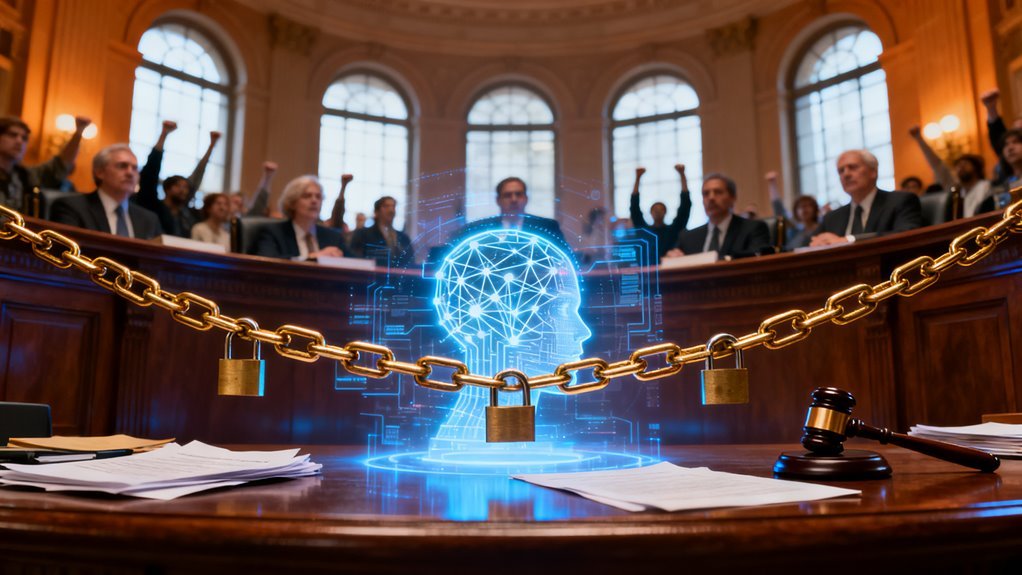

The Godot Foundation has moved to sharply restrict AI involvement in its open-source game engine, announcing on June 30, 2026 that all engine code contributions must be human-authored and that substantial AI-generated code will no longer be accepted into official repositories. The update tightens earlier contributor guidance while remaining framed as an amendment to existing policies, but in practice it nearly bans AI-authored code from the core engine and editor. The rules apply immediately to bug fixes, new features, and performance work across all godotengine repositories.
In the revised guidelines, the foundation explicitly prohibits autonomous AI agents and “vibe coding,” treating both as incompatible with accountable, high-quality engine development. Pull requests generated wholly by systems such as ChatGPT, Claude, Grok, or similar large language models are rejected, as are proposals where AI acts as a ghostwriter for humans. Maintainers also ban AI-written comments, issue descriptions, and proposal text, insisting that communication with volunteer reviewers remain directly human-authored to preserve clarity and responsibility.
AI assistance is not banned outright but is limited to narrowly defined “menial” tasks. Contributors may use tools for single-line code completion, regular expression help, or bulk find-and-replace, as long as these operations support rather than replace human-authored logic and remain fully understood by the submitting developer. Machine translation and minor textual edits are similarly tolerated when the original content was written by a human and is improved through subsequent manual review. The policy requires contributors to disclose any AI use in pull request discussions so maintainers can distinguish acceptable minor assistance from substantial generation that would violate the rules.
AI stays a servant for menial tasks; real logic and communication must remain human-authored and disclosed.
Enforcement reflects the project’s desire to keep review workloads manageable while safeguarding repository governance. These rules respond to an overwhelming backlog of open pull requests from new contributors and a shortage of qualified reviewers available to carefully assess them. Autonomous AI agent use or vibe-coded submissions trigger automatic bans from the GitHub repository, extending an existing auto-ban policy and emphasizing that prompt-driven development is incompatible with long-term participation. Low-quality, AI-heavy pull requests are dismissed as “slop” and rejected on sight, and every accepted change must receive explicit human review and approval before merging into the engine codebase.
Foundation representatives link these measures to a surge of suspected AI-generated contributions that introduced code lacking deep understanding, eroded trust in authorship, and consumed scarce maintainer attention. By insisting that meaningful patches be genuinely human-written and owned, they aim to foster learning, preserve architectural coherence, and protect open-source game development from becoming a dumping ground for unaccountable machine output.
Within the wider open-source landscape, the move positions Godot as a prominent example of a project drawing a hard boundary between human creativity and automated code generation. The foundation argues that engines underpinning thousands of games require maintainable, accountable changes, and that review processes work best when contributors can engage in dialogue, absorb critique, and iterate over time—capabilities current large language models do not meaningfully possess. That distinction underpins the 2026 policy.