
As Japan moves to establish itself as a global leader in artificial intelligence, NVIDIA has forged a sweeping network of partnerships spanning national infrastructure, industrial robotics, automotive technology, and cloud computing across the country. Jensen Huang‘s visit to Japan has underscored the scale of these commitments, positioning NVIDIA at the center of Japan’s sovereign AI ambitions.
At the national level, Japan has launched a physical AI infrastructure initiative developed through a coordinated effort involving government, industrial leaders, and NVIDIA. The project is framed as the world’s first national AI system for physical AI.
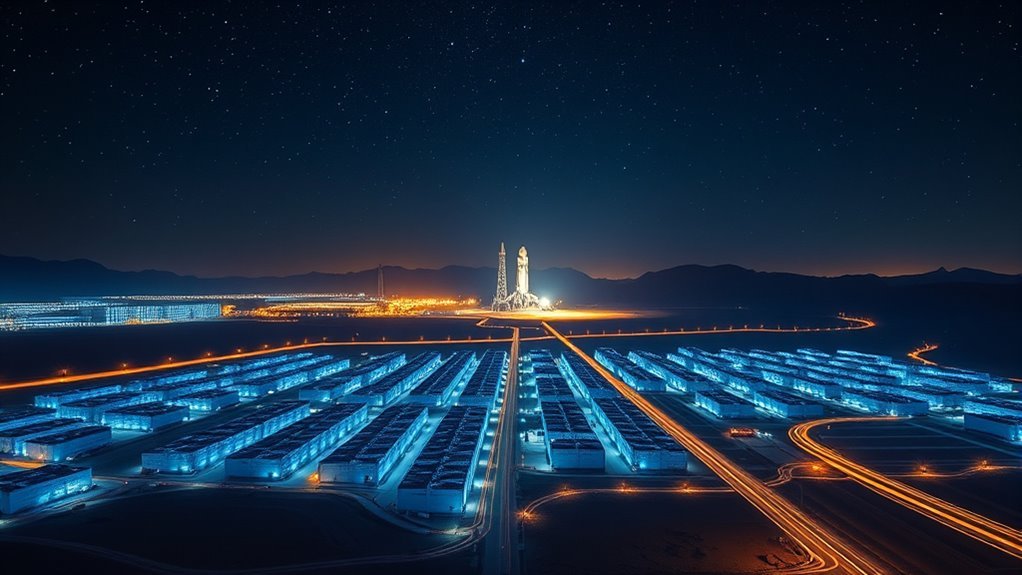
Central to this effort is the formation of Noetra Corp, a consortium comprising SoftBank, Sony, Honda, and NEC. The consortium will leverage advanced NVIDIA GPUs and CPUs to drive domestic AI technology development. The initiative’s hardware backbone is the NVIDIA Vera Rubin AI factory, featuring 13,750 Vera CPUs and 27,500 Rubin GPUs, designed to handle national-scale AI workloads and power core world models. Japan positions this infrastructure as a cornerstone of its sovereign AI strategy and economic competitiveness.
Noetra Corp’s NVIDIA-powered AI factory forms the hardware foundation of Japan’s sovereign AI ambitions.
On the robotics and industrial automation front, Fujitsu, Fanuc, Yaskawa Electric, and Kawasaki Heavy Industries have all joined NVIDIA’s Cosmos alliance to develop specialized manufacturing AI models. These partnerships utilize NVIDIA’s Isaac, Cosmos, and related robotics stacks to build AI-powered automation for factories, logistics, and hospital environments.
Hitachi, Fanuc, Yaskawa Electric, and Kawasaki Heavy Industries are also collaborating with NVIDIA on AI systems that integrate and control entire factories and power plants. The deepening of these industrial relationships directly addresses concerns about Japan being bypassed in the global AI race, with additional partnerships extending to FANUC, NEC, SoftBank, Kubota, and Mitsubishi Electric.
In the automotive and mobility sector, Toyota has extended its partnership with NVIDIA to develop driver-assistance systems on NVIDIA DRIVE platforms and factory simulations in NVIDIA Omniverse. Toyota’s next-generation L2++ vehicles are being built on NVIDIA DRIVE AGX, incorporating autonomous driving and digital twin capabilities.
Toyota’s Woven subsidiary is using NVIDIA infrastructure to train vision-language models for urban traffic, supporting smart city applications. NVIDIA technology is also integrated into Toyota’s Woven City project in Susono, Shizuoka Prefecture, embedding AI into urban infrastructure and mobility systems. Kawasaki Heavy Industries further reinforces the automotive and robotics overlap within NVIDIA’s expanding Japan footprint.
Across the cloud and telecom landscape, SoftBank, GMO Internet Group, Highreso, KDDI, Rutilea, and SAKURA internet are deploying NVIDIA accelerated computing, networking, and software to build out national AI infrastructure. The FRONTia Project, underpinning much of this effort, aims to develop multimodal foundation models for AI robotics, with pretrained weights made available to domestic developers alongside tools such as NVIDIA Nemotron, Cosmos, and Isaac GR00T. Several of these providers are certified by Japan’s Ministry of Economy, Trade and Industry, lending institutional weight to the cloud infrastructure push. Together, these developments reflect a broad and deliberate strategy by NVIDIA to embed itself within Japan’s evolving AI ecosystem at every level.