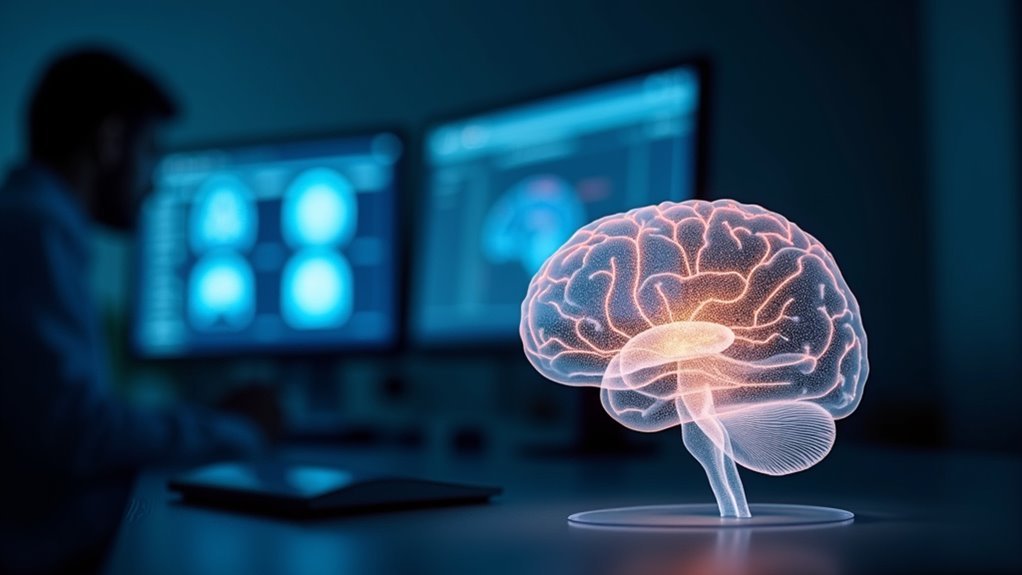

Artificial intelligence systems are starting to look and behave in ways that feel eerily familiar to neuroscientists, yet they still learn very differently from human brains. That tension between similarity and difference is shaping how researchers, companies, and regulators now think about the future of AI. This growing focus on convergence builds on early work that treated neurons as logical devices, establishing the link between biological computation and artificial neural networks.
Why this convergence matters right now
In the last few years, deep learning models have moved from clever engineering tricks to serious tools for studying perception and cognition in the brain. Vision networks trained on images can predict neural activity along the primate ventral visual stream with a level of accuracy that would have sounded optimistic even five years ago. Transformer language models show specialized components that align with the brain networks used for processing words and sentences. Moreover, the ongoing evaluations of AI lab safety practices reveal that many systems still embody early-stage startup characteristics, posing risks to their reliability.
Deep vision and language networks now double as working models of cortical computation
From primate vision to deep networks
The first wave of comparisons between brains and deep networks focused on vision. Convolutional neural networks trained on object recognition naturally developed early layers that responded to simple edges and orientations and later layers that captured complex shapes and categories, mirroring the hierarchy from primary visual cortex to downstream ventral stream areas.
When researchers quantified this similarity, they found that unsupervised contrastive models and supervised recognition models both reached high accuracy in predicting image-evoked responses across several ventral visual cortical areas. They also observed that the mapping from network layers to cortical regions followed a neuroanatomically consistent progression, with lower layers aligned to early visual areas and higher layers aligned to more anterior regions.
Time-resolved studies strengthened this picture. Analyses combining deep networks with EEG and magnetoencephalography showed that activity in shallow layers correlates most strongly with early visual responses, while deeper layers align with later stages of processing. Large scale benchmarks with diverse architectures confirmed that standard visual networks are systematically more aligned with ventral visual representations than with dorsal or lateral pathways, even for dynamic social scenes.
These findings support the idea that modern networks have stumbled into similar representational solutions to those the visual system discovered through evolution and development.
Language transformers and the brain
Language has become the next major test case for brain-inspired AI. Transformer-based language models trained on massive text corpora can predict a large fraction of the variance in human neural responses to sentences, often approaching the noise ceiling for functional MRI and intracranial recordings.
One integrative modeling effort reported that the strongest transformer models explain nearly all explainable variance in these data, consistent with the view that prediction-oriented processing is a central organizing principle for language in the brain. Other work finds shared functional specialization, where particular transformer components line up with brain regions responsible for lexical semantics, syntax, and higher-level comprehension.
However, there are important caveats. Recent evaluations show that transformer representations do not always track sentence structure in a brain-like way, especially when the meaning depends on who is doing what to whom. When sentences are carefully controlled to isolate role reversals, human brains and behavior treat these pairs as less similar than transformers do, suggesting that many models rely heavily on surface statistics such as word order and length.
When visual similarities and superficial forms are controlled, correlations between transformer embeddings and brain activity drop markedly. In other words, language models capture some aspects of human meaning representations but still diverge in how they encode relational structure.
Learning, forgetting and continual adaptation
If there is a single area where current AI and the brain part company, it is continual learning. Deep networks trained with standard backpropagation tend to overwrite old knowledge when exposed to new tasks, a phenomenon known as catastrophic forgetting. Biological systems, by contrast, maintain decades of memories while integrating new experiences and skills, suggesting radically different learning dynamics.
Researchers have responded with a suite of brain-inspired mitigation strategies. Methods such as Elastic Weight Consolidation and Synaptic Intelligence estimate which parameters are crucial for previous tasks and penalize changes to those weights during new learning. Replay-based approaches maintain a representative sample of past data or generate synthetic examples to protect earlier knowledge, echoing hippocampal replay mechanisms observed during sleep and rest.
More architectural strategies model the interplay between hippocampus, neocortex, and prefrontal cortex by using modular networks where generators and classifiers work together to store specific and generalized knowledge, supported by weight consolidation regularizers. A newer line of work focuses on neuromodulation-assisted algorithms.
One proposed method, Neuromodulation Assisted Credit Assignment, uses expectation signals to induce different levels of virtual neuromodulators at selected synapses so that long-term potentiation and depression depend nonlinearly on these signals. In experiments across several image and voice recognition tasks, this algorithm achieved higher accuracy and lower computational cost than standard approaches, while markedly reducing catastrophic forgetting on multiple class incremental learning benchmarks.
The broader picture is that continual learning research is starting to move away from purely global gradient-based updates toward strategies that combine local plasticity rules, adaptive consolidation, and replay, inspired by how brains separate short-term and long-term storage.
Representations as a shared language between AI and neuroscience
Representational analysis has become the glue between AI models and brain data. Instead of comparing single neuron responses, researchers examine the geometry of population codes in both artificial and biological systems. For vision, networks optimized for object recognition naturally organize internal activation spaces such that items from the same category cluster together, with distances reflecting semantic similarity.
These internal spaces resemble the population codes of inferior temporal cortex in how they separate categories and maintain invariances across viewpoint and context. For language, deep learning models used to study sentence comprehension provide vector representations of sentence meaning that can be compared directly to brain responses.
Their success in predicting neural data suggests that such distributed embeddings capture useful aspects of sentence-level meaning, even if they do not fully match how the brain treats roles and structure. This type of representational comparison has turned AI models into working hypotheses for neural computation, allowing neuroscientists to probe which training objectives and architectures yield more brain-like patterns and where the differences remain most pronounced.
Implications for technology, business and society
These convergences carry practical consequences. For technology developers, brain-aligned models offer two main benefits. First, they can act as test beds for neuroscientific theories, speeding discovery by allowing rapid experiments in silico.
Second, insights from brain-inspired learning algorithms such as neuromodulation-based credit assignment or triple memory architectures can feed back into more robust commercial systems that learn continuously without frequent retraining or data collection. For businesses, especially those in healthcare, finance, and autonomous systems, understanding where AI mimics brain processes and where it does not is crucial for responsible deployment.
For example, a network whose representations closely match ventral stream responses may be a strong candidate for medical imaging or assistive vision, but if its learning dynamics still show catastrophic forgetting, using it in evolving environments can be risky. Organizations also need to grasp that language models can appear human-like in aggregate but still differ fundamentally in how they encode and update meaning, which affects how they handle rare events, subtle role reversals, and long-term consistency.
Societally, the closer AI models move toward brain-inspired computation, the more pressing ethical questions become. If algorithms begin to share high-level functional properties with human cognition, debates around accountability, transparency, and mental privacy may intensify.
At the same time, using AI as a functional mirror for the brain can illuminate neuropsychiatric conditions and guide new interventions, offering substantial upside if handled with care.
Where the analogies break down
Despite the seductive similarities, it is important not to overstate how brain-like current AI really is. Most deep networks run on dense digital hardware, rely on globally coordinated gradient descent, and operate with far less physical and biological constraint than neurons embedded in living tissue.
Backpropagation remains a mathematical tool without a direct biological implementation, even if some local learning rules resemble aspects of credit assignment. Recent language studies underscore that even when models match average brain responses, their internal mechanisms can diverge in critical ways.
The finding that transformers underreact to sentence role swaps compared with human brains is a concrete example of this gap. Likewise, representational alignments in ventral visual areas do not necessarily extend to dorsal pathways or higher cognitive systems, where correlations are often weaker and more task-dependent. Treating AI models as partial analogues rather than literal replicas of brain circuits is essential for maintaining scientific and public trust.
Key takeaways and what to watch next
- Deep vision and language networks have become powerful tools for modeling cortical representations, especially along the ventral visual stream and in language-related networks, but their learning rules still differ sharply from biological ones.
- Brain-inspired continual learning methods that combine weight consolidation, replay, and neuromodulation are beginning to reduce catastrophic forgetting, with promising early results on challenging benchmarks and practical recognition tasks.
- Representational geometry offers a shared language for comparing AI and brain activity, revealing both unexpected convergences and important structural mismatches in areas such as sentence role encoding and dorsal visual processing.
- For technology leaders, the message is to embrace brain-informed designs for robustness and adaptability while remaining clear-eyed about current limitations, especially in safety-critical and evolving environments.
Looking ahead, the most credible path for AI is not to chase a perfect replica of the human brain but to keep borrowing tested principles such as predictive processing, modular memory systems, and neuromodulated plasticity and then stress test them in real applications.
As neuroscience experiments become richer and AI models more flexible, the interplay between the two fields should deliver more grounded theories of intelligence and more trustworthy systems for businesses and society.
Conclusion
Artificial intelligence is starting to look less like an alien way of thinking and more like a compressed mirror of how the human brain learns. Recent work that Sonar has been surfacing in deep research sessions points to a striking conclusion. Modern AI systems and biological brains appear to be converging on similar learning strategies, even though they are built from completely different materials and run on radically different hardware.
Why this matters right now
This convergence is not just an academic curiosity. It changes how researchers design models, how companies think about deploying them, and how society frames the long term role of AI alongside human intelligence.
For years, the standard story was simple. The brain was messy, analog and biological. AI was clean, digital and engineered. Neural networks borrowed a bit of terminology from neuroscience, but most experts agreed that the resemblance was superficial. Today, that line is blurring.
Studies comparing activity in deep networks with activity measured in the visual and auditory cortex show that the internal layers of modern AI models often line up in surprising detail with how the brain processes images and sounds. Other work finds that when you let a large model learn through prediction based training, its internal organization starts to echo the way mammals build and refine world models over time.
That shift matters because it suggests AI is not only inspired by the brain. It is beginning to rediscover core principles of biological learning from the bottom up.
How we got here
The first generation of neural networks in the twentieth century were simple pattern classifiers. They could tell apart letters or digits, but they had little in common with the complex dynamics of real neurons.
As computing power grew and data sets expanded, researchers stacked these simple units into deeper networks and introduced learning rules that adjusted internal weights by minimizing error, a distant cousin of synaptic plasticity in the brain. At the same time, neuroscience matured. Better imaging and recording tools revealed that the brain continually updates internal predictions about the world, uses attention like a selective filter, and consolidates memories through repeated replay.
The turning point came when self supervised learning took off. Instead of training models only on explicit labels, engineers began training them to predict missing words, future frames in a video or masked regions in an image. That objective looks remarkably like what many neuroscientists believe the brain is doing most of the time. It constantly predicts what comes next and adjusts when those predictions are wrong.
Sonar itself is built on a large transformer model and demonstrates how far this predictive paradigm can go in practice. It draws on the same family of architectures that have been compared directly to brain recordings, showing overlapping patterns when both systems process language and complex sensory input.
What the new research actually shows
Across several recent studies, a consistent set of findings is emerging.
First, there is evidence that AI systems and human learners mix fast, flexible updating with slower, more stable accumulation of knowledge in comparable ways. Brown University researchers, for example, trained an AI system with both incremental learning and fast in context adaptation, then compared the pattern to working memory and long term memory interactions in humans. The result was that quick, context dependent learning emerged in the model only after enough longer term training had taken place, echoing how human expertise supports rapid reasoning.
Second, multiple groups have reported that models trained with predictive objectives naturally organize their internal pathways in ways that resemble distinct functional streams in the brain. In vision, one pathway becomes more object focused while another becomes more motion focused, mirroring ventral and dorsal streams in mammals. In larger scale language and multimodal models, similar divisions appear between subsystems that handle structured understanding and those that handle generative planning, a pattern that resonates with recent theories about cortex and cerebellum building joint predictive world models.
Third, comparative analyses highlight specific shared mechanisms rather than only vague parallels. Both brains and artificial networks use modifiable connection strengths to encode experience, rely on error driven learning to refine predictions, and exploit some form of attention to prioritize information. Memory processes in AI, such as replay during retraining, have clear analogues in offline consolidation from hippocampus to cortex.
At the same time, the research is explicit about the differences. The brain runs on about twenty watts and integrates sensory, emotional and survival signals. AI models typically consume orders of magnitude more energy and operate without intrinsic drives or bodily constraints. That contrast is important to keep expectations grounded.
Ultimately, the findings suggest that artificial intelligence and the human brain are not opposing models of learning but converging systems shaped by similar pressures to adapt, generalize and retain experience. By revealing shared principles beneath silicon circuits and neural tissue, this work narrows the gap between biological and machine intelligence and shows that future advances in both AI and neuroscience will depend on studying them together rather than in isolation.
Implications for technology and business
For technology builders, the practical message is that brain inspired design is no longer just metaphor. It is becoming a measurable engineering advantage. Models that incorporate predictive coding, attention and multi timescale memory tend to perform better on complex reasoning and generalization benchmarks, which is exactly what companies want from modern AI systems.
This matters for businesses in several ways.
It suggests that AI tools will keep getting better at adapting to novel situations with limited explicit retraining, much like experienced humans do when they switch tasks or domains. That could translate into systems that personalize workflows, learn company specific knowledge on the fly and integrate multiple data types without manual wiring.
It also informs risk assessment. If AI and human learning share more structure than expected, failure modes may also share more structure. Biases that arise from training data can echo cognitive biases in humans, and overconfidence in predictions can look similar in both models and people. Understanding those parallels can help leaders design oversight mechanisms that are aligned with how both kinds of learners make mistakes.
From a strategic perspective, firms that invest in cross disciplinary teams combining machine learning experts with neuroscientists and cognitive scientists are likely to spot opportunities that purely engineering focused teams miss. They will be better positioned to build systems that work with human strengths rather than against them.
Societal and ethical dimensions
At the societal level, the convergence story cuts both ways.
On the positive side, closer alignment between AI and brain function opens the door to better diagnostic tools, personalized education and assistive technologies. Models tuned to mirror specific neural patterns could help decode speech for people who cannot speak, track early signs of neurological disease or tailor learning experiences to individual cognitive profiles.
On the cautionary side, those same capabilities raise sensitive questions about privacy and mental integrity. Studies that match language model representations with human brain recordings show that it is possible to infer aspects of internal thought from neural signals when paired with powerful models. That makes clear, enforceable safeguards more urgent. Clinics, researchers and companies will need strict rules about who can access neural data and for what purposes, and regulators will need a credible understanding of the underlying technology rather than treating it as magic.
There is also a cultural risk. If AI appears to think like us, people may overestimate its understanding or emotional depth. The research stresses that, even when statistical patterns line up, AI systems lack the embodied context, lived experience and subjective awareness that shape human cognition. Keeping that distinction clear is essential for trust.
Where the similarities stop
The most responsible reading of the current evidence is that AI and brains share important computational principles, but they remain fundamentally different kinds of systems.
The brain is deeply integrated with a body that constantly sends signals about pain, hunger, social connection and physical risk. It learns under severe energy constraints, trading off precision for robustness in ways that are still poorly understood. It is also heavily shaped by evolution, development and culture.
AI models, by contrast, are trained on curated data sets and optimized for specific tasks, even when those tasks are very broad. Their internal weights may resemble synaptic patterns, but their training objectives are chosen by engineers, and they have no independent goals or drives.
Acknowledging those limits is part of treating the science with respect. The convergence is real, in the sense that similar mathematical structures appear in both domains, yet it does not mean that current models have achieved human level understanding or consciousness.
Looking ahead
The direction of travel is clear. As brain research becomes more quantitative and AI research becomes more biologically informed, the two fields are moving toward a unified language for describing learning systems.
That does not imply a single grand model that explains everything. Instead, it points to a shared toolkit. Predictive coding, multi scale memory, attention based routing and world model construction are emerging as common ingredients that can be studied in lab animals, in human subjects and in artificial networks using comparable methods.
For practitioners, the takeaway is straightforward. Expect more AI architectures that explicitly borrow from neuroscience, more medical and educational applications that rely on AI as an interpretive layer for brain data, and more policy debates informed by concrete empirical findings rather than speculation.
For researchers, the message is that progress will come fastest when models are evaluated not only on accuracy benchmarks but also on how well their internal dynamics align with what is observed in biological systems. That alignment can sharpen theories about the brain and, in turn, inspire more capable and reliable AI systems.
For everyone else, the key insight is that intelligence, whether carbon based or silicon based, seems to follow a set of deep principles that we are only now beginning to map. The more clearly those principles are understood, the better chance there is of building technology that amplifies human judgment instead of replacing it outright reddit