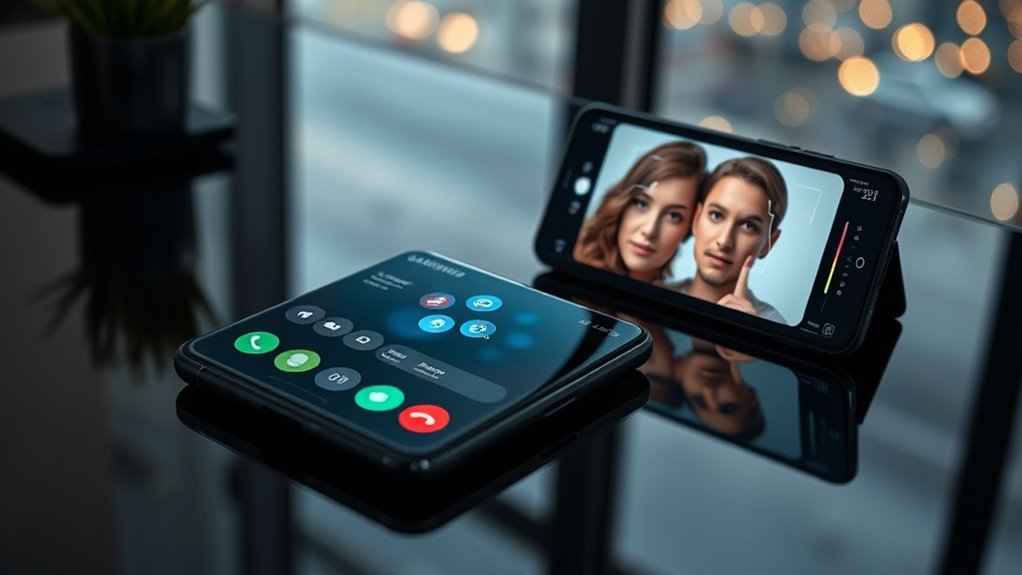
How quickly smartphones are shifting from collections of apps to intent-driven operators is becoming clear as AI agents emerge as the primary interface for everyday digital life. Against this backdrop, the CEO of Nothing positions AI agents as the successor to traditional smartphone apps, arguing that colorful grids of icons will give way to conversational operators that handle tasks end to end. In this view, apps recede into the background as invisible service endpoints, while the agent becomes the user’s primary counterpart for shopping, travel, communication, and everyday productivity.
Industry analysts broadly describe AI agents as goal-driven software entities that perceive context, plan actions, and execute multi-step tasks with minimal human intervention. Unlike simple chatbots that only respond with text, agents are designed to open apps, fill forms, make purchases, send messages, and browse the web on behalf of the device owner. On mobile devices, they operate according to objectives rather than fixed scripts, turning static software into adaptive systems capable of independent decision-making within defined constraints. This emphasis on multi-step workflows aligns with their growing use in high-friction tasks like customer support, scheduling, and in-app research. These agents leverage agentic compute patterns to improve coordination and resource allocation throughout their operations.
AI agents evolve from static tools into adaptive mobile operators that perceive context, understand intent, and complete tasks autonomously
For the Nothing CEO, this technical evolution translates into a fundamental user-interface change. Instead of hunting through folders to find and open individual apps, people are expected to interact through a single AI portal that understands natural language, remembers preferences, and coordinates actions across services. The familiar home screen is portrayed as a temporary design, likely to disappear as phones begin to behave more like trusted operators than toolboxes, finishing work once a goal is stated.
Analysts increasingly describe this shift as a move from app-centric to agent-centric computing, in which AI orchestrates applications on the user’s behalf. In this emerging “Agent Phone” era, the phone becomes an intelligent orchestration layer that interprets intent and sequences tasks across calendars, payments, communications, and content services. Devices start to feel effectively app-less to the user, even though specialized software still runs in the background as modular capabilities invoked by the agent.
Concrete use cases are already being mapped out. Simple shopping is treated as an early domain, with agents comparing prices, selecting products, placing orders, and tracking deliveries across multiple retailers without the user ever opening a dedicated shopping app.
Travel and mobility workflows, such as booking flights, reserving accommodation, ordering rides, and aligning itineraries with calendars and maps, illustrate how agents can manage complex, multi-step tasks end to end.
Everyday productivity is another focus of the prediction. AI agents are expected to set reminders, prioritize notifications, draft and send messages, split bills, and issue follow-up payment prompts without requiring the user to juggle multiple applications.
Over time, continuous learning from behavior and context allows these systems to anticipate routine needs, reducing cognitive load and shrinking the number of direct app interactions to exceptional or specialized scenarios.
For Nothing, this marks a redesign of the smartphone as an always-on operator.