The Brain’s Motivation Circuit Just Got Mapped by AI. That Matters Far Beyond Neuroscience.
For decades, the popular understanding of motivation in the brain boiled down to a deceptively simple formula: dopamine fires, you feel rewarded, you keep going. It was clean, intuitive, and wrong in ways that mattered enormously. Now a team of researchers has used artificial intelligence to map the actual circuit architecture that sustains human motivation, and the results reveal a system so layered and distributed that it fundamentally challenges how we think about everything from treating depression to designing reinforcement learning systems.
The timing here is not accidental. This discovery sits at the intersection of two accelerating trends: the use of AI as a tool for scientific discovery rather than just automation, and the growing feedback loop between neuroscience and AI architecture design. Understanding why this particular finding landed now, and what it actually means for the technology industry, requires looking beyond the headline.
What the Research Actually Found
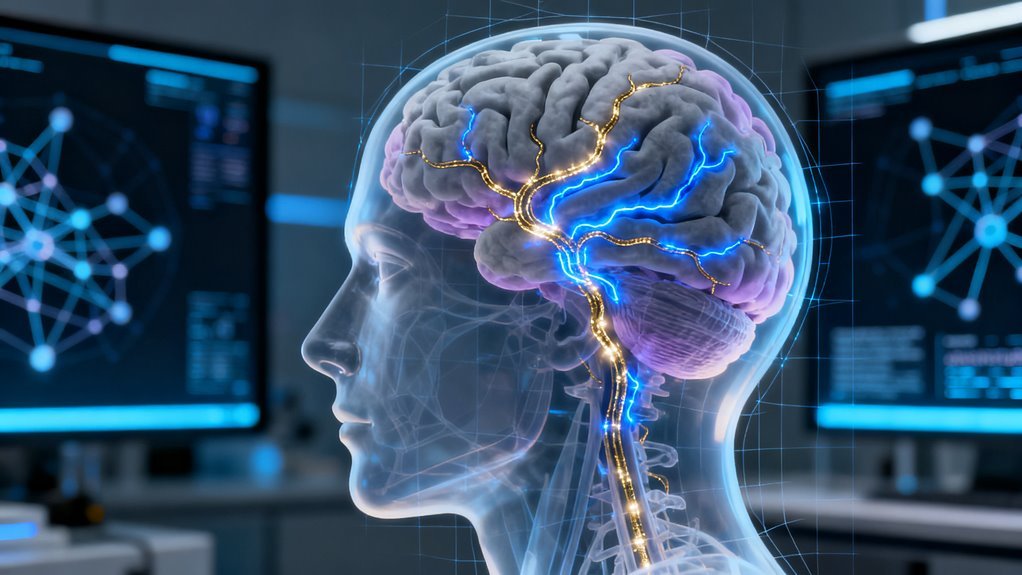
The brain’s motivation system, it turns out, operates less like a simple reward switch and more like a distributed computing network with multiple layers of oversight. The ventral tegmental area, a small cluster of neurons deep in the midbrain, acts as an ignition point. From there, signals propagate through two distinct pathways. The mesolimbic pathway drives the raw wanting impulse. The mesocortical pathway routes through higher cortical regions that evaluate, moderate, and contextualize those impulses.
What makes this genuinely interesting is the separation the researchers found between “wanting” and “liking” at the neurochemical level. These are not the same signal wearing different hats. They are distinct processes, carried by different chemical messengers, modulated by different brain regions. The orbitofrontal cortex and anterior cingulate cortex sit on top of these lower level drives, adding something like executive oversight to what would otherwise be raw compulsion.
Previous attempts to map this network relied on traditional neuroimaging analysis, which could identify active regions but struggled to characterize the dynamic relationships between them. The AI models used in this research could process the full spatiotemporal complexity of neural signaling patterns, identifying circuit connections that human researchers had either missed or lacked the statistical power to confirm.
Why AI Was the Tool That Cracked This Open
This is worth pausing on, because it illustrates something important about where AI creates genuine scientific value versus where it simply speeds up existing processes.
The motivation circuit was not invisible before. Neuroscientists have studied the mesolimbic pathway for decades. Individual components were well documented. What resisted mapping was the system level architecture: how dozens of regions interact simultaneously, how signals modulate each other in real time, how the same dopamine release can produce motivation in one context and apathy in another depending on what the cortical oversight layers are doing.
This is a pattern recognition problem at a scale that exceeds human analytical capacity. Not because the data was hidden, but because the relationships within the data are nonlinear, high dimensional, and context dependent. Exactly the kind of problem where modern AI systems excel.
The parallel to what DeepMind accomplished with AlphaFold is instructive. Protein folding was not an unknown problem. The physics was understood. What was missing was the ability to navigate an astronomically large solution space efficiently. AI did not discover new physics. It found the patterns within known physics that human researchers could not computationally access. The same dynamic is at work here.
The Feedback Loop Between Neuroscience and AI Design
Here is where this gets strategically important for anyone building or investing in AI systems.
Reinforcement learning, the training paradigm behind everything from game playing agents to RLHF tuned large language models, was originally inspired by a simplified model of dopamine signaling. The reward prediction error theory, proposed in the 1990s, suggested that dopamine neurons fire when outcomes exceed expectations and go quiet when outcomes disappoint. This became the mathematical backbone of temporal difference learning, which became the backbone of modern RL.
But that model was always a simplification. It treated motivation as a single signal. It collapsed wanting and liking into one reward function. It ignored the cortical oversight layers entirely.
Now we have a much more detailed picture of what the actual biological system looks like. And that picture suggests the current generation of reinforcement learning systems is missing critical architectural features.
Consider the wanting versus liking distinction. In current RL frameworks, there is typically one reward signal. An agent either gets positive reward or it does not. There is no mechanism for an agent to “want” something without “liking” it, or to find an outcome pleasurable without being motivated to pursue it again. Yet this separation appears to be fundamental to how biological intelligence sustains motivation over long time horizons without collapsing into either compulsive repetition or complete disengagement.
Anyone working on AI alignment should find this deeply relevant. One of the persistent challenges in aligning AI systems is reward hacking, where agents find unintended shortcuts to maximize their reward signal. A system with separate wanting and liking circuits, plus cortical oversight that contextualizes both, would be structurally more resistant to this failure mode. The biological system essentially has built in checks and balances that prevent the motivational equivalent of wireheading.
Google DeepMind, OpenAI, and Anthropic have all published research on reward model robustness in the past 18 months. None of it, to my knowledge, has explicitly drawn on the wanting versus liking separation as an architectural principle. That may be about to change.
Implications for Psychiatry and Neurotechnology
The clinical implications are substantial and more immediate than the AI design implications.
Depression, addiction, ADHD, and schizophrenia all involve disruptions to the motivation circuit, but they disrupt it in different ways and at different points in the network. The old dopamine model led to a generation of treatments that essentially tried to turn the dopamine dial up or down globally. SSRIs, antipsychotics, and stimulants all operate on this principle to varying degrees. They work for some patients, fail for others, and produce side effects that often reflect the bluntness of the intervention.
A detailed circuit map opens the door to targeted interventions. If you know that a specific patient’s depression involves dysfunction in the anterior cingulate cortex’s oversight of wanting signals rather than a global dopamine deficit, you can design a very different treatment. Deep brain stimulation, transcranial magnetic stimulation, and next generation pharmaceuticals could all potentially target specific nodes in the motivation network rather than flooding the entire system.
Neuralink, Synchron, and other brain computer interface companies should be paying close attention. The commercial viability of neural interfaces depends partly on understanding which circuits to read from and write to with enough precision to produce meaningful therapeutic outcomes. A validated circuit map of motivation is exactly the kind of foundational knowledge that turns speculative neurotechnology into something with clear clinical targets.
What People Are Overlooking
Three things stand out as underappreciated.
First, this research validates AI as a discovery tool in a domain that directly feeds back into AI development. That recursive loop, where AI helps us understand the brain which helps us build better AI, has been theoretical for years. It is now producing concrete results. The pace of this loop will accelerate as both neuroscience data collection and AI analytical capabilities improve simultaneously.
Second, the commercial implications extend beyond healthcare. Any company designing systems that need to sustain user engagement, think productivity software, educational platforms, fitness applications, should care about the distinction between wanting and liking. Building products that people want to use but do not like using is a well documented failure mode in consumer technology. Understanding the neurological basis of that distinction could inform genuinely better product design rather than more manipulative engagement tactics.
Third, the ethical terrain is shifting. A detailed map of the motivation circuit is also, unavoidably, a detailed map of how to manipulate motivation. The same knowledge that enables better depression treatment enables more precisely targeted persuasion systems. Regulatory frameworks for neurotechnology and AI powered behavioral influence are already lagging behind the technology. This research widens the gap further.
What Comes Next
Expect to see three developments in the near term.
Pharmaceutical and biotech companies will begin incorporating this circuit architecture into drug target identification pipelines. The precision medicine movement in psychiatry has been waiting for exactly this kind of structural map.
AI research labs will start experimenting with motivation architectures that separate wanting from liking in reinforcement learning agents. Whether this produces measurable improvements in alignment or long horizon planning remains to be seen, but the theoretical motivation is strong enough that someone will try.
And the broader conversation about AI as a scientific instrument, not just a product category, will gain momentum. AlphaFold won the Nobel Prize. If AI derived brain circuit maps lead to new treatments for depression or addiction, the case for AI as the most consequential scientific tool since the microscope becomes very difficult to argue against.
The dopamine equals motivation model served its purpose for a generation. What replaces it is richer, stranger, and far more useful. The fact that it took AI to see it clearly tells us something important about both the brain and the tools we are building to understand it.
For decades, the shorthand explanation for human motivation went something like this: dopamine equals reward, reward drives behavior. It was a useful simplification, good enough for textbooks and TED talks. But neuroscientists always knew the reality was messier.
Now, a convergence of advanced circuit mapping techniques, optogenetics, and high resolution imaging has produced something the field has never had before: a precise, functionally validated architecture of how motivation actually works in the human brain. And the implications stretch far beyond neuroscience, reaching directly into how we design AI systems, build brain computer interfaces, and treat psychiatric conditions that affect hundreds of millions of people worldwide.
What the New Circuit Architecture Actually Shows
The ventral tegmental area, a small cluster of dopamine producing neurons deep in the midbrain, has long been identified as the ignition point for motivational signaling. What is new is the granularity with which researchers can now trace its outputs and understand how those outputs interact with downstream targets to produce fundamentally different psychological experiences.
Two pathways emerge from this region. The mesolimbic pathway feeds dopamine into the nucleus accumbens, the septum, the amygdala, and the hippocampus. This is the reward anticipation circuit, the system that makes you want things before you have them.
The mesocortical pathway, meanwhile, routes signals to the medial prefrontal cortex, the orbitofrontal cortex, and the perirhinal cortex, tying raw motivation to the kind of structured thinking that turns impulse into strategy.
What makes recent mapping work genuinely significant is the discovery that “wanting” and “liking” are not just conceptually different. They are neurochemically separable, running on distinct substrates within overlapping but distinguishable networks.
The hedonic experience of enjoying a reward relies on opioid signaling and specific hotspot regions within nucleus accumbens and pallidal circuits. The motivational drive to pursue that reward operates through broader striatal networks that loop in the amygdala and neostriatum.
This explains a phenomenon clinicians have observed for years but could never fully account for: why desire and pleasure so often decouple, why addiction persists long after enjoyment has evaporated, and why some patients on dopaminergic medications develop compulsive behaviors toward activities they do not actually find pleasurable.
The Cortical Layer That Turns Impulse Into Purpose
Raw dopaminergic signals, left unchecked, would produce chaotic, impulsive behavior. The cortex prevents this. The orbitofrontal cortex functions as a continuously updated value calculator, reassessing the worth of potential rewards based on context and experience.
The dorsolateral prefrontal cortex takes those value assessments and converts them into goal directed action plans, feeding instructions back into the dopamine system in a loop that is far more bidirectional than older models assumed.
Two other cortical players deserve attention. The anterior cingulate cortex mediates the relationship between motivation and attention, essentially deciding which motivational signals get cognitive resources and which get suppressed.
The anterior insula handles something even more nuanced: effort based cost benefit analysis, the calculation of whether a goal is worth the energy required to pursue it.
This layered architecture, subcortical drive modulated by cortical oversight, is not just elegant neuroscience. It is a design principle that the AI field has been groping toward for years without having this biological reference point clearly articulated.
Reward Prediction Error: The Learning Signal That Rewrites the Map
Perhaps the most consequential element in the new circuit model is the reward prediction error signal. When outcomes deviate from expectations, either better or worse, dopaminergic neurons adjust their firing rates.
These error signals propagate from the striatum to the prefrontal cortex, and the result is learning. The brain recalibrates which goals deserve sustained effort and which should be abandoned.
Anyone working in reinforcement learning will recognize this immediately. Temporal difference learning, the algorithmic backbone of systems from DeepMind’s AlphaGo to modern robotics controllers, was directly inspired by earlier, cruder models of dopaminergic prediction error.
What the new circuit mapping reveals is that biological reward prediction error is far more sophisticated than its computational analogue. It does not just update value estimates. It interacts with glutamate signaling in corticolimbic circuits to amplify or dampen motivational drives based on the convergence of cognitive and emotional context.
The brain does not simply learn what is rewarding. It learns when, why, and how much effort to invest, all simultaneously.
This has direct relevance for the next generation of AI architectures. Current reinforcement learning systems remain brittle precisely because their reward signals lack this contextual richness.
They optimize for a scalar reward without the kind of multi layered modulation that the biological system provides. Building AI systems that integrate something analogous to the wanting/liking distinction, or that incorporate effort cost calculations alongside reward maximization, could produce agents that behave far more robustly in open ended environments.
Why This Matters for Brain Computer Interfaces and Neuromodulation
The practical implications for neurotechnology are immediate. Deep brain stimulation, already used to treat Parkinson’s disease and treatment resistant depression, has historically been deployed with a somewhat imprecise understanding of the circuits being modulated.
A detailed motivational circuit map changes the targeting calculus significantly. Clinicians could potentially distinguish between interventions that restore “wanting” versus those that restore “liking,” tailoring treatments to the specific motivational deficit a patient exhibits.
Companies like Neuralink, Synchron, and Blackrock Neurotech are building interfaces that will increasingly interact with these circuits. The question of whether a brain computer interface should modulate motivation, and if so, how, is no longer hypothetical.
It is an engineering decision that requires exactly this kind of circuit level understanding.
The ethical dimensions here are significant and underexplored. A technology that can selectively enhance wanting without affecting liking, or vice versa, raises questions that existing regulatory frameworks are not equipped to handle.
Who decides what level of motivation is “normal”? What happens when employers or insurers gain access to motivational biomarkers? These are not distant concerns. They follow directly from the neuroscience now coming into focus.
What the AI Field Should Take From This
The broader lesson for AI development is architectural. The brain does not produce motivated, purposeful behavior from a single module or a single signal. It emerges from coordinated activity across interconnected systems, each contributing a different computational function: value estimation, effort calculation, prediction error correction, attentional gating, and hedonic evaluation.
Current AI systems, even the most advanced large language models and reinforcement learning agents, tend to collapse these functions into monolithic reward signals or rely on human feedback as a proxy for the entire motivational stack.
The new circuit map suggests that genuine artificial motivation, if such a thing is ever built, would require not just a reward signal but an architecture that separates wanting from liking, integrates effort costs, maintains bidirectional communication between “drive” components and “control” components, and continuously updates value estimates through contextually rich error signals.
That is a fundamentally different design philosophy from what dominates AI research today.
Whether AI systems should have anything resembling motivation is, of course, a separate and deeply consequential question. But understanding the biological blueprint in this level of detail at least clarifies what the engineering challenge would involve.
And for the nearer term applications, from personalized medicine to adaptive educational software to workplace productivity tools, the ability to model and predict human motivation with circuit level precision opens possibilities that were not available even five years ago. Notably, fMRI studies have demonstrated that anticipation of rewards activates dopamine pathways before any reward is actually received, underscoring how predictive signaling rather than consumption alone shapes the motivational dynamics these tools aim to harness.
The brain’s motivation system turns out to be less like a thermostat and more like a distributed negotiation among specialized agents. For an industry that has spent the last several years building increasingly powerful but motivationally simplistic systems, that is a finding worth paying close attention to.