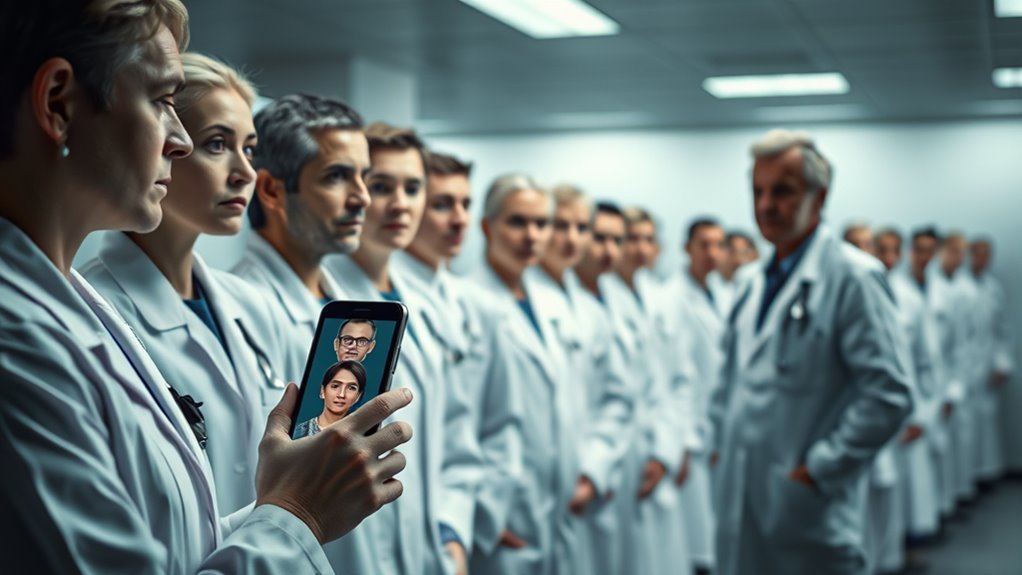

On TikTok and Instagram it is becoming genuinely difficult to know whether the doctor in your feed is a licensed clinician or a synthetic character assembled by artificial intelligence. Recent investigations show that AI generated doctors and health influencers are already drawing millions of views and shaping what people believe about cancer, hormones, weight loss and everyday risks. This matters now because health systems are struggling with misinformation at the same moment that cheap generative tools and engagement driven platforms reward whatever content spreads fastest, not what is true.
How online health advice evolved into synthetic doctors
For more than a decade people have turned to search engines and social platforms for quick medical answers, a trend sometimes called the rise of informal online doctoring. The first wave of concern focused on misleading blogs and unqualified influencers who offered home remedies and wellness tips without evidence.
As short video platforms grew, a new type of persona emerged polished health creators presenting themselves as gynecologists, dietitians or hormone experts giving bite sized advice directly to camera.
The shift to AI generated doctors began around 2024 and 2025 when generative video and audio tools became easy to use and inexpensive. Rolling investigations in 2025 and 2026 by newsrooms and fact checking organizations documented campaigns on TikTok and Instagram where synthetic avatars posed as medical specialists to sell supplements and beauty products. Sophos reports that 52% of incidents are resolved autonomously, highlighting the rapid response capabilities that AI can provide.
Fact checkers such as Full Fact and Science Feedback as well as broadcasters and cybersecurity researchers have since mapped dozens of accounts and more than one hundred videos using either entirely fabricated doctors or deepfake versions of real clinicians.
What makes this moment different is scale and realism. One study of TikTok health content found that AI generated material appeared in about forty percent of top videos, and for broad search terms such as health tips the share of AI assisted content rose above eighty percent.
Top AI doctor videos in that sample averaged around two and a half million views amplifying whatever advice those synthetic experts delivered.
How AI generated doctors are created
The investigations reveal two main patterns.
The first uses fully synthetic personas. Companies and anonymous marketers build a digital doctor from scratch by combining a realistic AI face generator, an AI voice and a script often written or refined by text generation systems. The result is a persuasive avatar that introduces itself as a specialist with many years of clinical experience, yet no such person appears in any professional registry.
The second pattern relies on deepfake techniques that target real physicians. Scammers collect public footage of respected doctors from interviews, conference talks or educational channels, then use AI tools to clone the face and voice and overlay new audio so that the doctor appears to endorse products or repeat talking points they never approved.
In some campaigns the fake videos show well known clinicians recommending supplements for menopause, miracle weight loss pearls or alternatives to GLP 1 drugs that do not exist or have no credible evidence behind them.
Technically these productions are becoming smoother. Early deepfakes were easy to spot from mismatched lip movements, odd blinking or strange lighting artifacts around the face. Newer tools reduce these glitches, although security researchers still advise viewers to watch closely for robotic voices, overly polished delivery and visual inconsistencies that hint at synthetic origins.
What fake doctors are actually saying
When researchers examined the content they found a familiar mix of myths, half truths and aggressive product promotion wrapped in clinical language.
Several AI generated physicians were caught repeating debunked cancer claims. In popular clips, synthetic doctors warned that microwaving food in plastic containers, using standard deodorants or sleeping beside mobile phones would cause cancer.
Cancer Research UK and other oncology experts have long refuted these myths, yet the videos presented them as settled facts with simple explanations aimed at anxious viewers. For someone already worried about their diagnosis or family history such clear and confident messaging can feel more compelling than nuanced evidence from official sources.
Other content focused on unproven supplements and natural remedies for conditions ranging from hair loss to endocrine disorders and chronic fatigue. ESET researchers documented AI avatars posing as gynecologists and nutrition specialists who recommended specific brands of vitamins, oils and detox kits as safe cures or preventive tools for intimate health concerns.
Medscape reporting similarly highlighted synthetic doctors promoting oils for hair loss, supplements for hormonal balance and generic detox routines as universally beneficial low risk solutions, even though many of these products lack rigorous clinical trials.
Several investigations described campaigns targeting women experiencing menopause with AI doctors endorsing bespoke probiotic blends and hormone free treatments based on loose scientific claims.
In reality the evidence behind these regimens is often limited, and some can interact with existing medications or delay appropriate medical care. Yet the tone of the videos is reassuring, and the presence of a white coat and professional title encourages viewers to treat advertising as trustworthy guidance.
Impersonation and damage to real clinicians
Impersonation of real physicians significantly raises the stakes. Deepfake videos using the names and likenesses of recognized doctors have appeared across TikTok, Instagram, Facebook and YouTube.
In several cases highlighted by CBS and other outlets, doctors discovered videos of themselves apparently praising vitamin protocols, hormone treatments or all purpose cures that they had never heard of, let alone endorsed.
The reputational impact is twofold. Patients may arrive in appointments quoting advice from videos that look fully legitimate yet are entirely fabricated, creating confusion and sometimes confrontation when the clinician disagrees.
At the same time public audiences may begin to doubt whether any video of a doctor is authentic, eroding trust in educational content that health systems rely on to promote screening and prevention. The chief executive of the American Medical Association has described deepfake doctors as a threat to public health, pointing to scams that impersonate high profile clinicians to push counterfeit weight loss pills and snake oil supplements.
The rise of chatbot doctors and blurred boundaries
Parallel to synthetic video doctors, general purpose AI chatbots are increasingly being used for health advice. People type symptoms or questions into chat interfaces and receive apparently detailed explanations and care suggestions within seconds.
Recent audits of popular free chatbots found that their medical answers often sound confident but are frequently incomplete, misleading or unsafe when followed without professional oversight.
One study cited by NPR reported accuracy rates under fifty percent for certain health scenarios, with chatbots omitting red flag symptoms that should trigger urgent care. A separate Nature Medicine aligned audit concluded that chatbots commonly provided weak citations and risk laden recommendations, including inappropriate self treatment suggestions for serious conditions.
When these systems are packaged as virtual doctors or digital clinics the line between informational tool and clinical authority becomes dangerously blurred.
Combined with AI video personas, chatbot advice can create a full stack synthetic care environment where the face, voice and text all appear medically authoritative but none of it is backed by licensing, liability or accountable oversight.
Why this is happening now
Several forces converge to make AI generated doctors particularly attractive to scammers and aggressive marketers.
Short video platforms reward content that holds attention and triggers engagement, regardless of whether it is accurate. AI tools make it cheap to produce large volumes of polished clips, a phenomenon some analysts call AI slop video, flooding feeds with low effort material that exploits recommendation algorithms.
Creating a synthetic doctor avatar removes constraints such as filming schedules, performance costs and reputational risk for the producer. The doctor can appear on screen at any time, in any language, tailored to any demographic or niche health concern.
At the same time there is a real demand for accessible health advice. Long appointment waits, rushed consultations and complex medical jargon push people toward easier explanations and quick answers.
Synthetic doctors promise precisely that short, clear guidance delivered in a friendly tone that fits inside platform native formats. For marketers the combination is powerful targeted persuasive messaging wrapped in a familiar clinical aesthetic.
Generative tools have also lowered barriers for organized scams. Once a deepfake pipeline is built, it can be reused to impersonate different doctors, revoice existing footage with new scripts and copy the persona to multiple accounts and platforms.
Cybersecurity researchers have documented campaigns where the same synthetic gynecologist appears in both TikTok and Instagram feeds promoting similar supplements with localized branding depending on audience location.
Public health risks and societal implications
The health risks of fake doctors operate on several levels.
Recent analyses of TikTok health content show that AI-generated material now makes up a large share of popular videos, with average view counts in the millions, amplifying the huge danger when misleading medical claims reach audiences who increasingly rely on social media for health advice.
First there is direct harm when people act on inaccurate or dangerous advice. Cancer myths can cause individuals to fixate on everyday exposures while ignoring evidence based screening and lifestyle changes that genuinely affect risk.
Miracle detox claims may encourage people to try unregulated products that interfere with medications or delay treatment for liver or kidney disease. Counterfeit weight loss pills promoted by deepfake clinicians can contain undeclared stimulants or other substances with serious cardiovascular risks.
Second there is opportunity cost. Time and attention spent on misleading recommendations displace engagement with trustworthy sources such as public health agencies, professional societies and experienced clinicians.
When fear driven or sensational advice dominates feeds, nuanced and boring but accurate explanations struggle to gain reach.
Third there is systemic erosion of trust. As deepfakes become more convincing, audiences may begin to doubt whether any digital doctor can be believed. This skepticism can spill over onto legitimate telehealth services and educational campaigns, undermining efforts to expand access through digital tools.
The situation resembles earlier battles over fake news but with an added layer of vulnerability because health decisions directly affect bodies, families and finances.
Finally these trends create new pressure on medical institutions and regulators. Professional organizations must monitor social platforms for impersonations, respond quickly to protect members’ reputations and educate the public on how to distinguish genuine expertise from synthetic performance.
Regulators will need to consider whether existing advertising, consumer protection and medical licensing rules adequately cover AI generated personas, especially when they cross borders and operate through anonymous shell companies.
What can be done now
There is no simple fix, but several practical strategies can reduce harm and build resilience while longer term governance catches up.
Platforms can strengthen detection and response. Investigations show that external fact checkers and cybersecurity researchers are already identifying synthetic doctor campaigns and feeding evidence back to platforms.
Systematic collaboration including trusted flagger programs, better internal tooling for detecting cloned faces and voices, and clear penalties for accounts that impersonate clinicians would limit reach and profitability.
Health systems and professional bodies can increase proactive communication. Verified doctors who create content can use consistent branding, cross platform presence and official directories so that patients can more easily confirm authenticity.
Clear public statements from medical associations about known deepfake scams help inoculate audiences against specific deceptive narratives.
Regulators and policymakers can modernize rules to cover synthetic endorsements. Many of the products promoted by AI doctors fall under existing health claims and advertising standards, but enforcement often lags behind digital tactics.
Explicit guidance on AI generated personas and liability for impersonation would send a signal that hiding behind synthetic avatars does not remove accountability.
Individuals also have an important role. Security researchers and fact checkers offer several red flags that everyday viewers can use.
- Watch the mouth and eyes. Poor lip sync, odd blinking or facial expressions that do not match emotional tone can indicate an artificially generated face.
- Listen for unnatural audio. Voices that sound overly smooth, monotone or robotic, with no breathing or ambient noise, may be AI generated.
- Check the account history. New profiles with few followers, minimal previous posts or inconsistent biographical details should prompt caution.
- Be wary of miracle language. Claims that doctors hate a simple trick, that a product guarantees results or that one remedy fixes many unrelated conditions are strong warning signs.
- Verify identity beyond the platform. Searching for the doctor in professional directories, hospital websites or respected medical organizations can confirm whether they exist and practice as claimed.
Above all, people should treat any online doctor as a starting point for questions, not a substitute for in person or formally supervised care, especially for serious conditions or medication decisions.
Forward looking insights
The emergence of AI generated doctors is not an isolated glitch but a preview of how synthetic media will intersect with health, finance, politics and other domains where trust and expertise are central.
The technology itself is not inherently malicious. The same tools that create fake physicians can be used to localize genuine public health messages, translate specialist explanations into accessible clips and extend the reach of evidence based campaigns.
There is real opportunity for responsible organizations to harness generative systems while maintaining strong verification and oversight.
The challenge is aligning incentives and guardrails so that trustworthy content thrives and deceptive content is constrained. That will require coordinated effort among platforms, regulators, medical associations, researchers and civil society.
It will also demand that audiences grow more literate about synthetic media, treating polished appearances and confident tones as signals to scrutinize rather than proof of authority.
Over the next few years expect to see more technical measures such as cryptographic content provenance, watermarking of AI generated video and dedicated monitoring teams focused on health impersonation.
Legal frameworks will gradually clarify liability, and major platforms are likely to face pressure to treat health misinformation and impersonation with the same seriousness as financial fraud.
Trust in medicine has always depended on transparent qualifications, accountable practice and shared norms about what counts as evidence.
Those foundations can survive the era of synthetic doctors, but only if the combined response matches the speed and creativity of the systems that made these avatars possible.
As people navigate feeds filled with polished yet unverified health advice, the most important habit will be a simple one pause, question the source and seek corroboration before acting.
Conclusion
Convincing digital doctors now appear across social platforms and video sites, speaking with polished bedside manner and delivering tailored health advice at scale. This matters because many viewers treat these synthetic professionals as real clinicians, yet the advice they offer can be misleading, commercially driven, or outright dangerous.
How online health misinformation evolved into synthetic doctors
Online health misinformation has been a problem for years, but generative AI has changed its speed and realism. Health agencies such as the National Health Service in the United Kingdom have already warned that misleading health content on social media is a genuine threat to public health. That warning came during a period when influencers and unqualified commentators were spreading false claims about cancer, diet, and chronic disease.
The latest wave goes further by creating entire doctor personas from data and code. Recent investigations show that AI generated physicians are now gaining millions of views on TikTok while presenting themselves as clinical experts. In a study of health related TikTok videos, AI generated content appeared in roughly forty percent of the top results, often posted by accounts designed to look and sound like real doctors. These synthetic figures repeatedly push disproven myths about cancer, such as everyday deodorant use or sleeping next to a phone causing the disease, despite clear refutation from organizations like Cancer Research UK.
At the same time, generative models and face cloning tools have become simple for non experts to use, lowering the barrier for scammers to impersonate respected clinicians with video and audio that many viewers cannot easily distinguish from genuine recordings. That shift transforms traditional misinformation into something that looks like personalized consultation, delivered on demand and optimized for engagement.
What AI generated doctors are doing today
The most visible threat involves deepfake doctors who impersonate real physicians to promote supplements, miracle cures, and unapproved treatments. Investigations have uncovered hundreds of manipulated videos where the faces and voices of well known health experts are repurposed to sell products targeting menopause, weight loss, blood pressure, and other common concerns. In several cases, clinicians discovered that their names, photos, and clinical reputations had been attached without consent to aggressive marketing campaigns for unproven therapies.
Professional organizations now describe these impersonations as a public health and safety crisis rather than a niche technology concern. The American Medical Association has warned that deepfake content which uses a physician identity to endorse unproven care erodes patient trust and can steer people toward dangerous choices. In media interviews, its leadership has emphasized that when bad actors exploit the authority of a doctor, they compromise the entire patient physician relationship and the credibility of evidence based medicine.
Beyond influencer style clips, there are emerging reports of forged diagnostic images and synthetic clinical documents inserted into health system workflows. Researchers have noted scenarios where manipulated radiology images or laboratory results could be used to defraud insurers, trigger unnecessary legal disputes, or even alter patient management inside hospitals if not detected. This moves the problem from public facing content into the operational core of healthcare delivery, where trust in records is critical.
Regulatory and legal responses are forming but incomplete
Regulation is beginning to respond, yet current frameworks still leave gaps that opportunists can exploit. Global health bodies such as the World Health Organization have outlined principles for the regulation of AI in health, stressing the need for robust legal and technical safeguards around privacy, security, accuracy, and bias. Those documents highlight that AI can contribute substantially to health outcomes but can also amplify misinformation and ethical violations if deployed without rigorous oversight.
In Europe, the AI Act adopted in 2024 classifies AI systems used in clinical settings as high risk technologies and imposes strict obligations on developers and deployers. These obligations include demanding high quality data, detailed technical documentation, meaningful human oversight, transparency for users, and ongoing post marketing surveillance to monitor performance in practice. Such provisions are designed to ensure that any AI tool interacting with patient care is accountable and auditable.
Professional liability is another concern. Legal scholars and clinicians have warned that generative AI tools used in medical contexts create new avenues for malpractice and regulatory exposure. Articles in medical journals describe lawsuits where chatbots were marketed or perceived as therapists or psychologists, even though those qualifications were inaccurate and potentially deceptive. When AI is presented as a clinician or used to generate health advice without clear human verification, responsibility for harm becomes tangled among physicians, technology vendors, and platforms.
In response to impersonation specifically, the American Medical Association has introduced a policy framework aimed at protecting physicians from unauthorized deepfake use of their identities. The framework calls for stronger laws at state and federal levels, clearer penalties for misuse of medical credentials in synthetic media, and coordinated enforcement by regulatory agencies. Some states such as California and Nebraska have begun exploring legislation that disciplines vendors when conversational AI crosses into medical practice without proper oversight.
Why synthetic doctors are uniquely risky
AI generated doctors magnify long standing problems because they combine three powerful elements: believable identity, scalable distribution, and personalized persuasive messaging. Deepfake content can replicate a doctor manner of speaking, clinical vocabulary, and even institutional branding, which makes viewers feel they are receiving authoritative guidance from a trusted professional. Social platforms then amplify those clips through recommendation systems that favor emotionally engaging content, regardless of its scientific validity.
For patients, the consequences are immediate. Investigations have documented cases where viewers purchased counterfeit treatments or supplements based on deepfake endorsements, delaying proper diagnosis and care. In serious conditions such as cancer or cardiovascular disease, delays and reliance on unregulated products can translate into preventable morbidity and mortality. Even when the products themselves are not directly harmful, wasted money and time erode confidence in legitimate care and insurance systems.
Physicians face reputational and legal risks as well. When synthetic media falsely associates a doctor with dubious products, patients may blame the real clinician for harm or financial loss, leading to complaints and potential litigation. Experts have warned that if a patient is injured after acting on advice they attribute to a fake doctor video, courts and regulators will struggle to untangle responsibility among impersonators, hosting platforms, and health institutions. The mere existence of deepfake doctors also contributes to a broader credibility crisis, where some patients begin to doubt whether any online medical advice is genuine.
Healthcare systems and insurers must consider security implications. Researchers have pointed out that malicious actors could insert synthetic diagnostic images or records into hospital networks, potentially manipulating treatment decisions, triggering insurance fraud, or disrupting clinical workflows. These scenarios demand not only content moderation on public platforms but also technical safeguards such as integrity checks and anomaly detection within clinical information systems.
The role of platforms and technology safeguards
Social media and video platforms sit at the center of this problem because they host and distribute most synthetic doctor content. Investigations into TikTok, for example, show that AI generated health videos are prevalent among top ranked content and often receive high engagement despite promoting myths that have already been disproven by credible health organizations. Public health experts argue that platforms must do more to label AI generated personas, remove clearly harmful medical misinformation, and throttle the reach of content that promotes unapproved treatments.
Technical safeguards are available but not yet widely deployed. Watermarking methods, cryptographic signatures, and provenance tracking tools can help mark genuine recordings from licensed providers and flag manipulated media for review. Combined with identity verification programs for health professionals, these tools could make it harder for impersonators to convincingly present themselves as practicing clinicians. However, experts note that no single technique is sufficient, especially when models can be fine tuned rapidly and synthetic videos can be generated in large volumes.
The emerging consensus among regulators and medical organizations is that technology firms must share responsibility for harm caused by AI generated medical misinformation, rather than treating it solely as user generated content. That includes more transparent algorithms, clearer rules about health claims and endorsements, and dedicated channels for clinicians to report impersonation quickly.
Opportunities and legitimate uses that should not be lost
Despite these serious risks, it is important to recognize that AI itself is not inherently hostile to good medicine. Generative models already assist with drafting clinical notes, summarizing complex records, and providing decision support when used under strict human supervision. Research on AI in healthcare emphasizes that these tools can improve efficiency and expand access, particularly in under resourced systems, if designed and governed properly.
Regulatory analyses highlight that classifying medical AI applications as high risk is meant to enable safe deployment rather than to block innovation entirely. The requirements for data quality, monitoring, and human oversight are intended to ensure that clinicians remain in control of care decisions and that patients know when AI is involved. When these principles are respected, AI can act as an augmenting instrument, improving diagnosis and treatment planning while leaving ultimate accountability with human professionals.
The challenge is separating legitimate clinical support from synthetic persuasion. Systems that quietly assist physicians in the background pose different risks than public facing AI doctors who speak directly to patients on consumer platforms. Conflating the two undermines both public trust and professional clarity. That is why leading organizations call for precise labeling of AI functions and explicit boundaries about what constitutes medical practice.
What a durable response should aim for
A durable response to AI generated fake doctors will require alignment among law, technology, and health literacy rather than a single quick fix.
Legal frameworks need to clearly define and prohibit unauthorized impersonation of medical professionals, establish liability rules for harm caused by synthetic medical advice, and recognize AI generated deepfakes as a specific category of public health risk. Laws similar to the European AI Act, which treats clinical AI as high risk and demands ongoing surveillance, offer one model for structuring responsibility across developers, deployers, and healthcare institutions.
Technology solutions must embed provenance, identity verification, and anomaly detection into both consumer platforms and clinical systems. That includes not only visual watermarking but also secure professional identity registries that can be checked automatically when content appears to come from a doctor. Collaboration between platform engineers, cybersecurity specialists, and medical regulators is essential, since each group sees different parts of the threat surface.
Health literacy is the third pillar. Patients and the general public need practical skills to question online health advice, recognize red flags such as miracle cures or aggressive supplement sales, and confirm that a supposed doctor is licensed and affiliated with real institutions. Public health campaigns that explain the existence of deepfake doctors and teach simple verification steps can reduce the impact of synthetic persuasion.
When these elements work together, medical authority becomes something that is earned through training, licensure, and transparent practice, not manufactured instantly by opaque algorithms. That kind of authority is auditable, traceable, and anchored in human accountability, which is ultimately what protects patients.
Key takeaways and what to watch next
For individuals, the most practical protection is to treat any online doctor presence as a starting point rather than a final source of truth. Cross checking advice with official health services, professional associations, or known clinicians remains essential, especially when content asks for payment, promotes dramatic cures, or contradicts established guidance.
For clinicians and health organizations, investing in identity protection, monitoring for impersonation, and engaging directly with patients about the realities of AI and deepfakes can help rebuild trust. Clear communication that explains which tools are used in care, how decisions are made, and how to reach a real professional can differentiate authentic medicine from synthetic performance.
For regulators and platforms, the next few years will define whether AI generated fake doctors become a contained nuisance or a structural threat to public health. The speed of generative technologies suggests that passive approaches will not be enough. Proactive regulation, technical safeguards, and public education must move as quickly as the models themselves if medical authority is to remain credible in an age of synthetic experts.
The more medical systems, technology companies, and communities treat trustworthy health information as shared infrastructure rather than viral entertainment, the harder it will be for fake doctors to capture attention and influence at scale reddit