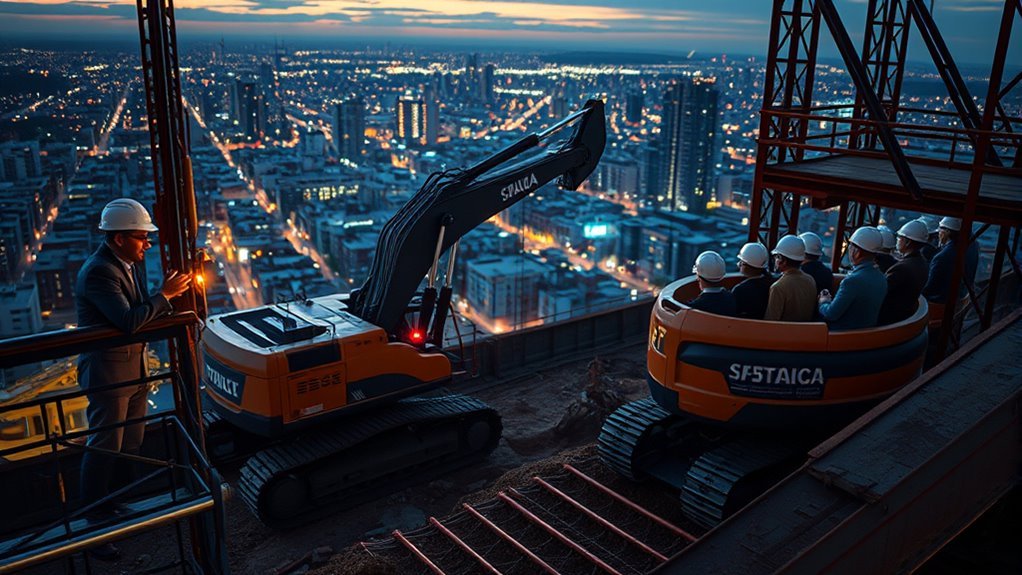

SoftBank is quietly lining up one of the most telling bets in its next phase of AI investing, as it weighs a major stake or full takeover of Swiss startup Gravis Robotics in a deal that could top 500 million dollars. If it goes ahead, this will not just be another robotics acquisition. It will be a signal of how quickly AI is moving from data centers and software stacks into the physical machines that shape infrastructure, industry and everyday work.
Why SoftBank and Gravis Matter Now
SoftBank Group Corp is in early talks to acquire or heavily invest in Gravis Robotics AG, a Zurich based spin out from ETH Zurich that builds autonomy systems for heavy construction equipment. Multiple reports describe a potential valuation north of 500 million dollars and emphasize that the final size and structure of the transaction are still open. A successful transaction would highlight how investors are now willing to back autonomy platforms in construction with valuations over $500 million. Some sources frame it as a full acquisition around that figure, while others describe SoftBank building a large position that could later grow beyond that valuation.
This is happening at a moment when SoftBank is reorienting itself around AI as its central growth engine. The group has already committed massive capital to AI software and infrastructure, including a multibillion exposure tied to OpenAI and related initiatives, as well as a 5.4 billion dollar acquisition of ABBs industrial robotics business as part of a broader AI and robotics roadmap. The Gravis talks fit into a deliberate push into what SoftBank calls Physical AI, where algorithms are embedded in robots and machines that operate in the physical world rather than only in digital environments.
The Deal Structure: Flexible And Incremental
Sources describe SoftBank exploring a flexible multi stage transaction rather than a one shot takeover. The current thinking involves a mix of buying existing shares from current investors and injecting new capital into Gravis Robotics over time. In practical terms, that means SoftBank would gradually accumulate a substantial stake while funding the companys growth, rather than writing a single large check and closing the book.
Reports also indicate that SoftBank is open to underwriting newly issued Gravis shares in stages, alongside secondary purchases from existing shareholders. That approach matters. It allows both sides to adjust the pace of investment as the technology matures and as market demand for autonomous heavy machinery becomes clearer. It is closer to a structured partnership than a traditional private equity style buyout.
All of this remains preliminary. People familiar with the discussions consistently stress that no binding agreement has been reached and that there is no guarantee the talks will lead to a completed deal. Valuation, ownership percentage, governance and the exact mix of primary and secondary capital are still being negotiated.
Roze And The Rise Of Physical AI
SoftBank is not planning to hold Gravis in its legacy portfolio. Instead, it aims to fold the stake into Roze, a new AI and robotics entity being set up as a dedicated vehicle for embodied and industrial AI assets. Several reports say that Roze will consolidate the groups AI and robotics holdings under one umbrella and is expected to be based in the United States with an eventual public listing in view.
This structure is important for understanding the strategy. SoftBank is effectively carving out a focused AI and robotics platform where assets like ABBs industrial robots and potentially Gravis sit alongside AI infrastructure and software investments. Under the Physical AI theme, Roze is meant to combine large scale AI models and planning systems with robots and machines that can act in the real world, from factory floors to construction sites and logistics hubs.
Gravis is a natural fit for that thesis. Rather than building new machines from scratch, the company develops autonomy kits that retrofit existing excavators, diggers and other earthmoving equipment with sensors, control units and software for fully or semi autonomous operation. The platform is designed to turn a traditional fleet of construction machines into robots, reducing the need for manual driving while enabling more precise and repeatable work in difficult outdoor environments.
What Gravis Actually Builds
At its core, Gravis is sitting at the intersection of heavy machinery and machine intelligence. The companys systems give conventional construction equipment perception, planning and control abilities that are more commonly associated with self driving vehicles and industrial robots. Cameras, lidar and other sensors feed data into onboard computing units, which then use AI driven software to interpret the environment, plan motions and execute digging or grading tasks autonomously or in close collaboration with human operators.
The technology targets sectors such as construction, mining and agriculture, where automation can directly translate into higher productivity, better safety and more predictable project execution. In construction, for example, autonomous excavators can work longer shifts with consistent quality, reduce the risk of accidents in hazardous areas and help offset labor shortages on complex projects. In mining, autonomous earthmoving equipment can operate in remote or dangerous sites with fewer workers on the ground.
Crucially, this is not purely theoretical. Gravis and similar players have been piloting autonomous and semi autonomous heavy machinery on real world job sites, proving that autonomy is not limited to clean factory lines or carefully mapped roads. SoftBank is effectively betting that this field is ready to move from experimental projects into scaled deployment over the coming decade.
How This Fits Into The Broader AI And Robotics Landscape
SoftBank has a history of making bold bets in robotics, from consumer facing robots to industrial systems, but the current phase is more tightly coupled to AI than previous cycles. Earlier robotics waves often focused on mechanical innovation or niche use cases. Today, the emphasis is on robots as physical endpoints for AI platforms that can be updated and improved over time through software and data.
The Gravis deal would push SoftBank further beyond traditional industrial arms and warehouse automation into autonomy solutions for large vehicles that operate on complex unstructured terrain. These systems embody the Physical AI theme by combining perception, planning and control algorithms to navigate dynamic outdoor job sites, coordinate with human workers and respond to changing conditions in real time.
From a business perspective, integrating hardware, sensors and AI software into a single stack is attractive because it lends itself to recurring revenue. Gravis style autonomy kits can be sold once and then monetized over time through software updates, data driven performance improvements and value added services such as remote monitoring or predictive maintenance. That kind of model fits SoftBanks preference for platform plays rather than single product bets.
More broadly, this move underscores an important shift in AI investing. For years, capital flowed primarily into model development, foundation models, and cloud based AI services. Now, leading investors are increasingly looking at embodied AI, where models are paired with specific physical systems that can capture data, learn continuously and deliver tangible productivity gains across industries. Heavy machinery autonomy is one of the clearest examples of this trend.
Opportunities And Risks
If SoftBank and Gravis finalize a deal on the terms being discussed, several opportunities stand out.
Gravis would gain deeper access to capital, global industrial relationships and a broader AI ecosystem via Roze and SoftBanks network of portfolio companies and partners. That could accelerate the rollout of autonomous construction and mining solutions in markets where regulatory and customer buy in are already emerging.
SoftBank would obtain a foothold in a category that can scale in a relatively disciplined way. The retrofit model means growth is not tied to manufacturing entirely new fleets of heavy machinery. Instead, autonomy can be layered onto existing equipment, which lowers upfront costs for customers and speeds adoption. In addition, positioning Gravis within Roze could make it easier to package autonomy solutions together with other AI and robotics offerings in integrated deals.
The risks are just as real. Construction and mining are cyclical industries that respond to macroeconomic conditions, commodity prices and public infrastructure budgets. Demand for autonomous equipment could stall if projects are delayed or capital spending tightens. Regulatory frameworks for autonomous heavy machinery are still evolving and vary widely by country and region. Adoption also depends on trust from site managers and workers who must be confident that autonomy systems are safe, reliable and maintainable.
There is execution risk on SoftBanks side as well. Roze is a new structure, and integrating multiple robotics and AI assets into one coherent operating model is complex. Aligning product roadmaps, sales channels and data platforms across ABBs industrial robotics business, potential Gravis autonomy systems and other AI investments will require sustained operational focus. SoftBank has experienced painful cycles before when ambitious portfolios did not translate into consistent financial performance.
What This Signals For The Future Of AI In The Physical World
Even if the Gravis talks take time to crystallize or ultimately fall through, the signal is clear. AI is moving steadily into the physical infrastructure layer. Heavy machinery that once depended entirely on human skill and endurance is becoming programmable and data driven. Construction sites, mines and farms are emerging as important testing grounds for embodied AI, not only for self driving trucks and drones but for the core equipment that shapes terrain and materials.
SoftBank wants to be one of the central owners of that transition, not just a financial backer of software models. Roze is the organizational embodiment of that ambition. Gravis is one of the clearest illustrations of how AI can extend beyond servers and screens into machines that transform the world around us.
For technology leaders, the key takeaway is that AI strategy now needs a physical dimension. For industrial companies, autonomy is moving from pilot programs to strategic capability. For policymakers and workers, the conversation must shift from whether AI will enter these fields to how it will be governed, integrated and shared in a way that balances productivity, safety and employment.
Negotiations between SoftBank and Gravis are still at an early stage, but regardless of the exact outcome, this potential deal marks a milestone in the evolution of AI from digital intelligence to physical capability and will be watched closely across the global AI and robotics community. In that sense, Gravis is less about one company and more about a broader question that will define the coming decade of AI deployment: how quickly and responsibly the industry can turn algorithms into machines that work alongside people in the real world.
Conclusion
SoftBank’s interest in a more than five hundred million dollar stake in Gravis Robotics is a clear signal that the next phase of the AI boom is moving from data centers to dirt and concrete. Reports that the Japanese group may fold the Zurich company into a new entity called Roze, built around what its leadership calls Physical AI, suggest that autonomous heavy machinery is graduating from experimental pilot to strategic infrastructure bet.
Why this deal matters now
Gravis sits at the intersection of several powerful forces. Construction productivity has lagged behind other sectors for decades, even as infrastructure demand and labor shortages keep rising in markets such as Europe and the United States. At the same time, investors are looking for AI applications that generate tangible, cash flowing outcomes rather than just more cloud compute spend.
SoftBank has a long, sometimes turbulent history in robotics and automation. It previously backed companies such as Boston Dynamics and has more recently combined a portfolio of robotics stakes into a holding company known as Robo HD. The proposed Roze platform is meant to go further by concentrating AI and robotics assets in a single vehicle that could eventually list in the United States, with some reports suggesting an aspirational valuation in the tens of billions of dollars.
Seen in that context, a controlling or near controlling position in Gravis is not an isolated deal. It is part of a deliberate attempt to own the software and hardware that make physical infrastructure work more like a programmable system and less like a one off project.
Who is Gravis Robotics
Gravis Robotics was founded in twenty twenty two as a spinout from the Robotics Systems Lab at ETH Zurich, one of Europe’s leading centers for robotics research. The company develops modular autonomy kits for earthmoving equipment such as excavators and loaders, combining lidar sensors, cameras, satellite positioning and AI algorithms so that machines can dig, load and move material without a human in the cab.
Rather than building new machines from scratch, Gravis focuses on retrofitting existing fleets. Its platform can be integrated with multiple original equipment manufacturers, which is crucial in a sector where contractors already own or lease large mixed fleets of machinery.
The company has moved unusually quickly from lab project to commercial deployments. In late twenty twenty five Gravis raised around twenty three million dollars in venture funding, led by firms such as IQ Capital and Zacua Ventures, with participation from Holcim and other strategic backers. That capital is being used to expand operations across the United Kingdom, United States and European Union, including projects such as autonomous excavation at Manchester Airport and quarry automation pilots with Holcim.
According to statements cited in regional coverage, Gravis claims its autonomy stack can lift on site productivity by roughly thirty percent in some use cases, while also improving safety by keeping workers out of hazardous zones. These numbers are still early and context dependent, but they illustrate why both industrial groups and financial investors are paying attention.
Inside the potential SoftBank Gravis transaction
Multiple outlets report that SoftBank is considering acquiring a substantial stake in Gravis Robotics in a transaction that could value the Swiss company at more than five hundred million dollars. The structure under discussion is a phased deal that mixes purchases of existing shares with injections of new capital, rather than a single all cash takeover.
SoftBank is said to be exploring the idea of holding Gravis within Roze, a new United States based AI and robotics company that would house a portfolio of Physical AI assets. The intention is to build a large, possibly controlling interest over time rather than a small minority position.
It is important to stress that the talks are described as ongoing. SoftBank and Gravis have not publicly confirmed binding terms, and reports consistently note that both the final valuation and the exact ownership structure could still change or even fall apart. A spokesperson for SoftBank has declined to comment on the specifics.
That uncertainty does not make the story less significant. In practice, large technology investors often build positions in stages, especially in complex industrial businesses where due diligence, regulatory approvals and partner alignment take time. The fact that this is already being framed as a more than five hundred million dollar outcome for a young company that raised around twenty three million dollars in venture funding only months ago indicates how aggressively capital is now chasing physical world AI platforms.
How this fits SoftBank’s Physical AI strategy
SoftBank’s recent messaging has revolved around Physical AI, a label for systems that connect advanced AI models with robots, sensors and machines operating in the real world. The group has been consolidating robotics holdings and investing in industrial automation, including deals involving ABB’s industrial robot operations and startups such as Agile Robots and Skild AI.
Gravis slots neatly into that portfolio. In contrast with humanoid robots or consumer oriented devices, autonomous earthmoving has a direct link to large capital projects, recurring maintenance work and public infrastructure budgets. That aligns with SoftBank’s search for assets that can underpin long duration cash flows and possibly support an eventual public listing of Roze.
If SoftBank secures a major stake, Gravis would likely benefit from access to a broader network of industrial partners, capital for scaling manufacturing and deployment, and potential synergies with other robotics investments inside the Roze umbrella. For SoftBank, Gravis offers specialized know how in outdoor autonomy, a domain that complements the factory focused robotics businesses already in its orbit.
Implications for construction and industrial technology
The construction industry has experimented with automation for years, from machine control systems to semi autonomous bulldozers, but adoption has often been fragmented. Gravis and similar platforms promise a more software defined approach. Contractors could in theory apply the same autonomy stack across different brands and models, move digital work plans directly into machine instructions and gather detailed operational data for planning and billing.
If SoftBank pushes Gravis to scale globally, several shifts could follow. Large equipment makers may accelerate their own autonomy roadmaps rather than risk becoming mere hardware suppliers to third party AI platforms. Major contractors and quarry operators may revisit their fleet strategies, balancing outright ownership with Robotics as a Service style models where autonomy is bundled with support and performance guarantees.
There are also broader societal implications. Autonomous heavy machinery could help address skilled labor shortages and safety challenges on large sites, particularly in markets where aging workforces and stricter safety rules are already constraining capacity. At the same time, there will be debates about job displacement, retraining and the new kinds of high skill roles needed to supervise fleets of intelligent machines. The experience of previous automation waves suggests that roles tend to shift from manual operation toward planning, supervision and maintenance, but the transition is rarely smooth.
Risks, open questions and lessons from history
SoftBank’s record in ambitious technology bets is mixed. The first Vision Fund produced both standout successes and severe write downs when high growth startups failed to live up to their valuations. Investors will therefore scrutinize whether the group is bringing more discipline to capital allocation in the Physical AI era.
There are also execution risks specific to construction autonomy. Turning prototypes and pilots into reliable, everyday tools requires ruggedization, robust safety cases and deep integration with the workflows of contractors, regulators and insurers. Outdoor sites introduce edge cases such as changing weather, unpredictable terrain and interactions with other vehicles and humans that are harder to handle than controlled factory floors.
Regulation is another variable. While no global rulebook for autonomous construction equipment exists yet, local authorities and safety regulators will likely set requirements around remote supervision, emergency intervention, data logging and liability in case of accidents. Companies like Gravis will need to invest heavily in certification, standards work and transparent reporting to win trust.
History offers a useful perspective. Earlier generations of industrial automation, from programmable logic controllers to industrial robots and advanced machine control, took years to diffuse through factories and infrastructure projects. The gains were real but uneven across sectors and regions. It is reasonable to expect a similar pattern in construction autonomy, with early adoption in high wage, highly regulated markets and in specialized environments such as quarries and large infrastructure hubs.
What to watch next
Several signposts will determine how transformative this deal becomes if it closes. One is the level of integration SoftBank actually achieves across its various robotics holdings. A coherent Roze platform with shared technology, go to market channels and financial discipline would send a different signal than a loose bundle of unrelated stakes. Another is how aggressively original equipment makers choose to collaborate with or compete against Gravis as autonomy becomes a differentiator for their customers.
Equally important will be evidence from the field. Data on uptime, safety incidents, return on investment and worker acceptance will shape how quickly autonomous machinery moves from showcase projects into everyday practice. Independent validation and transparent reporting will be essential if Gravis and its backers want to be seen as partners in a safer, more productive construction ecosystem rather than just another speculative AI story.
In that sense, the SoftBank Gravis talks are a microcosm of the broader AI shift. Capital is moving from pure software to systems that touch soil, steel and people. The technology is promising, the potential impact on productivity and safety is significant, and the risks are very real. The next few years will reveal whether Physical AI becomes a durable industrial platform or just another phase in the cycle of automation hype and retrenchment. reddit