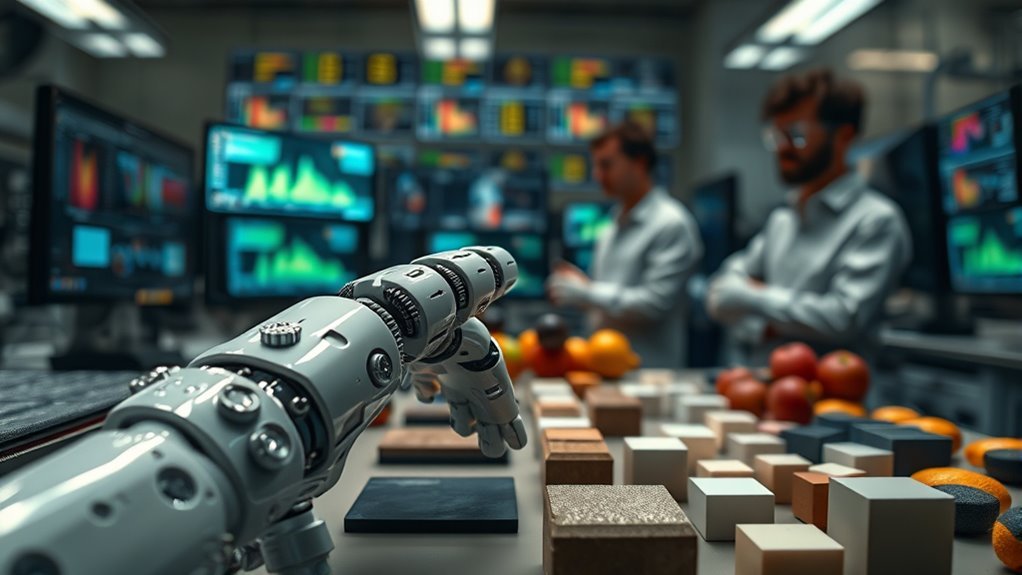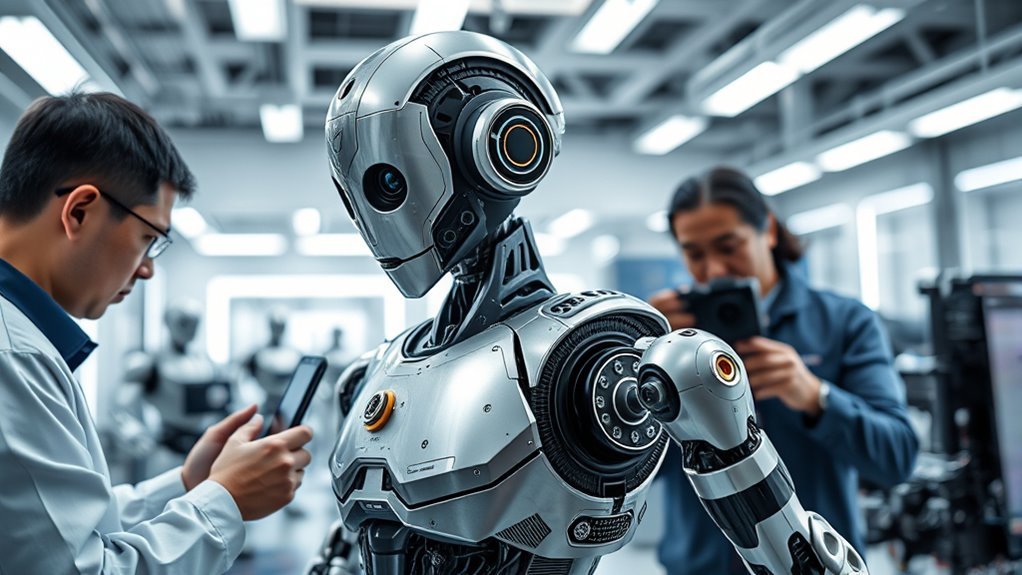

Physical AI robots are bumping into the limits of what camera-based vision alone can deliver. If machines are going to work safely next to people in factories, hospitals, homes, and public spaces, they need integrated senses that look, feel, and listen to the world with the same richness and redundancy that humans rely on. The new alliance between LG Innotek and TDK is a serious attempt to build those senses into compact modules that robot makers can treat as standard building blocks rather than bespoke engineering projects. The partnership, formalized through a memorandum of understanding at LG Innotek’s Magok headquarters, is explicitly focused on jointly developing vision and tactile sensing modules for next-generation Physical AI robots. This matters right now because the robotics industry is shifting from single-purpose machines behind safety fences to general-purpose humanoids and mobile robots that must operate in unstructured environments. Vision has made big strides with deep learning and cheap image sensors, but the lack of reliable touch, motion awareness, and sound integration has kept many systems brittle and difficult to deploy at scale. The LG Innotek TDK partnership targets this gap by packaging multiple sensing modalities into unified modules designed specifically for Physical AI applications, reflecting the growing need for integrated AI capabilities.
Physical AI demands robots with integrated eyes, skin, and ears—standardized sensing modules, not fragile camera-only machines
From camera-centric robots to Physical AI
For much of the past two decades, industrial robots relied on hard-coded motion paths and limited perception, often using simple proximity sensors or fixed cameras that watched a work cell from a distance. Collaborative robots and mobile platforms added more sophisticated vision, lidar, and basic force sensing, but these components were usually integrated piecemeal, with each project needing custom engineering and tuning. Physical AI is essentially the idea that robots require embodied intelligence, not just clever software in the cloud. That means perception tightly coupled to motion, touch, and context. In practice, it demands sensor fusion modules that can deliver stabilized three-dimensional vision, high-fidelity motion and position data, precise touch and pressure sensing, and audio awareness in one coherent package. The LG Innotek TDK roadmap is one of the clearest examples of large component suppliers committing to that integrated approach rather than incremental upgrades to cameras or accelerometers alone.
Inside the LG Innotek and TDK sensor roadmap
LG Innotek and TDK have aligned on a strategic partnership in the Physical AI sector, focusing on vision sensing modules and tactile sensing modules as core elements of next-generation robots. The arrangement combines LG Innotek expertise in optics and ultra-precision module design with TDK’s extensive portfolio of inertial, position, pressure, temperature, and audio sensors. The two companies describe these solutions explicitly as the eyes and skin of future robots, framing them as foundational components rather than optional add-ons. Under the partnership, LG Innotek is responsible for system-level module integration and digital signal processing, while TDK contributes its high-precision sensing technologies developed across consumer and automotive markets. Joint advanced research is underway to embed TDK inertial measurement units, position sensors, and microphones into LG Innotek vision sensing modules, supported by sensor fusion algorithms that combine optical, motion, and audio data in real time. The roadmap targets commercialization around 2027 for the first advanced vision module equipped with inertial sensors, as well as a tactile sensing module that can be mounted on robot hands, arms, and bodies to act as synthetic skin. That timeline aligns with broader industry expectations for more capable humanoid and service robots moving from pilot deployments into scaled production.
Vision modules giving robots more reliable eyes
At the center of the collaboration is a next-generation vision sensing module conceived as the robot eyes, designed to support object recognition, scene understanding, and spatial awareness in complex environments. LG Innotek is bringing its optical lenses, image sensors, and mechanical precision structures, while the module design embeds sensor fusion logic for three-dimensional vision, pose estimation, and navigation. TDK inertial measurement units and position sensors are being integrated directly into the module to stabilize images during robot motion and to enhance motion-aware perception and high-frequency tracking. When a robot arm accelerates quickly or a humanoid walks over uneven surfaces, inertial data can be used to correct for image blur and maintain accurate depth estimates, reducing misdetections and improving safety margins. Microphones within the module add audio-visual sensing, allowing robots to reason about movement, direction, and surrounding sound together, which is especially important for event detection such as alarms, human speech, or unexpected impacts. By packaging optical, inertial, position, and audio sensors into a single module, LG Innotek and TDK aim to simplify robot design. Manufacturers can reduce integration complexity, standardize on validated subsystems, and shorten development cycles instead of reinventing vision and motion sensing for every platform. The companies expect the module to deliver higher recognition performance and a broader functional set than current solutions, positioning it as a reference design for humanoid and service robots worldwide.
Tactile modules giving robots responsive skin
Complementing vision, the partnership is also focused on tactile sensing modules that effectively serve as robot skin. These modules are designed to be mounted on hands, arms, and torso, using ultra-thin flexible structures that can conform to curved robot surfaces while maintaining durability and high sensitivity. The aim is not only to detect contact but also to measure pressure and fine touch, enabling safer human-robot collaboration and more dexterous manipulation. TDK is leading the development of tactile sensor technologies that convert pressure and force into accurate digital signals suitable for real-time control. LG Innotek is responsible for module integration and digital signal processing, including noise filtering and signal routing from distributed tactile and pressure sensors across the robot body. This division of roles leverages TDK’s experience with precision sensing and LG Innotek’s strengths in turning discrete components into manufacturable, robust modules. The companies plan to complete development of the tactile module around 2027, with the goal of offering standardized robot skin that can be tuned to different operating environments. For example, industrial robots may prioritize impact detection and robust materials, while service robots in healthcare or domestic settings may require greater sensitivity to soft touch and gentle grasping.
Why integrated sensor suites matter for industry
From an industry perspective, what LG Innotek and TDK are building is an integrated sensor suite that fuses optical, inertial, position, pressure, temperature, and audio data in one coherent architecture. That fusion is critical for Physical AI because it allows robots to cross-check different modalities, increasing reliability and resilience. Consider a humanoid robot navigating a cluttered warehouse. Vision alone can misjudge glossy surfaces or suffer in poor lighting. Inertial sensors can help distinguish actual motion from perceived motion in images. Tactile sensors can confirm whether an object has been successfully grasped, while microphones can pick up acoustic cues such as machinery noise or human voices indicating restricted areas. When all of these signals are available as synchronized streams from standardized modules, robot developers can focus more on higher-level behavior and less on low-level hardware integration. For businesses, the promise is shorter time to market and more predictable performance. LG Innotek and TDK explicitly state that they aim to capture emerging demand from robot and automation manufacturers seeking standardized high-performance sensing subsystems. Large customers typically prefer proven modules with clear roadmaps and support, rather than bespoke combinations of sensors from multiple vendors. If this alliance succeeds, it could become a default choice for many next-generation robot designs, in the same way that certain camera modules and wireless chipsets became industry standards in smartphones.
There are also ecosystem implications. A common sensing baseline makes it easier for software and AI companies to build perception and control stacks that can run across many robot platforms. That in turn can accelerate innovation in manipulation, locomotion, and human-robot interaction, since developers are not constantly fighting hardware variability.
Risks, limitations, and open questions
Despite the promise, several risks and uncertainties are worth keeping in mind. First, integrated modules inevitably involve trade-offs. A single package that tries to serve industrial arms, humanoids, and mobile platforms may not perfectly fit any one use case. There is a chance that some customers will still prefer custom sensor configurations tailored to their specific environments, particularly in high-end manufacturing or defense. Second, tight coupling between hardware and specific fusion algorithms can lead to vendor lock-in. If LG Innotek and TDK do not expose enough interfaces or configuration options, robot makers might find it difficult to adapt the modules to novel applications or to swap in alternative components. The long-term success of this approach will depend on how open and flexible the platform is. Third, the timeline to 2027 suggests that the technology is still in active development, not yet proven at scale. Real-world deployment often uncovers edge cases that laboratory tests miss. Tactile sensors, in particular, can degrade under repeated mechanical stress or contamination from dust and fluids. Ensuring durability and consistent calibration across thousands of robots will be a major engineering challenge. Finally, broader societal questions remain. More capable Physical AI robots could improve safety and productivity, but they also raise issues around labor displacement, surveillance, and autonomy. Integrated vision and audio modules make it easier to monitor spaces continuously. It will be important for regulators and companies to address privacy and ethical concerns as these systems roll out.
What to watch over the next few years
Several signposts will show whether this partnership is achieving its goals. There will likely be early pilot deployments of the vision module with inertial sensors before full commercialization. Watching how those pilots perform in mixed environments such as logistics hubs or advanced manufacturing lines will provide concrete data on robustness and integration effort. The same is true for tactile modules. If robot makers begin to advertise standardized skin solutions powered by LG Innotek and TDK, that will signal real traction. Competition will also matter. Other sensor suppliers and robotics companies are exploring integrated perception and touch solutions. If multiple ecosystems emerge, interoperability and standards will become important topics. The companies position their modules as foundational components for Physical AI platforms, and success will depend not only on hardware performance but also on how well they align with broader industry architectures.
Takeaways
The LG Innotek TDK alliance is a notable inflection point in robotics sensing. Rather than treating cameras, inertial units, microphones, and tactile pads as separate considerations, the partnership treats perception as a holistic capability that must be designed and delivered as integrated eyes and skin for Physical AI robots. If the roadmap to 2027 holds and the modules perform as promised, robot developers could gain a reliable foundation for embodied intelligence, making it easier to build machines that genuinely understand and interact with the physical world in real time. The opportunity is significant, but so are the engineering and societal challenges. Sensor fusion at this scale is difficult, and responsible deployment will require careful attention to safety, privacy, and workforce impact. For now, this partnership is a strong signal that the industry is moving past camera-centric robotics and into an era where embodied sensing is treated as a first-class platform capability rather than an afterthought.
Conclusion
Physical AI robots are moving from concept to industry roadmap, and the new collaboration between LG Innotek and TDK is a concrete sign that the sensing stack for these machines is maturing fast. By combining advanced vision modules with tactile systems that act as synthetic skin, the two companies are positioning themselves as core suppliers for the next wave of humanoid and service robots due to reach the market around 2027.
From industrial robots to physical AI
For decades, most robots lived in structured factory environments, separated from people and guided by fixed routines rather than rich perception. Early systems relied on simple encoders, limited cameras and safety cages to avoid collisions, which worked well for repetitive tasks but made flexible interaction with the real world difficult.
Over the past fifteen years, several trends have reshaped this landscape. Collaborative robots introduced force and torque sensing so that machines could work closer to humans without causing injury. Mobile platforms added depth cameras and lidar, allowing robots to navigate warehouses and hospitals with less reliance on fixed infrastructure. LG Innotek has already been moving into this space, including work with Boston Dynamics on vision sensing systems for robots and the start of mass production of robotics sensing parts in recent years.
Physical AI pushes this evolution further. The term generally refers to AI systems that operate in and respond to the physical world rather than existing only in software. They need perception systems that can approach human capabilities in seeing, hearing and feeling, and they must do this reliably in cluttered, unpredictable environments.
What LG Innotek and TDK are actually building
LG Innotek and TDK announced a strategic partnership in late July 2026 focused on next generation sensing solutions for physical AI robots, especially humanoid platforms. The collaboration centers on two main module families.
First, there are vision sensing modules. LG Innotek contributes optical and ultra precise module design technology, including experience building compact camera systems and composite sensing packages for robotics. TDK brings a broad portfolio of inertial measurement units, position sensors and microphones that can be integrated into the same module to stabilize robot vision, track motion and capture audio. The companies plan to introduce a vision module that incorporates inertial sensors around 2027, with an eye toward mass production for humanoid robots and other physical AI applications.
Second, they are jointly developing tactile sensing modules that act as skin for robots by detecting touch and pressure across surfaces such as hands, arms and torso. LG Innotek contributes its strengths in module integration and digital signal processing, while TDK adds ultra precise tactile sensor technology designed to capture subtle contact information. The target for completing these tactile modules is also set around 2027, aligning the roadmap so that both vision and touch systems can be deployed together in next generation platforms.
Importantly, LG Innotek has signaled that it is not just supplying standalone cameras but is moving toward composite sensing modules that blend cameras with other modalities such as lidar and radar for humanoid robots, with large scale production expected between 2027 and 2028 depending on customer timelines. Taken together, this suggests a strategy to become a central provider of integrated perception hardware for the broader LG robotics push and for external clients in the United States and Europe.
Why integrated vision and touch matter now
The technical direction of the partnership reflects a broader shift in robotics. Older systems often treated sensing as a collection of separate components: cameras from one vendor, inertial sensors from another, and basic limit switches or force sensors for contact. Integrating these pieces was complex, and the lack of unified design frequently limited performance in dynamic environments.
By contrast, integrated modules that fuse cameras, inertial sensors, positional sensing and microphones inside a single package can deliver more stable perception and reduce development effort for robot makers. When that module is paired with a tactile skin that covers key parts of the robot body, the platform gains a coordinated view of what it sees and what it feels. For example, a humanoid robot can visually track a fragile object while its tactile sensors monitor grip pressure, allowing it to adjust in real time to avoid dropping or crushing the item.
This matters particularly for physical AI robots intended to work in homes, hospitals, warehouses and public spaces. In those environments, the robot must distinguish between accidental bumps and deliberate interactions, recognize when a person is in its path, and respond to subtle changes in balance or load. A combination of stabilized vision, rich audio sensing and distributed tactile feedback makes those tasks much more tractable.
Strategic implications for LG, TDK and the robotics sector
For LG Innotek, the partnership is part of a broader push to become a major supplier of robotics parts, including joints, sensing modules and eventually actuators and tactile systems. The company has already begun mass production of some robot sensing components, with sales measured in large unit volumes, and is openly targeting humanoid robotics as a growth area. Locking in a partnership with TDK, which holds extensive sensor know how across inertial, positional and audio domains, strengthens its claim to that role.
For TDK, the collaboration offers a path to embed its sensors deeper into complete solutions rather than selling them only as discrete components. As robot makers look for turnkey perception modules rather than building everything from scratch, a combined LG Innotek and TDK offering can be more attractive than individual parts that must be integrated and validated separately.
More broadly, the move signals that physical AI is becoming a defined product category with concrete roadmaps and supplier ecosystems. Having multiple media and investor reports referencing specific timelines, such as the 2027 launch goals for inertial based vision modules and tactile skin systems, indicates that customers are already planning deployments that depend on these capabilities. That encourages other hardware and software vendors to organize around similar schedules, which can accelerate standardization and interoperability in the robotics sector.
Opportunities and benefits
If the roadmap holds, integrated vision and tactile modules could deliver several practical benefits.
Robot builders could reduce time to market by sourcing prevalidated sensing modules rather than designing camera and touch systems from the ground up. That is especially valuable for startups and service providers that want to focus on higher level AI and application logic rather than low level signal processing.
Humanoid and service robots could improve safety by detecting contact early and responding gracefully. A high resolution tactile skin allows a robot to sense when it is brushing against a person or object and adjust its motion before a collision becomes harmful, while inertial stabilized vision reduces misperception caused by rapid movements or vibrations.
End users could see more capable robots handling tasks such as assisted lifting, item picking, cleaning in cluttered spaces and basic caregiving support. Better sensing does not guarantee useful behavior, but it expands the range of actions that AI control systems can plan and execute with confidence.
From a business perspective, LG Innotek and TDK can move up the value chain by selling high margin modules and potentially capturing long term supply contracts with major robot manufacturers in North America, Europe and Asia.
Risks, limitations and open questions
Despite the promise, several uncertainties remain.
The performance of these modules outside controlled settings will be critical. Real homes and workplaces present dust, variable lighting, electromagnetic noise and unpredictable human behavior. Even sophisticated inertial and optical systems can struggle without careful calibration and robust sensor fusion, and tactile skins must withstand repeated mechanical stress without degrading.
Cost is another factor. High precision inertial sensors and dense tactile arrays are not cheap, and the economics of humanoid robots are still fragile. If the combined module cost stays too high, deployments may be limited to premium industrial or logistics uses rather than mass market consumer robots.
There are also questions around standards and interoperability. When perception modules are tightly integrated, developers gain convenience but risk vendor lock in. If LG Innotek and TDK define proprietary interfaces for their physical AI modules, it may be harder for smaller hardware companies or open source ecosystems to plug in alternative components or extend capabilities.
Finally, safety and ethics will depend on how these sensing systems are used. Rich perception can support gentle physical interaction, but it also increases the amount of data collected about people and environments. That raises privacy and governance issues that go beyond hardware engineering and will require clear policies and oversight as robots become more present in everyday life.
How this fits into the future of physical AI
Taken together, the LG Innotek and TDK partnership illustrates how physical AI is becoming an integrated stack rather than a collection of separate technologies. Vision, inertial sensing, audio and tactile feedback are being treated as a coherent system that can be designed, produced and sold as modules ready for humanoid and service robots.
As LG Electronics builds out robot joints and LG Innotek prepares large scale production of sensing modules between 2027 and 2028, the pieces for full body humanoid platforms are coming into alignment. The success of this effort will depend not only on hardware but also on advances in control algorithms, simulation, data collection and human robot interaction design. Hardware partnerships like the LG Innotek and TDK alliance set the stage by ensuring that future robots can see and feel with greater fidelity. The next challenge is to make them understand and respond in ways that are safe, useful and trustworthy for the people who will live and work alongside them.
Sources
This analysis is based on recent reporting and corporate announcements from Korean and international business and technology outlets that detail the LG Innotek and TDK physical AI sensing partnership, its technical focus and its roadmap toward 2027 and beyond. reddit