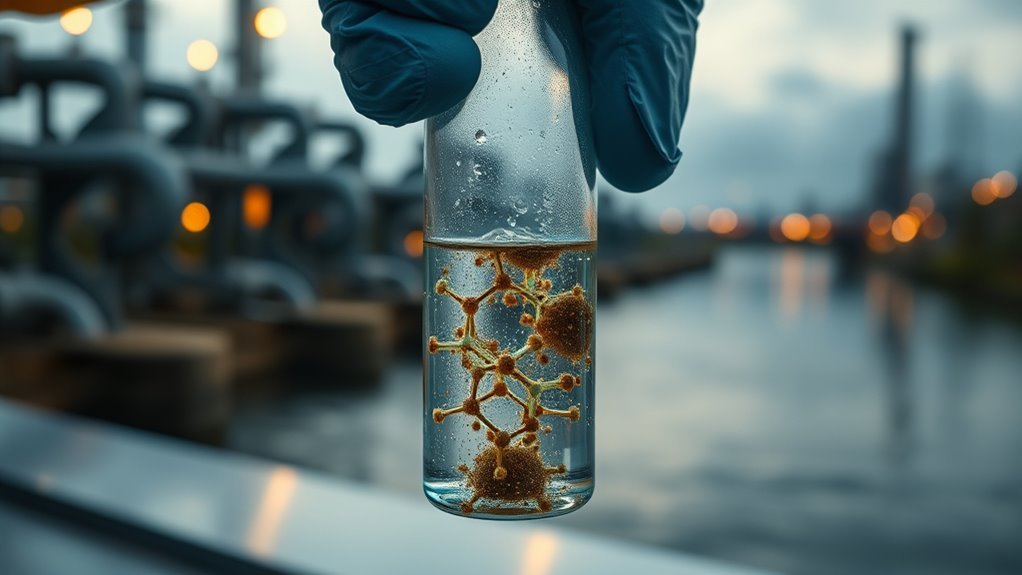
Artificial intelligence driven molecular design is pushing water treatment from passive filtration toward active, programmable materials that can both detect and remove contaminants. This matters now because legacy infrastructure is struggling to cope with persistent chemicals such as PFAS and modern pharmaceuticals that were never envisioned when most treatment plants were built. When access to key research platforms is interrupted by Cloudflare errors, users are typically instructed to contact support with their reference number and IP address so that troubleshooting can restore visibility into emerging treatment technologies.
Why AI molecules for water pollution matter right now
Water pollution has become more complex over the past few decades. Early treatment plants were largely designed around conventional pollutants such as nutrients, suspended solids, and basic organic matter. Those systems rely heavily on processes like sedimentation, biological treatment, and simple adsorption, which work reasonably well for many contaminants but fall short when confronted with highly stable synthetic chemicals.
PFAS compounds and many pharmaceuticals are built to resist degradation in the human body and in industrial processes, and that same stability makes them extraordinarily difficult to remove from water. Traditional approaches such as activated carbon, ion exchange resins, and pressure driven membranes mostly separate these substances from water rather than breaking them down, creating secondary waste streams that still need to be managed.
As monitoring improves, regulators and communities are discovering contamination at lower concentrations and across more locations, putting pressure on utilities and industries to find solutions that are both more selective and more sustainable.
AI is entering this landscape at a moment when experimental data sets are finally large enough and diverse enough to train meaningful models. High throughput characterization, growing archives of treatment performance data, and increasingly detailed molecular descriptors have created the raw material that modern machine learning needs to move from academic curiosity to practical design tool. That shift is starting to change how chemists, engineers, and operators think about molecules and materials for water treatment.
From passive filters to AI steered molecular sorbents
The most visible change is in sorbent design. Instead of starting from a small set of familiar materials and tweaking them experimentally, researchers now feed libraries of thousands of candidate molecules and frameworks into AI models that predict how well they might bind specific pollutants under realistic water conditions.
These models incorporate features such as pore size, surface chemistry, and hydrophobicity, linking molecular structure to adsorption capacity, selectivity, and regeneration potential.
One example is the use of covalent organic frameworks and other porous organic materials as PFAS sorbents. These frameworks can be tuned at the molecular level to create binding sites that preferentially capture particular PFAS structures, including short chain compounds that are notoriously difficult to remove.
AI guided discovery strategies help navigate the enormous design space by ranking candidate frameworks, suggesting promising chemistries, and continuously refining structure performance relationships as new characterization data comes in.
Cyclodextrin based sorbents demonstrate how a different molecular architecture can be guided and improved using data driven methods. Their cyclic cavities can encapsulate PFAS molecules based on size and shape, offering selective capture with inherently biodegradable and nontoxic host molecules.
As more performance data on cyclodextrin sorbents becomes available, machine learning models can probe which functional groups and processing conditions deliver better removal, faster kinetics, or easier regeneration, turning what used to be trial and error into a more predictable design exercise.
Importantly, AI does not replace experimental validation. Instead it acts as an integrative layer on top of infrared and nuclear magnetic resonance spectroscopy, x ray scattering, and other tools that probe sorbent contaminant interactions at the molecular scale.
Feedback loops between simulations and measurements allow chemists to refine binding sites and material architectures rapidly, closing the gap between computational predictions and manufacturable sorbents that perform well in real water.
The result is a shorter discovery cycle and sorbents that are tailored for specific contaminants and operating conditions rather than being general purpose compromises.
Looking ahead, the goal is to embed these AI enhanced sorbents into modular cartridges for drinking water systems and point of use devices, enabling targeted PFAS removal in homes, small communities, and industrial facilities without relying solely on large centralized plants.
As sensors and treatment units become more integrated, the same molecular design tools that create sorbents can help engineer receptor molecules and coatings for real time monitoring, closing the loop between detection and remediation.
AI optimized electrochemical and photoelectrocatalytic treatment
Sorption will always have limitations, especially when dealing with very high loads or mixtures of contaminants that compete for binding sites. Electrochemical and photoelectrocatalytic processes offer a complementary route by actively degrading pollutants rather than just capturing them.
For years, these systems were held back by the complexity of their operating space. Removal efficiency depends simultaneously on pH, current density, electrode material, electrolyte composition, catalyst dose, and contact time, with nonlinear interactions that are difficult to capture using simple models.
AI has started to change that picture. Reviews of electrochemical water treatment show that artificial neural networks, support vector machines, and adaptive neuro fuzzy inference systems routinely achieve high predictive accuracy when trained on experimental datasets from electrocoagulation, electrooxidation, electro Fenton, and electrodialysis systems.
These models do more than fit curves. They reveal which parameters exert the strongest influence on removal efficiency and energy consumption, and they can search efficiently for operating points that balance performance with cost.
Specific applications illustrate how far this has progressed. In three dimensional electrochemical reactors designed to treat xenobiotic dyes and pharmaceutical contaminants, hybrid AI approaches combining artificial neural networks with gradient boosting have been used to optimize decolorisation and total organic carbon removal, pushing removal efficiencies into the ninety percent range while keeping energy use under control.
Machine learning guided optimization in these systems has improved predictions of both dye breakdown and mineralization, providing operators with practical settings for current density and reactor configuration.
Similar ideas are being applied to pharmaceuticals such as carbamazepine and ciprofloxacin, which are difficult to remove through conventional biological processes.
Machine learning frameworks that integrate molecular descriptors with operating parameters from full scale wastewater treatment plants have achieved classification accuracies around eighty percent when predicting whether a drug is likely to be removed under given conditions.
These models can identify which compounds are better suited to electrochemical degradation and which are more amenable to biological treatment, informing both process selection and investment decisions.
On the photocatalytic side, machine learning is being used to predict degradation rates for medicinal drugs and dyes under UV or solar irradiation across a variety of catalyst materials.
By ingesting data on catalyst composition, light intensity, pollutant structure, and reaction conditions, these models can forecast catalytic rate constants and degradation efficiency, helping researchers select promising photocatalysts and tune illumination strategies for different wastewater matrices.
For example, studies with TiO2 based systems show that neural network models can guide the adjustment of light intensity and exposure time to maintain high radical generation as pollutant loads fluctuate, improving both removal efficiency and energy usage.
The implications for utilities and industrial operators are significant. Instead of running electrochemical and photocatalytic systems at fixed settings or relying on manual tuning, AI allows these processes to adapt dynamically to incoming water quality data, optimizing removal while minimizing electricity and chemical consumption.
This kind of process aware optimization turns what used to be a costly and sometimes unreliable advanced treatment step into a controllable, data driven technology that can be integrated into modern treatment trains.
Smart nanomaterials and biologically assisted cleanup
Not all water pollution challenges involve treated wastewater. Rivers, lakes, and coastal zones suffer from diffuse contamination that is hard to capture through centralized plants.
Here, the combination of smart nanomaterials and biological systems, guided by AI, is opening new avenues for in situ remediation.
Nanomaterials bring high surface area and tunable chemistry that can interact selectively with metals, organics, and other pollutants. Graphene based structures, carbon dots, and metal organic frameworks, among others, have been engineered as sensors and separation media with impressive sensitivity and selectivity.
When these materials are paired with AI enhanced analytics, their performance improves further. Machine learning can help distinguish signal from environmental noise, compensate for interference, and calibrate responses across varying temperature and turbidity conditions, making nanosensors more robust in real world deployments.
In treatment applications, data driven models can vary nanoparticle composition, size, dosage, and contact time in simulation to identify configurations that accelerate heavy metal removal and organic degradation while staying within acceptable toxicity and ecological impact thresholds.
Predictive frameworks tie nanomaterial properties to observed removal rates and side effects, supporting designs that are effective yet compatible with surrounding ecosystems.
There is growing interest in combining these engineered particles with microbial consortia, allowing bacteria and fungi to carry out biodegradation while nanomaterials enhance mass transfer, provide electron shuttling, or locally concentrate pollutants.
From an operational perspective, AI also supports deployment strategies. Environmental monitoring systems that integrate nanosensors with machine learning can map pollutant plumes and detect hotspots more accurately, guiding where and when to release remediation agents or adjust flow management.
While autonomous underwater vehicles and robotic platforms are still an emerging piece of this puzzle, their navigation and sampling routines are increasingly informed by AI models that learn from previous surveys and toxicity data.
The main caveat is that nanomaterials introduce their own risks. Questions remain about long term accumulation, ecotoxicity, and interactions with higher trophic levels.
A trustworthy deployment strategy therefore needs not just performance optimization but also robust risk assessment, again an area where AI can help by synthesizing diverse ecotoxicological datasets and highlighting knowledge gaps.
AI designed molecular sensors and real time water intelligence
Detection is the other half of the story. It is difficult to manage what cannot be measured, and many persistent pollutants occur at concentrations that are challenging to monitor continuously.
AI assisted molecular engineering is being used to design sensor molecules and receptor structures that bind PFAS and other contaminants with high selectivity, improving both sensitivity and reliability.
Research programs are combining AI guided molecular modeling with organic synthesis and advanced characterization to sift through thousands of candidate molecules, searching for structures that recognize target PFAS with strong binding and minimal cross reactivity.
Once promising receptors are identified, they can be integrated into compact devices that couple molecular binding events with optical or electrochemical readout, such as changes in UV visible absorbance, infrared spectra, or fluorescence.
Machine learning then analyzes the resulting spectral signatures, distinguishing genuine contamination events from background variation and enabling rapid identification even at low concentrations.
For utilities, industries, and communities, this kind of sensing capability can transform how water systems are managed. Continuous monitoring feeds data into predictive models that forecast contamination trends, detect emerging threats, and support targeted interventions rather than reactive crisis management.
Over time, sensor networks could underpin adaptive water infrastructure that modulates treatment intensity and routing in response to real time risk rather than static design assumptions.
Implications for technology, business, and society
The shift toward AI guided molecules and materials has several implications that reach beyond the lab.
From a technology standpoint, it accelerates innovation but also demands new skills. Chemists and materials scientists must learn to collaborate closely with data scientists, integrating experimental design with model development.
Treatment plant operators will need to understand both electrochemical hardware and the AI systems that advise them, while regulators grapple with performance claims that rely on complex algorithms rather than simple specifications.
This convergence raises the bar for technical literacy across the water sector.
For businesses, AI optimized treatment technologies can reduce operational costs by cutting energy use and chemical consumption, and by focusing advanced treatment where it is most needed.
Companies that manage industrial wastewater can use AI to tailor treatment to specific production cycles and contaminant profiles, potentially avoiding over treatment or under treatment.
At the same time, there is a risk of vendor lock in if proprietary models and data platforms become too opaque, making it hard for customers to assess performance independently.
Societally, there is both promise and concern. On the positive side, the capacity to detect and remove difficult pollutants more effectively can reduce health risks, protect ecosystems, and build trust in drinking water and recreational water supplies.
AI designed sorbents and sensors may enable decentralized solutions in smaller communities that currently lack sophisticated infrastructure, narrowing gaps in water security.
On the negative side, if these technologies are deployed unevenly or priced out of reach for certain regions, existing inequities could worsen. There are also legitimate worries about algorithmic bias and data gaps.
Models trained on limited sets of water matrices or contaminants may not perform as well in under studied environments, and over reliance on AI could obscure important uncertainties.
Trustworthiness will hinge on transparency and validation. Independent testing of AI guided materials, open sharing of performance datasets, and clear communication about limitations will be essential to prevent hype from outpacing reality.
Regulators and researchers are starting to call for interoperable datasets and closed loop workflows that link molecular design directly to manufacturable architectures and real water performance, which should make claims more verifiable.
Key takeaways and what comes next
AI molecules for water pollution are not a single technology but a family of approaches that link data driven models with chemistry, materials science, and process engineering.
Sorbents are becoming more selective and tunable. Electrochemical and photocatalytic systems are moving from static operation to adaptive control.
Nanomaterials and sensors are gaining sensitivity and robustness through machine learning. Together these trends point toward water infrastructure that is more programmable and responsive than the largely passive systems of the past.
The most realistic near term trajectory involves hybrid solutions in which AI helps optimize existing processes and guide the design of new materials that can be integrated into current plants and distribution networks.
Over the longer term, if sensor networks and modular treatment units mature, water systems could evolve into distributed platforms where smart materials continuously monitor and purify flows at multiple points from source to tap.
For practitioners, the practical advice is to engage early with these tools, but to demand evidence. Look for technologies backed by transparent data and independent validation, pay attention to how models handle uncertainty, and consider how AI components will be maintained over time.
For researchers, the challenge is to expand datasets, connect lab scale breakthroughs to field performance, and incorporate risk assessment as seriously as removal efficiency.
If those conditions are met, AI guided molecules and materials could become a cornerstone of the next generation of water treatment, helping societies cope with contaminants that would otherwise linger far beyond the lifetimes of current infrastructure.
Frequently Asked Questions
How Will Ai-Designed Molecules Be Regulated for Safety in Drinking Water Systems?
Regulators are not going to create a special, isolated lane just for AI designed molecules in drinking water systems. At least for the foreseeable future, these new materials and compounds will be pushed through the same powerful machinery that already governs drinking water safety, then gradually wrapped in additional expectations around transparency, data, and AI accountability.
Why AI designed molecules matter for drinking water right now
Water utilities are under intense pressure on several fronts at once. Tougher limits on legacy contaminants such as PFAS are arriving precisely as infrastructure is aging, climate driven variability is increasing, and the public is demanding more transparency about what comes out of the tap. At the same time, research groups and companies are now using generative AI and other machine learning tools to explore enormous spaces of possible materials for filtration, adsorption, and contaminant destruction in ways that were unimaginable a decade ago.
One recent industrial collaboration reported exploring a design space of roughly three hundred trillion possible material structures to identify thousands of candidates that could remove priority PFAS such as GenX, PFBS, and PFOS from water at very low concentrations. Another line of work uses machine learning to generate and screen more than two hundred sixty thousand potential PFAS like molecules, evaluating their toxicity and performance virtually before any synthesis happens. At the same time, separate research teams are using AI models to predict the toxicity of hundreds of disinfection byproducts that form when chlorine or chloramine react with organic matter in drinking water, including many compounds that are not currently regulated.
Put simply, AI is accelerating both the design of treatment materials and the discovery of previously unrecognized contaminants, and regulators now have to decide how to keep up without slowing down useful innovation.
The regulatory backbone that will govern AI designed molecules
The key point is that water safety regulation is contaminant and exposure driven, not tool driven. In practice that means AI designed molecules and materials will be pulled under existing statutory umbrellas rather than regulated as a special AI category.
In the United States, the Safe Drinking Water Act gives the Environmental Protection Agency primary authority over the quality of public drinking water systems, including setting maximum contaminant levels for substances such as PFAS. Recent policy moves include enforceable PFAS limits at extremely low parts per trillion levels, reflecting the shift toward tighter control of persistent synthetic chemicals in drinking water. Across the Atlantic, the European Union Drinking Water Directive sets standards for microbiological and chemical parameters and is being updated to address emerging contaminants including PFAS and microplastics, offering another template for how new substances are folded into existing frameworks.
Legal scholars tracking the environmental footprint of AI emphasize that as of the mid twenty twenties, there are still no comprehensive laws written solely around the environmental impacts of AI itself. Instead, AI driven activities are interpreted through traditional environmental statutes, with agencies like EPA adapting guidance and reporting requirements as AI is adopted in sectors such as water treatment.
Regulation of AI designed molecules intended for use in drinking water systems will therefore sit at the intersection of several pillars. The first is chemical and product regulation, which determines whether a new material or compound can be manufactured, imported, or sold at all. The second is drinking water regulation, which focuses on contaminants at the tap and the performance of treatment systems. The third is emerging AI governance, which increasingly touches automated control, monitoring accuracy, cybersecurity, and documentation for AI systems used in critical infrastructure.
How approval is likely to work in practice
Although detailed pathways will vary by jurisdiction, there is a fairly clear shape to how AI designed molecules will be scrutinized when they are used in drinking water treatment.
Regulators will want to understand the material itself, the way it is used in treatment, and what consumers might ultimately be exposed to. Before a utility can deploy a new adsorbent, membrane, or catalyst that was created with generative AI, the material will have to go through standard toxicological and materials testing to demonstrate that it does not leach harmful substances into finished water under realistic operating conditions. Those leaching and migration tests are already routine for coatings, pipes, and filter media that contact potable water, and there is no indication that AI designed materials will be exempt from them.
Once a material passes basic safety screening, regulators will focus on whether it actually achieves the promised level of contaminant removal while maintaining system reliability. AI assisted treatment processes are already subject to performance and validation expectations. For example, guidance for AI controlled water treatment and monitoring systems requires that automated sensors stay within defined accuracy thresholds for primary contaminants, that facilities maintain detailed logs, and that all automated decisions can be reviewed by human operators. Generative AI may make the materials themselves more complex, but the regulators interest in predictable, verifiable performance remains the same.
Continuous monitoring and reporting are another area where existing rules can be extended. Environmental agencies already require water systems to monitor for regulated contaminants and retain operational data for many years, and AI enabled monitoring platforms must meet those same data retention and reporting accuracy standards. If AI designed molecules become essential parts of treatment trains, operators will likely be asked to track not only how well they remove target contaminants but also how they age, whether performance drifts over time, and whether any degradation products appear in the water.
Finally, consumer right to know provisions are likely to expand. In many countries utilities must provide annual water quality reports summarizing contaminants, violations, and treatment steps. Once AI designed molecules are widely used, it is reasonable to expect regulators and the public to ask for more explicit explanations of what these materials are doing and how their safety has been evaluated, even if the underlying legal authorities remain the same.
AI as a tool for toxicity prediction and regulatory triage
One of the more subtle shifts is that AI is not only designing new molecules but also helping regulators decide which molecules merit the most urgent attention. That is already happening today.
For PFAS, which include thousands of structurally related fluorinated chemicals, machine learning is being used to build quantitative structure activity relationship models that predict toxicity endpoints for compounds that have never been tested in animals or humans. In one study, researchers generated more than two hundred sixty thousand PFAS like structures with a machine learning model, then screened them using computational descriptors related to toxicity and industrial suitability, ultimately narrowing the list to a small set of candidates that appeared both effective and less likely to bind to key human receptors than an existing alternative. Other reviews describe how machine learning helps map out adverse outcome pathways for PFAS, linking molecular initiating events to downstream health effects and making the overall toxicity assessment framework more systematic.
A similar pattern is emerging for disinfection byproducts. Researchers at institutions including Harvard and Stevens have built AI models trained on toxicity data from a few hundred chemicals, then used these models to predict toxicity for more than one thousand additional byproducts that can form during routine disinfection of drinking water. Some of those predicted compounds appear more toxic than substances that already have regulatory guidelines, revealing blind spots in current standards and offering regulators a ranked list of candidates for further testing.
From a policy perspective, AI thus becomes a triage engine. Instead of regulators trying to write rules for every conceivable AI designed molecule, they can rely on AI assisted screening to prioritize which new compounds or materials should move into experimental validation, epidemiological assessment, or eventual standard setting.
Lessons from microplastics and other emerging contaminants
Although AI designed molecules are new, regulators have been grappling with emerging contaminants and uncertain risks for decades. Microplastics provide a useful analogy. Scientific calls to regulate microplastics in drinking water emphasize the need to define metrics, harmonize measurement methods, and develop risk based thresholds even when toxicology data are incomplete. That pattern mirrors what is likely to happen with AI designed molecules that appear in water either as treatment materials, transformation products, or byproducts.
In Europe, updates to the Drinking Water Directive incorporate monitoring requirements for certain emerging contaminants and encourage the use of risk based approaches at the catchment to tap scale. In the United States, EPA has incrementally added contaminants like PFAS to its regulatory agenda as new evidence emerges, using health advisory levels and monitoring rules as stepping stones toward enforceable standards. AI accelerated discovery will not replace this process but will change the pace and the initial evidence base regulators work from.
AI in the broader water regulatory ecosystem
AI is already woven into other parts of the water regulatory system, which indirectly shapes how AI designed molecules will be treated. A systematic review of AI in water regulation highlights growing use of machine learning for risk assessment, anomaly detection in drinking water quality, and predictive modeling to support early warning systems. The same review notes an emerging interest in integrating AI tools directly with formal regulatory instruments such as permits and effluent limits, along with demands for explainability and participatory design so that nontechnical regulators and communities can trust AI supported decisions.
At the utility level, guidance for AI driven water treatment automation requires manual override capabilities, accuracy bounds for key measurements, and cybersecurity protections such as segregated control networks and encrypted data transmission. Regulators also insist on detailed documentation and periodic revalidation of machine learning models when training data are updated, particularly when those models influence compliance reporting or chemical dosing. That mindset is likely to carry over to AI generated materials. Agencies will ask not only whether a molecule is safe but also how it was designed, which datasets were used, and whether the design process is reproducible and auditable.
Legal analysis of AI and the environment underscores that most agencies are still in an exploratory phase, developing voluntary reporting systems and guidelines rather than binding AI specific environmental rules. That gives early movers in AI designed water treatment a chance to shape expectations by adopting strong internal governance practices before regulation hardens.
Key risks and open questions
Even with robust existing laws, AI designed molecules raise several hard questions for regulators and utilities.
One concern is model blind spots. Toxicity prediction models work well within the domain of chemistry they have seen but can be unreliable for novel chemistries, especially when training data are sparse or biased. Regulators will need to understand the limits of these models, potentially requiring that experimental testing backstop any AI claim that a new molecule is safe or low risk.
Another challenge is transformation products. A molecule that looks benign on paper may degrade into harmful fragments in the presence of disinfectants, sunlight, or microbes. Experience with disinfection byproducts and PFAS has shown that transformation products can sometimes be more problematic than their parent compounds. AI can help predict those pathways, but regulators will likely demand empirical confirmation for materials that are used at scale in contact with drinking water.
A third issue is responsibility and transparency. When an AI system helps generate a material that later causes harm, who is accountable: the software provider, the chemist who accepted the design, the utility that deployed it, or all of the above. Current environmental law generally focuses on the entity that manufactures, sells, or uses a substance rather than the tool that suggested it, but pressure is building to define clearer duties of care for AI developers in high stakes applications.
Finally, there is the international dimension. PFAS regulation already shows a patchwork of standards and timelines between different countries and regions. If AI designed molecules are commercialized quickly, some jurisdictions may approve them ahead of others, effectively turning their populations into test beds. That in turn will push global bodies and scientific networks to share toxicity data, monitoring results, and lessons learned more rapidly than in past waves of chemical regulation.
What companies and utilities should do now
Given this evolving landscape, the most credible players are those who treat AI designed molecules as an opportunity to raise their safety and transparency bar rather than only to speed discovery. Several practical approaches stand out.
- Build regulatory thinking into the design loop. Materials and molecule discovery teams should factor in regulatory triggers from the beginning, such as known structural alerts for toxicity, potential persistence, and the likelihood of forming regulated byproducts.
- Use AI as a complement, not a substitute, for traditional toxicology. Predictive models can rank candidates and highlight mechanisms, but regulators will still expect in vitro and in vivo data for molecules used in critical drinking water applications.
- Document the full provenance of AI designs. That includes training data sources, model versions, design criteria, and post processing steps. This documentation can help regulators understand the basis of safety claims and makes it easier to revisit earlier decisions if new information emerges.
- Prepare for more granular monitoring and reporting. Utilities that adopt AI designed materials should assume that regulators and the public will want time resolved data on contaminant removal performance, breakthrough behavior, and any trace leachates, along with timely disclosure of anomalies.
- Engage with communities early. Experience with PFAS, microplastics, and disinfection byproducts shows that public trust erodes quickly when people feel that new technologies have been deployed without their knowledge or input. Clear explanations of what AI designed molecules are, why they were chosen, and how they are tested can help maintain social license.
Takeaways and what to watch next
AI designed molecules are not arriving in a regulatory vacuum. They will be governed first and foremost by the same drinking water and chemical safety laws that now apply to PFAS, microplastics, and disinfection byproducts, and those laws are already being tightened and modernized for an era of persistent synthetic contaminants. The novelty lies in the speed and breadth with which AI can generate new candidates, which will force regulators to lean more heavily on AI enabled toxicity prediction, risk prioritization, and data intensive monitoring.
For technology and water sector leaders, the competitive edge will come from treating regulation as a design constraint and a trust framework rather than a hurdle to clear. Teams that can demonstrate a clear chain from AI design rationale to laboratory validation to field performance, and that are candid about uncertainties, will be better positioned when explicit guidance for AI designed materials emerges.
Over the next few years, expect to see pilot projects that pair AI generated treatment materials with rigorous life cycle assessments, regulatory sandboxes that explore how to certify AI designed solutions for drinking water, and international collaborations to harmonize toxicity data and monitoring strategies. The direction of travel is clear. AI will reshape what is possible in water treatment, but only those solutions that can satisfy a demanding and increasingly data fluent regulatory regime will be trusted to sit between source water and the tap.
Sources
Systematic review of AI in water regulations and decision support for drinking water management in a leading scientific journal.
Profile of AI research that combines drinking water chemistry and machine learning to identify harmful disinfection byproducts.
Study on molecular screening and toxicity estimation of hundreds of thousands of PFAS like molecules generated and evaluated using machine learning.
Review of machine learning applications in PFAS toxicity assessment, including quantitative structure activity models and adverse outcome pathway analysis.
Legal analysis of the environmental impacts of AI and how existing laws, rather than AI specific statutes, currently govern those impacts.
Report on an AI model developed by academic collaborators to assess the toxicity of more than one thousand disinfection byproducts in drinking water.
Scientific commentary on regulating microplastics and emerging contaminants in drinking water, including references to California and European regulatory efforts.
Overview of AI related regulatory requirements for water treatment facilities, covering monitoring accuracy, data retention, cybersecurity, and model validation obligations.
Technical review of AI applications across water quality management, including generative AI for designing new treatment processes and compounds.
Announcement of an industrial collaboration that used generative AI to design novel materials for PFAS removal at trace concentrations, in the context of tightening PFAS standards in the United States and European Union.
What Happens to Captured Pollutants After AI Molecules Remove Them From Water?
Artificial intelligence is not only changing how pollutants are removed from water, it is reshaping what happens to those pollutants afterward. The critical story now is not just clean effluent, but the fate of the concentrated contaminants that AI designed molecules pull out of rivers, groundwater, and industrial wastewater. As regulations tighten and new toxins emerge, that back end of the process is becoming a strategic issue for utilities, industry, and regulators alike.
From classical wastewater treatment to AI guided systems
For most of the twentieth century, water treatment relied on a familiar sequence of steps. Coagulation and flocculation bundled particles together, clarifiers settled them out, filters removed finer solids, and disinfectants such as chlorine or ultraviolet light finished the job. Along the way, pollutants were shifted from water into sludge, brine, or other secondary waste streams that then had to be handled and disposed of.
Artificial intelligence began entering this picture as a control and optimization layer rather than as a new material. Machine learning models were used to predict key performance metrics such as biological oxygen demand, chemical oxygen demand, turbidity, total dissolved solids, and hardness, allowing operators to adjust chemical doses and process conditions more accurately. Reviews of full scale plants report that advanced neural network and hybrid models can achieve very high prediction accuracy for pollutant removal, sometimes with determination coefficients close to one for contaminants such as nitrogen, organics, and heavy metals.
More recently, AI has moved upstream in the design process. It now helps researchers imagine and evaluate novel adsorbents, membranes, and catalytic materials in silico before they are synthesized in the laboratory. The result is a growing family of AI informed molecules and materials that can grab specific pollutants more selectively and more efficiently than legacy media.
What AI designed molecules actually do inside treatment systems
The phrase AI molecules usually refers to sorbents, membranes, or catalytic structures designed or screened with the help of machine learning, rather than to software itself. These materials sit at the heart of processes such as adsorption, advanced membrane filtration, and electrochemical treatment.
Adsorption based systems rely on solid media that hold contaminants on their surface or within pores. Many of these sorbents are now engineered at the nanoscale or doped with functional groups that target particular pollutants, including pharmaceuticals, endocrine disruptors, and heavy metals. Membrane processes use finely tuned barriers that allow water molecules to pass while rejecting larger or charged species, and AI models are widely used to predict membrane flux, rejection, and fouling behavior. Electrochemical technologies such as electrooxidation, electrocoagulation, and electro Fenton further transform dissolved contaminants into more manageable forms or break them down entirely, with AI models optimizing voltage, reaction time, and configuration.
In all of these approaches, pollutants are not simply made to disappear. They are captured and concentrated. The clean water leaves the system. The contaminants remain behind in media, sludge, brines, or spent solutions and must go somewhere else.
The journey of captured pollutants after removal
The journey of pollutants after AI molecule capture can be broken into several linked stages, each with its own technical and regulatory implications.
Concentration into waste streams
Once AI designed materials pull pollutants from water, the first result is a concentrated waste stream. In adsorption systems, contaminants accumulate on the sorbent. In membrane processes, they build up in retentate or brine on the reject side of the barrier. In hydrate based purification approaches, recently demonstrated with gas hydrate formers and advanced aerogels, contaminants are deliberately excluded from the solid hydrate phase, ending up in a residual liquid that holds much higher pollutant levels than the purified water.
This concentration is not a bug. It is a design principle. Capturing pollutants into smaller volumes makes subsequent handling and destruction more practical and less expensive. It also turns diffuse contamination into clearly identified waste that must be tracked as hazardous material.
Regeneration and desorption
Most AI enhanced sorbents and membranes are intended to be reused. To make that possible, they undergo regeneration cycles in which the captured pollutants are desorbed or washed out. This can involve chemical regenerants, shifts in pH, changes in ionic strength, or temperature swings that push contaminants from the solid phase into a liquid stream.
During regeneration, the system effectively squeezes the pollutants out of the AI molecule and into a secondary solution. At that point, the clean sorbent or membrane can go back into service, while the regeneration solution now carries a concentrated mixture of the same metals, organics, or other compounds that were removed from the raw water. The original problem has been transformed from millions of liters of slightly contaminated water into a far smaller volume of highly contaminated liquid.
Treatment and destruction of the concentrated pollutants
What happens next is one of the most important questions for environmental risk. The concentrated streams are either treated for destruction or managed as hazardous waste.
Advanced oxidation processes are a leading option when the pollutants are degradable. In electrochemical water treatment, electrooxidation and electro Fenton reactions generate reactive species such as hydroxyl radicals that can mineralize organic pollutants. Photocatalytic systems combine tailored materials like titanium dioxide composites with light to both adsorb and then oxidize pharmaceutical contaminants at very high removal rates. AI plays a growing role here by modeling reaction kinetics and optimizing conditions to maximize pollutant breakdown while minimizing energy use and byproduct formation.
Where destruction is feasible, the end products become simpler compounds such as carbon dioxide, water, and inorganic salts. The remaining residues can then be discharged or reused within regulatory limits. However, not every pollutant is easy to oxidize, and not every facility has access to advanced oxidation or electrochemical infrastructure.
Hazardous waste management for residuals
If pollutants cannot be fully destroyed or if the resulting residues still fail to meet discharge standards, the concentrated wastes are treated as hazardous material in their own right. They may be stabilized chemically to reduce leaching, then sent to secure landfills designed for long term containment. In some cases, high energy incineration is used to destroy organic components, with careful flue gas treatment to prevent new emissions. Sludges that contain heavy metals can be solidified, encapsulated, or reused in tightly controlled industrial applications, depending on local regulations and economic incentives.
In all of these routes, monitoring is essential. The same mindset that led to AI driven monitoring of plant performance and effluent quality is increasingly being applied to waste streams, with models predicting leaching potential, treatment performance, and long term risk. The capture step does not eliminate responsibility. It shifts it.
Why the back end of AI water treatment matters now
The attention paid to AI molecules and materials often focuses on removal percentages and energy savings. Reviews highlight large gains in predictive capability and process efficiency when AI is integrated into coagulation, filtration, desalination, and disinfection. For utilities and industries under pressure to meet stricter pollutant limits, these gains are significant.
The less visible story is about liability and lifecycle cost. Concentrated waste streams require specialized handling, and if regeneration or destruction processes fail, the risk falls on operators and nearby communities. Persistent contaminants such as some pharmaceuticals and industrial organics can resist oxidative destruction and may accumulate in brines or sludges if reuse cycles are not well designed. This creates scenarios where plants achieve impressive removal rates on paper, yet quietly stockpile difficult wastes.
From a business perspective, the true cost of AI enhanced treatment includes the capital and operating expenses of downstream waste management. That includes advanced oxidation reactors, electrochemical equipment, hazardous waste transport contracts, and long term monitoring programs. Companies that treat these as integral parts of the system rather than afterthoughts are more likely to maintain compliance and avoid reputational damage.
Regulators are beginning to look beyond effluent metrics to require fuller accounting of residuals. As AI models become more capable, they can help estimate the mass balance of pollutants across capture, regeneration, treatment, and disposal, enabling more transparent reporting and policy making. The evolution mirrors earlier shifts in air pollution control, where attention moved from stack emissions to secondary wastes from scrubbers and filters.
Opportunities and risks in designing future AI molecules
The way AI molecules capture pollutants heavily influences what happens afterward. Materials that adsorb contaminants irreversibly reduce the need for regeneration but increase the volume of solid hazardous waste. Media that are easily regenerated reduce solid waste but produce more concentrated liquid streams that must be treated.
There is a growing push to design AI informed materials that both capture and help destroy pollutants. Catalytic sorbents, reactive membranes, and electroactive surfaces aim to combine separation with transformation, turning pollutants into less harmful forms on or near the media itself. If successful, these integrated approaches could shrink the problem of secondary wastes, though they raise new questions about byproducts, catalyst longevity, and the fate of intermediate compounds.
Uncertainty remains around long term behavior of novel materials. Nanostructured sorbents and complex composites may themselves become contaminants if they degrade or escape into the environment. Robust monitoring and toxicity testing are needed not only for the pollutants removed but for the AI designed materials doing the removing. Transparent data sharing and independent evaluation will be essential for trust.
Key takeaways and what to watch next
Several conclusions stand out.
Captured pollutants do not vanish when AI molecules pull them from water. They are concentrated into smaller, more managed waste streams that require careful handling and, where possible, destructive treatment. Regeneration cycles release those pollutants into solutions that are then sent through advanced oxidation, electrochemical processes, or other destruction routes, or they are managed as hazardous waste through stabilization, incineration, and secure landfilling, under monitoring that aims to prevent new contamination events.
The success of AI in water treatment will ultimately be judged not just by effluent quality but by the full lifecycle of pollutant capture, transformation, and disposal. Systems that integrate capture with reliable destruction and transparent residual management will earn trust. Those that focus only on front end performance while sidestepping the back end will face growing scrutiny.
Over the next few years, expect greater emphasis on AI models that track pollutants from intake to final fate, and on materials that merge selective capture with catalytic breakdown. Expect also more detailed regulation of secondary waste streams from advanced treatment plants, especially where persistent or toxic pollutants are involved.
The key question will be whether AI enabled water treatment technologies can deliver not only cleaner water today but also a smaller legacy of hazardous waste for future generations. reddit
Could These AI Molecules Unintentionally Harm Aquatic Ecosystems or Beneficial Microorganisms?
Artificial intelligence is speeding up the design of new molecules far faster than traditional chemistry ever did, and that means many more novel compounds will eventually reach wastewater plants rivers and coastal environments. The short answer is yes AI designed molecules can unintentionally harm aquatic ecosystems and beneficial microorganisms if their full life cycle behavior is not understood and tightly managed.
From smart toxicity prediction to an explosion of new chemicals
Over the past decade scientists have learned to use machine learning to predict how chemicals behave in fish algae and aquatic invertebrates using only their molecular structures. These models can estimate key risk indicators such as bioconcentration factors and lethal concentration thresholds with high accuracy which has already reduced some reliance on slow and expensive animal tests.
Recent studies report transformer based models trained on well over one hundred thousand experimental toxicity measurements covering thousands of chemical structures, and they already outperform many classic structure activity approaches used by regulators. At the same time integrated platforms now combine predictions of ecotoxicity with bioaccumulation potential so that risk assessors can prioritize the compounds most likely to build up in aquatic organisms.
This is the positive side of the story. AI is making it easier to flag dangerous molecules before they are mass produced, and that has clear benefits for environmental protection and public health. The concern is that the very same AI capabilities that help screen chemicals can also help design vast numbers of new molecules that never would have existed otherwise, including drugs, industrial additives and nanoscale materials that may behave unpredictably in real ecosystems.
How AI designed molecules could stress aquatic life
When AI models propose new structures for pharmaceuticals or advanced materials their primary objective is usually performance in humans or in industrial applications not safety in rivers and lakes. Many existing pharmaceuticals already persist through wastewater treatment and have measurable effects on fish and invertebrates including chronic mixture toxicity along real rivers. In one European river study AI tools helped map sites where chemical mixtures posed sustained chronic risks, with pharmaceuticals emerging as major drivers of toxicity for fish.
If AI accelerates the creation of more bioactive molecules for medicine and consumer products, more of these compounds and their breakdown products will end up in sewage effluent stormwater and agricultural runoff. Even at low concentrations such substances can interfere with endocrine systems, reproduction and growth in fish and other organisms, especially when multiple compounds act together over long time scales.
Beneficial microorganisms are especially vulnerable because they sit at the foundation of nutrient cycles and pollutant degradation. Aquatic microbes and sediment communities are responsible for breaking down organic matter, cycling nitrogen and phosphorus, and transforming pollutants into less harmful forms. If AI designed molecules inhibit key enzymes or disrupt microbial membranes, they can alter these processes at scale, shifting community composition and making ecosystems less resilient to other stresses such as warming or low oxygen. Although most toxicity datasets focus on fish and standard test organisms, newer models are beginning to highlight mechanistic interactions such as chemical binding to proteins that are conserved across diverse aquatic species.
In practice this means that an AI generated molecule engineered to be highly potent or stable in a human body may also be stable in wastewater, bioavailable to microbes, and capable of interrupting crucial biochemical pathways in nitrifying bacteria algae and sediment microbiota.
Persistence, transformation products and bioaccumulation
The initial toxicity of a molecule is only part of the story. AI assisted risk studies now routinely estimate bioconcentration factors and bioaccumulation potential, showing that some compounds can build up through aquatic food webs from plankton to invertebrates to fish. Once a compound enters sediments or the tissues of organisms it can be remobilized later by physical disturbance or changes in environmental conditions, effectively re releasing old pollution into the water column.
Another challenge is transformation products. When a molecule passes through sunlight exposure, microbial metabolism or chemical reactions in water, it can morph into new compounds that may be more toxic or more persistent than the original. Current AI toxicity models are still mostly trained on known parent compounds, not the full spectrum of transformation products that arise in complex real world settings. That leaves a blind spot where apparently safe AI designed molecules could generate harmful derivatives after years of use.
Research using machine learning on fullerene derivatives and nanoparticles has already shown that small changes in functional groups can dramatically alter toxicity toward aquatic organisms and that structural alerts can help flag the most concerning variants for further testing. When generative AI begins to explore these structural spaces at scale it can easily produce niche compounds whose long term environmental behavior has never been evaluated.
Where current AI safeguards fall short
There is genuine progress toward better environmental safeguards. Consensus AI models already integrate data across species such as protozoa, crustaceans and fish, and they can highlight structural features linked to high aquatic toxicity. Tiered strategies combine fast computational screening with targeted laboratory and field studies to check the predictions against reality, which is now seen as the modern approach in advanced aquatic toxicology.
However several limitations remain. Many models focus on acute toxicity endpoints, while chronic low level exposures and mixture effects are harder to predict and validate. Datasets are skewed toward chemicals that regulators have historically tested, which may not reflect the novel architectures produced by modern generative design systems. Most importantly current frameworks rarely incorporate full life cycle thinking from manufacturing and use through wastewater treatment, environmental transport, degradation and potential remobilization.
New work on large language models hints at a path forward, suggesting that text based AI can mine scattered environmental studies, identify pollutants in monitoring data and connect them to known toxicity thresholds. This could help close data gaps by synthesizing legacy toxicology information and linking it to emerging chemicals. Yet even this approach depends on the quality and coverage of existing literature, which is incomplete for many compound classes.
Implications for regulators, companies and researchers
For regulators the rise of AI designed molecules means traditional chemical management frameworks will need substantial updates. Authorities are already exploring AI based toxicity prediction as a tool to prioritize testing and set environmental quality standards, but they will also have to define how generative design pipelines are audited and constrained. The fact that AI models can generate and evaluate thousands of candidates overnight raises uncomfortable questions about how many of those molecules will be tracked once products based on them reach markets.
Companies that use AI to design drugs, coatings, solvents or nanomaterials will increasingly face expectations to integrate ecotoxicity prediction and exposure modeling at the earliest stages of discovery. Rather than treating environmental risk assessment as a late regulatory hurdle, firms will need to make it a core part of their design culture, using AI platforms that jointly optimize for performance safety and sustainability. This may slow down some development programs but it will also reduce long term liabilities and reputational risk.
For researchers the opportunity is significant. Integrating advanced transformers, mechanistic models and big environmental datasets can reveal patterns of molecular features that drive toxicity in microbes and higher organisms. Better understanding of these patterns can guide design systems away from hazardous regions of chemical space and toward molecules that degrade more cleanly or have minimal interaction with crucial microbial pathways. Yet this will require deliberate collaboration between cheminformaticians ecotoxicologists microbiologists and data scientists, not just standalone AI efforts.
What to watch next
In the next few years several trends will determine whether AI designed molecules become a manageable environmental challenge or a new generation of invisible threats in aquatic ecosystems. One is the expansion of chronic mixture data and multi species toxicity models, building on early river studies that already use AI to pinpoint risk hot spots. Another is the integration of bioaccumulation and transformation product prediction into mainstream generative design workflows so that persistence and ecotoxicity are treated as design constraints rather than afterthoughts.
Equally important will be how quickly regulators and industry align around transparent standards for AI use in chemistry including requirements for environmental metadata, life cycle assessment and monitoring plans for new product classes. If those standards emerge, AI could become a powerful ally in protecting aquatic ecosystems and the microbes that keep them functioning. If they do not, the same tools that accelerate innovation could quietly seed rivers and lakes with molecules that damage nutrient cycling communities, destabilize food webs and lock in long term contamination.
The path forward is not to slow AI but to insist that every advance in molecular design is matched by equally rigorous advances in environmental intelligence and governance so that life in water and the microorganisms that sustain it are treated as first class design constraints rather than collateral damage reddit
How Much Will Implementing AI Molecule Treatment Systems Cost Municipalities and Consumers?
Artificial intelligence is arriving in water treatment at the same moment AI itself is driving unprecedented demand for clean water. Utilities are under pressure from fast growing data centers and semiconductor plants that rely on large volumes of treated water, and the cost of meeting that demand is starting to show up on household bills. Against this backdrop, AI molecule treatment systems look like both a necessary upgrade and a new financial burden that municipalities and consumers will need to navigate carefully.
From experimental AI to molecule level optimisation
A decade ago, AI in water utilities mostly meant small pilot projects and academic models that tried to predict contaminant levels or optimise a single process. A recent survey of large United States water utilities found that only about a quarter have used AI at all, and most of those uses remain experimental rather than fully embedded in daily operations. Utilities are motivated by leak detection, better water quality and cost savings, but they also report uncertainty about whether investments will pay back and a shortage of AI expertise as major barriers.
In parallel, treatment technology has moved closer to the molecule level. Machine learning platforms now routinely control aeration, dosing of coagulants and disinfectants, and energy intensive processes that remove nitrogen, phosphorus and other pollutants from wastewater. Researchers highlight that mesoporous nanohybrids and other advanced materials can act as rapid and cost effective decontaminants, while AI systems fine tune how and when these materials are deployed in the plant. The result is an emerging class of AI molecule treatment systems that combine sensors, advanced materials, and digital models to manage contaminants more precisely than traditional control logic ever could.
What municipalities should expect to pay
The financial picture for municipalities starts with significant upfront spending. Implementing AI molecule treatment typically requires new software platforms, upgraded hardware and sensors, integration work with legacy control systems, and staff training. Utilities also need ongoing budgets for software licences, cloud or on premises computing, data storage, maintenance and periodic retraining of models.
Recent pricing data from wastewater AI deployments in 2026 suggests three broad tiers of capital cost. For small plants treating less than ten thousand cubic metres per day, utilities are usually steered toward software as a service packages that focus on aeration and chemical dosing, with typical capital equivalent spending between forty thousand and one hundred twenty thousand United States dollars. Mid size municipal plants in the ten thousand to one hundred thousand cubic metre per day range are advised to budget three hundred fifty thousand to seven hundred fifty thousand United States dollars in capital costs for a plant wide optimisation platform, plus roughly twelve to eighteen percent of that amount every year for operations and maintenance. Large utilities serving more than one hundred thousand cubic metres per day are the only group where a full digital twin encompassing multiple treatment processes and regulatory reporting is seen as economical, and these deployments usually start around one million five hundred thousand United States dollars and can exceed two million five hundred thousand.
Beyond the core AI platform, digital twin projects add development and integration work, new sensor networks and data infrastructure, and higher expectations for continuous updating and support. Analysts point out that these deployments can deliver substantial savings. Case studies from water treatment plants using AI for process optimisation report energy reductions of around sixteen to nineteen percent and chemical savings near eighteen percent, with pay back periods between a few months and a couple of years. For an energy intensive plant, these savings can translate into hundreds of thousands of dollars annually, which helps offset the upfront investment and makes the overall cost of AI molecule treatment more defensible on a multi year horizon.
It is important to be transparent about uncertainty. Technical reviews stress that it is difficult to give exact estimates of cost effectiveness because outcomes vary widely with plant size, influent characteristics, existing infrastructure and the specific AI system chosen. Some utilities will see rapid returns, especially those with high energy costs or severe leakage, while others may face longer pay back periods and more operational complexity before benefits are fully realised.
How costs flow through to households
Municipalities rarely absorb these costs on their own. Under typical utility rate structures, the capital and operating expenses for new infrastructure, including advanced treatment systems, are spread across the customer base through water and sewer tariffs. In many jurisdictions, the same approach is used when new pipes, treatment capacity or recycling systems are built to serve industrial customers such as AI data centers, which means households and small businesses subsidise part of the investment required for those facilities.
Investor analyses and policy reports already warn that municipal utilities will face higher costs and affordability pressures as they adapt water supplies and treatment infrastructure to large continuous data center users. Where bills have been rising for years due to ageing networks and climate related stresses, the prospect of additional increases to fund AI linked upgrades is beginning to test public patience.
At the household level, the impact of AI molecule treatment systems will depend on several interacting factors. First is the scale of deployment. A small town that opts for a focused software as a service optimisation of aeration and chemical dosing will likely face far smaller capital and operating charges than a metropolitan utility that commits to a full digital twin across multiple treatment plants. Second is the regulatory and rate setting environment. Some regulators may allow utilities to recover investments quickly through stepped tariff increases, while others will require more gradual adjustments to protect low income customers. Third is how effectively the AI systems deliver savings in energy, chemicals and maintenance, which can reduce the net cost that must ultimately be recovered from consumers.
Although public data on specific bill impacts is still limited, aggregating current cost ranges and typical rate structures suggests that households could realistically see annual increases from tens to low hundreds of dollars per year as AI molecule treatment scales, especially in systems that combine new industrial demand with ambitious digital twin projects. In smaller utilities with fewer customers to share the cost, the per capita burden will naturally be higher, even though the absolute investment is lower. Larger systems have more room to spread costs across a broad base of residential, commercial and industrial users, which can dampen the visible effect on any one bill.
Why AI molecule treatment might still be worth it
To understand whether these investments are justified, it helps to zoom out. Global studies now estimate that AI related water consumption could reach levels equivalent to the basic annual domestic needs of around one point three billion people by the end of this decade. Semiconductor manufacturing alone is expected to multiply its water demand several times over the next twenty five years, while cooling for large data centers continues to expand. For municipalities, ignoring this trend is not really an option, because the risk is a growing mismatch between industrial water demand and the capacity of existing treatment systems.
Viewed through that lens, AI molecule treatment is part of a wider effort to modernise water infrastructure. Digital sensors and AI based monitoring can significantly reduce non revenue water by detecting leaks sooner and guiding targeted repairs, which cuts both water losses and the energy and chemical inputs needed to treat that wasted volume. In an era when utilities collectively lose tens of trillions of litres between the plant and the end user every year, even modest leak reductions translate into meaningful savings and resilience gains.
AI based optimisation also supports a shift toward recycled water and closed loop systems. Less than ten percent of freshwater is currently treated for reuse globally, even though technologies to safely reuse water at scale in communities, chip plants and data centers already exist. Combining advanced filtration and biological treatment with AI controlled dosing and quality monitoring can raise confidence in reused water and turn it into a strategic asset rather than a marginal sustainability initiative. Over time, this can reduce the need for more costly options such as desalination, which remains significantly more expensive than treating municipal sources for most applications.
From a societal standpoint, the key question is not whether AI molecule treatment systems will cost money, but whether they create enough value to justify that cost. If they deliver cleaner water, lower leak rates, more predictable regulatory compliance and better resilience to climate shocks and industrial demand, many communities will accept moderate bill increases as the price of a safer and more reliable service. If deployments are poorly planned, fail to deliver promised savings or are seen as subsidising private AI businesses at the expense of residents, trust will erode and political resistance will grow.
Takeaways and what to watch next
Municipalities looking at AI molecule treatment systems should treat them as strategic infrastructure, not as isolated technology purchases. The capital outlays today range from tens of thousands of United States dollars for targeted optimisation in small plants to millions for plant wide digital twins in major utilities, with meaningful ongoing costs for licences, maintenance and staff capacity. Many of these investments can pay back through lower energy and chemical use, reduced leakage and improved regulatory performance, but results are not guaranteed and depend heavily on local conditions.
For consumers, the reality is that some portion of these costs will reach household bills, especially in regions where utilities are expanding capacity to support water hungry AI infrastructure. In most cases the impact is likely to show up as gradual increases measured in tens to low hundreds of dollars per year rather than dramatic single step shocks, though this will vary with income protections, rate designs and how quickly utilities try to recover their spending.
The most constructive stance for communities is not simple opposition or blind enthusiasm, but engaged scrutiny. Residents, businesses and regulators can push utilities and technology providers to demonstrate clear financial and environmental benefits, to share data on performance, to phase deployments in ways that protect affordability and to ensure that industrial AI customers shoulder a fair share of the cost of the systems they depend on. Done well, AI molecule treatment can be part of a broader transition to smarter, more resilient water infrastructure that supports both the digital economy and public health. Done poorly, it risks becoming another opaque line item on a rising utility bill that fuels distrust.
Over the next few years, watching how real projects perform and how regulators respond will reveal whether AI molecule treatment becomes a trusted backbone of modern water systems or a short lived experiment. That outcome will determine whether the multi million to billion scale investments now on the table feel like visionary planning or expensive missteps for the communities that ultimately have to pay for them reddit
Can AI Molecules Be Adapted Quickly to Emerging Contaminants Not yet Regulated?
Yes, AI designed sorbent molecules can be adapted to new and even unregulated contaminants in a matter of months rather than years, by combining generative materials design, predictive adsorption models, and tightly integrated sensing and optimization loops.
Why rapid retargeting of AI molecules matters now
Water systems around the world are increasingly contaminated by substances that did not exist in significant quantities a generation ago and are not yet fully covered by regulation. These include per and polyfluoroalkyl substances often grouped as PFAS, a wide range of pharmaceuticals, personal care product residues, and microplastics.
Traditional materials development for water treatment has been slow and highly empirical. It can take many years to move from a promising lab adsorbent to a robust material that can be manufactured at scale and trusted in municipal or industrial systems. During that time, new contaminants appear or old ones are reclassified, leaving treatment plants behind the curve.
The promise of AI is that sorbent molecules and porous materials can be designed, screened, and refined in a much more agile way. Instead of starting from scratch each time a new contaminant emerges, the system draws on large data sets of structures and performance and proposes targeted binding chemistries that can be tested quickly in both simulations and experiments.
From slow chemistry to AI accelerated sorbent design
Over much of the last century, adsorbent development for water treatment relied on a handful of workhorse materials such as activated carbon, along with incremental tweaks to biochar, clays, and zeolites. These materials are effective for many pollutants, but they were rarely designed with specific emerging contaminants in mind.
Recent reviews show a shift toward more innovative sorbents, including transition metal modified biochar, graphene based materials, metal organic frameworks and nature inspired hybrid systems that combine biopolymers, agricultural wastes and nanoparticles. These materials can reach very high adsorption capacities for heavy metals, pharmaceuticals and other micropollutants, sometimes far beyond conventional options.
Artificial intelligence is now layered on top of this richer materials landscape. Machine learning methods are used to collect and featurize data, generate models that link structure with performance, and then guide synthesis conditions to optimize removal of targeted contaminants. AI assisted frameworks have already been deployed for greenhouse gas adsorbents and rare earth recovery, illustrating how feature engineering and predictive models can reliably estimate adsorption efficiency based on molecular descriptors such as functional group properties and surface chemistry.
This history matters, because it shows that the ability to retarget sorbents is not just a theoretical idea. The community has already built the data sets, algorithms, and experimental workflows needed to connect new contaminants with tailored materials at a pace that is much faster than the previous trial and error approach.
Generative design and retargeting to new contaminants
A key development is the use of generative AI for materials discovery. In a recent commercial project, Kemira and CuspAI used generative models to explore a design space of roughly hundreds of trillions of possible structures and produced several thousand novel material candidates aimed specifically at removing PFAS molecules such as GenX, PFBS and PFOS from drinking and process water. From that enormous search space, the team narrowed the list to around a few dozen priority candidates in about half a year, each with predicted properties relevant to sub parts per billion removal in realistic conditions.
This type of workflow illustrates what rapid retargeting looks like in practice. Once AI models have learned how features such as pore size distribution, functional group chemistry and framework topology relate to adsorption performance for one family of pollutants, they can be redirected to a new target molecule by changing the objective function and constraints in the generative search.
In academic work on AI guided biochar design, machine learning models analyze how feedstock choice, pyrolysis conditions and surface chemistry affect the removal of specific contaminants including PFAS, pharmaceuticals and microplastics. These models can quickly identify promising combinations for new pollutants without repeating all the original experiments, which is central to retargeting emerging contaminants that regulators have not yet formally cataloged.
Projects in AI assisted molecular engineering for PFAS detection and removal take this idea a step further. Teams use AI to sift through thousands of molecules, screen their interactions with target PFAS, and guide the synthesis of new binding agents that are then characterized with spectroscopy and scattering techniques. Because the workflow is computationally guided and tightly linked to lab validation, it can pivot to new PFAS variants or other persistent molecules relatively quickly once structural information and basic toxicity data are available.
Cross contaminant adsorption models and interpretable AI
Retargeting does not mean throwing away existing knowledge. The most powerful approaches build cross contaminant adsorption models that learn general patterns about how classes of pollutants bind to surfaces and how materials behave under different water chemistries.
Reviews of AI in water treatment highlight that machine learning systems are already used to predict removal efficiencies for metals, dyes, organic compounds, pharmaceuticals and pesticides across many adsorbent types. By learning from this diverse set, the models start to capture relationships between contaminant properties such as polarity, size and charge, and adsorbent features such as functional groups, porosity and surface energy.
More recent work on interpretable machine learning for adsorption energies uses structured decision trees over graph representations of surfaces and adsorbates. These models achieve good accuracy on large databases and can be used not only for prediction but also for generative optimization, meaning they can suggest changes to catalyst or sorbent structure that improve performance across multiple adsorbates simultaneously. That is exactly the kind of capability needed to retarget sorbents to new contaminants without ignoring coexisting pollutants already present in the same water system.
Integrative chemometric and intelligent modeling studies show similar principles for specific pollutants such as bisphenol A and other organic micropollutants. They combine experimental design, AI and density functional theory to understand adsorption mechanisms and then use those insights to guide the design of modified surfaces with better selectivity and capacity. Once such models are in place, adding a new contaminant is a matter of mapping its molecular features into the same framework and letting the system propose candidate materials and operating conditions.
Closed loop sensing and optimization
The final piece in rapid retargeting is the move toward closed loop sensing and optimization. Instead of designing molecules in isolation and then handing them off to operators, AI systems can be embedded in water treatment infrastructure, continuously monitoring performance and feeding data back into models that adjust material formulations or operating parameters.
Studies of AI in adsorption processes show that data analytics and machine learning support real time monitoring and adaptive control, which helps maintain high performance under variable water conditions and changing pollutant loads. This makes it possible to treat the material design and process control as one integrated system. When new contaminants are detected at low levels, the models can update their predictions of adsorption behavior and guide either the deployment of alternative sorbents or tweaks to regeneration and dosing strategies.
AI assisted molecular engineering efforts aimed at PFAS go further by pairing novel sorbents with sensing devices, enabling near real time feedback about how well the designed molecules are capturing target contaminants under field conditions. This feedback closes the loop between design and deployment and shortens the time needed to refine binding chemistries for new or evolving contaminant profiles.
Opportunities and risks for technology, business and society
For technology developers, the ability to retarget AI designed molecules quickly opens a new model of modular water treatment. Instead of overhauling entire facilities, operators could swap in updated cartridges or beds containing next generation sorbents that have been tuned to the latest contaminants identified by monitoring and regulation. That creates a faster innovation cycle but also demands strong validation pipelines to avoid unintended side effects.
Businesses in chemicals, materials and utilities see clear upside. Projects like the generative AI partnership targeting PFAS show that commercial players are willing to invest in AI platforms that can search vast design spaces and deliver focused candidate materials in months rather than years. Companies that master this retargeting capability may be able to offer targeted remediation solutions for specific industrial sites or regions, potentially at premium prices. At the same time, they must ensure that new materials are environmentally compatible, synthesizable at scale and cost effective, otherwise the benefits will remain in the lab.
Society stands to gain from faster responses to emerging pollutants, especially those that have persistent and bioaccumulative characteristics. AI guided biochar and hybrid adsorbents provide cost effective options that can be aligned with circular economy goals, using agricultural wastes and biopolymers as feedstocks while still achieving high removal efficiencies. However, there are legitimate concerns about the ecological safety of nano enhanced adsorbents, the long term stability of modified surfaces, and the fate of captured contaminants once materials are regenerated or disposed.
Regulators and public health agencies face a delicate balance. On one hand, AI enabled rapid retargeting could help them move from reactive to proactive management of water contaminants, with tools that can be tuned as evidence evolves. On the other hand, they will need robust standards for evaluating AI designed sorbents, transparency about training data and assumptions, and clear guidelines for monitoring performance and potential secondary impacts over time. Without that governance, the speed advantage could undermine trust.
What to watch next
Several trends will determine how far and how fast AI molecules can be adapted to emerging contaminants that are not yet regulated.
One trend is the growth of curated materials and adsorption databases that span both traditional sorbents such as activated carbon and biochar and newer families like metal organic frameworks and graphene based composites. The richer and more standardized these data sets become, the more reliable cross contaminant models will be for new targets.
Another trend is the rise of interpretable AI in materials science. Techniques such as structured decision trees for adsorption energies offer pathways to understand why a model recommends certain chemistries or surfaces, which is crucial for scientific confidence and regulatory acceptance.
A third trend is integration with sensing infrastructure. AI assisted molecular engineering for PFAS already points toward devices that combine detection and remediation, with AI guiding both molecule design and operational control. Extending that pattern to broader classes of emerging pollutants would make retargeting much more practical at scale, since models would constantly receive the real world data they need to stay current.
Finally, there is the question of equity. Emerging contaminants often appear first or most acutely in communities near specific industrial activities or with aging infrastructure. If AI accelerated sorbent design remains concentrated in a small number of wealthy regions or specialized firms, benefits may not reach the places that need them most. That makes collaboration between universities, public agencies, and private developers essential to ensure that advances in AI retargeting translate into safer water for a wide population.
The bottom line
The evidence from recent industrial and academic work supports a clear conclusion. AI designed sorbent molecules and materials can be retargeted to emerging and even unregulated contaminants much more quickly than traditional development pipelines, by reusing learned structure performance relationships, generative exploration of chemical space, and closed loop links between sensing, modeling and experimental validation.
The speed is not instantaneous, and challenges remain in scaling up production, proving long term stability, and building regulatory trust. Yet the shift from years of manual trial and error toward workflows measured in months shows that AI is already changing how the water treatment sector responds to new threats. The next phase will be about turning these promising case studies into robust, transparent and widely accessible platforms for adaptive contaminant control reddit
Conclusion
Artificial intelligence designed molecules are arriving just as the world is confronting the uncomfortable reality that conventional water treatment was never built for today’s mix of forever chemicals, pharmaceutical residues and microscopic industrial byproducts. At a time when utilities face tightening regulations and rising costs, the ability to computationally design molecules that selectively capture or break down these stubborn contaminants is more than a scientific curiosity. It is becoming a serious option on the table for regulators, water companies and technology investors.
From sand filters to smart molecules
For more than a century, drinking water treatment has relied on a familiar toolkit. Sand and activated carbon filters, chemical coagulation, disinfection using chlorine or ozone and, more recently, membrane technologies such as reverse osmosis. These methods work well for many traditional pollutants, including pathogens and basic organic matter, but they were never optimized for synthetic molecules engineered to resist degradation.
Per and polyfluoroalkyl substances, often called forever chemicals, are a prime example. The same carbon fluorine bonds that make PFAS excellent for non stick coatings, firefighting foams and industrial processes also make them extremely hard to remove from water and soil. Many pharmaceutical compounds and pesticide residues show similar persistence and can slip through conventional treatment steps or concentrate in sludge and filter media.
Over the past two decades, computational chemistry started to play a supporting role in designing membranes and sorbent materials with better selectivity and efficiency. Researchers used density functional theory, molecular dynamics and quantum chemistry to simulate how pollutants interact with surfaces, identify promising binding sites and predict reaction pathways. That work laid the foundation for the current shift. As machine learning matured, it became possible to couple these physics based models with data driven algorithms that can search enormous chemical spaces far beyond what human intuition and traditional lab screening could handle.
What AI designed molecules actually are
In the context of water treatment, AI designed molecules are usually not single magic bullets. They are families of sorbents, binders, catalysts or photocatalysts whose structures and functional groups have been optimized using machine learning models trained on large sets of molecular and materials data.
One approach focuses on molecular binders that act like tailored Velcro for specific pollutants. The AI Remedy project in Sweden, for instance, is developing molecular binders that selectively capture hazardous micropollutants such as pharmaceutical residues, pesticides and PFAS like substances. Models propose candidate structures that are predicted to bind strongly to target contaminants while remaining stable and compatible with realistic water conditions. These binders can then be integrated into biological filtration media or sensing platforms that operate in flowing water and complex mixtures, not just clean lab solutions.
Another strategy uses AI to design porous materials such as metal organic frameworks that can trap contaminants within finely tuned cavities. Kemira, a major water treatment company, and CuspAI, a materials science startup, recently reported generative AI results for PFAS removal. Their system explored an estimated 300 trillion possible material structures and generated more than 5000 novel designs with property predictions for priority PFAS molecules such as GenX, PFBS and PFOS. From that pool, about 20 candidates were selected for further development based on predicted performance, stability and manufacturability.
A third wave centers on photocatalysts that use light to break down contaminants rather than simply capturing them. At the University of Toronto, Diana Virgovicova modelled a water purifying molecule as a teenager that could use visible light rather than expensive ultraviolet reactors to degrade pollutants. Her startup Xatoms now combines quantum chemistry with AI to discover new photocatalyst materials that eliminate viruses, bacteria, pesticides and even heavy metals, with early work yielding dozens of patentable candidates over just a few months.
These efforts share a common pattern. Machine learning models propose molecules or materials guided by physical constraints, they are synthesized and characterized using spectroscopy and scattering techniques, and then they are tested under realistic conditions to validate performance. The feedback from experiments flows back into the models, gradually improving their ability to predict which designs will work in practice.
Case studies that show the trajectory
Taken together, recent projects offer a glimpse of how quickly this field is moving from theory to potential deployment.
At the University of Chicago, researchers are using AI to screen thousands of molecules to identify candidates that can detect and remove PFAS from water. The team couples computational screening with infrared and nuclear magnetic resonance spectroscopy and x ray scattering to understand how these molecules behave and how they might be integrated into real time sensing devices and advanced sorbents. This illustrates a full pipeline from model to sensor or filter that can eventually sit inside treatment plants or monitoring systems.
In Scandinavia, the AI Remedy initiative is working to embed AI designed binders into biological filtration materials. The goal is not just to catch isolated pollutants in a controlled setting but to demonstrate selective removal in complex water systems where dozens of contaminants, natural organic matter and variable conditions interact. This is crucial experience because many promising technologies falter when exposed to real world mixtures.
Industry partnerships like Kemira and CuspAI show how commercial players are starting to treat AI designed materials as a way to compress research timelines. Their PFAS project reached the stage of around 20 priority candidates in roughly six months, a process that would likely have taken years using traditional high throughput experiments alone. However, these materials still need to prove they can remove PFAS at sub parts per billion concentrations at industrial scale and at costs that utilities can tolerate. The gap between computational promise and robust field performance remains significant.
Beyond targeted removal and sensing, computational catalysis and machine learning are being applied to broader water treatment technologies. Studies demonstrate that machine learned force fields trained on millions of examples can accelerate catalyst discovery, while algorithms that repattern membrane surfaces can improve selectivity and energy efficiency. Mechanistic modeling of ozonation and complex reaction networks in water gives researchers a more detailed view of how pollutants transform during treatment, which can help avoid unintended byproducts. There are also projects using AI to design metal sulfide based ion exchange materials to capture toxic metals in wastewater streams.
Opportunities for technology and business
From a technology perspective, AI designed molecules make it possible to treat water quality challenges as search and optimization problems rather than slow, sequential experiments. That does not remove the need for careful lab and pilot testing, but it changes the economics of discovery. Materials and molecules that once required many years of trial and error can now be proposed, simulated and prioritized in months.
For water utilities and industrial operators, this opens several opportunities.
It becomes more feasible to design treatment trains where each stage targets a particular class of contaminants, using sorbents, membranes and catalysts tailored for local conditions. Companies can explore bespoke solutions for problematic sites, such as groundwater contaminated with specific PFAS mixtures or waste streams laden with metals from particular mines or factories.
There is also a potential shift in the business models of chemical suppliers. Instead of selling generic activated carbon or broad spectrum resins, they can offer application specific materials optimized for defined pollutant profiles and performance metrics. Partnerships between data rich utilities, AI companies and chemical manufacturers may become common, with shared platforms that continuously update models as new performance data arrives.
Startups such as Xatoms show another path, aiming to combine advanced simulation tools with pragmatic products like industrial powders and portable filters. If they can convert computational discoveries into low cost, robust devices, they may help bridge the gap between laboratory innovation and consumer access to clean water.
Risks, limitations and what needs to go right
Despite the promise, there are important caveats and risks that deserve clear attention.
Many AI designed molecules are still in early development, tested in controlled lab conditions rather than messy real world environments. Results that look excellent in small scale experiments can deteriorate when exposed to long term operation, fluctuating temperatures, organic fouling and mixed contaminant loads. The durability and regeneration of these materials in continuous use are critical questions that cannot be answered by models alone.
Regulation will be a major gatekeeper. New molecules and materials used in water treatment must meet strict safety standards, both for human health and environmental impact. Regulators will need transparent data on degradation products, potential leaching of components and life cycle impacts. If AI designed sorbents successfully capture PFAS or metals, the spent materials themselves become concentrated hazardous waste and must be handled accordingly. Policies that encourage recovery and safe disposal will be as important as removal efficiencies.
Costs and scalability are another constraint. Even if a molecule performs extremely well at trace concentrations, it must be synthesizable using industrial processes and affordable for utilities that often operate under tight budget and regulatory pressure. There is a risk that highly engineered materials remain niche solutions for wealthy regions or specialized industrial applications, leaving lower income communities dependent on older technologies.
Public trust cannot be ignored. Water systems already struggle with confidence issues when new treatments or sources are introduced. The phrase AI designed molecules will need careful explanation to avoid misunderstanding or anxiety. Utilities and companies will have to show that these materials are thoroughly tested, monitored and regulated, and that AI is used as a tool within established scientific and engineering practice rather than a black box making unreviewed decisions.
Finally, there are scientific uncertainties. Machine learning models are only as good as the data and physics they encode. Biases in training datasets, oversimplified assumptions or gaps in mechanistic understanding can lead to overconfident predictions. Robust validation, independent replication and open reporting of both successes and failures are essential to maintain credibility.
The road ahead
Ultimately, the emergence of AI designed molecules marks a pragmatic shift in how societies confront persistent water pollutants. By rapidly screening vast chemical spaces, these tools promise more targeted capture and breakdown of contaminants that evade conventional treatment, from PFAS to pharmaceutical residues and heavy metals. The trajectory visible in current research and industry projects suggests that computational chemistry and machine learning are becoming central instruments in safeguarding freshwater, moving from supporting roles to core design engines for next generation materials and treatment systems.
Whether these technologies deliver on their potential will depend on the integration of several pieces. Rigorous experimental validation, transparent regulation, realistic cost models and clear communication with the public are all necessary for deployment at scale. If those conditions are met, AI designed molecules could help retrofit existing plants, enable more local and resilient treatment solutions and tackle legacy industrial and agricultural pollution that has resisted earlier interventions.
The most useful way to think about this development is not as a sudden revolution but as a cumulative step in a long evolution of water treatment. The tools are new, but the goals remain constant: reliable access to clean water, reduced health risks and sustainable management of complex pollutant mixtures. The difference now is that societies have far more computational leverage to search for answers within the molecular world, and the coming decade will show whether that leverage can translate into trustable, affordable solutions flowing from the lab into pipes, filters and taps worldwide. reddit