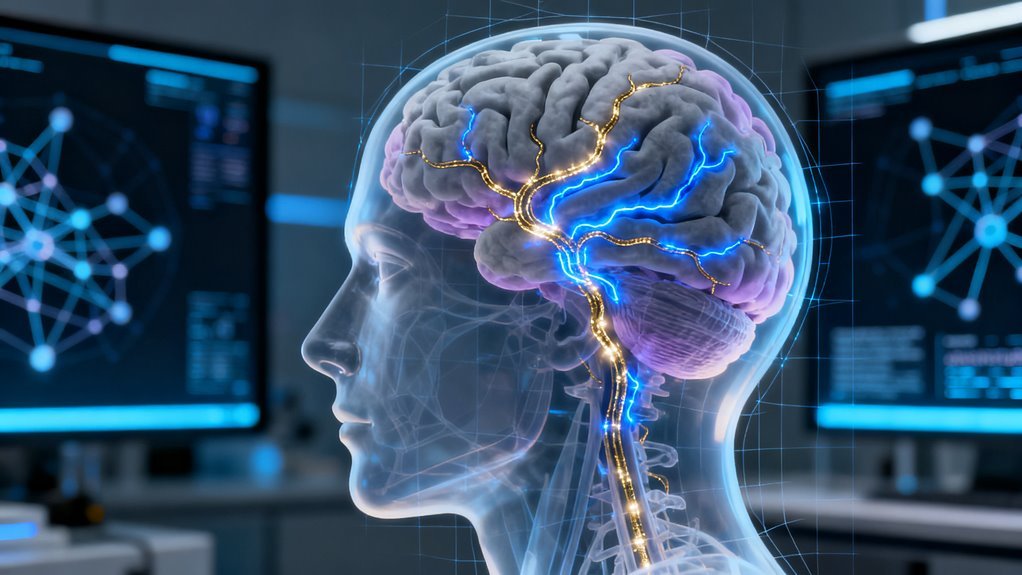
Artificial intelligence is turning handwriting into a powerful early warning system for dyslexia, at a moment when schools are under pressure to spot learning differences sooner and intervene more effectively. Instead of relying only on long reading tests and teacher intuition, educators now have access to models that can scan ordinary classroom writing and estimate dyslexia risk with accuracy that rivals controlled clinical studies. Emerging school-based projects are already using AI handwriting analysis to flag both dyslexia and dysgraphia earlier than traditional screeners, while making these tools accessible in underserved communities.
From intuitive observations to data driven screening
For decades, dyslexia was primarily identified through patterns in reading and spelling performance combined with clinical interviews and teacher reports. Handwriting was often treated as a secondary symptom, noted when children showed messy work, letter reversals or unusual spacing, but rarely analyzed systematically. Recent advancements in generative AI technology have opened new avenues for early detection.
For years, handwriting languished as a messy footnote in dyslexia identification
As digital imaging and machine learning matured, researchers began to ask a simple question that now looks obvious in hindsight. If teachers can often see that something is different in a student’s handwriting, could computers be trained to recognize those same patterns at scale? Early efforts focused on manual feature engineering, measuring baseline drift, letter size and spacing, then feeding those handcrafted features into traditional classifiers. These models showed promise but required extensive tuning and struggled when applied to diverse real classroom writing.
Deep learning changed the trajectory. Convolutional neural networks made it possible to learn visual features directly from image data, capturing subtle differences in stroke patterns and spatial organization that are difficult to describe by hand. Subsequent work introduced sequence models, transformers and explainable AI frameworks, and the field has moved quickly from proof of concept prototypes to systems designed explicitly for school screening and clinical support.
What dyslexia looks like on the page
While dyslexia is fundamentally a language based learning difference, it leaves a clear imprint on handwriting. Many children with dyslexia show inconsistent letter size and spacing, unstable baselines that rise and fall across the page, and skewed alignment of words within a line. Margins may be irregular, with crowded clusters of text in some areas and large gaps in others, producing pages that feel visually uneven even to the untrained eye.
Letter forms themselves often carry distinctive signals. Curves and angles in letters such as m, n, u and v may be atypical, loops may not close cleanly, and strokes can be repeated or overwritten in ways that suggest effortful motor planning rather than fluent execution. Orthographic errors are common, including misspellings, letter reversals and inconsistent application of spelling rules even in short writing tasks.
Motor execution can add another layer of information. Slow and jerky strokes, frequent erasures and variable pressure reduce the smoothness and rhythm of writing. Studies that combine visual and temporal features report that irregular stroke timing, repeated corrections and unusual changes in direction can help distinguish dyslexic handwriting from typical production.
Taken together, these spatial, motor and orthographic cues form a rich behavioral signal. Human specialists have exploited this signal for years in detailed assessments. The current wave of AI research is about encoding those same cues into models that can operate consistently across thousands of students and many schools.
How AI reads the handwriting signal
Modern AI systems start by converting handwriting samples into structured visual data. Pages or dictation sheets are captured as images and divided into manageable units, sometimes at the level of individual characters, sometimes at the level of words, lines or small tiles. Convolutional neural networks then process these units to learn features that describe shape, spacing, stroke texture and alignment.
Several studies report strong performance using compact CNN architectures tailored for handwriting classification. A comprehensive CNN approach for dyslexia detection achieved more than 95 percent accuracy when classifying three categories of dyslexic handwriting, demonstrating that a single deep convolutional model could reliably capture relevant visual patterns.
Other work uses DenseNet style architectures to analyze handwriting at the paragraph level, with reported test accuracies around 90 percent even in relatively small datasets, explicitly positioning the method as a low cost screening tool for resource constrained schools.
Transfer learning has become a central strategy. Research on systems such as DyslexiaAnalyzer shows that pretrained models like MobileNetV3 can act as efficient feature extractors for handwriting images, reaching classification accuracy around 96 and a half percent after fine tuning on dyslexic and non dyslexic samples. Similar work compares custom CNN architectures with pretrained models such as EfficientNet and MobileNetV2, often finding that task specific networks can outperform generic image backbones when carefully designed for handwriting.
Explainability is no longer an afterthought. Studies integrate methods such as Grad CAM and other explainable AI techniques to highlight regions of handwriting that most influence model decisions, revealing that attention consistently concentrates on illegible segments, crowded clusters of letters or unusually shaped character forms. This not only improves transparency for teachers and clinicians but also helps validate that models are focusing on the same anomalies that human experts would flag.
From static images to sequences and language
Handwriting is inherently sequential. Children form letters and words in time, and those dynamics can reveal as much as the final static image. To capture that, several groups have moved beyond isolated patch classification to sequence modeling.
Ensemble approaches such as DxDetekt combine CNN models that process individual handwriting images with CNN LSTM architectures that handle sequences of images, allowing the system to capture temporal dependencies along a line of text or across multiple writing samples. Researchers report that these combined models outperform standalone CNN or standalone LSTM networks, particularly when the goal is to reflect how handwriting evolves during a dictation or copying task.
Other work introduces hybrid CNN BiLSTM CTC architectures that treat handwriting as a sequence to be decoded, rather than a static image to be labeled. In one study focused on early dyslexia prediction, a custom CNN BiLSTM CTC model achieved nearly 97 and three quarters percent accuracy, outperforming several well known pretrained vision models on the same dataset.
Recurrent neural networks and related sequential models are also used to analyze more abstract geometrical descriptors of handwriting, such as baseline deviations, stroke connectivity and thickness, enabling the detection of both dyslexia and related writing disorders like dysgraphia.
Language information is increasingly integrated. Cost effective screening tools for schools have begun to pair handwriting image analysis with optical character recognition to extract the written text, then measure spelling accuracy, letter reversals and rule based errors alongside visual legibility metrics. Some systems further fuse handwriting features with data from short computer based quizzes, combining motor, spatial and cognitive performance into a single risk score that teachers can review.
What the results actually show
Across studies, AI models for dyslexia detection from handwriting routinely report performance in the mid eighties to high nineties for classification accuracy, with respectable sensitivity and specificity on held out test sets. A large investigation using the DysDiTect CNN positional LSTM attention model trained on one hundred thousand Chinese characters from more than one thousand children reached accuracy of about 83 percent using handwriting features alone, and around 85 percent when grade level information was added, along with areas under the receiver operating characteristic curve above 89 percent.
Hybrid visual sequence models often perform even better. The stacking ensemble approach that combines multiple deep neural networks for dyslexic handwriting classification reports roughly 96 and three quarters percent accuracy across three handwriting classes, showing the benefit of aggregating complementary model perspectives.
CNN SVM hybrids designed explicitly to reveal dyslexia from handwriting have achieved accuracy rates above 98 percent for the pure CNN component, 99 and a third percent when using SVM for classification, and just above 98 percent for CNN random forest combinations.
Transfer learning and lightweight architectures deliver strong results with better computational efficiency. Studies using MobileNetV3 and similar compact models for handwriting classification report accuracy in the range of 96 percent, with explainable AI methods confirming that decision maps align with visibly anomalous handwriting regions. Custom CNN architectures developed specifically for dyslexia recognition have achieved around 95 percent accuracy in multi class settings, comparable to or surpassing larger networks.
Importantly, some research focuses on realistic school constraints. Paragraph level models for low cost screening in resource constrained environments reach about 90 percent test accuracy while operating within modest hardware budgets. Pilot deployments that combine handwriting and quiz performance report around 90 percent accuracy in identifying at risk students, a figure that is framed as comparable to more controlled experimental evaluations of deep learning models that achieve about 96 percent accuracy and dysgraphia focused CNN SVM systems with accuracies above 90 percent.
These numbers are promising, but they are not a guarantee that any single model will perform as well in every school. Performance depends heavily on the language, script, grade range, dataset quality and label definitions used in each study. Many of the highest reported accuracies come from carefully curated datasets and may drop when models encounter messier real world handwriting, mixed learning profiles and incomplete documentation of diagnoses.
Opportunities for classrooms and clinics
The practical implications are significant. For schools that currently rely on occasional screening and overloaded specialists, AI handwriting analysis offers a way to scan large numbers of students using artifacts that already exist: daily writing tasks, dictation exercises and homework pages. Teachers can receive risk scores or alerts that help them prioritize detailed assessment for students who may otherwise be overlooked until reading difficulties become severe.
Resource constrained settings stand to benefit the most. Paragraph level CNN tools and cost effective screening systems are explicitly designed to run on standard school computers or tablets, often without cloud connectivity, preserving privacy and avoiding recurring infrastructure costs. By focusing on small models, offline processing and simple data collection protocols, these systems align with the realities of many public school environments rather than assuming high end hardware or constant internet access.
Clinics and research centers gain a complementary lens. AI models that analyze fine grained handwriting features can support neurocognitive studies by quantifying graphomotor patterns, spatial organization and orthographic errors in ways that are consistent across large cohorts. This can deepen understanding of how dyslexia interacts with motor planning, attention and working memory, and may help refine intervention strategies that target both reading and writing together.
For families, earlier and more objective screening can reduce the long period of uncertainty that often precedes a formal diagnosis. When AI systems are carefully integrated into broader assessment workflows, they can prompt timely referrals while still leaving final decisions with human specialists. That balance respects both the complexity of dyslexia and the understandable desire to avoid mislabeling children based on a single automated test.
Risks, limitations and open questions
Despite encouraging results, several risks and limitations deserve serious attention. Dataset bias is a central issue. Many current models are trained on handwriting from specific regions, languages and scripts. A model that performs well on Chinese characters may not generalize to alphabetic handwriting, and a system tuned to one educational curriculum can misinterpret spacing, alignment or dictation formats used elsewhere. Deploying models without careful validation across local contexts invites both false positives and false negatives.
Interpretability is another concern. While explainable AI methods like Grad CAM, attention visualization and feature attribution have been introduced to make handwriting models more transparent, these tools are only as useful as the explanations they provide. Heatmaps that highlight vague regions of interest can give a false sense of understanding, and teachers may over trust models if explanations appear visually convincing but are not rigorously evaluated.
Ethical and practical questions also loom. Screening tools that flag students as at risk must be embedded within supportive systems, not punitive ones. If schools treat AI outputs as labels rather than signals, children could be tracked into inappropriate programs or stigmatized unnecessarily. Conversely, if models are ignored because they are seen as experimental or opaque, the potential benefits for early intervention will not materialize. Thoughtful policy and training are required to ensure that educators use these tools as one piece of a holistic assessment process.
Technical robustness remains a challenge. Handwriting captured under classroom conditions includes smudges, lighting variation, different pens and paper types, and a wide range of writing prompts. Systems that depend on clean scans may falter in realistic deployments. Longitudinal validation, where models are tested across multiple years and cohorts, is still rare and urgently needed to understand how performance holds up over time.
The road ahead
Taken together, the current wave of research shows that AI powered handwriting analysis is moving from speculative idea to practical tool. Deep learning models grounded in CNN, LSTM and transformer architectures now routinely match or exceed the accuracy of traditional screening methods when applied to curated handwriting datasets, while emerging explainable AI frameworks offer clearer visibility into why a particular page of writing raises concerns.
The most credible path forward treats these systems as augmentations rather than replacements. In the short term, expect more schools to pilot low cost handwriting based screeners that run locally, integrate simple quiz data and provide risk flags that feed into established support processes.
Over the longer term, as models learn from multilingual and multiscript datasets and as clinical validation accumulates, handwriting analysis could become a standard early indicator alongside phonological awareness tests and family history.
For technology providers and policymakers, the opportunity is to design solutions that respect the nuances of dyslexia, prioritize transparency and privacy, and remain grounded in evidence rather than marketing hype. For educators and families, the message is cautious optimism. The handwriting on the page has always told part of the story. AI is finally giving that story a more precise, scalable voice, as long as its insights are interpreted with care and combined with human judgment.
Conclusion
Artificial intelligence handwriting analysis is emerging as one of the most quietly important developments in special education, because it promises to spot dyslexia risk years before traditional reading tests show a problem. At a time when schools are under pressure to do more with limited specialist staff, the idea of turning everyday handwriting exercises into structured data for early screening is both compelling and controversial.
From reading tests to handwriting data
For decades, dyslexia has typically been identified only after a child begins to struggle with reading and spelling, often in the early grades of primary school. By that point, the student may have already experienced frustration, lower self confidence, and a widening achievement gap compared with peers. Early intervention is known to improve outcomes, yet access depends on timely referral to specialists, which in turn relies on educators noticing difficulties that are not always obvious.
Handwriting has long been recognized as a window into neurodevelopmental differences, including subtle motor, visual, and cognitive traits associated with dyslexia and related conditions. Researchers note characteristic patterns such as inconsistent letter size, irregular spacing, reversed letters, and non linear writing paths in the handwriting of some people with dyslexia. In traditional practice, these clues are interpreted by occupational therapists or psychologists through qualitative observation, which is valuable but not easily scaled to entire school systems.
The current wave of research on AI handwriting analysis builds on earlier work that used machine learning to recognize characters, signatures, and forms, but moves the focus from recognition to risk profiling for learning differences. Instead of merely asking what a child wrote, these systems examine how the child writes and extract patterns that may signal underlying challenges in motor control, visual processing, or language.
How AI handwriting analysis works
Modern systems treat handwriting samples as rich structured data. They capture image based features, such as letter shape, size, and spacing, and can also incorporate time based signals like writing speed, pen trajectory, and pressure when digital pens or tablets are used. Models then learn to distinguish patterns in this data that correlate with dyslexia or dysgraphia in labeled training sets.
A study led by researchers at the University at Buffalo describes an AI handwriting framework that analyzes writing speed and pressure to detect motor difficulties and examines visual aspects such as letter size and spacing. The same framework converts handwriting to text, allowing detection of misspellings, letter reversals, and grammatical issues that may reflect deeper language or cognitive challenges. The team proposes a tool that combines these models and generates a summary assessment that teachers and specialists can review, reinforcing the idea that AI should support, rather than replace, human judgment in early screening.
Other groups focus on highly accurate image based classification. An explainable AI framework using transfer learning and transformer models reports test precision of nearly ninety nine point seven percent for dyslexia detection from handwriting samples, while highlighting influential regions in the image through visual explanations. A system called DyslexiaAnalyzer uses transfer learning with explainable methods and reports classification accuracy above ninety six percent on handwriting data. Hybrid approaches that pair convolutional neural networks with support vector machines or random forests reach accuracy figures in the upper nineties when discriminating handwriting from dyslexic and non dyslexic writers.
Researchers are also combining handwriting with other modalities. The SAMARTHAN AI methodology integrates handwriting analysis with eye tracking and interactive tasks, achieving validation accuracies above ninety seven percent for its handwriting component and similarly high figures for the other modules in controlled evaluations. Reviews of AI based dyslexia detection emphasize that handwriting is an especially useful part of these multimodal systems because it captures sensory motor abilities alongside orthographic and language related behavior.
Not all results are close to perfect. One reported screening implementation using handwriting analytics achieved an accuracy rate of around sixty five percent when identifying children who were later diagnosed with dyslexia or dysgraphia by trained volunteers, illustrating both the potential and current limitations when models are tested in more realistic educational settings. This gap between laboratory performance and real world deployment is central to any trustworthy analysis of what schools can expect.
Why this matters for schools and students
From a practical perspective, handwritten work is one of the most abundant data sources in early education. Children regularly complete worksheets, copy letters, and practice spelling, producing far more writing samples than formal reading assessments. AI handwriting analysis turns these everyday artifacts into a continuous screening stream, allowing schools to flag possible risk patterns before grades or reading scores begin to fall.
If implemented carefully, such systems could help identify students who might otherwise be overlooked, including children who compensate through strong oral language skills or those who mask difficulties due to anxiety or perfectionism. For administrators, the promise is a scalable way to prioritize referrals and allocate specialist time more efficiently, focusing human assessment where data suggests the highest likelihood of need. For families, the potential benefit is earlier access to tailored support, such as phonological training, occupational therapy, or assistive technologies including text to speech and word prediction tools that are already widely used in special education.
AI driven adaptive learning platforms add another layer. When early screening detects risk, adaptive systems can adjust reading tasks, scaffold instructions, and offer multimodal supports based on the learner profile, creating a more personalized path through the curriculum. In principle, handwriting analysis could feed into these platforms, informing how content is presented and what pacing is appropriate, though this integration is still largely experimental.
Crucially, most academic work and expert commentary frame AI handwriting analysis as an early screening aid, not a diagnostic replacement for psychologists or neuropsychologists. The models aim to surface subtle difficulties so that qualified professionals can evaluate the child in depth and, where appropriate, provide a formal diagnosis and individualized plan. Preserving the central role of specialists is a key aspect of responsible deployment.
Balancing promise with risk
High reported accuracy figures can be tempting for educators and technology vendors, but they must be interpreted with caution. Many studies rely on relatively small, carefully curated datasets, often drawn from specific linguistic and cultural contexts that may not generalize to diverse school populations. Labels usually come from prior diagnoses or screening outcomes, which may themselves contain biases or inconsistencies. As a result, there is a real risk that models trained in one environment could underperform or misclassify students in another.
False positives carry their own cost. A child incorrectly flagged could be subjected to unnecessary assessment, stigma, or altered expectations, especially if teachers over trust algorithmic outputs. False negatives are equally serious, delaying support for students who genuinely need help. The field study with significantly lower accuracy is a reminder that performance metrics in publications do not automatically translate to everyday classrooms.
Privacy and ethics cannot be an afterthought. Handwriting samples and derived features may reveal more than academic skill, touching on motor function and aspects of cognitive and language processing that some families may regard as sensitive health information. Storing and analyzing these data at scale raises questions about consent, data governance, and the potential for misuse, especially if commercial platforms are involved. Clear policies are needed to define who can access the data, for what purposes, and how long it will be retained.
There is also the risk of overreliance on AI. Experienced teachers and specialists learn to interpret the context around handwriting and behavior, including trauma, multilingual backgrounds, and other factors that may mimic or mask dyslexia. Any responsible deployment must emphasize that algorithmic results are one piece of evidence, not the final word, and that professional judgment remains essential.
How this fits into the broader evolution of AI in special education
Viewed in context, AI handwriting analysis is part of a larger trajectory in which artificial intelligence is being woven into tools for reading, writing, communication, and behavior support in special education. Text to speech technology, intelligent word prediction, and voice typing are already mainstream supports for students with dyslexia, offering immediate access to grade level content even while remediation is underway. Adaptive systems align instruction with frameworks such as Bloom taxonomy and respond to ongoing performance data, making differentiated materials more feasible at scale.
Academic reviews of AI in special education emphasize that some automated assessment tools can approach ninety percent accuracy and are inherently more scalable than traditional testing, yet they repeatedly caution that these tools should augment existing practices rather than stand alone. Work on AI powered adaptive education explores how algorithms can dynamically adjust content and supports for disabled learners, but also stresses the importance of inclusivity, transparency, and collaboration between technologists and educators.
In this landscape, handwriting analysis is notable because it reframes a familiar task as a data source for equity. Instead of waiting for failure on standardized reading assessments, schools could, in principle, use patterns in everyday writing to allocate resources more proactively, provided the systems are validated, transparent, and embedded in a human centered workflow. This is a shift not only in technique, but in mindset about how early warning signs are detected and acted upon.
What to watch next
Several threads will determine whether AI handwriting analysis becomes a trusted part of dyslexia screening or remains a niche research topic. Large longitudinal studies across varied school systems are needed to test whether early alerts actually lead to better outcomes, and to understand how different thresholds affect false positive and false negative rates. Regulatory and ethical frameworks must evolve to address the unique sensitivities of educational data, especially when it intersects with health related information. Teacher training and clear communication with families will be critical to ensure that results are interpreted appropriately and do not become labels that limit opportunity.
Technically, future models are likely to combine handwriting with other signals, such as eye tracking, speech, and task interaction, to build richer profiles while maintaining explainability through visual and textual explanations that educators can understand. Policy makers and school leaders will need to decide how much weight to give these systems and how to integrate them with existing multi tiered support frameworks, rather than letting the technology drive practice on its own.
The core idea is straightforward yet powerful. Handwriting is no longer just a record of what a child puts on the page. With appropriate safeguards, it can become actionable data that helps schools notice students who might otherwise fall behind quietly and to connect them with support earlier in their educational journey. The challenge now is to pair that technical possibility with rigorous evidence, ethical guardrails, and a renewed commitment to human expertise, so that AI handwriting analysis genuinely advances equity rather than simply adding another opaque layer to the system reddit