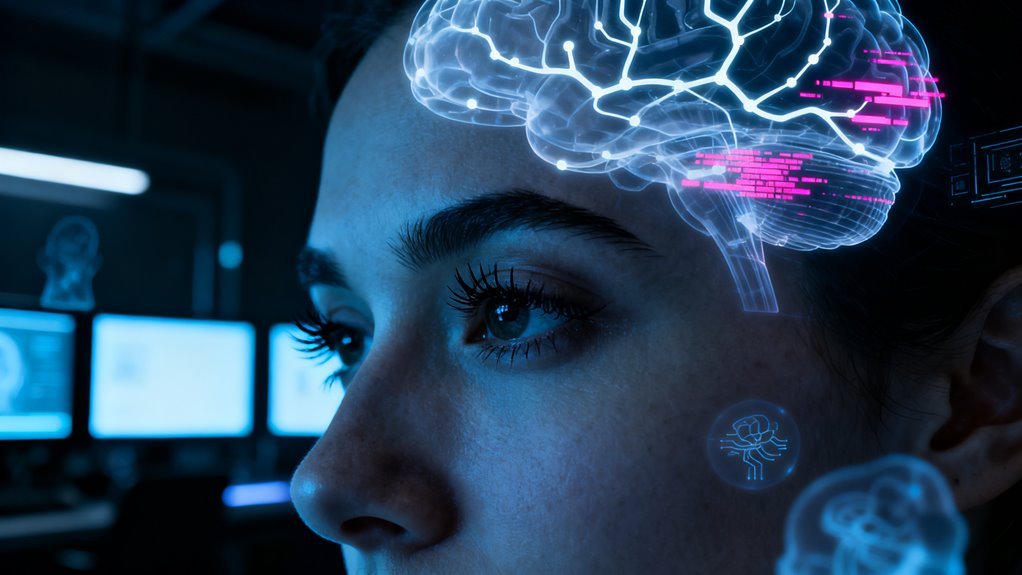
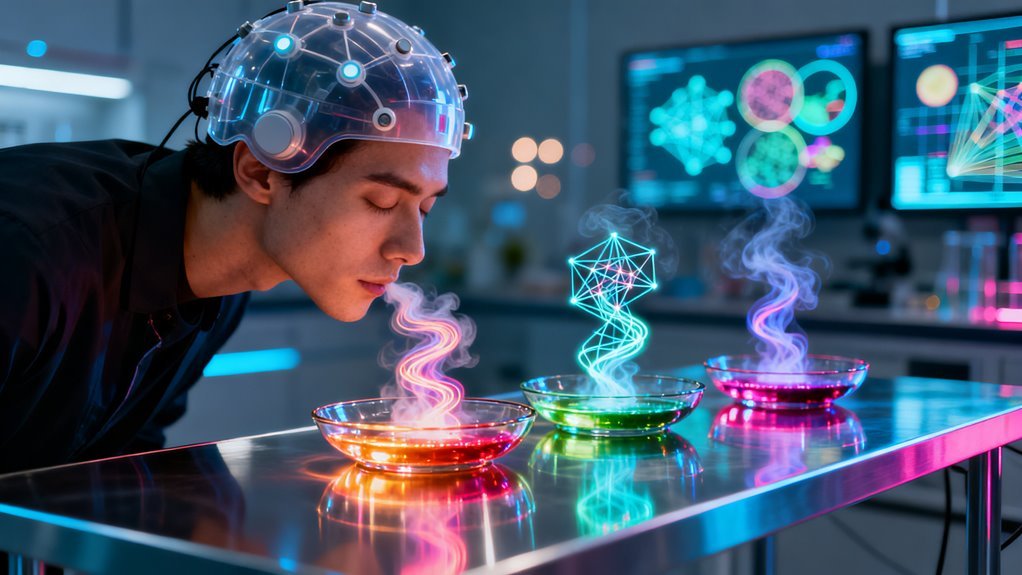
For years, neuroscientists have wired people up to electroencephalography caps and fed the resulting brain activity into machine learning models, chasing a tantalizing goal: can a computer tell what you remember? In carefully controlled lab setups, the answer is increasingly yes. Algorithms trained on event-related potentials can look at characteristics such as amplitude, timing, and where a signal appears on the scalp and classify whether a stimulus is familiar to you or not. Given a large labeled dataset that maps specific images or words to the neural signatures they evoke, these systems now routinely hit recognition accuracies that would have sounded implausible a decade ago, often nudging past ninety percent in benchmark tasks. This success, however, lives inside a narrow sandbox. The experiments rely on simple stimuli, minimal distraction, and perfectly clean ground truth about what the subject did or did not see. Out in the wild, human memory is messy. It is influenced by stress, context, suggestion, emotion, and countless prior experiences. The distance between laboratory recognition and real-world memory detection is similar to the gap between a self-driving car on a closed test track and the same vehicle in a chaotic city at rush hour. The core technology works, but the environment changes everything. A broad but shallow diffusion of AI complicates the application of AI in real-world scenarios.
This is where expectations start to diverge from reality. The idea that AI might cleanly separate true memories from convincing false ones is attractive to courts, insurers, and security agencies, yet the current science is far from that point. Brain-based systems are good at flagging that information is stored somewhere in your neural networks. They are much worse at indicating how it got there. A pattern could reflect something you directly experienced, something you watched happen to someone else, or something you later picked up from a news clip, a chat with a friend, or a social feed. On single trials, the brain activity linked to genuine recollection and vivid but mistaken recollection often overlaps to a degree that defeats simple classification. Even trivial countermeasures such as silently rehearsing an alternate version of events or focusing on unrelated internal thoughts can blur the signal further.
The deeper problem is structural. Remembering is not an act of replaying a video file stored on disk. It is reconstructive. Each time you recall an event, your brain rebuilds it from a mix of gist, inference, and scattered perceptual fragments. Over time, these reconstructions are edited and reassembled, which undermines any hope of a neat binary output that labels a memory as purely true or purely false. Developers who approach this space as if it were yet another supervised learning problem often underestimate how little ground truth exists for many real memories. There is no authoritative log of what someone saw at age seven, or what they felt during a conversation five years ago, to train against. Recognizing those limits, researchers are shifting the focus from detecting false memories at the moment of recall to understanding how they form in the first place, echoing the need for effective governance in AI systems.
One active line of work maps how patterns of activation during encoding predict later misattribution. When similar events light up overlapping semantic and associative networks, the risk rises that details will be swapped or blended when recalled weeks or years later. For AI teams, this is more than an academic curiosity. It is a blueprint for how synthetic media can exploit the natural fault lines in human memory. Recent work on AI-implanted false memories shows that generative chatbots simulating witness interviews can induce over three times more immediate false memories than traditional, non-AI questioning methods.
That brings us to the other side of the story. AI is not only trying to read memories. It is also quietly reshaping them. Experiments with AI-edited images and AI-generated video sequences have shown that minor manipulations can significantly increase the rate at which people report remembering nonexistent details and can boost their confidence in those memories. The trick is not to invent wild new scenes but to strengthen the gist of something plausible while muddying the source. A slightly altered childhood photo, a tweaked protest image, or a polished video clip of a news event can slide into the same networks that store authentic experiences. Later, people remember the narrative but forget which parts came from direct experience and which from the synthetic artifact.
For businesses and governments, this creates a strange dual role for AI-assisted memory technology. On one hand, tools that read neural signals can help validate whether a person has seen particular information, which is useful for training evaluation, safety-critical procedures, or even certain medical diagnostics. On the other hand, the same ecosystem of generative tools is making it easier to implant, distort, and amplify memories in ways that are very hard to untangle afterward. Authenticity becomes less of a technical detection problem and more of a contextual judgment problem. Who created the media that interacted with your memory? Under what incentives? With what omissions?
Strategically, this suggests that any future deployment of AI-based memory detection will need to be paired with robust controls around AI-generated media and conversational systems. Without that, we risk building instruments that can tell us which ideas have taken root in the mind but cannot tell us whether those ideas grew from genuine experience or from a synthetic seed deliberately planted there. For legal systems, that raises questions about the reliability of witness recall in an environment saturated with subtle generative edits. For platforms and marketers, it highlights both a powerful influence channel and a serious ethical hazard. Over the next several years, the organizations that grasp this duality sooner will be the ones that avoid overclaiming what AI can prove about the truth of our memories, while still leveraging what it can reliably show about what we have been exposed to.
Conclusion
Ultimately, this work points to a future in which artificial intelligence can read the fine grained structure of brain activity and separate memories that have been bent by suggestion from those that track what actually happened. By tracing how the brain encodes, reshapes and occasionally invents experience, the technology shifts from a laboratory curiosity into a potential instrument for memory research, clinical diagnosis and the handling of eyewitness testimony in courtrooms. At the same time, any system that can flag false recollections is also a system that catalogs the most intimate contours of a persons inner life, which forces hard conversations about consent, surveillance and who is allowed to interrogate that data in workplaces, clinics and legal investigations. The real question is whether regulators, judges and hospital boards can design safeguards quickly enough, before these tools migrate from controlled experiments into commercial products that promise to audit our recollections in real time.