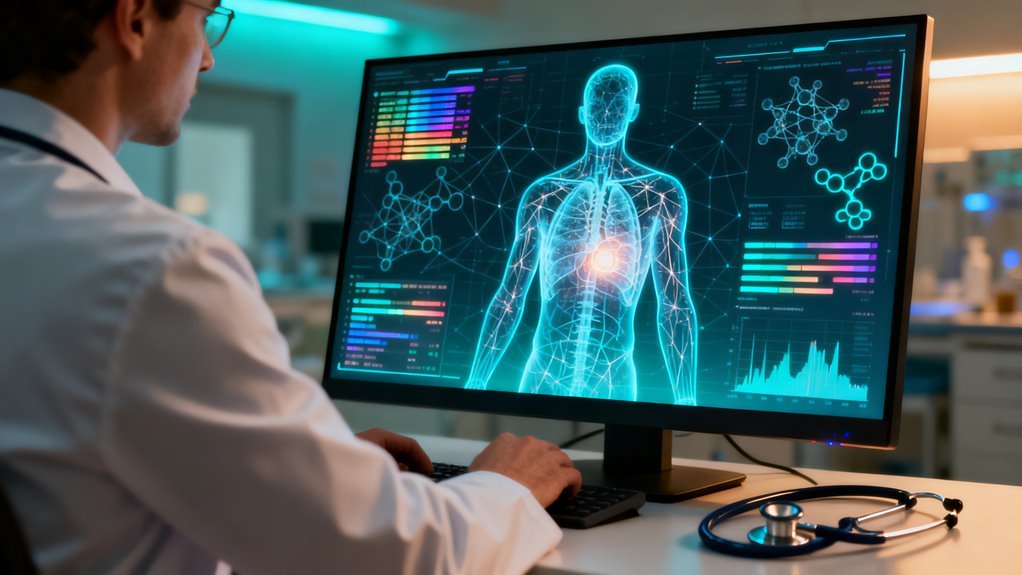
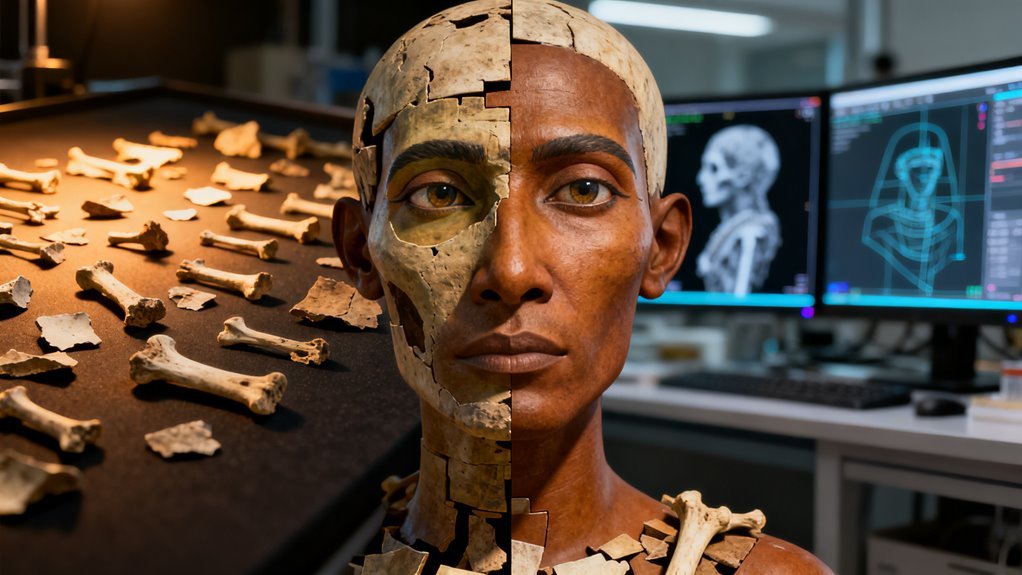
For the roughly 300 million people worldwide living with a rare disease, the path to a correct diagnosis has historically been measured not in weeks but in years. Clinicians call it the diagnostic odyssey, a term that undersells the toll it takes. Patients bounce between specialists, accumulate incorrect labels, undergo unnecessary treatments, and burn through savings while their actual condition progresses unchecked. The fundamental problem is not a lack of caring physicians. It is that rare diseases, by definition, fall outside the pattern recognition that clinical training optimizes for. A doctor who sees thousands of patients a year might encounter a given rare condition once in an entire career, if ever.
The diagnostic odyssey persists because rare diseases defy the pattern recognition that clinical experience is built on.
That asymmetry between clinical experience and disease prevalence is precisely the kind of problem AI was built to solve. And recent developments suggest the technology is finally mature enough to deliver on the promise.
What Actually Changed
The breakthrough worth paying close attention to emerged from a collaboration between researchers at UCSF and UCLA. Their team built a predictive algorithm that mines electronic health records to flag patients who may have acute hepatic porphyria, a painful metabolic disorder that commonly masquerades as garden variety abdominal pain.
The combined models achieved accuracy rates between 89 and 93 percent, which is notable on its own. But the more consequential finding is this: the algorithm identified 71 percent of AHP cases earlier than conventional diagnosis, shaving an average of roughly 1.2 years off the diagnostic timeline per patient.
A year might not sound dramatic in the abstract. For someone cycling through emergency departments with agonizing abdominal episodes, dismissed repeatedly with diagnoses of irritable bowel syndrome or anxiety, that year represents a fundamentally different life. Furthermore, the ability to leverage AI model-driven decisions enhances the potential for timely interventions in other medical domains.
Retrospective analysis of the system’s potential performance suggests that had it been running continuously across hospital networks, it could have compressed the diagnostic window by approximately one year for each patient caught. Scale that across an entire disease population and the downstream effects on treatment outcomes, healthcare spending, and patient quality of life become enormous.
The Technical Architecture Behind the Shift
What makes this moment different from earlier AI healthcare hype cycles is the convergence of several distinct technical capabilities that were previously siloed.
Record mining at scale. Platforms like FindEHR apply natural language processing to both structured data (lab values, billing codes, medication lists) and the unstructured clinical notes that physicians type during encounters. The unstructured layer matters enormously because rare disease clues often hide in the qualitative observations a doctor records but never acts on, partly because no single clinician sees enough cases to recognize the pattern.
AI does not forget, and it does not suffer from sample size limitations the way an individual physician does.
Advanced imaging phenotyping. Self-supervised image search for histology, known as SISH, works essentially as a search engine for pathology slides. Given a tissue sample, it can retrieve morphologically similar cases from massive repositories without requiring someone to first label every slide by hand.
This matters because the bottleneck in applying deep learning to pathology has always been annotation. Supervised learning demands enormous labeled datasets. Self-supervised approaches sidestep that constraint, making it feasible to spot rare morphological patterns that a pathologist reviewing slides in isolation would almost certainly miss.
Multi-tool systems like DeepRare push further by generating ranked diagnostic hypotheses, integrating imaging analysis with text mining and knowledge graphs and then providing explicit reasoning chains that clinicians can evaluate.
Genomic variant interpretation. Many rare diseases trace back to genetic mutations, and platforms like Fabric GEM now analyze gene variant combinations from exome or whole genome sequencing data to prioritize the candidates most likely to be pathogenic.
This automates what was previously a painstaking manual process requiring highly specialized genetic counselors, a workforce that is in critically short supply globally.
Each of these capabilities existed in some form over the past several years. What is new is their integration into workflows that can operate in parallel rather than sequentially. The traditional diagnostic process for rare diseases is essentially serial: try one thing, wait for results, refer to another specialist, try something else.
AI collapses that into a simultaneous multimodal assessment.
Why This Matters Beyond Rare Disease
The strategic significance here extends well beyond the rare disease community, important as that population is. What these systems demonstrate is a template for how AI can function as a diagnostic layer across medicine more broadly.
Consider the structural problem. Healthcare systems worldwide are buckling under physician shortages, aging populations, and rising costs. The United States alone faces a projected shortfall of up to 86,000 physicians by 2036, according to the Association of American Medical Colleges.
In that environment, any technology that amplifies diagnostic accuracy without requiring additional specialist appointments represents a force multiplier.
The rare disease use case is actually the hardest version of this problem. If AI can reliably detect conditions that affect one in 100,000 people by mining records, images, and genomic data, the same infrastructure can almost certainly be adapted to catch more common conditions that are frequently missed or diagnosed late.
Think autoimmune diseases, certain cancers, or neurodegenerative conditions where early intervention dramatically changes outcomes. Researchers are already planning to expand AI diagnostic approaches to conditions like irritable bowel disease and hypertension, signaling a clear trajectory from rare to common disease applications.
Google, through its Health AI efforts, and Microsoft, through partnerships with healthcare systems via Azure and Nuance, have been building toward similar capabilities. But the UCSF/UCLA work and platforms like FindEHR are notable because they demonstrate clinical-grade performance on a problem that most commercial AI players have avoided, precisely because rare diseases lack the large training datasets that conventional machine learning demands.
Who Benefits and Who Should Be Watching
Patients are the obvious beneficiaries, but the economic implications ripple outward. Rare disease patients in the U.S. incur an estimated $400 billion annually in direct medical costs, a significant portion of which stems from the diagnostic odyssey itself: unnecessary tests, incorrect treatments, repeated specialist visits.
Shortening that process even modestly generates real savings for insurers, hospital systems, and government healthcare programs.
Pharmaceutical companies developing rare disease therapies stand to gain substantially. One of the persistent challenges in rare disease drug development is patient identification and recruitment for clinical trials.
If AI can flag likely patients years earlier, trial enrollment accelerates and commercial launch populations become easier to define. Companies like BioMarin, Alexion (now part of AstraZeneca), and Ultragenyx have struggled for years with this exact bottleneck.
Health systems that adopt these tools early will likely see competitive advantages in both cost reduction and reputation. Being known as the hospital network where rare diseases actually get diagnosed is a meaningful differentiator.
Investors should note that the rare disease AI space remains relatively uncrowded compared to radiology AI or drug discovery AI, where funding has been concentrated. The combination of clear clinical need, demonstrable accuracy, and quantifiable economic impact makes this a sector likely to attract significant capital over the next two to three years.
The Risks Nobody Is Talking About Enough
There are important caveats that the optimistic framing tends to obscure.
False positives at scale could create new problems. An algorithm with 90 percent accuracy deployed across millions of patient records will generate a substantial number of false alarms. Each false positive triggers follow-up testing, specialist referrals, and patient anxiety.
For rare diseases, where the base rate is extremely low, even a small false positive rate can mean that the majority of flagged patients do not actually have the condition. Calibrating these systems to balance sensitivity against specificity in real-world deployment remains an unsolved challenge.
Regulatory frameworks are still catching up. The FDA has cleared numerous AI diagnostic tools, but the regulatory pathway for systems that mine EHRs to suggest rare disease diagnoses is less established. These tools do not fit neatly into existing device categories.
Is an algorithm that flags a possible diagnosis a medical device? A clinical decision support tool? The classification matters because it determines the level of premarket scrutiny required.
Data access and privacy tensions are real. These systems work best when they can access comprehensive patient records across institutions. That runs headlong into data fragmentation, interoperability barriers, and legitimate privacy concerns.
European GDPR requirements and evolving U.S. state privacy laws add complexity. The technical capability to detect rare diseases may outpace the legal and institutional willingness to share the data needed to make detection work.
Equity gaps could widen. AI models trained predominantly on data from well-resourced academic medical centers in wealthy countries may perform poorly on populations that are underrepresented in those datasets.
Rare diseases affect people globally, but the diagnostic AI being built today reflects a narrow slice of human genetic and clinical diversity. Without deliberate efforts to diversify training data, these tools risk working best for the patients who already have the most access to care.
What Comes Next
The trajectory here points toward a future where AI-driven screening for rare diseases becomes embedded in standard EHR systems, running quietly in the background and surfacing alerts when a patient’s record crosses a diagnostic threshold.
That future is probably three to five years away for early adopters and longer for widespread deployment.
The more transformative possibility is that these approaches catalyze a broader rethinking of how diagnosis works. The current model treats diagnosis as something that happens after a patient presents with symptoms severe enough to seek care.
AI screening flips that model, detecting disease signatures from the accumulated digital exhaust of routine healthcare interactions. That is a philosophical shift as much as a technical one.
For the rare disease community, the immediate question is not whether AI can help. The evidence increasingly says it can. The question is how quickly health systems, regulators, and payers will move to integrate these tools into clinical practice, and whether they will do so in a way that serves all patients equitably rather than only those already inside the most sophisticated medical ecosystems.
The diagnostic odyssey has persisted not because the clues were absent from the data, but because no human could see them all at once. That limitation no longer applies.