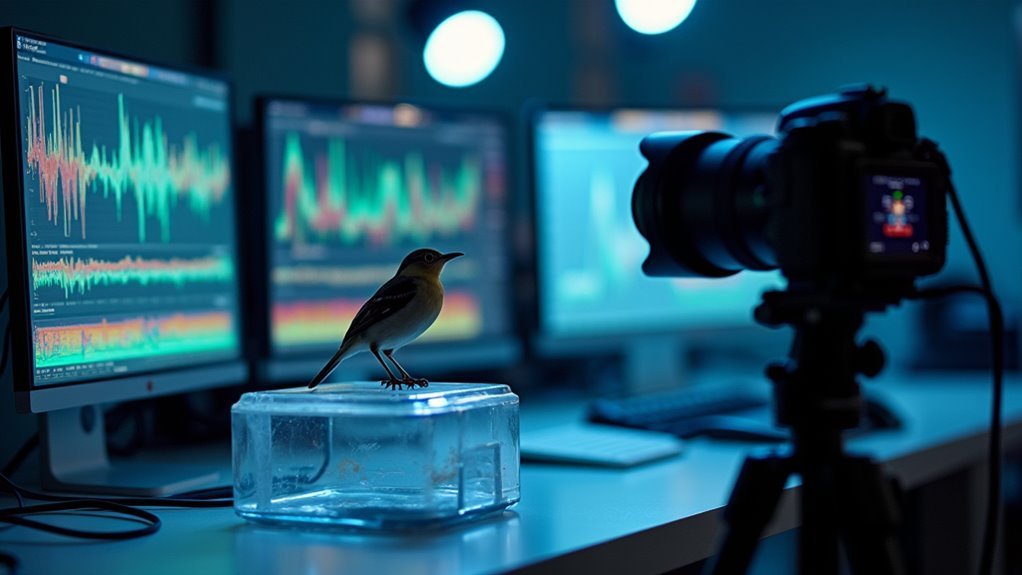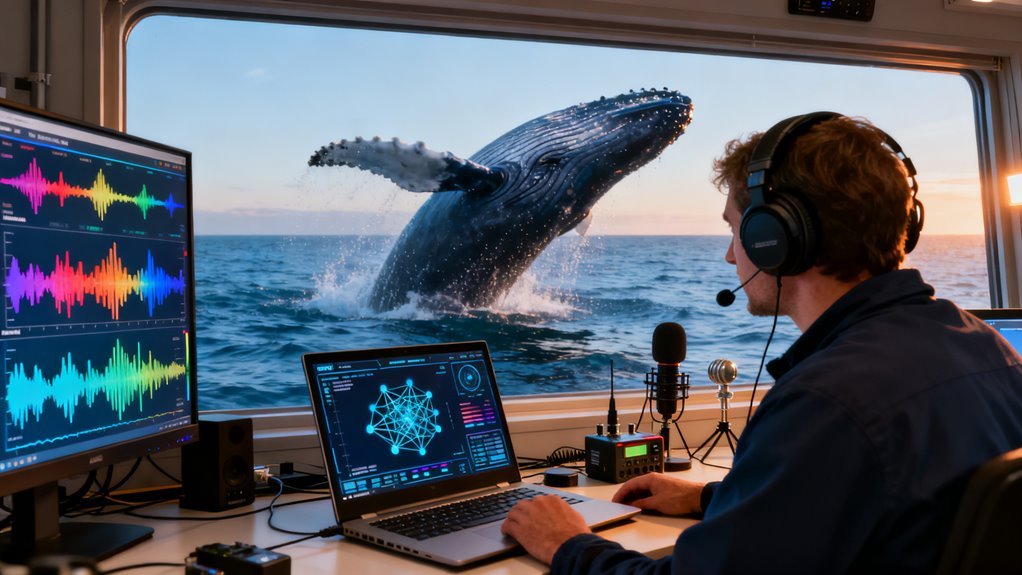
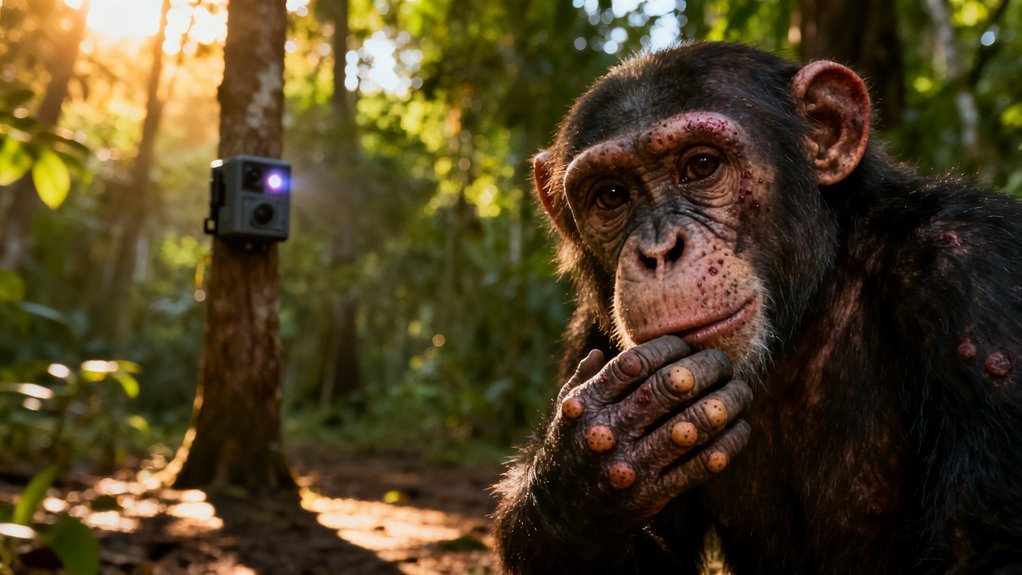
Most of the AI conversation in 2025 revolves around foundation models, agentic systems and enterprise automation. But some of the most technically ambitious work in machine learning is happening far from Silicon Valley boardrooms, in ocean waters and forest canopies where researchers are turning neural networks loose on a problem that has eluded science for centuries: understanding what animals are actually saying to each other.
This is not a novelty story. The convergence of large scale acoustic data collection, transformer architectures originally designed for human language, and increasingly powerful unsupervised learning methods has created a genuine inflection point. For the first time, researchers have the computational tools to move beyond cataloguing animal sounds and start interrogating the structure and possible semantics of non-human communication systems. The implications stretch well beyond biology, touching questions about the nature of language itself, the limits of current AI architectures and even future regulatory frameworks for how we interact with other species.
What Changed and Why It Matters Now
The field of bioacoustics has existed for decades. Researchers have recorded whale songs, bird calls and primate vocalizations since the mid-twentieth century. What was always missing was the analytical horsepower to process these datasets at the scale and granularity needed to detect meaningful patterns. A spectrogram of a single sperm whale click sequence might take a trained researcher hours to annotate. Multiply that by tens of thousands of hours of recordings across multiple individuals and populations, and the bottleneck becomes obvious.
Two things shifted almost simultaneously. First, high throughput sensor networks and autonomous underwater and terrestrial recorders became cheap enough to deploy at ecosystem scale, generating continuous multi-year archives of acoustic data. Second, the same self-supervised and transformer-based architectures that powered breakthroughs in natural language processing turned out to be remarkably well suited for finding structure in sequential acoustic signals. Recent initiatives like the PULSE program signal a growing recognition of the need to leverage AI for complex data analysis.
Organizations like the Earth Species Project and Project CETI recognized this convergence early. The Earth Species Project is building foundation models for animal communication across species. Project CETI has spent years amassing one of the largest annotated sperm whale vocalization datasets ever assembled, drawn from populations in the Eastern Caribbean, and is now applying GPT-style architectures to decode the combinatorial logic of whale codas.
Sperm Whales and the Complexity Nobody Expected
The sperm whale research deserves particular attention because it overturned a long-standing assumption. For years, whale codas were treated as relatively simple identifiers, something akin to Morse code patterns that signaled clan membership or individual identity. Machine learning analysis has revealed something far more sophisticated.
Researchers have now identified at least 143 distinct phonetic combinations in sperm whale click sequences, built from four controllable features: rhythm, tempo, rubato and ornamentation. Custom AI systems have detected vowel-like and diphthong-like frequency patterns within these codas. That is a level of combinatorial complexity that looks less like a simple identity beacon and more like a structured signaling system with the potential for compositional meaning.
Whether this constitutes “language” in the way linguists define it remains an open and contentious question. But the point is that without machine learning, this structure was invisible. Human perception and traditional analytical methods simply could not detect it in raw acoustic data.
Project CETI’s next stated objective is even more provocative: training models to generate whale-like signals and testing whether wild sperm whale populations respond to them in meaningful, measurable ways. If that works, even partially, it would represent the first credible step toward interactive communication with another species using AI as an intermediary.
The Technical Architecture Behind the Scenes
The computational pipeline underpinning this research is more complex than it might appear. It starts with raw audio captured by hydrophones, microphone arrays or wearable biologgers. That audio gets converted into spectrograms and processed through feature extraction layers, typically using Mel-frequency cepstral coefficients and related acoustic descriptors.
From there, the workflow branches. Supervised models like random forests have proven consistently reliable for narrower tasks such as identifying individual callers from their vocal signatures. But the more interesting work is happening in unsupervised and self-supervised territory, where clustering algorithms and contrastive learning methods find latent structure in call types without requiring human labels.
This matters because labelled data remains the single biggest bottleneck. Getting a behavioral annotation for an animal vocalization means a researcher had to be watching the animal at the moment it vocalized, recording both the sound and the behavioral context simultaneously. That kind of paired data is extraordinarily expensive and difficult to collect at scale. Self-supervised methods sidestep this constraint by learning representations directly from raw audio, then allowing researchers to probe the learned structure for patterns that correlate with observed behaviors.
Purpose-built architectures are also emerging. NatureLM-audio, for instance, is a large audio-language model specifically designed for analyzing animal vocalizations rather than adapting human speech models to non-human sounds. Early findings from NatureLM-audio suggest parallels between human and animal communication structures, reinforcing the potential of cross-species acoustic analysis. This is a meaningful design choice. Human speech models carry implicit biases about phoneme structure, prosody and syntax that may not transfer to species whose vocal tracts, auditory ranges and communication pressures are fundamentally different.
Who Benefits, Who Should Be Paying Attention
The most obvious beneficiaries are conservation biologists. Ecoacoustics, the analysis of entire soundscapes rather than individual calls, is already being used to monitor ecosystem health in near real time. A forest recovering from logging sounds measurably different from a degraded one, and AI can track those changes continuously across thousands of monitoring stations.
But the implications extend further. If AI-driven animal communication research demonstrates that multiple species use structured, combinatorial signaling systems, it will force a re-examination of legal and ethical frameworks governing animal welfare. Several jurisdictions are already debating the moral and legal status of cetaceans. Evidence of linguistic complexity would add significant weight to arguments for expanded protections.
There is also a less obvious strategic angle. The techniques being developed for animal communication, robust unsupervised representation learning from noisy sequential data, transfer directly to other domains. Signal intelligence, environmental monitoring, even medical acoustics could benefit from methods refined on the uniquely challenging problem of decoding non-human vocalizations in uncontrolled environments.
For the AI industry specifically, this research serves as a stress test for current architectures. If transformer models can find meaningful structure in whale codas, it tells us something important about the generality of attention mechanisms beyond human language. If they cannot, that failure mode will be equally informative about the limitations of current approaches.
What People Are Overlooking
The risk of anthropomorphism looms large and is not discussed enough. When researchers describe whale vocalizations using terms like “vowel-like” or “diphthong-like,” those analogies are useful but potentially misleading. There is a real danger that AI models trained on frameworks derived from human linguistics will impose human-like structure on signals that operate according to entirely different principles.
The model might find patterns that are statistically real but semantically meaningless, or worse, it might miss genuinely important patterns because they do not map onto human linguistic categories.
The generation and playback dimension of this research also raises ethical questions that the field has not fully resolved. If Project CETI succeeds in producing synthetic whale calls that provoke responses from wild populations, that creates a tool with significant potential for both benefit and harm. Poorly designed playback experiments could disrupt social structures, feeding behavior or migration patterns.
The absence of clear ethical guidelines for AI-mediated interspecies interaction is a gap that will need to be addressed before this capability scales. There is also the question of what “understanding” actually means in this context. Even if an AI model can predict the next element in a whale coda sequence with high accuracy, that does not necessarily mean it understands the communicative function of that sequence any more than a large language model “understands” the sentences it generates.
The gap between statistical pattern recognition and genuine semantic decoding remains wide, and overstating progress serves no one.
Looking Ahead
The trajectory is clear even if the timeline is not. Within the next three to five years, expect purpose-built foundation models for animal communication to reach a level of maturity comparable to where NLP models were around 2018 or 2019. That means impressive pattern recognition, useful clustering and classification, but limited semantic interpretation.
The real breakthroughs will depend on closing the data gap. More paired behavioral and acoustic annotations, more species covered, more environmental contexts captured. Hardware costs are declining fast enough that data collection will accelerate. The analytical tools are already ahead of the data.
If the field delivers on even a fraction of its ambitions, the downstream effects will be substantial. Conservation policy informed by real time acoustic intelligence. Legal frameworks that account for communicative complexity in non-human species. And a deeper, more honest understanding of where human language sits on the broader spectrum of biological communication systems.
None of this is guaranteed. But the convergence of computational power, architectural innovation and large scale ecological data has opened a window that did not exist five years ago. The smartest move for anyone in the AI space is to pay attention to what comes through it.