AI Is Rebuilding Cities That No Longer Exist, and the Implications Go Far Beyond Archaeology
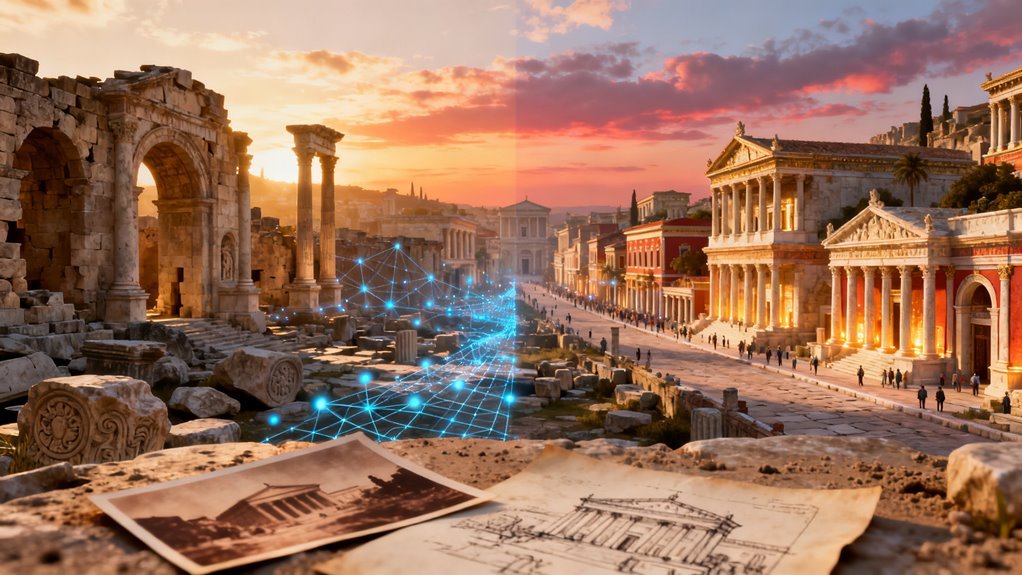
Something quietly remarkable is happening at the intersection of computer vision, generative AI and cultural heritage. Research teams and preservation organizations are using machine learning to reconstruct entire ancient urban landscapes from fragments, rubble and partial scans. Not just individual artifacts or building facades, but full city layouts with streets, structural systems and architectural detail that vanished centuries ago. The technology has matured enough that these reconstructions now carry real engineering plausibility, and the consequences ripple well beyond academia.
This matters right now because several converging developments in AI capability have turned what was recently a research curiosity into a practical toolchain. The explosion of accessible drone photogrammetry, the commoditization of LiDAR scanning, and the rapid improvement of 3D generative models have collectively lowered the barrier to entry. Five years ago, digitally reconstructing a single Roman villa required months of manual modeling by specialists. Today, a trained pipeline can infer structural completions across an entire archaeological district in a fraction of that time.
What the Pipeline Actually Looks Like
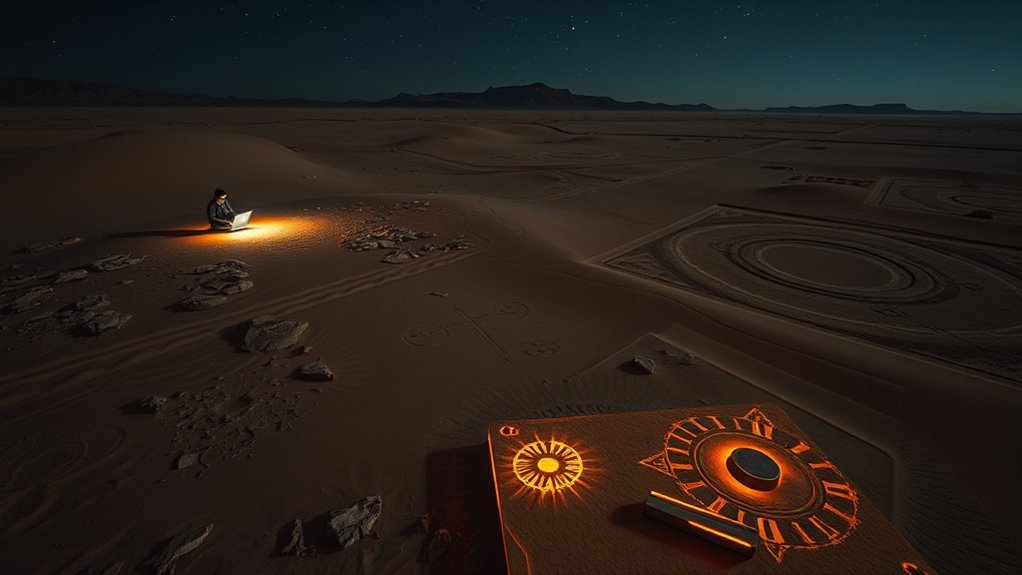
The reconstruction process starts with data collection that would have been prohibitively expensive a decade ago. Drones capture photogrammetric surveys. Satellites provide overhead context. LiDAR generates dense point clouds of ruins at city scale. These inputs get combined with multispectral imaging, archival photographs, historical maps, architectural drawings and museum scans of recovered artifacts to form multimodal datasets.
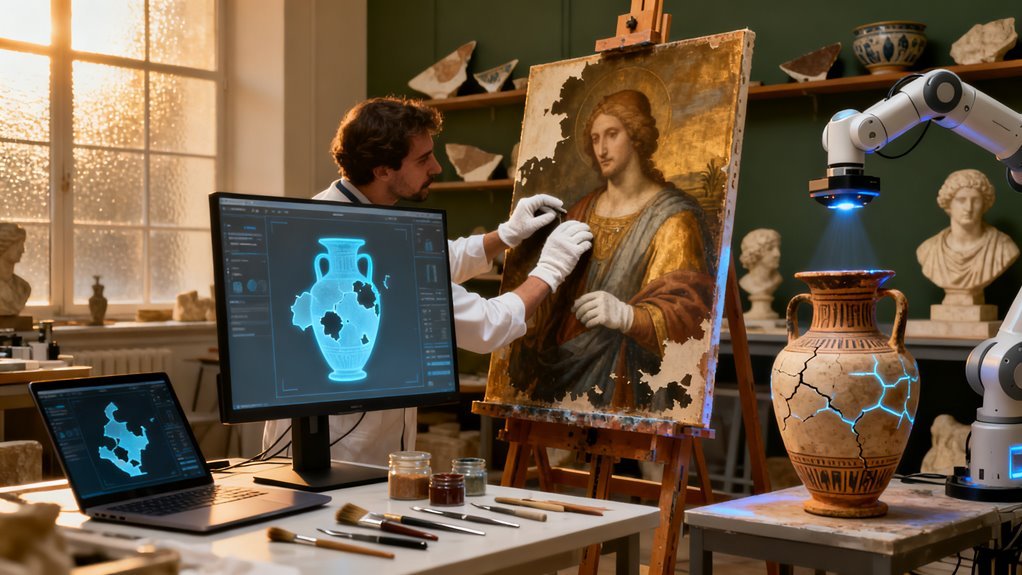
From there, the AI layers stack up in ways that mirror broader trends in the industry. Convolutional neural networks and semantic segmentation models classify fragments within point clouds, essentially teaching machines to distinguish a column base from a wall fragment from a paving stone. Generative adversarial networks and diffusion models synthesize missing textures and facades. Neural Radiance Fields reconstruct 3D geometry from sparse observations, filling in what erosion and conflict have removed.
The most interesting technical development is the integration of physics informed deep learning into these pipelines. Rather than just generating geometry that looks plausible, these systems estimate stress distribution and structural loading. When the AI completes a missing dome or arch, it does so with engineering constraints baked in. The output is not a guess dressed up as architecture. It is a structurally coherent inference.
Building Information Modeling workflows tie everything together, combining machine learning completions with parametric models that encode knowledge about historical construction typologies. The result is a digital twin that behaves more like an engineering model than a pretty render.
Where This Is Already Working
A framework developed at Purdue University infers full city layouts from drone captured ruins, generating virtual models of streets, buildings and public spaces from fragmented evidence. Deep learning has been applied to map the spatial networks of Seljuk caravanserais across Anatolia, effectively reconstructing medieval trade route infrastructure that connected cities across hundreds of kilometers.
Machine learning prediction models for the domed mosques of Mimar Sinan infer missing structural components with geometric consistency, allowing researchers to reconstruct Ottoman urban skylines with confidence about load bearing behavior.
Higher profile projects tell a similar story. Digital twin initiatives for the Colosseum and Notre Dame cathedral use AI assisted 3D reconstruction both to visualize original forms and to inform ongoing physical restoration strategies. The Notre Dame case is particularly instructive because it demonstrates the feedback loop between digital reconstruction and real world rebuilding. AI models helped identify structural priorities after the 2019 fire, and the insights fed directly into engineering decisions.
Why This Is More Than a Heritage Story
The tendency is to file this under “interesting academic work” and move on. That would be a mistake. Several dynamics make this development strategically significant for the broader AI industry.
Multimodal reasoning under extreme data scarcity. Ancient city reconstruction is one of the most challenging inference problems in computer vision. The models must work with incomplete, degraded, heterogeneous inputs spanning text, imagery, 3D scans and historical records. Solving this problem well advances capabilities that transfer directly to infrastructure inspection, disaster response, urban planning and defense intelligence. Any organization working on 3D scene understanding from partial data should be paying attention to what heritage AI teams are publishing.
Generative AI with physical constraints. The integration of physics informed models into generative pipelines is a trend with massive implications beyond archaeology. The AI industry has spent the past two years focused on generating images, text and video. The next frontier is generating physically valid 3D structures and environments. Heritage reconstruction teams are among the first to combine diffusion models with structural simulation at scale. The techniques they develop for completing ancient domes will eventually apply to generative design in architecture, manufacturing and civil engineering.
Digital twins for irreplaceable assets. The concept of a digital twin has been discussed extensively in manufacturing and smart city contexts, usually tied to new construction with abundant sensor data. Heritage reconstruction pushes the digital twin concept into a far more demanding regime: creating comprehensive models of assets where the original no longer exists and the data is fragmentary. Success here validates digital twin approaches for a much wider range of real world scenarios where perfect data is unavailable.
The Business and Market Angle
Several commercial opportunities are emerging. Heritage tourism is a multi billion dollar global industry, and AI reconstructed immersive experiences represent a new product category. Imagine visiting Pompeii and viewing the city as it appeared in 79 AD through an AR headset driven by AI generated digital twins. Multiple startups and cultural institutions are already exploring this.
Insurance and risk modeling for heritage sites is another angle. UNESCO lists over 1,100 World Heritage Sites, many facing threats from climate change, conflict and urban development. AI driven digital preservation creates a baseline record that supports damage assessment, insurance valuation and restoration planning. Governments and international organizations represent a significant potential customer base.
The defense and intelligence community also has obvious interest. The same pipelines that reconstruct ancient cities from partial aerial data can analyze modern urban environments from satellite imagery, inferring building layouts, structural characteristics and underground features from surface observations.
What People Are Overlooking
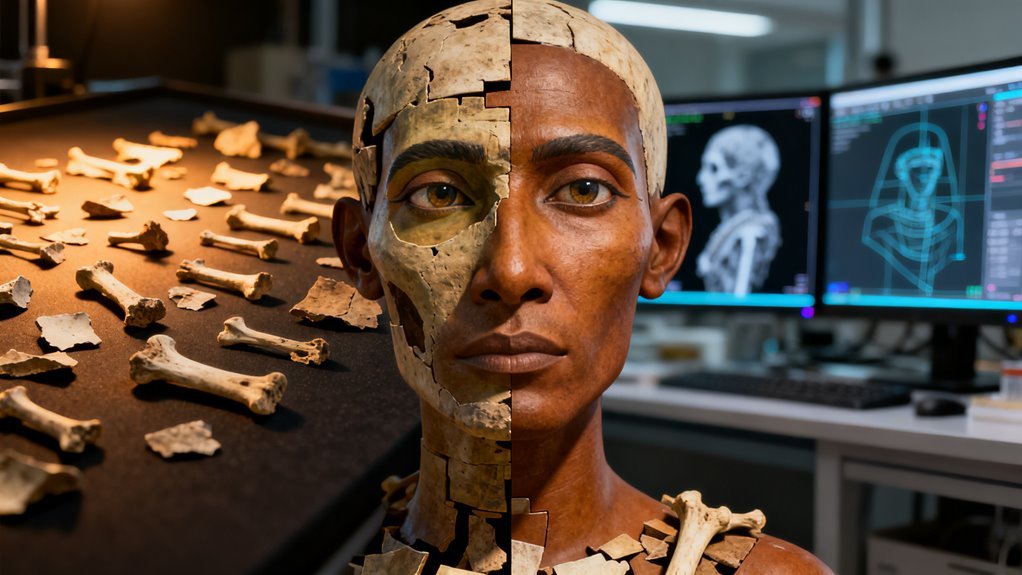
The accuracy question deserves more scrutiny than it typically receives. When a diffusion model fills in a missing facade, how do we evaluate whether the output reflects historical reality or simply generates something architecturally coherent but fictitious? The line between reconstruction and fabrication is blurry, and the AI community has not yet developed robust validation frameworks for this specific problem.
There is also a cultural authority issue. Who decides which AI reconstruction of a contested historical site becomes the “official” version? Heritage sites in regions of political conflict carry enormous symbolic weight. An AI generated visualization of ancient Jerusalem, Palmyra or Angkor Wat is not a neutral technical output. It is a cultural and political statement. The governance frameworks for making these decisions lag far behind the technology.
Data sovereignty matters too. Many of the richest archaeological datasets come from countries in the Global South, while the AI expertise and computational resources to process them are concentrated in North America and Europe. The risk of a new form of digital colonialism, where foreign institutions create authoritative digital representations of another country’s heritage, is real and largely unaddressed.
What Happens Next
Expect three near term developments. First, foundation models trained specifically on architectural and archaeological data will emerge within the next 18 to 24 months. The current approach of fine tuning general purpose vision and generative models works but leaves performance on the table. Purpose built models will significantly improve reconstruction quality and speed.
Second, real time reconstruction will become feasible. As inference costs drop and edge computing improves, archaeologists in the field will be able to point a LiDAR equipped device at a ruin and see a plausible reconstruction overlay in near real time. This changes the pace of fieldwork fundamentally.
Third, the integration of large language models with 3D reconstruction pipelines will enable text driven exploration of reconstructed cities. A researcher or student will be able to ask a system to “show the marketplace of Carthage as described by Appian” and receive a spatially grounded, historically informed visualization. The convergence of language understanding and 3D generation points directly toward this capability.
The broader trajectory is clear. AI is not just documenting the past. It is making the past computationally accessible in ways that create new knowledge, new experiences and new industries. Alongside reconstruction, machine learning is also being deployed to autonomously analyze environmental parameters and non-destructive testing data, enabling early warning systems that detect deterioration at heritage sites before damage becomes irreversible. The teams working on ancient city reconstruction today are building tools that will reshape how we understand, preserve and interact with the physical world for decades to come.