
What AI-Unlocked Worlds Really Are
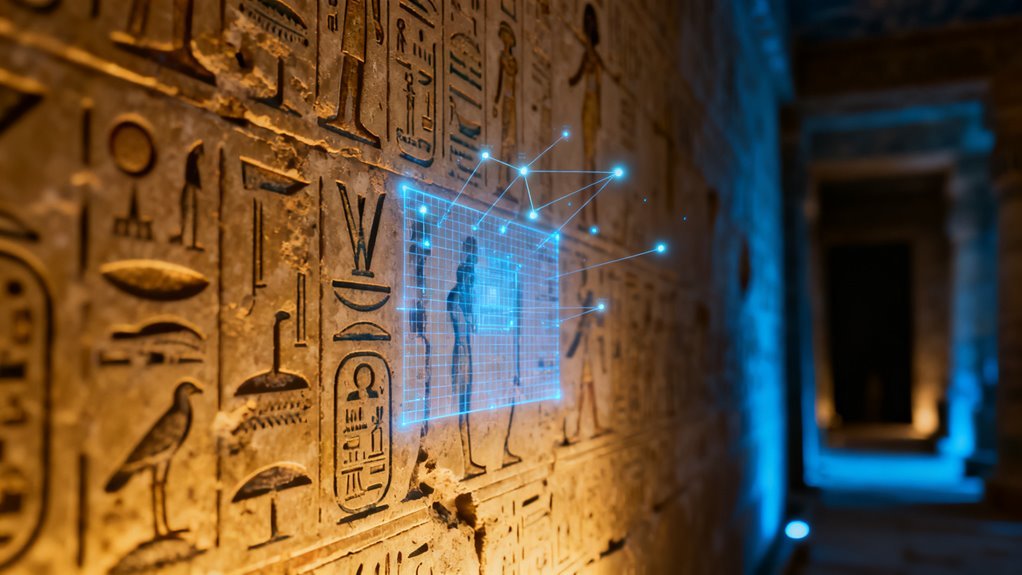
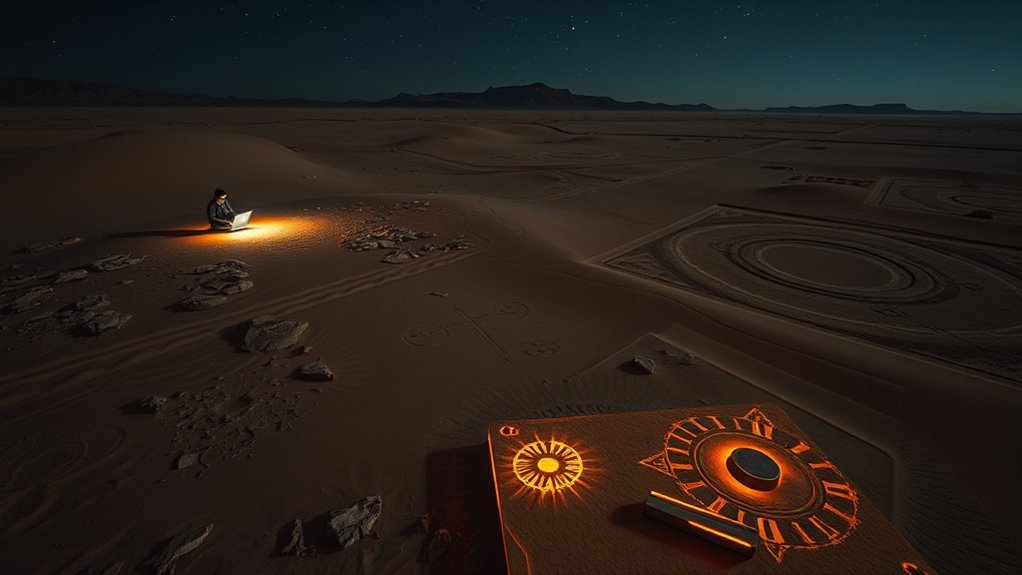
An AI-unlocked world is a data-driven reconstruction or discovery of an environment—whether landscape, built site, or synthetic digital universe—produced through large-scale computational analysis. Such worlds emerge from dense capture of imagery, scans, source code, and other traces, processed by machine-learning models that infer patterns across entire environments. They organize objects, spaces, and events into spatial or systemic representations that can be explored via maps, 3D scenes, VR/AR interfaces, or game engines. In landscape-scale archaeology, AI scans vast terrains, rapidly identifying features such as geoglyphs that were previously overlooked. In Peru’s Nazca Desert, such methods nearly doubled the catalog of figurative geoglyphs, revealing that relief-type geoglyphs cluster near foot trails and were likely meant for individuals or small groups. These reconstructions can also benefit from action-conditioned predictive systems that enhance their contextual understanding.
AI-unlocked worlds reconstruct environments from dense data, revealing coherent landscapes, architectures, and synthetic universes as evidence-based models
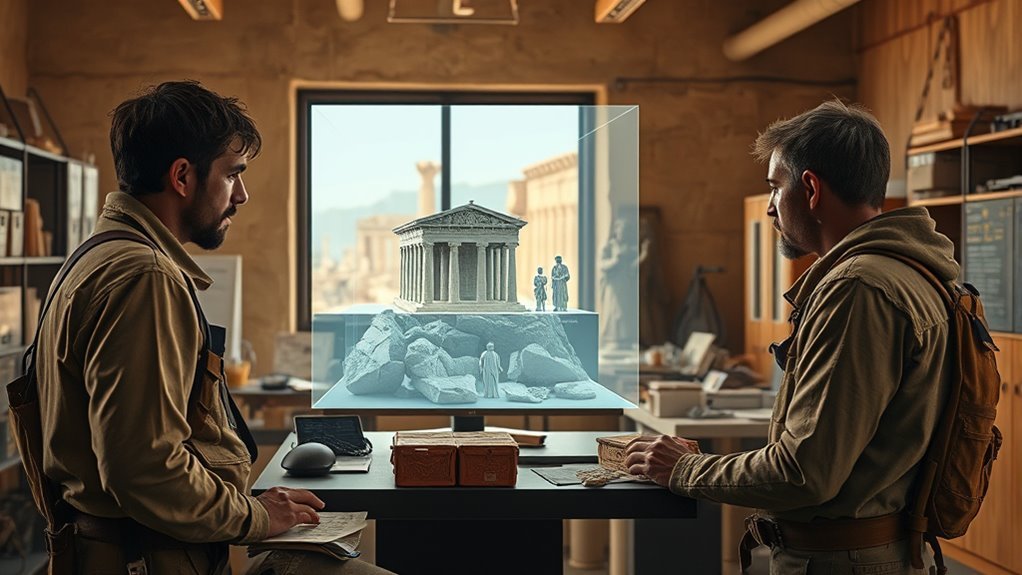
In virtual heritage, photogrammetry, LiDAR, and archival imagery are fused into high-fidelity 3D reconstructions where generative models cautiously infer missing elements. Across physical and synthetic domains, the emphasis shifts from isolated artefacts to relationships within coherent worlds, enabling systemic study, preservation, and repeated experience of environments that might otherwise remain inaccessible, fragmented, or lost. These reconstructions remain explicitly evidence-based models.
AI-Unlocked Scrolls and Manuscripts
Harnessing AI-driven imaging and pattern recognition, scholars now reveal sealed scrolls and manuscripts that remained unreadable for centuries, including the carbonized Herculaneum papyri entombed by Vesuvius in 79 CE. These scrolls were recovered from a luxury Roman villa in Herculaneum, believed to have been owned by Julius Caesar’s father-in-law.
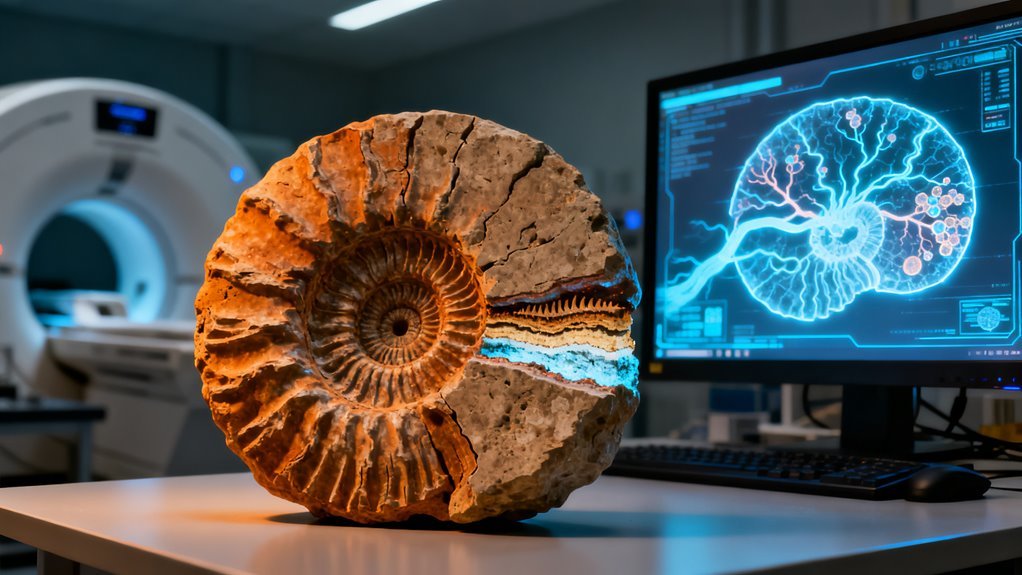
Virtual unrolling of high-resolution CT scans reconstructs papyrus layers into flattened surfaces, exposing ink traces without touching the fragile originals. Machine-learning models trained on subtle intensity variations flag textured regions where carbon-based ink resides, producing probabilistic maps of letters and columns hidden inside charred volumes.
Human papyrologists then transcribe and interpret the emerging text, recovering thousands of Greek characters from Epicurean works attributed to Philodemus. The open Vesuvius Challenge has formalized this pipeline, rewarding teams that can read large, contiguous passages at high accuracy thresholds.
As entire scrolls such as PHerc 1667 approach complete decipherment, debates over pleasure, food, music, and ethics resurface, extending the documentary record of philosophical life in Roman-era Campania, transforming papyrology and manuscript studies worldwide.
AI-Unlocked Landscapes: Nazca and Amazon
From sealed libraries to open terrain, the same AI vision systems now map ancient ritual landscapes across Nazca and the Amazon, extending pattern recognition from charred papyrus to desert plateaus and rainforest canopies.
Over Peru’s desert plateau, a deep neural network pretrained on natural images and fine-tuned on relief-type textures sweeps hundreds of square kilometers at 5‑meter resolution, producing continuous probability maps that highlight faint figurative traces once lost among stones and sand. These desert figures were created between 500 BCE and 500 CE by the Nazca culture, their shallow geoglyph incisions preserved by the region’s extreme aridity and minimal wind erosion.
Archaeologists then ground‑truth AI candidates, confirming hundreds of small geoglyphs—parrots, felines, monkeys, killer whales, and severed heads—that cluster along ancient trails rather than near the great ritual plazas, sharpening distinctions between giant line figures and intimate relief markers of individual pilgrimage and sacrifice.
In the Amazon, lidar and high‑resolution satellite constellations feed object‑detection frameworks that digitally strip canopy from terrain, using robust micro‑relief estimators to expose buried geometric enclosures, ditches, and embankments across river basins.
AI-Unlocked Games and Lost Play
Turning from landscapes to ludic traces, AI‑Unlocked Games and Lost Play follows artificial intelligence into the domain of forgotten games and vanished play cultures.
At Maastricht University, the Digital Ludeme Project encodes nearly a thousand historical board games as ludemes—atomic descriptors of boards, pieces, movements, and victory conditions—linked to archaeological and cultural metadata.
AI agents explore vast rule spaces through simulated play, filtering candidates by balance, depth, and correspondence to surviving evidence. This computational archaeoludology recently decoded a worn limestone slab from Roman Coriovallum, yielding Ludus Coriovalli, a blocking game reconstructed by training Ludii on families of ancient strategies and matching virtual wear against grooves on the stone.
Computational archaeoludology simulates forgotten boards, aligning emergent strategies with scars etched into Roman stone
Parallel work applies 3D pipelines to fragmentary pieces, rebuilding meshes from single images to test ergonomics and rule compatibility in virtual environments.
Together, these techniques restore lost play, tracing how games travelled, mutated, and structured interaction across regions and eras. By comparing similar rule structures across regions, the project is building a genealogical family tree of games that reveals long-range cultural exchanges.
Culture Shaped by AI-Unlocked Worlds
While AI’s capacity to decode lost games and inscriptions began as a technical exercise, it now operates as a cultural engine that redefines what counts as evidence, voice, and memory.
By restoring fragmented inscriptions, AI extends the documentary record, allowing institutional histories and civic narratives to be reargued on denser, newly legible evidence.
Machine transcription of archives surfaces overlooked actors and disputes, shifting collective memory toward a more contested, multi-voiced past.
Intangible heritage platforms and AI translation similarly reposition oral traditions, proverbs, and craft practices as shareable cultural resources rather than fragile local knowledge.
At the same time, AI-aided geoglyph discovery and virtual reconstructions feed new visual imaginaries, influencing tourism, education, and even political claims about ancestry and territorial belonging.
Culture consequently absorbs AI-unlocked worlds as fresh archives and stages, where historical authority is negotiated among algorithms, experts, communities, and publics.
The past becomes a computationally mediated repertoire. In this emerging paradigm, AI supports data-driven humanities that complement rather than replace qualitative interpretation.