
Every major technology platform now runs some form of pattern detection at scale, and most users never notice. That invisibility is the point. The most consequential advances in artificial intelligence over the past two years have not been chatbots or image generators. They have been the steady, unglamorous improvements in how machines find structure in data that humans never knew existed.
This matters right now because the volume of data enterprises collect has crossed a threshold where traditional analytics simply cannot keep up. IDC projects global data creation will exceed 180 zettabytes by 2025. Most of that information sits in unstructured formats, never touched by a human analyst, never queried by a dashboard. The gap between what organizations collect and what they actually understand is widening every quarter. AI pattern discovery is the only realistic mechanism for closing it.
The gap between what organizations collect and what they actually understand is widening every quarter.
What Changed and Why It Took So Long
For decades, statistical methods could identify correlations in structured datasets. What they could not do was operate across hundreds or thousands of variables simultaneously, learn nonlinear relationships without explicit programming, or work with raw text, images, and sensor streams in their native formats. Deep learning changed that equation fundamentally, but for years the computational cost remained prohibitive for all but the largest research labs.
Three shifts converged to make hidden pattern discovery practical at enterprise scale. First, cloud GPU infrastructure from NVIDIA, AWS, and Google Cloud drove per hour training costs down by roughly 90 percent between 2018 and 2024.
Second, open source frameworks like PyTorch and the Hugging Face ecosystem democratized access to architectures that previously required dedicated ML engineering teams.
Third, and perhaps most critically, organizations accumulated enough historical data to make unsupervised and self-supervised learning genuinely useful rather than theoretically interesting. This accumulation parallels advancements in AI-enhanced catalogs that significantly improve seismic hazard assessments.
Unsupervised techniques such as K-Means clustering, DBSCAN, and more recent contrastive learning approaches now operate as standard components in production pipelines. They segment customers without predefined labels, identify anomalous network traffic without signature databases, and surface behavioral clusters in clinical trial data that protocol designers never anticipated.
Dimensionality reduction methods like PCA and t-SNE remain valuable, but newer approaches including UMAP have gained traction for preserving both local and global structure in high dimensional spaces.
Association rule mining, the algorithmic descendant of the famous “beer and diapers” retail insight, continues to power recommendation engines and supply chain optimization across every major e-commerce platform.
None of this is speculative. These are mature techniques running in production today at thousands of companies.
Where the Real Impact Is Landing
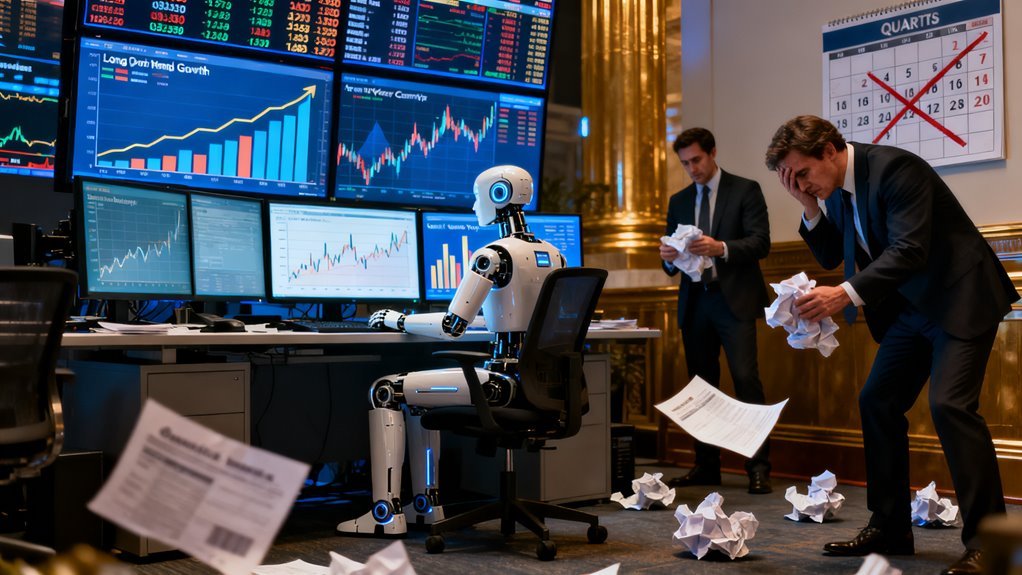
The business applications get the most attention because they generate measurable revenue. Pattern detection in financial services now catches fraud schemes that would have taken human investigators months to identify, if they identified them at all.
JPMorgan’s COiN platform reportedly reviews commercial loan agreements in seconds that previously required 360,000 hours of lawyer time annually. Healthcare systems use anomaly detection to flag sepsis risk hours before clinical symptoms become obvious to physicians.
Retailers optimize pricing and inventory through demand signals buried in transaction logs, weather data, and social media sentiment simultaneously. Walmart, for example, uses AI to identify sales patterns linked to hurricanes, detecting unusual surges in demand for specific products like strawberry Pop-Tarts well before store managers would notice the trend themselves.
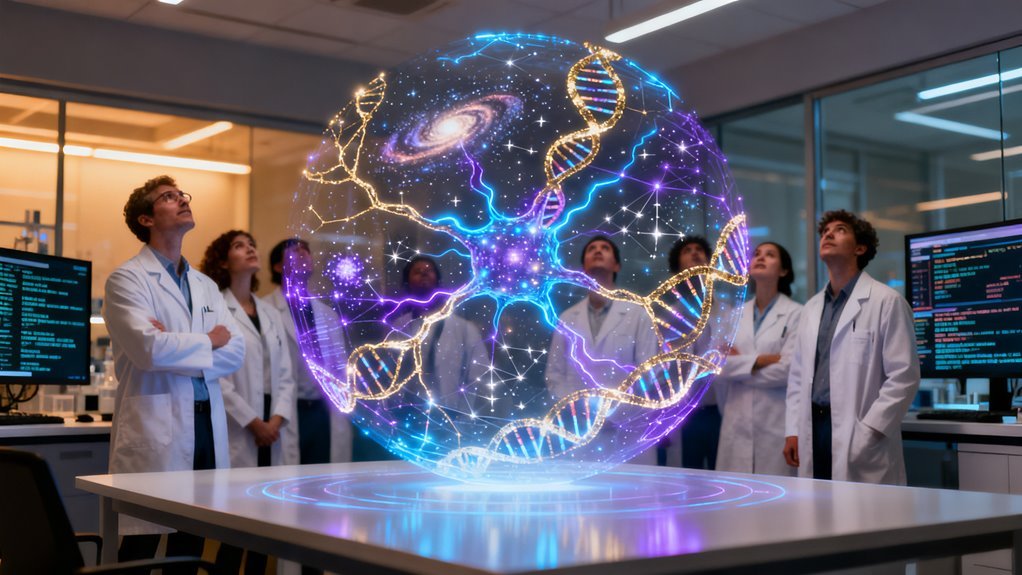
But the developments worth watching most closely are happening in science. In 2024, Google DeepMind’s GNoME system predicted the stability of over 2.2 million new crystal structures, effectively multiplying the number of known stable materials by a factor of nearly ten.
That single result compressed what would have been centuries of traditional materials science experimentation into months. AlphaFold’s protein structure predictions, now covering virtually every known protein, have reshaped drug discovery timelines across the pharmaceutical industry.
Researchers at MIT used neural networks to infer physical laws directly from raw experimental data, identifying conservation principles without any prior physics knowledge encoded in the model.
These are not incremental improvements. They represent a qualitative shift in how discovery works. The machine is not replacing the scientist. It is identifying the starting points that no scientist would have thought to investigate.
What Most Analysis Gets Wrong
The standard narrative frames AI pattern discovery as a straightforward acceleration of existing processes. Find insights faster, make decisions quicker, optimize more efficiently. That framing misses the deeper structural change.
When AI surfaces patterns that humans cannot perceive, it does not just speed up existing workflows. It changes what questions are worth asking. A materials scientist who receives a list of 380,000 potentially stable compounds is not doing the same job faster.
She is doing a fundamentally different job, one that centers on experimental validation and application design rather than hypothesis generation and exploratory synthesis.
This has profound implications for workforce planning, research funding allocation, and competitive strategy. Organizations that treat AI pattern discovery as a cost reduction tool will capture a fraction of its value.
Those that restructure their operations around the new kinds of questions AI makes possible will build durable advantages.
The Risks Nobody Wants to Talk About
Pattern detection at scale introduces failure modes that traditional analytics did not face. Spurious correlations multiply as the number of variables increases.
A model scanning millions of feature combinations will inevitably find statistical relationships that are artifacts of the data rather than reflections of reality. Without rigorous validation frameworks, organizations risk acting on phantom patterns with real consequences.
Bias amplification is another concern that scales with capability. If historical data encodes discriminatory outcomes in lending, hiring, or healthcare, unsupervised pattern discovery will faithfully reproduce and potentially amplify those outcomes without any human ever explicitly programming a biased rule.
The patterns are real in the statistical sense. They are also artifacts of structural inequity that no organization should be optimizing toward.
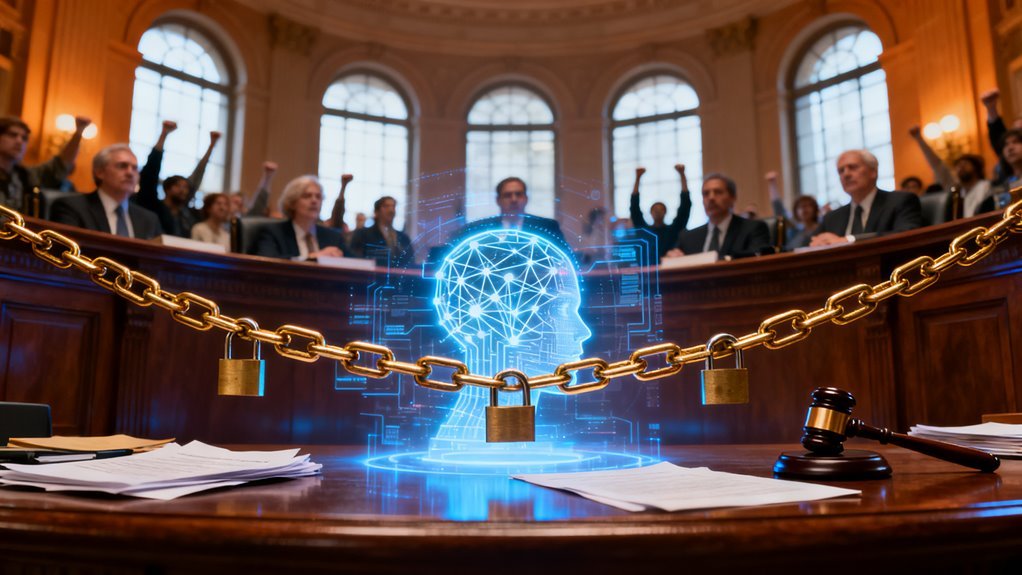
Regulatory frameworks have not caught up. The EU AI Act addresses high risk applications but does not yet provide clear guidance on how organizations should validate unsupervised pattern discovery in domains like healthcare diagnostics or criminal justice.
In the United States, sector specific regulation remains fragmented. Companies operating at the frontier of pattern discovery are largely self-governing, which creates both opportunity and risk.
What Comes Next
The trajectory is clear even if the timeline is not. Foundation models trained on multimodal data are beginning to discover cross domain patterns that specialized systems could never access.
A model that processes satellite imagery, commodity prices, shipping logs, and weather data simultaneously can identify supply chain disruptions weeks before they manifest in traditional indicators.
Google, OpenAI, and Anthropic are all investing in reasoning capabilities that move beyond pattern matching toward something closer to pattern understanding, the ability to explain why a detected structure exists, not just that it does.
For technology professionals and business leaders, the practical takeaway is straightforward. The organizations generating the most value from AI over the next several years will not be those with the largest models or the most data.
They will be the ones that build the institutional capacity to act on patterns that no human would have found independently. That requires not just technology investment but changes in organizational culture, decision making processes, and risk management frameworks.
The hidden patterns are already there. The competitive question is who learns to see them first, and what they decide to do about it.