

A Machine Just Passed Peer Review. The Scientific Publishing System Wasn’t Built for This.
For decades, peer review has operated on a foundational assumption: the entity submitting a paper is human. That assumption no longer holds. AI Scientist v2, developed by Sakana AI, autonomously produced a complete research paper that was accepted at an ICLR 2025 workshop. The system handled everything from hypothesis generation through experiment execution to final manuscript formatting. No human wrote or edited the text. Reviewers evaluated it on merit, unaware they were reading machine output.
The initial human contribution was limited to specifying the research topic. Everything downstream of that single prompt was the system’s own work.
This is not a story about AI getting better at writing. It is a story about what happens when the gatekeeping mechanisms of science encounter an entity they were never designed to evaluate.
What Actually Changed
Previous AI research tools operated as sophisticated assistants. They could draft sections, suggest statistical approaches, clean datasets, or even propose hypotheses. But a human researcher remained in the loop at every critical juncture, deciding which questions to pursue, interpreting results, choosing what to emphasize, and exercising judgment about what the findings actually meant. Tools like GitHub Copilot, AlphaFold, and various LLM-based writing aids all fit this pattern. They accelerated human work without replacing the human decision chain.
AI Scientist v2 collapses that chain. The system doesn’t assist a researcher. It functions as one. The gap between “AI helped write this paper” and “AI wrote this paper” turns out to be enormous, not in terms of text quality, but in terms of what it means for the institutions that validate scientific knowledge.
The first version of AI Scientist, released in 2024, could generate research ideas and run experiments but still required substantial human curation and editing before anything approached publishable quality. The jump to v2 producing work that clears peer review without any human polishing represents a qualitative shift, not merely an incremental improvement.
Why Peer Review Is the Wrong Test and the Right One
There is a temptation to treat this as a Turing test moment for scientific writing, and in some narrow sense it is. But that framing misses the deeper issue.
Peer review was designed to evaluate the quality of ideas, methods, and conclusions. It was not designed to verify the identity or nature of the author. Workshop papers at top conferences already face high rejection rates and genuine scrutiny. The fact that AI Scientist v2’s output survived this process tells us something real about the system’s capability.
At the same time, peer review at the workshop level is not equivalent to publication in a flagship journal. Workshop papers are shorter, more speculative, and reviewed under tighter time constraints. The bar is meaningful but not maximal. Whether AI Scientist v2 could produce work that survives the full review cycle at a top venue with multiple revision rounds remains an open question.
Still, dismissing this because it was “only” a workshop paper would be a mistake. Workshop acceptance at ICLR is competitive. And the trajectory matters more than the current position. If autonomous systems are clearing this bar today, the question of when they clear higher bars becomes a matter of engineering timelines, not fundamental capability limits.
The Integrity Problem No One Has a Protocol For
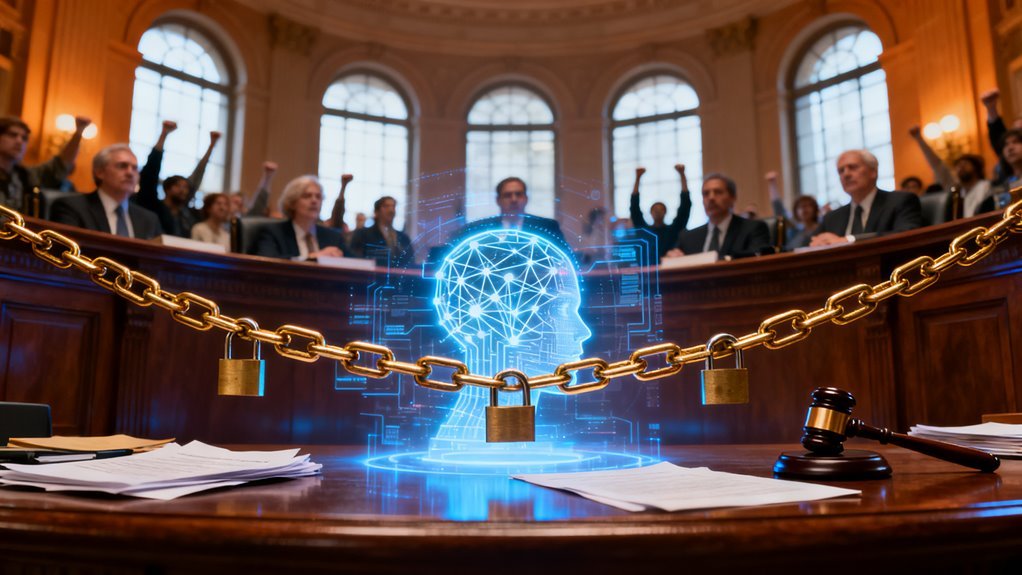
Scientific publishing has spent years building infrastructure to handle plagiarism, fabrication, and conflicts of interest. It has almost no infrastructure to handle the possibility that a submitting author is not a person.
Consider the practical complications. If an AI system generates a hypothesis, designs an experiment, runs it, and writes up the results, who is responsible if the findings are wrong? Who retracts the paper? Who bears liability if the methods turn out to be flawed in ways that affect downstream research or clinical decisions? Current frameworks assign these responsibilities to named authors. When the actual intellectual agent is a machine, those assignments become fictions.
Conference organizers and journal editors are already grappling with disclosure policies around AI use. Most major venues now require authors to declare when AI tools contributed to a submission. But these policies assume a human author used AI as a tool. They do not contemplate a scenario where the tool is, for all practical purposes, the author.
The ICLR reviewers who evaluated this paper did not know it was machine generated. That fact alone exposes a gap that disclosure policies cannot close retroactively. It also raises an uncomfortable question: if the work is good enough to pass review on its merits, does it matter who or what produced it?
The honest answer is that it matters enormously, but not for the reasons most people think.
What This Means for Researchers
The immediate practical impact falls on early career researchers and graduate students. A significant portion of academic training involves learning to formulate research questions, design experiments, interpret results, and communicate findings through writing. If AI systems can perform this entire pipeline autonomously, the value proposition of that training changes.
This does not mean human researchers become irrelevant. But it does mean the skills that differentiate human researchers from AI systems will shift. Identifying genuinely important problems, exercising taste in research direction, connecting findings across disparate fields, and understanding the social and ethical implications of results are all areas where human judgment still dominates. The mechanical aspects of research production, literature review, experiment execution, statistical analysis, manuscript preparation, are exactly the tasks most vulnerable to automation.
For established researchers, AI Scientist v2 represents a potential force multiplier. A principal investigator who can specify research directions and let an AI system execute them could dramatically increase output. The competitive dynamics of publish or perish could intensify significantly if some labs adopt these tools while others do not.
The Business Angle
Sakana AI, the company behind this work, is positioning itself at the intersection of AI and scientific discovery. This is a growing market. Competitors and adjacent players include Google DeepMind with AlphaFold and its successors, Microsoft with its scientific AI initiatives, and a range of startups targeting drug discovery, materials science, and other research intensive domains.
The difference is that most of these efforts focus on specific scientific problems. Sakana’s approach targets the research process itself. That is a fundamentally different value proposition. If AI Scientist scales beyond workshop papers to producing reliable research across domains, the addressable market extends to every organization that funds or conducts research, pharmaceutical companies, national laboratories, defense contractors, universities, and technology firms.
Investors should note the distinction between tools that accelerate specific research tasks and systems that automate the research pipeline end to end. The former is valuable. The latter is transformative but comes with substantially higher risk, both technical and reputational.
Regulatory and Institutional Responses Will Lag
History tells us that institutional responses to technological disruption in publishing are slow. The open access movement took decades to reshape journal economics. Preprint servers like arXiv faced years of skepticism before becoming central to several fields. Retraction processes remain painfully slow even for clear cases of fraud.
The regulatory landscape for AI generated scientific content is essentially nonexistent. No government has established clear rules about AI authorship in scientific publications. The EU AI Act addresses high risk AI systems but does not specifically contemplate autonomous scientific agents. The U.S. has no relevant framework beyond executive orders that focus primarily on safety and national security applications.
This gap will persist for years. In the interim, the burden falls on conferences, journals, and funding agencies to develop their own policies. Expect significant variation and inconsistency across venues and disciplines.
What Comes Next
The trajectory from here is predictable in direction if not in speed. AI systems capable of autonomous research will improve. They will tackle more complex problems. They will produce longer, more sophisticated papers. Some of that work will be genuinely valuable. Some will be plausible sounding but subtly flawed in ways that are difficult to detect.
The most likely near term consequence is a flood of submissions to conferences and journals. If the marginal cost of producing a research paper drops to nearly zero, submission volumes will increase dramatically. Review systems that already struggle with volume will face an existential challenge.
One possible response is the development of AI systems specifically designed to review AI generated research, an arms race dynamic that mirrors what has happened with AI generated text detection in other domains. The track record of detection tools in those contexts is not encouraging.
A more productive response would involve rethinking what peer review is actually for. If machines can produce competent research papers, perhaps the review process should focus less on evaluating the paper and more on evaluating the significance and reliability of the underlying work. That would require deeper engagement with methods, data, and reproducibility, which is arguably what peer review should have been doing all along.
The acceptance of an autonomously generated paper at a respected venue is not the end of a story. It is the beginning of a renegotiation between artificial intelligence and the institutions humans built to validate knowledge. That renegotiation will be messy, slow, and consequential in ways that extend far beyond computer science workshops.
For years, the idea of artificial intelligence conducting its own scientific research existed somewhere between aspiration and science fiction. That line just got a lot thinner. Sakana AI’s system, AI Scientist-v2, has produced a research paper that was accepted through standard peer review at an ICLR 2025 workshop track, with no human-written text and no manual editing involved. The reviewers did not know the paper was machine-generated. They evaluated it on the same criteria applied to work submitted by human researchers, and it cleared the bar.
This is not a parlor trick or a demo designed to impress on social media. It is a functioning end-to-end pipeline that starts with a topic, generates hypotheses, writes and runs experiment code, analyzes results, produces a fully formatted manuscript with citations and figures, and then iterates on the draft using simulated peer review feedback. The only human contribution was providing the initial research topic. Everything else was autonomous.
What Actually Changed Here
To appreciate why this matters, it helps to understand what AI research tools looked like even 18 months ago. Systems like ChatGPT and Claude could help researchers brainstorm, draft prose, debug code, and summarize literature. GitHub Copilot could autocomplete experiment scripts. But these were assistive tools embedded in a fundamentally human-driven workflow. A researcher still had to formulate the question, design the study, interpret the results, and stitch everything into a coherent argument.
The original AI Scientist, released by Sakana AI in 2024, took a step further by automating more of that pipeline, but it relied on human-authored code templates as scaffolding. The system could explore variations within a predefined experimental framework, but it could not truly start from scratch.
AI Scientist-v2 eliminates that dependency. Its architecture uses multiple specialized agents coordinated through what the team describes as a progressive best-first tree search over experimental branches. Think of it as the system maintaining a mental map of possible research directions, systematically exploring the most promising paths, running experiments along each branch, and pruning dead ends. It pulls citations from Semantic Scholar, generates its own visualizations, and structures the final paper with the narrative arc expected in academic publishing. An experiment manager agent guides the entire tree search process, coordinating when to expand new branches and when to abandon unpromising directions.
The distinction between “AI that helps a researcher write a paper” and “AI that is the researcher” is not trivial. It represents a shift from tool to agent, and that shift carries consequences the research community has barely begun to grapple with.
Workshop Level Is Still Significant
Skeptics will rightly point out that the paper was accepted at a workshop track, not a top-tier main conference venue or a journal like Nature or Science. Workshop papers occupy a specific tier in the academic hierarchy. They are shorter, more speculative, and held to a somewhat lower evidentiary standard than full conference papers. The ICLR workshop in question, “I Can’t Believe It’s Not Better: Challenges in Applied Deep Learning,” focuses on negative or surprising results, which arguably lowers the novelty threshold.
But dismissing this achievement because it happened at workshop level misses the trajectory. Consider how large language models progressed. GPT-2 in 2019 could write passable paragraphs that fell apart over longer texts. GPT-3 in 2020 could draft coherent essays. GPT-4 in 2023 could pass bar exams and medical licensing tests. The gap between “workshop-level paper” and “main conference paper” is almost certainly smaller than the gap between “no paper at all” and “workshop-level paper.” If Sakana AI or a competitor closes that remaining distance within the next two to three years, the implications for scientific publishing become genuinely disruptive.
Who Benefits and Who Should Be Worried
The most immediate beneficiaries are research labs with more ideas than people. Academic departments facing funding constraints, pharmaceutical companies screening thousands of molecular hypotheses, climate science teams drowning in simulation data: any organization that is bottlenecked not by questions but by the capacity to investigate them stands to gain enormously from automated research pipelines. A system like AI Scientist-v2 does not need sleep, does not need a salary, and can run dozens of experimental branches simultaneously. The PULSE program being tested by US public health agencies reflects a similar drive towards automation in research.
For well-funded AI labs like Google DeepMind, Meta FAIR, and Microsoft Research, this technology represents a potential force multiplier. Imagine deploying hundreds of AI Scientist instances across your research portfolio, each autonomously exploring a different subproblem. The volume of publishable findings could increase by orders of magnitude.
The people who should be paying close attention are early-career researchers, particularly PhD students and postdoctoral fellows whose primary value proposition is the ability to execute research and produce papers. If autonomous systems can generate workshop-quality manuscripts today, the competitive pressure on junior academics will intensify substantially over the next few years. This does not mean human researchers become irrelevant. Formulating genuinely novel research questions, making conceptual leaps across disciplines, and exercising the kind of scientific taste that distinguishes important work from incremental work remain deeply human capabilities. But the portion of academic labor that involves grinding through experiments and drafting results sections is squarely in the automation crosshairs.
The Peer Review Problem Nobody Wants to Talk About
The fact that a machine-generated paper passed peer review without reviewers detecting its origin raises uncomfortable questions about the peer review system itself. To be clear, this is not necessarily an indictment of the specific reviewers involved. Workshop reviews are typically shorter and less rigorous than reviews for main conference tracks. But it does highlight a structural vulnerability.
Academic peer review already operates under severe strain. Reviewers are overworked, often unpaid, and frequently reviewing outside their narrow expertise. The system depends on a basic assumption: that submitted work represents genuine intellectual effort by the listed authors. If AI-generated papers begin flooding submission portals, and there is every reason to expect this will happen, the volume problem that already plagues venues like NeurIPS and ICLR will get dramatically worse.
Some conferences have started requiring authors to disclose AI involvement, but enforcement is nearly impossible. Detecting AI-generated scientific text is significantly harder than detecting AI-generated blog posts or student essays, because scientific writing already follows rigid structural conventions that constrain stylistic variation. The prose in a methods section written by a human and one written by GPT-4 may be functionally indistinguishable.
This creates an asymmetric situation. Honest researchers who disclose AI assistance may face additional scrutiny or bias, while those who do not disclose face essentially no risk of detection. Without a fundamental rethinking of how peer review operates in an age of autonomous research systems, the integrity of the process will erode.
How This Fits Into the Broader Agentic AI Trend
AI Scientist-v2 is not an isolated development. It sits within a broader industry movement toward agentic AI systems that can plan, execute, and iterate autonomously over extended tasks. OpenAI’s push toward agents with its Codex and operator tools, Anthropic’s work on computer-use capabilities for Claude, Google DeepMind’s explorations of tool-using AI, and the explosion of agent frameworks in the open-source community all point in the same direction: AI systems that do not just respond to prompts but pursue goals through multi-step reasoning and action.
What makes the Sakana AI result notable is that it demonstrates agentic capability in one of the most cognitively demanding domains imaginable. Writing a research paper is not like booking a flight or filling out a form. It requires sustained logical reasoning, creative hypothesis generation, technical implementation, quantitative analysis, and persuasive scientific writing, all integrated into a single coherent output. If agentic AI can handle this, the range of professional knowledge work vulnerable to automation is broader than many industry observers have been willing to acknowledge.
Regulatory and Ethical Terrain
The regulatory landscape for AI-generated research is essentially nonexistent. No major jurisdiction has specific rules governing autonomous authorship of scientific papers. Academic publishers have issued conflicting guidance. Some, like Nature, have stated that AI systems cannot be listed as authors. Others have been more permissive. But none of these policies have the force of law, and none were designed for a scenario where AI generates the entire paper with no meaningful human contribution beyond choosing a topic.
Questions of accountability become thorny in this context. If an AI-generated paper contains fabricated results or flawed analysis, who is responsible? The developers of the system? The person who provided the topic? The reviewers who accepted it? Current frameworks for research misconduct assume human agency at every step, an assumption that no longer holds.
There is also a deeper epistemological concern. Science progresses not just through the production of papers but through the understanding that researchers develop in the process of doing research. A human scientist who designs an experiment and interprets the results comes away with intuitions and insights that inform future work. An AI system that produces a paper does not “understand” its results in any meaningful sense. If the volume of AI-generated research grows to dominate certain fields, we may find ourselves in a situation where the published literature expands rapidly while genuine scientific understanding does not keep pace.
What Comes Next
Sakana AI has demonstrated that full-loop automated research is technically feasible at workshop level. The next milestones to watch for are acceptance at a main conference track, successful replication of AI-generated findings by independent teams, and deployment of similar systems by major research institutions.
The competitive dynamics are worth monitoring closely. If one lab gains a significant advantage in automated research output, it could reshape the balance of power in AI research itself, using AI to accelerate AI development in a feedback loop that has long been theorized but never concretely demonstrated at the publication level.
For businesses, the practical applications are not far off. Automated research systems could accelerate drug discovery pipelines, materials science exploration, financial modeling, and any domain where the bottleneck is the speed of hypothesis testing rather than data collection. Companies that integrate these tools early will have a structural advantage in R&D velocity.
The single paper accepted at an ICLR workshop is a proof of concept. But proofs of concept in AI have a tendency to scale faster than anyone expects. The research community, academic publishers, and policymakers have a narrow window to develop frameworks for a world where machines do not just assist with science but conduct it independently. Based on the pace of progress in agentic AI systems, that window is measured in years, not decades.






1 comment
Comments are closed.