
The White House Wants to See Frontier AI Models Before You Do. That Changes Everything.
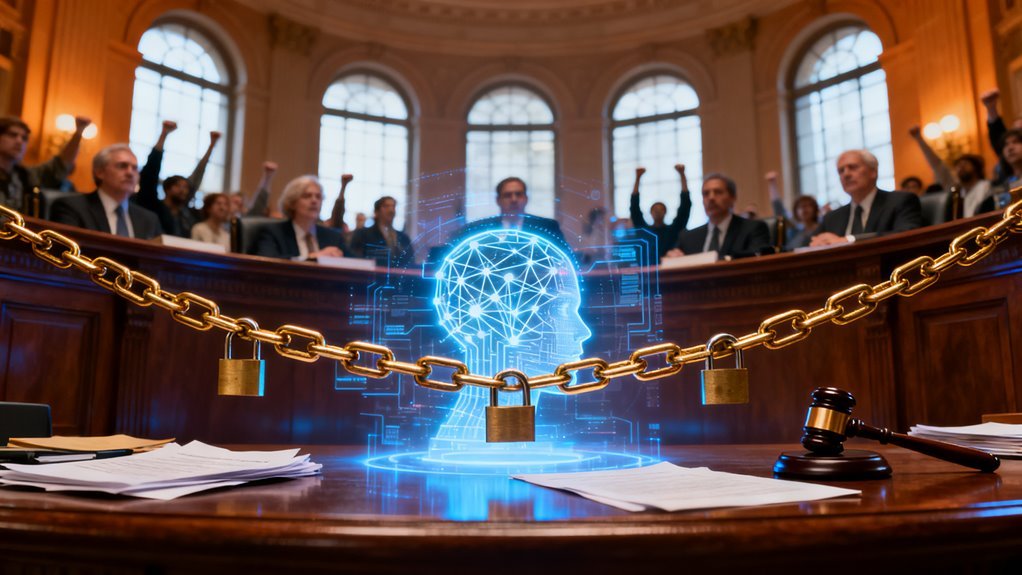
For the first time, the three companies building the most powerful AI systems on the planet are sitting across the table from the federal government and negotiating pre-release access to their models. Anthropic, OpenAI and Google are working with the White House on a framework that would give government evaluators 30 days with frontier AI systems before those systems reach the public. The arrangement is technically voluntary. Its consequences will not be.
What Is Actually on the Table
The proposed framework centers on cybersecurity and safety evaluation. Government teams would conduct penetration testing, run misuse simulations and assess whether a new model introduces novel risks before it ships. An executive order signed in June 2026 established standardized benchmarks for evaluating AI cyber capabilities, and this framework builds directly on that foundation.
Thirty days may sound modest. In practice, it represents a structural shift in how the most advanced AI gets released. No previous arrangement has given any government body a formal window to evaluate commercial AI products before launch. The closest precedent was the voluntary commitments secured by the Biden administration in 2023, where leading labs agreed to share safety testing results with the government. Those commitments were vague, largely self-reported and carried no meaningful enforcement mechanism. This is different. A fixed evaluation window with standardized benchmarks introduces something closer to a regulatory checkpoint, even if participation remains technically optional.
Why Voluntary Does Not Mean Optional
The word “voluntary” deserves scrutiny. Anthropic, OpenAI and Google are not doing this out of civic generosity. All three companies have powerful incentives to participate.
Each is pursuing enormous government contracts. Anthropic recently deepened its work with the intelligence community. OpenAI has been actively courting defense and federal agencies. Google Cloud already holds significant government business. Walking away from a White House framework on AI safety would complicate those relationships considerably.
There is also a competitive dimension. Companies that participate in the framework get to shape the evaluation criteria. They influence which benchmarks matter, how testing is conducted and what thresholds define acceptable risk. Being inside the room when those standards are written is far more valuable than protesting from outside it.
For these three organizations, voluntary participation functions as a strategic investment. The framework gives them a seat at the table where future regulation will be drafted in everything but name.
The Problem for Everyone Else
This is where things get complicated. A framework designed around three of the wealthiest AI companies on Earth will inevitably reflect their operational realities. Anthropic, OpenAI and Google can absorb a 30 day evaluation period. They have the legal teams, the compliance infrastructure and the financial cushion to manage a government review process without material disruption.
Smaller developers and startups do not. A mandatory or even strongly encouraged 30 day pre-release review would impose significant costs on companies operating with limited runway. For a startup racing to ship a product before funding runs out, a month of government evaluation is not a minor inconvenience. It could be existential.
Open source projects face an even more awkward fit. The entire model of open development depends on continuous, public iteration. How do you give the government 30 days of pre-release access to a model that is being built in the open? Who submits it for review? Who is responsible for the findings? The framework as described does not appear to address these questions, and the absence of answers is itself revealing. It suggests the framework was designed with a very specific type of AI development in mind, namely the closed, commercial, resource-intensive kind practiced by the companies at the negotiating table.
This dynamic echoes a pattern familiar from other industries. Large incumbents often welcome regulation because they can afford compliance and their smaller competitors cannot. Whether or not that is the intent here, it is a likely outcome.
Cybersecurity as the Wedge Issue
The choice to frame this initiative around cybersecurity is deliberate and smart. Cybersecurity is one area where there is genuine bipartisan consensus that AI poses real and escalating risks. Models capable of identifying software vulnerabilities, generating exploit code or automating social engineering attacks represent threats that are concrete and easy to explain to policymakers who may not grasp the subtleties of alignment research.
By anchoring the framework in cyber risk, the White House avoids the more politically fraught debates around AI bias, labor displacement or content moderation. It also establishes a precedent. Once a pre-release government review process exists for cybersecurity, extending it to other domains becomes a matter of scope, not principle. The infrastructure will already be in place. The legal and procedural arguments will have been tested. Future administrations could expand the framework to cover biosecurity risks, critical infrastructure applications or national security concerns with relatively little friction.
This is a beachhead, not a boundary.
What the Benchmarks Will Determine
The June 2026 executive order mandating standardized benchmarks for AI cyber capabilities is arguably more significant than the 30 day review window itself. Benchmarks define what gets measured. What gets measured gets managed. And what gets managed becomes, over time, what gets regulated.
The specific benchmarks chosen will shape commercial AI development for years. If the government defines dangerous cyber capability as the ability to autonomously discover zero day vulnerabilities, for example, that definition will influence how companies design, train and constrain their models. It will affect red team priorities, safety research agendas and even hiring decisions.
The question is who gets to set those benchmarks. The executive order established a mandate, but the technical details are still being worked out. Anthropic, OpenAI and Google all have sophisticated safety teams with deep expertise in exactly these questions. Their input will be invaluable. It will also be self-interested. Every company will advocate for benchmarks that align with its existing safety practices and architectural choices, creating a subtle but real home court advantage.
Independent researchers, academic institutions and civil society organizations should be pushing aggressively for a seat in this process. The early indications suggest they are not receiving one.
Historical Context Matters
It is worth stepping back to appreciate how rapidly the relationship between AI companies and the federal government has evolved. In 2022, the prevailing dynamic was one of mutual wariness. Tech companies viewed Washington as slow and uninformed. Washington viewed tech companies as unaccountable and reckless. The explosive public debut of ChatGPT in late 2022 forced both sides to recalibrate.
The voluntary commitments of 2023 were a first, tentative step. The 2024 executive order on AI safety went further, establishing reporting requirements for large training runs. The EU AI Act created external pressure by demonstrating that other jurisdictions were willing to regulate aggressively. Now, in 2026, we have reached a stage where the largest AI developers are actively negotiating pre-release government access. The trajectory is clear, consistent and accelerating.
What makes the current moment distinct is the degree of industry cooperation. Anthropic, OpenAI and Google are not merely complying with requirements. They are co-designing the oversight architecture. That level of collaboration would have been unthinkable three years ago. It reflects both a maturation of the industry and a recognition that the alternative, legislation drafted without technical input, would be far worse for everyone.
What to Watch Next
Several questions will determine whether this framework becomes a meaningful governance mechanism or a symbolic exercise.
First, will the 30 day review window produce actionable findings? If government evaluators identify serious risks and companies respond by delaying or modifying releases, the framework will gain credibility and political support. If the reviews consistently rubber stamp models that were already going to ship, the process will be seen as theater.
Second, will the results be made public? Transparency is critical for accountability. A secret evaluation process that produces secret findings and leads to secret negotiations between companies and government agencies is worse than no process at all. It creates the illusion of oversight without the substance.
Third, how will this interact with international efforts? The EU, the UK, China and other jurisdictions are all developing their own AI governance frameworks. A model evaluated and cleared by the U.S. government may still face restrictions elsewhere. Conversely, the existence of a credible U.S. evaluation process could influence how other nations design their own.
Finally, the question of enforcement looms. Voluntary frameworks are only as strong as the consequences for non-participation. If a major lab decides to skip the review and launch anyway, what happens? The answer to that question, when it eventually arrives, will tell us whether this is regulation or recommendation.
The Bigger Picture
What is unfolding in Washington right now is not just a negotiation about testing timelines. It is the beginning of a governance architecture for the most transformative technology of the century. The decisions made in these early discussions will create precedents, institutions and power dynamics that persist for decades.
The companies at the table understand this. The government officials across from them understand this. The question is whether the rest of the ecosystem, the startups, the researchers, the open source community, the public, understands it too. Because the framework being built right now will eventually apply to all of them, whether they were in the room or not.
For years, the debate over AI regulation in the United States has oscillated between two poles: let the market self-correct, or build a federal licensing regime modeled on pharmaceuticals or nuclear energy. What emerged from Washington the first week of August 2026 is neither of those things, and that’s precisely why it deserves close attention.
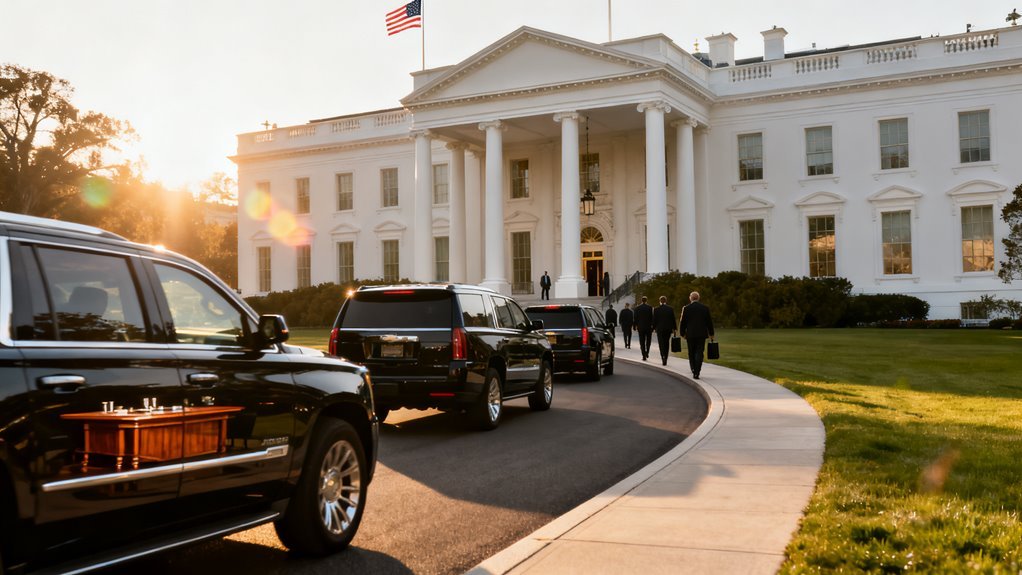
The Trump administration convened executives from Anthropic, OpenAI, Google, Meta, and several other major AI developers for a meeting that, on the surface, looked like standard Washington theater. Industry leaders shake hands with officials, everyone agrees on the importance of safety, cameras flash, statements are released. But the substance underneath this particular gathering signals a meaningful shift in how the federal government intends to relate to the companies building the most powerful AI systems on earth.
A Regulatory Framework Disguised as a Security Program
The core proposal is straightforward: the government wants access to frontier AI models up to 30 days before public release, specifically for safety and cybersecurity evaluation. Earlier discussions had floated windows as long as 90 days for certain advanced systems under voluntary arrangements. Companies would submit models for testing that includes penetration exercises, misuse simulations, and assessments of autonomous agent behavior.
What makes this framework unusual is not the testing itself. Anthropic and OpenAI already conduct internal red teaming and have engaged third party evaluators. The difference is who holds the clipboard. By positioning this as a cybersecurity function rather than a consumer protection measure or an innovation policy, the administration has effectively routed AI oversight through the national security apparatus. That is a deliberate architectural choice with consequences that extend well beyond the specifics of any single model evaluation.
The executive order behind all of this, signed in early June 2026, directed the creation of standardized benchmarks for assessing the cyber capabilities of advanced AI systems within 60 days. These benchmarks would measure a model’s ability to assist in intrusion, exploitation of software vulnerabilities, and offensive cyber operations. The language matters. This is not about hallucinations, bias, or job displacement. This is about whether a model can hack.
Why Cybersecurity Became the Entry Point
The choice to frame AI regulation primarily through the lens of cybersecurity is both pragmatic and politically calculated. Cybersecurity is one of the few policy areas where bipartisan consensus still exists in Washington. It also happens to be the domain where frontier AI models present the most immediate and demonstrable risks.
Government officials reportedly presented analysis of high profile hacking incidents linked to advanced systems from Anthropic and OpenAI during the meeting, using them as case studies. This framing sidesteps the politically toxic questions about content moderation, free speech implications, and creative industry displacement that have paralyzed previous attempts at comprehensive AI legislation.
It also conveniently avoids the thornier philosophical debates about artificial general intelligence and existential risk that some researchers have pushed to the center of the regulatory conversation. By narrowing the aperture to cybersecurity, the administration found a problem that is concrete, measurable, and politically defensible.
There is a strategic calculation here for the companies as well. A voluntary framework focused on cybersecurity testing is vastly preferable to the kind of broad licensing regime that the European Union has pursued with the AI Act. If the alternative is comprehensive regulation covering everything from training data provenance to algorithmic transparency, submitting a model for a 30 day security review starts to look like a bargain.
The Voluntary Question
The White House has been emphatic that this program relies on voluntary participation. No formal licensing. No mandatory compliance. Just a handshake agreement that the biggest AI developers will let the government kick the tires before shipping.
Anyone who has watched the evolution of technology regulation should recognize this pattern. Voluntary frameworks in Washington have a tendency to calcify into de facto requirements. Once the major players participate, market pressure and public expectation make opting out reputationally expensive.
And the infrastructure built for voluntary review, the benchmarks, the testing protocols, the institutional relationships, becomes the scaffolding for mandatory regulation down the road if political conditions change. Consider the parallel with financial stress testing after 2008. What began as an emergency measure eventually became a permanent feature of bank regulation.
The initial framework was imperfect, the benchmarks were debated, and the largest institutions had outsized influence on the process design. But the precedent was set, and the direction of travel only went one way.
The separate discussions that OpenAI CEO Sam Altman and other executives held with White House leadership, cabinet officials, and lawmakers before the main meeting are telling. These were not courtesy calls. They were negotiations over the final shape of the framework, and the companies involved understood that the terms set now will define the regulatory environment for years.
Being at the table during the voluntary phase is how you influence what the mandatory phase eventually looks like.
Who Benefits and Who Gets Squeezed
The immediate beneficiaries are the companies already in the room. Anthropic, OpenAI, Google, and Meta have the resources, the legal teams, and the government relations infrastructure to navigate a pre-release review process. A 30 day testing window is manageable when your release cycles are measured in months and your compliance budgets run into the tens of millions.
For smaller AI companies and open source developers, the picture is more complicated. The framework as described applies to “frontier” models, a category defined by cutting edge capabilities including autonomous agent behavior. That definition matters enormously. If the threshold is set high enough, only a handful of companies are affected.
If it creeps downward over time, as regulatory boundaries tend to do, it could create meaningful barriers to entry for startups pushing into advanced model development. The open source community faces a particular tension. Projects like Meta’s Llama series have demonstrated that powerful models can be released with open weights, enabling a broad ecosystem of downstream development.
A pre-release government review process does not map cleanly onto open source distribution models. How do you conduct a 30 day security evaluation of a model that anyone can download, modify, and deploy? The framework does not appear to have a clear answer yet, and that ambiguity is itself a form of risk for open development.
What the Benchmarks Will Actually Measure
The push for standardized benchmarks to assess AI cyber capabilities is one of the most technically significant elements of the framework. Current evaluation methods for AI systems are fragmented. Different companies use different red teaming approaches, different threat models, and different definitions of what constitutes a dangerous capability.
The government wants to change that by establishing common metrics. This is harder than it sounds. Measuring whether a model can assist in hacking is not like measuring its performance on a math test. Cyber capabilities exist on a spectrum, and the boundary between a useful coding assistant and a tool that can identify exploitable vulnerabilities is context dependent.
A model that helps a security researcher find bugs is the same model that could help an attacker find bugs. The benchmark has to somehow account for intent, deployment context, and the gap between theoretical capability and practical exploitation.
The inclusion of penetration testing and misuse simulation in the evaluation protocol suggests the government is planning to actually attempt to use these models for offensive purposes in a controlled environment. That is a reasonable approach, but it also means the government will be developing significant internal expertise in exactly how frontier AI models can be weaponized. The knowledge cuts both ways.
The Broader Trajectory
Zoom out and the pattern becomes clear. The United States is building its AI regulatory infrastructure incrementally, through executive action rather than legislation, focused on security rather than broad governance, and shaped heavily by industry input.
This approach has real advantages in speed and flexibility. It also has real limitations in durability and democratic accountability. The European Union took the opposite approach with the AI Act: comprehensive, legislative, risk tiered, and years in the making. Companies that violate the EU Act face fines of up to 7% of annual gross revenue, a penalty structure that gives the European framework considerably more enforcement teeth than anything currently proposed in the United States.
China has pursued a more centralized model with rapid regulatory issuance covering specific applications, including AI risks categorized alongside epidemics, cyberattacks, and financial anomalies. The American path is distinctly its own, pragmatic and industry proximate, with the government positioning itself not as a gatekeeper but as a testing partner.
What happens next depends on several variables. If the voluntary framework produces genuinely useful security evaluations and the participating companies cooperate in good faith, it could become a model for international coordination on AI safety.
If the benchmarks prove inadequate, or if a major security incident occurs involving a model that passed government review, the political pressure for mandatory regulation will intensify rapidly.
The briefings from the Office of the National Cyber Director back in May 2026 with OpenAI, Anthropic, and others had already telegraphed where this was heading. The August meeting was not the beginning of a conversation. It was the formalization of one that has been underway for months, with the terms largely set before the cameras arrived.
For anyone building, deploying, or investing in advanced AI systems, the message from Washington is clear enough: the government is no longer content to watch from the sidelines. The question is not whether oversight is coming. It is whether the version being built right now will prove adequate for the systems that arrive next year and the year after that.