
AI Is Helping Scientists Make Discoveries Faster Than Ever
Something fundamental is shifting in how science gets done, and it has nothing to do with bigger budgets or better microscopes.
Over the past two years, artificial intelligence has moved from being a useful tool in the researcher’s toolkit to something closer to an active participant in the scientific process itself. Literature reviews that once consumed weeks of a postdoc’s time now take hours. Experimental cycles that stretched across months are collapsing into weeks. And in a few high profile cases, AI systems are proposing hypotheses that human scientists had not considered at all.
This is not the familiar story of automation replacing human workers. It is something more nuanced and, frankly, more interesting. What we are watching is the emergence of a new division of labor between human intelligence and machine intelligence, one that could reshape the pace and economics of scientific discovery for decades.
What Actually Changed
The core breakthrough is not any single model or algorithm. It is the convergence of several capabilities that, together, create something qualitatively different from what existed even three years ago.
Large language models can now parse and synthesize scientific literature at scale. Machine learning systems can run continuous experimental feedback loops, adjusting parameters in real time based on incoming data. Generative models can propose novel molecular structures, material compositions and experimental designs. And robotic lab systems can execute physical experiments around the clock without fatigue or human error.
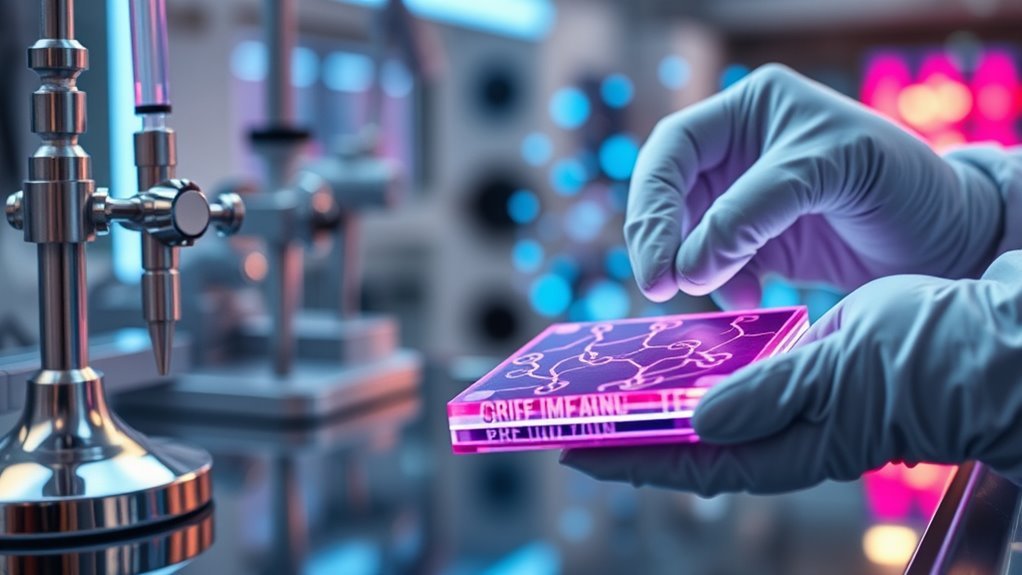
Berkeley Lab’s A-Lab offers perhaps the most concrete example. The facility uses AI to autonomously design, execute and analyze materials science experiments. It operates continuously, iterating through possibilities at a pace no human team could match. Since coming online, it has successfully synthesized new materials that were identified entirely through AI driven prediction.
This is not a proof of concept anymore. It is a working system producing real results.
Why Drug Discovery and Materials Science Lead the Way
Not every scientific field benefits equally from this shift, and the reasons why reveal something important about where AI currently excels and where it still falls short.
Drug discovery and materials science share a common characteristic: they involve searching through enormous combinatorial spaces. The number of possible drug molecules or material compositions is so vast that traditional approaches can only explore a tiny fraction. AI systems are exceptionally good at navigating these spaces, identifying promising candidates and pruning dead ends far more efficiently than brute force experimentation.
Compare this to fields like theoretical physics or pure mathematics, where the bottleneck is not search but conceptual insight. AI has made contributions here too, notably DeepMind’s work with AlphaFold on protein structure prediction and its collaboration with mathematicians on knot theory. But the impact is less transformative because the fundamental challenge is different.
The pattern is clear. Where science resembles an optimization problem across a large space of possibilities, AI accelerates progress dramatically. Where it requires the kind of creative leap that connects disparate conceptual frameworks, AI remains a supporting player rather than a lead.
The Real Stakes: Reproducibility, Access and Who Gets Left Behind
The speed gains capture headlines, but the deeper implications deserve more attention.
Start with reproducibility. Science has been grappling with a replication crisis for over a decade, particularly in psychology, biomedicine and social sciences. AI driven experimental systems could help address this by standardizing protocols, reducing human bias in data collection and making entire experimental pipelines transparent and repeatable. When a robot executes an experiment based on a clearly specified algorithm, reproducing that experiment becomes dramatically easier.
But this cuts both ways. If AI systems generate hypotheses and design experiments that humans struggle to fully understand or interpret, we risk creating a different kind of opacity. A result might be reproducible in the narrow sense that another AI system can replicate it, while remaining intellectually opaque to the scientists who are supposed to evaluate its significance.
Then there is the question of access. Building and operating facilities like A-Lab requires substantial capital, technical talent and institutional infrastructure. Elite research universities and well funded corporate labs will adopt these capabilities first. Smaller institutions, researchers in developing countries and independent scientists risk falling further behind. The democratization narrative that often accompanies AI breakthroughs does not automatically apply here.
This matters because scientific diversity, in terms of perspectives, questions asked and approaches taken, has historically been a source of breakthrough insights. If AI driven science concentrates further among a small number of wealthy institutions, the efficiency gains could come at the cost of the intellectual diversity that makes science productive in the first place.
The Competitive Landscape
Major technology companies are already positioning themselves around this opportunity, though their approaches differ significantly.
Google DeepMind continues to lead in high profile scientific AI applications, building on AlphaFold’s success with expanded efforts in genomics, weather prediction and materials design. Microsoft, through its partnership with OpenAI and its own research division, is investing heavily in scientific copilot tools aimed at making AI accessible to working researchers who lack deep machine learning expertise. Meta has taken a more open approach, releasing models and datasets that academic researchers can build on directly.
The pharmaceutical industry represents the most immediate commercial battleground. Companies like Insilico Medicine, Recursion Pharmaceuticals and Isomorphic Labs (a DeepMind spinoff) are racing to demonstrate that AI driven drug discovery can produce candidates that succeed in clinical trials, not just in computational simulations. The first truly AI discovered drug to reach market approval will be a watershed moment, and several candidates are now in mid stage clinical trials.
Investors have poured billions into this space, but returns remain uncertain. The fundamental challenge is that compressing the discovery phase does not eliminate the regulatory, manufacturing and clinical trial timelines that account for much of the cost and time in bringing a drug to market. AI might identify a promising molecule in weeks rather than years, but proving it safe and effective in humans still takes the better part of a decade.
What People Are Overlooking
Three underappreciated dynamics deserve attention.
First, the role of data quality. AI systems are only as good as the data they train on, and scientific data is notoriously messy, incomplete and inconsistent across institutions and disciplines. The organizations that invest in cleaning, standardizing and curating high quality scientific datasets will hold enormous leverage. This is less glamorous than building frontier models, but it may prove more consequential.
Second, the regulatory vacuum. No major jurisdiction has established clear frameworks for validating AI generated scientific findings, approving AI designed therapeutics through expedited pathways, or assigning intellectual property rights when an AI system makes a material contribution to an invention. The FDA, EMA and other regulatory bodies are watching closely but moving cautiously. How these frameworks develop will shape which companies and countries capture the most value from this transition.
Third, the talent bottleneck. The scientists who can effectively collaborate with AI systems, understanding both the domain science and the capabilities and limitations of the tools, are exceptionally rare. Training the next generation of researchers to work in this hybrid mode is arguably as important as improving the AI systems themselves. Universities have been slow to adapt their curricula accordingly.
Where This Goes Next
Over the next three to five years, expect several developments.
Semi-autonomous research agents will become standard infrastructure in well funded labs, handling not just data analysis but experimental design, literature monitoring and even grant writing support. The scientist’s role will shift further toward asking the right questions and exercising judgment about which AI generated findings merit deeper investigation.
We will likely see the first major scientific controversy involving AI generated results that turn out to be artifacts of training data bias or model limitations. This will be painful but ultimately productive, forcing the scientific community to develop better standards for validating AI contributions.
The gap between institutions with access to AI research infrastructure and those without will widen before it narrows. Open source efforts and cloud based platforms will eventually democratize access, but not before early adopters establish significant advantages in publication rates, patent portfolios and commercial applications.
And at some point, probably sooner than most expect, we will need to have a serious conversation about what it means for a scientific discovery to be “understood.” If an AI system identifies a new material with remarkable properties and no human scientist can fully explain why it works, does that count as scientific knowledge? The answer to that question will tell us something important not just about AI, but about what we think science is for.
The acceleration of scientific discovery through AI is real, measurable and already underway. The harder question is not whether it will continue, but whether we are building the institutional, regulatory and educational infrastructure to ensure the benefits are distributed broadly and the risks are managed wisely. On that front, the evidence is far less encouraging.
Something quietly extraordinary is happening inside research institutions, and it deserves far more attention than it is getting. The time required to move from scientific question to validated answer is shrinking at a rate that has no modern precedent. Not incrementally. Not by shaving a few percentage points off a timeline. In some fields, artificial intelligence and robotic automation are compressing what used to be a decade of work into six months.
That is not a projection. It is already happening.
The Real Story Is Not Speed. It Is Structure.
The obvious narrative here is that AI makes science faster. True, but incomplete. What is actually changing is the structure of how research gets done, and that distinction matters enormously.
AI isn’t just making science faster — it’s fundamentally reshaping the architecture of discovery itself.
Consider the traditional scientific workflow. A researcher reads hundreds of papers to understand the current state of a field, forms a hypothesis, designs an experiment, runs it manually, analyzes results, iterates, and publishes. Each stage has its own bottleneck. Literature review alone can consume weeks. Running experiments depends on equipment availability, human scheduling, and the physical limits of a person who needs sleep. Analysis of complex datasets often requires specialized statistical expertise that is not always available on the same team doing the bench work.
AI is not just accelerating individual steps. It is removing the gaps between them. When a foundation model can ingest the literature, propose a hypothesis, design the experiment, and then hand off to a robotic system that executes and analyzes results around the clock, the entire serial pipeline collapses into something closer to a parallel process. The bottleneck shifts from execution to human judgment about what questions are worth asking in the first place.
This is a fundamentally different kind of productivity gain than what we have seen from previous waves of laboratory automation. Earlier tools made individual tasks faster. AI is making the entire research cycle more fluid, allowing for the generation of alien hypotheses that challenge traditional research perspectives.
Berkeley Lab and the Autonomous Research Factory
The work happening at Lawrence Berkeley National Laboratory offers the clearest window into where this is heading. Their A-Lab facility pairs AI algorithms that propose novel compounds with robotic systems that synthesize and characterize them without human intervention.
The throughput numbers are striking: somewhere between 50 and 100 times more samples processed per day compared to a traditional human operated workflow.
But the throughput is almost beside the point. What matters is the feedback loop. The AI system proposes a candidate material, the robots make it, instruments characterize it, and the results feed back into the model, which refines its next set of proposals. This loop runs continuously. No waiting for a grad student to come back from lunch. No two week delay while samples sit in a queue for characterization equipment.
Facilities like this represent a new category of scientific infrastructure. They are not just tools that help researchers. They are semi autonomous research agents that operate under human direction but handle the mechanical and computational burden of discovery independently.
The researchers at Berkeley are not spending their time pipetting and running chromatography. They are designing the questions and interpreting the answers. That is a significant reallocation of human expertise toward the work that humans are actually best at.
Where the Compression Is Most Dramatic
The impact is not uniform across science, and understanding where AI delivers the most dramatic acceleration reveals something important about its strengths and limitations.
Materials science and drug discovery are the two fields experiencing the most visible transformation, and the reason is the same in both cases. These are domains defined by enormous search spaces. The number of possible chemical compounds, protein structures, or material compositions vastly exceeds what any human team could explore through trial and error.
AI excels precisely in this scenario because it can navigate high dimensional spaces, estimate which regions are most promising, and dramatically reduce the number of experiments needed to find something useful.
In pharmaceutical research, the path from target identification to clinical candidate has historically taken years of iterative screening. AI models now identify promising drug candidates by predicting molecular behavior computationally before anything is synthesized. This does not eliminate the need for clinical trials, but it compresses the preclinical phase significantly and increases the probability that candidates entering trials will actually work.
Synthetic biology may be the most extreme example. Industry estimates suggest that the intensive application of AI and robotics could accelerate development timelines by roughly 20 fold. Creating a commercially viable engineered molecule that would have taken close to ten years might now be achievable in about six months. If that estimate holds even approximately, it has massive implications for everything from sustainable materials to biofuels to engineered food proteins.
Climate science and energy research show a different pattern. Here, the acceleration comes less from exploring candidate spaces and more from processing observational data at scale. AI methods that collect, visualize, and analyze environmental datasets efficiently are freeing climate scientists from months of routine data processing, letting them spend more time on interpretation and modeling.
What People Are Overlooking
Several important dynamics in this shift are not getting enough attention.
The reproducibility question cuts both ways. One of science’s persistent problems is that many published results cannot be reproduced. AI driven research could actually help here because robotic systems execute experiments with far greater consistency than human hands.
Every parameter is logged. Every step is repeatable. But there is a counterpoint. When AI models generate hypotheses and design experiments, the reasoning behind those choices can be opaque. If a foundation model suggests a particular experimental design and it works, but nobody fully understands why the model made that suggestion, we have a new kind of reproducibility problem. The experiment is reproducible, but the scientific reasoning behind it may not be transparent.
Access and concentration of capability is a real concern. Facilities like the A-Lab require substantial capital investment. The AI models driving discovery increasingly require large scale compute. This creates a scenario where the institutions that can afford these systems pull further ahead, while smaller universities and research groups in less wealthy countries fall further behind.
Science has always had resource inequality, but AI could widen the gap dramatically.
The talent pipeline will need to shift. If AI handles data analysis, literature synthesis, and experimental optimization, the skills that make a scientist valuable change. Deep domain expertise still matters, but the ability to work effectively with AI systems, frame the right questions, and critically evaluate AI generated hypotheses becomes essential.
Graduate programs that do not adapt risk training students for a workflow that is rapidly disappearing.
Regulatory frameworks are not designed for this pace. Drug development timelines are partly long because of regulatory requirements, not just scientific ones. If AI compresses the discovery phase from years to months but regulatory review still takes years, the bottleneck simply moves downstream.
Agencies like the FDA will face pressure to develop new frameworks for evaluating AI accelerated research, and doing that well without compromising safety is a genuinely hard problem.
The Competitive Landscape
It is worth noting who is positioned to benefit most from this shift. Large pharmaceutical companies with the resources to deploy AI at scale have an obvious advantage, but so do nimble biotech startups that build around AI native workflows from day one.
Companies like Recursion Pharmaceuticals, Insilico Medicine, and Isomorphic Labs (Alphabet’s drug discovery venture) are betting their entire business models on AI compressed research timelines.
In materials science, the competitive implications extend to national strategy. Countries that invest heavily in autonomous research infrastructure will have structural advantages in developing next generation batteries, semiconductors, and sustainable materials.
China’s significant investments in AI driven materials research are not coincidental. Neither is the US Department of Energy’s commitment to facilities like Berkeley Lab.
The major cloud and AI providers also stand to benefit. Running foundation models for science at scale requires serious compute infrastructure. AWS, Google Cloud, Azure, and increasingly specialized providers like CoreWeave and Lambda are all positioned to capture revenue from research institutions migrating their computational workloads.
What Comes Next
The trajectory here is relatively clear, even if the timeline is not. Within the next three to five years, autonomous and semi autonomous research facilities will become standard at major research universities and corporate R&D labs.
Foundation models trained specifically on scientific data will improve substantially. The integration between AI planning systems and robotic execution platforms will tighten. Hiroaki Kitano’s Nobel Turing Challenge proposes that AI should be capable of making Nobel-worthy discoveries autonomously by 2050, a benchmark that once seemed fanciful but now looks increasingly plausible given the pace of these developments.
The more interesting question is what happens when these capabilities become accessible beyond elite institutions. Open source scientific AI models are already emerging. If the cost of robotic platforms continues to fall, smaller organizations could gain access to capabilities that are currently concentrated in a handful of well funded labs.
The deeper shift, the one that will take longer to fully materialize but may ultimately matter most, is cultural. Science has operated on certain assumptions about pace for centuries. Grants are structured around multi year timelines. Careers are built on the slow accumulation of published work.
Peer review assumes a cadence where months between submission and publication is normal. When the underlying speed of discovery changes by an order of magnitude, these institutional structures will face pressure to adapt. Some will. Some will resist. The tension between the two will shape how quickly the benefits of AI accelerated science actually reach the real world.
What we are watching is not simply a new tool being added to the scientific toolkit. It is the beginning of a structural transformation in how humanity generates knowledge. The researchers who figure out how to ask better questions, the institutions that build the right infrastructure, and the countries that invest strategically will define the next era of scientific progress. Everyone else will be reading about it after the fact.