

AI regulation encompasses the laws, policies, and oversight mechanisms that govern how artificial intelligence systems are developed, deployed, and monitored across major jurisdictions. More than 200 economists and technology leaders have called for stronger AI regulation, citing accelerating deployment of high-impact systems without adequate legal safeguards. Their appeal arrives as global regulatory frameworks diverge sharply in scope, method, and enforcement.
Three dominant paradigms currently shape AI governance worldwide. The European Union has established a thorough, risk-based horizontal regime. The United States relies on sector-specific guidance and a growing body of state-level statutes. China operates through centralized registration, licensing, and content controls. Each approach reflects different institutional priorities, but all three increasingly address high-impact systems, automated decision-making, and generative AI content.
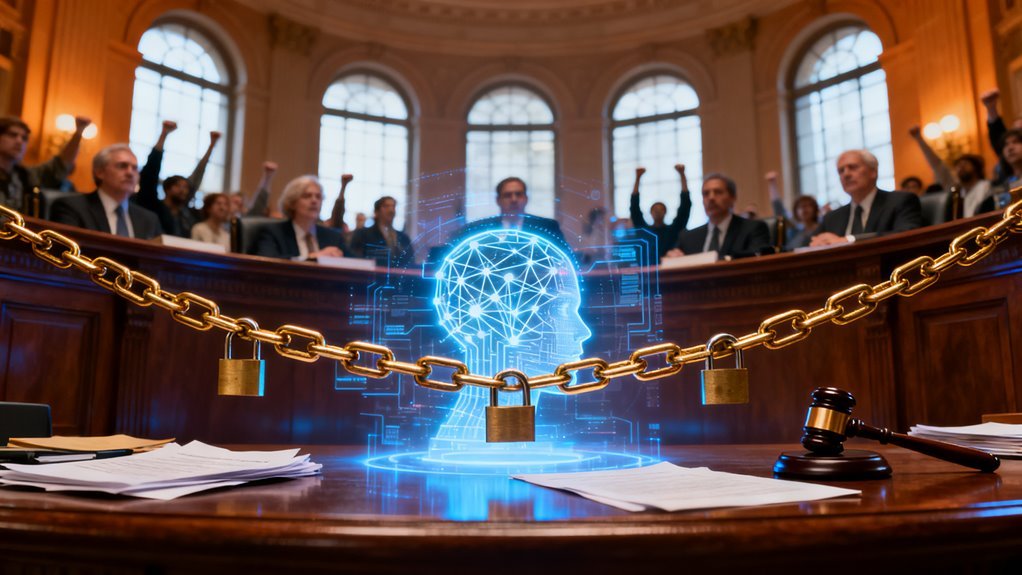
The EU AI Act represents the most structured regulatory architecture to date. It classifies AI applications into unacceptable, high, limited, and minimal risk categories, along with a separate classification for general-purpose AI. Eight practices are banned outright, including social scoring, harmful manipulation, exploitation of vulnerabilities, certain forms of emotion recognition, and untargeted biometric scraping.
The EU AI Act bans eight practices outright, from social scoring to untargeted biometric scraping.
High-risk systems must meet requirements covering risk management, dataset quality, logging, technical documentation, human oversight, robustness, and cybersecurity. The Act entered into force on 1 August 2024, with prohibitions and AI literacy obligations effective from February 2025 and full application of most provisions by August 2026.
General-purpose AI models face their own tier of obligations under the Act. Providers must supply technical documentation, training data summaries, and copyright compliance measures. Models deemed to pose systemic risk carry additional requirements, including adversarial testing and incident reporting. This tiered structure reflects growing regulatory consensus that large-scale foundation models demand distinct oversight separate from specific downstream applications.
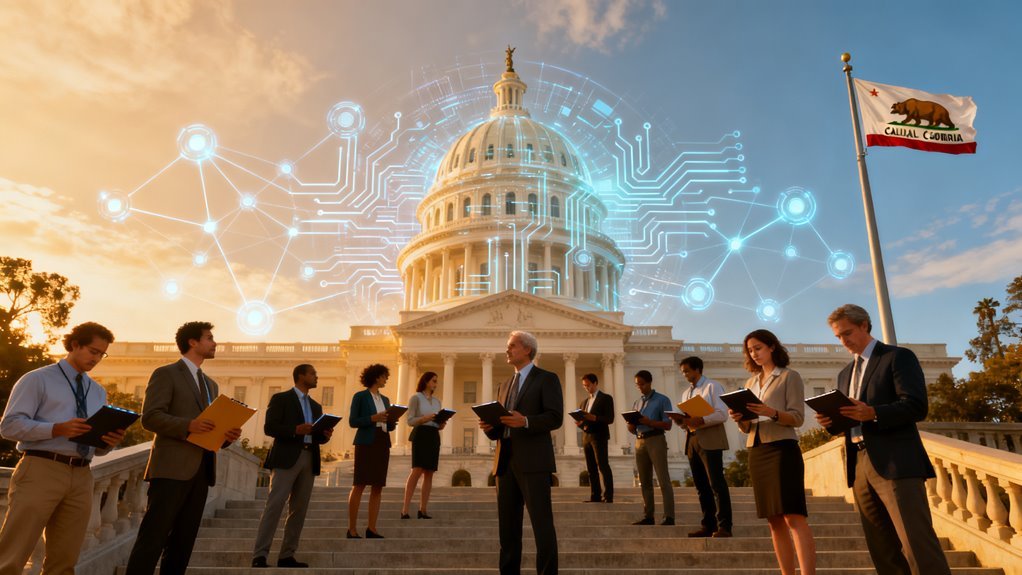
In the United States, no binding federal AI legislation exists. National efforts have relied on the AI Bill of Rights, which promotes data privacy, safeguards against algorithmic discrimination, and encourages safe AI deployment, but without enforceable mandates. The October 2023 Executive Order directed federal agencies to develop rules around large training runs, cybersecurity safeguards, intellectual property risks, and AI research expansion.
State and city governments have moved independently, enacting statutes covering automated decision tools and algorithmic market practices. Cross-cutting themes run through regulatory efforts across all jurisdictions. Automated decision rights, transparency requirements, fairness testing, data governance, and human oversight obligations appear in frameworks ranging from binding EU law to voluntary US guidance.
Economists and technology leaders supporting stronger regulation argue that these themes require uniform, enforceable standards rather than fragmented or aspirational policies. Transnational proposals are emerging that envision an international AI legal architecture analogous to governance regimes developed for other global risks. Whether such frameworks materialize depends on sustained political coordination among jurisdictions that currently hold divergent regulatory philosophies. A practical multinational compliance strategy involves treating the EU AI Act as a global baseline and layering jurisdiction-specific adaptations on top of that foundation.






3 comments
Comments are closed.