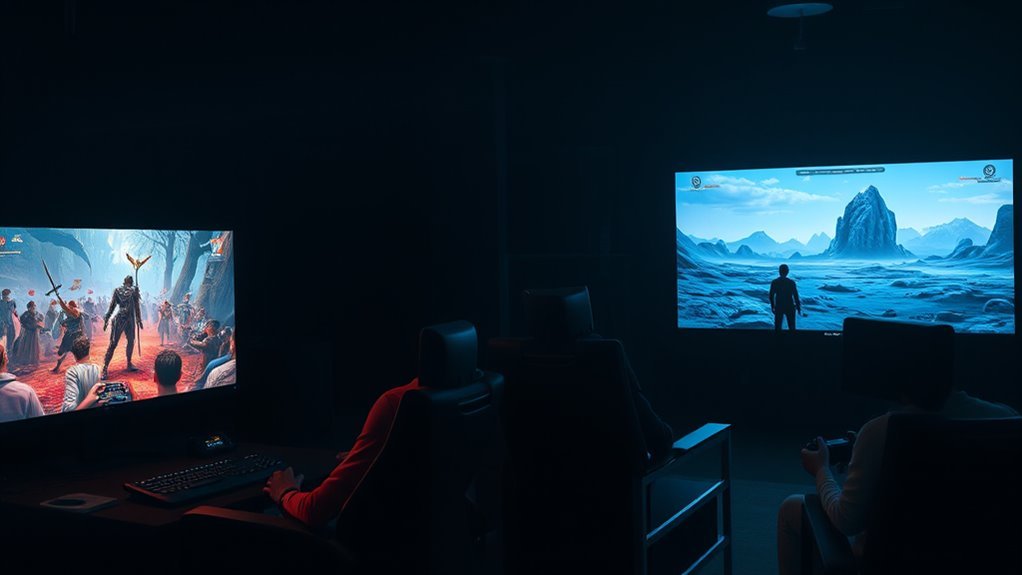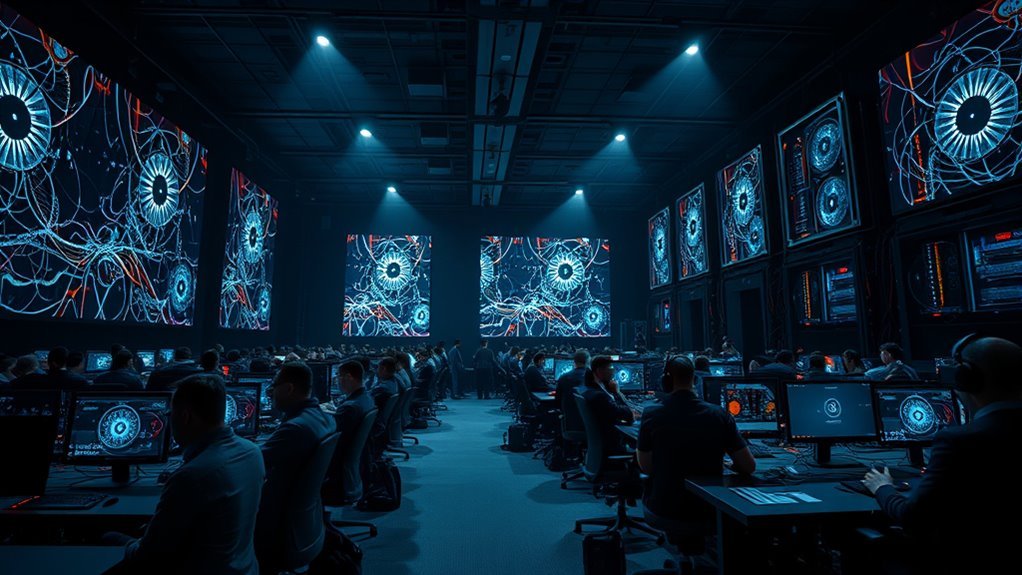

Amid a rapid wave of generative AI adoption, game development now relies on these systems chiefly as a productivity layer for planning, research, and routine support tasks rather than as a creative core. Survey data from GDC 2026 indicates that about one-third of professionals use generative AI tools in their daily work, with roughly four-fifths deploying them mainly for research, brainstorming, and administrative assistance rather than for direct asset authoring.
Industry analysis describes large language models and related tools as a “knowledge work” layer that streamlines preproduction, documentation, and pipeline coordination, while studios remain cautious about embedding AI-generated content directly into shipped games. Coverage of GDC 2026 reinforces this pattern, highlighting extensive AI presence in workflows, tools, and conference sessions but limited visible impact on player-facing art, writing, or audio.
While usage has normalized, sentiment has sharply deteriorated. The 2026 State of the Game Industry report records 52% of respondents viewing generative AI as having a negative impact on the sector, up from 18% in 2024 and 30% in 2025. Negative views are most concentrated among visual and technical artists at 64%, followed by game designers and narrative specialists at 63%, and programmers at 59%, reflecting deep unease in disciplines closest to craft and authorship.
Usage has normalized, but 52% now see generative AI as harming game development
Commentary around the GDC surveys links this backlash to fears over job security, erosion of artistic integrity, and displacement of creative labor by automated systems, even when those systems are framed as assistance rather than replacements. For many indie teams and creative-focused studios, generative AI is portrayed as undermining the human touch central to game development, transforming what might appear to be a neutral productivity upgrade into a cultural flashpoint.
The GDC Trends Report 2026 goes further, identifying a structural “infrastructure problem” across jobs, funding, and support networks. AI-driven displacement is cited among key reasons for a scarcity of entry-level roles, as routine tasks suitable for juniors are increasingly handled by automated tools while laid-off senior staff compete for the remaining positions.
Mass layoffs, consolidation, and aggressive cost-cutting intersect with AI adoption, creating a volatile employment landscape in which stability, mentorship, and career progression are increasingly fragile for marginalized and early-career developers.
These stresses manifest in widespread burnout. In related studies, only 20% of developers report good mental health, while nearly all respondents describe experiencing at least one symptom of burnout. Survey data suggests that the overwhelming majority of developers report symptoms of exhaustion, with pressures around AI integration, accelerated timelines, and complex co-development arrangements described as aggravating factors.
The rapid shift toward co-development and outsourced partnerships is framed as a structural adaptation to resourcing gaps and the need for specialized AI expertise, but it also fragments pipelines and diffuses responsibility for long-term staff wellbeing.
On the production side, experiments with generative NPC dialogue, procedural writing, and asset generation introduce nontrivial integration challenges in large projects. AI-driven systems can behave unpredictably in edge cases, increasing demands on QA infrastructure, internal tooling, and live-operations monitoring.
Visual technologies such as advanced upscaling have produced AI-generated faces that appear uncanny on recognizable characters, feeding quality concerns among both developers and players. At the hardware level, resource constraints and escalating RAM and compute requirements complicate aggressive AI adoption, particularly for mid-sized and indie teams operating under tight budgets.
Taken together, the GDC 2026 findings depict generative AI growth not as a straightforward efficiency boon but as a catalyst for an emerging game development infrastructure crisis that spans workforce stability, mental health, creative agency, and technical risk.