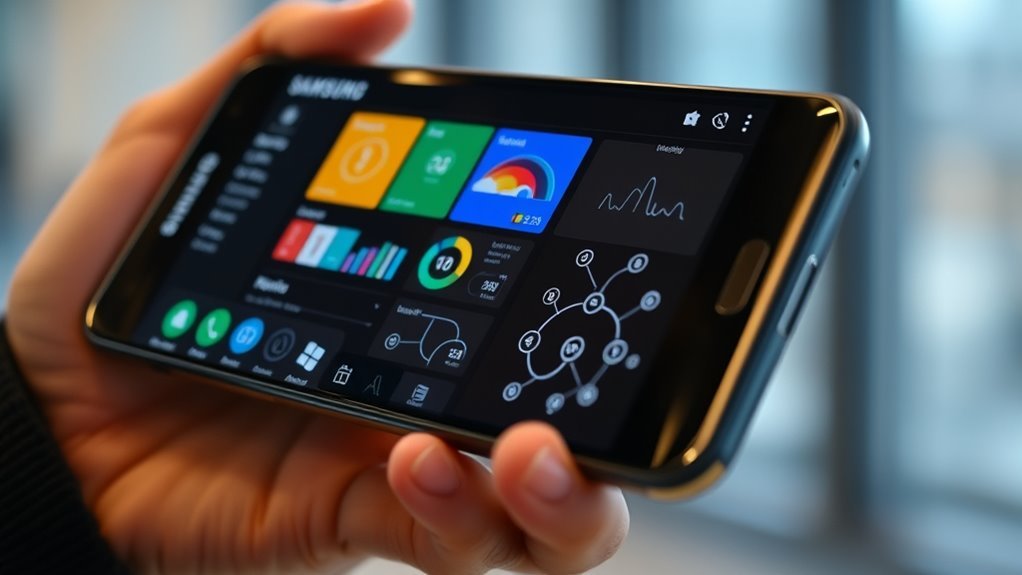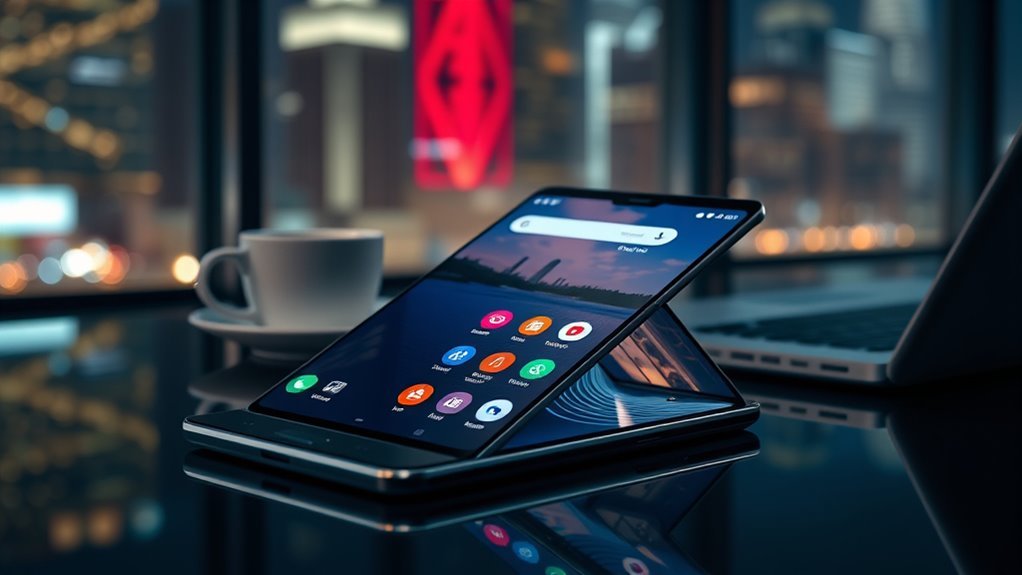

Few smartphones illustrate the shift from traditional mobile hardware to pervasive on-device AI as clearly as the Samsung Galaxy Z Flip 8, a flagship clamshell foldable built around a 4.1‑inch FlexWindow cover display and refined hinge-centric design. With a 948 × 1,048 AMOLED panel running at 60 or 120Hz, the FlexWindow no longer acts as a mere notification viewport but as the primary interface for AI‑driven interactions. Samsung positions the device at roughly $1,200, underscoring its role as the company’s main clamshell foldable, launching alongside the latest Galaxy Z Fold 8 models in the broader Galaxy Unpacked lineup.
Central to the experience is Gemini Intelligence, Google’s agentic AI framework woven directly into Android rather than exposed as a standalone chatbot. On the Galaxy Z Flip 8, it arrives with One UI 9 atop Android 17, giving the system deep visibility into on‑screen content, notifications, and device context. The phone relies on an on‑device Gemini Nano model, with the launch stack aligned to Gemini Nano v3 and future documentation pointing to Gemini Nano 4 for expanded multimodal processing and support for more than 140 languages.
Gemini Intelligence saturates One UI 9 on Android 17, turning Flip 8 into a context-aware, multilingual automation engine
This on‑device orientation allows many tasks to execute without persistent cloud dependence, improving latency and keeping workflows responsive on the compact hardware.
The redesigned FlexWindow converts the outer screen into a persistent assistant surface rather than a simple glanceable clock. A long press of the side key opens Gemini Intelligence directly on the cover display, presenting users with cards, prompts, and task flows tailored to what is currently on the screen or stored in apps. Voice‑triggered commands enable natural‑language requests from the closed state, so actions such as drafting messages, initiating searches, or starting automation routines can be completed without unfolding the main inner display.
New Now Brief cards summarize upcoming events, travel details, and other “next steps,” then tie these insights to suggested Gemini actions, effectively turning the cover interface into a proactive launcher for AI‑driven behavior.
Gemini Intelligence extends beyond single‑app shortcuts by orchestrating entire workflows across more than forty supported services and Chrome. A grocery list composed in a memo application can be translated into a populated cart in a delivery app, with Gemini guiding interface elements, confirming items, and presenting a summary for approval.
Similar patterns apply to travel and entertainment, where the system can surface stored tickets, locate nearby restaurants that match preferences, and book reservations or rides through connected partners with minimal user intervention. Because Gemini understands on‑screen context, it can chain actions that previously required manual app switching, transforming the foldable into a device that completes tasks rather than merely hosting them.
Hardware choices reinforce this orientation, with a 4,300mAh dual battery and familiar 25W wired and 15W wireless charging sustaining extended AI use on the cover screen and inner display. This 4,300mAh dual battery configuration is unchanged from the Galaxy Z Flip 7, maintaining the same 25W wired and 15W wireless charging speeds. Foldables take priority.