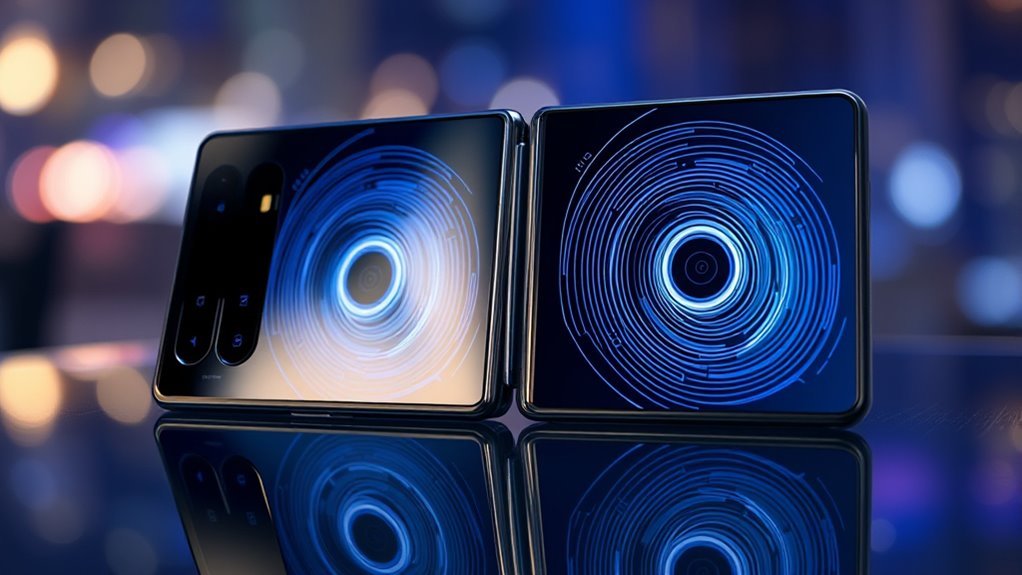

As Samsung continues to push the boundaries of foldable design, the Galaxy Z Fold 8 series debuted at the Galaxy Unpacked event in London on July 22, 2026, introducing the Galaxy Z Fold 8, Galaxy Z Fold 8 Ultra, and Galaxy Z Flip 8 under the launch theme “A New Shape Unfolds.” The keynote framed the Galaxy Z Fold 8 as the wide‑screen foldable flagship for 2026, adopting passport‑like proportions with a 5.5‑inch outer display and 7.6‑inch 4:3 inner panel to distinguish it from earlier, taller Fold generations.
The series headlined a broader hardware lineup that also included the Galaxy Watch 9 family and Galaxy Watch Ultra 2, reinforcing Samsung’s intent to anchor its ecosystem around foldables and wearable devices. Both the standard Fold 8 and Fold 8 Ultra are the first phones to ship with Android 17 pre-installed, marking a clean transition into Samsung’s next software cycle. This launch comes as part of a broader effort to enhance agentic task capabilities across mobile devices.
Central to the launch narrative is the integration of Gemini Nano 4 on‑device AI across the Galaxy Z Fold 8 series, bringing context‑aware assistance, smarter camera processing, and offline generative tools directly to the foldable form factor.
Samsung positions Gemini Nano 4 as a way to keep everyday interactions responsive and private, enabling features such as summarizing long articles on the 7.6‑inch inner display, refining multitasking layouts, and enhancing translation and voice commands without relying continuously on the cloud.
On the Galaxy Z Flip 8, Gemini Nano 4 is tuned for quick, glanceable experiences, using the compact cover interface to surface notifications, suggestions, and camera tools that match the clamshell’s focus on expression and portability.
The Galaxy Z Fold 8 itself emphasizes practicality alongside immersion, pairing its wider aspect ratio with significant gains in portability.
When opened, the device measures just 4.5 millimeters thick and weighs 201 grams, making it one of the lightest large‑format foldables in its class while still housing a 4,800 mAh battery with 45W wired fast charging.
Inside, a Snapdragon 8 Elite Gen 5 for Galaxy chipset is matched with 12GB or 16GB of RAM and up to 1TB of internal storage, though Samsung omits microSD expansion to streamline the design.
A 50‑megapixel optically stabilized primary camera continues the company’s focus on balanced image quality rather than sheer resolution, supported by Gemini Nano 4’s enhanced computational photography routines.
Samsung’s July 22 Unpacked presentation followed a global livestream at 9 a.m. ET, 6 a.m. PT, and 2 p.m. BST, opening preorders immediately for the Galaxy Z Fold 8, Fold 8 Ultra, and Flip 8 ahead of general availability on August 7.
The company frames the Fold 8 Ultra as the productivity‑oriented successor to earlier tall Fold models, while the wide Fold 8 targets users who want tablet‑like viewing in a more compact daily carry.
Confirmed and forecast pricing places the Galaxy Z Fold 8 firmly in the ultra‑premium bracket, with a base cost around $1,900 in the United States and regional expectations near ₹1,64,999 in India, climbing above ₹2,00,000 for higher‑capacity variants.