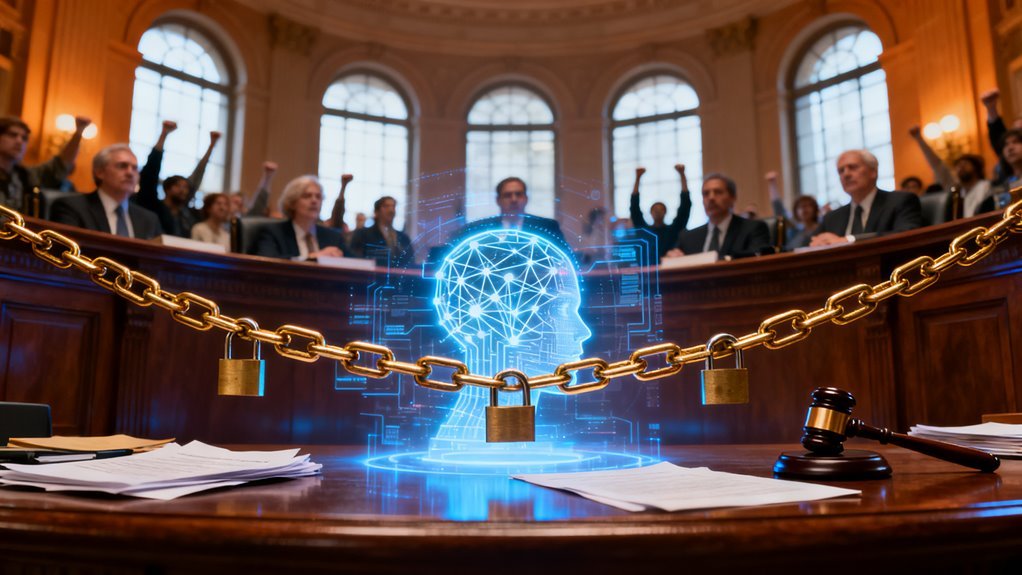

Under the envisioned regime, leading AI developers would share upcoming frontier models with a small group of competitors, granting them time‑bound access to run evaluations and flag problematic capabilities. Musk suggests that these companies convene regular meetings every few weeks to review emerging systems, discuss observed failure modes, and coordinate on immediate mitigations when needed.
Informal multi‑firm coordination calls would supplement these sessions, allowing technical teams to compare notes on red‑teaming results, security findings, and potential misuse pathways. The intent is to create shared visibility into high‑risk model behaviors, so that no single company bears the full burden of discovering dangerous capabilities after deployment. By pooling insights in this way, developers aim to reduce the public risks associated with frontier systems that might otherwise be released with insufficient safeguards. The EU AI Act is proposed as a global baseline for compliance strategies to help guide these collaborations.
The peer‑scrutiny mechanism is framed as a way to identify technical vulnerabilities early in systems that may exhibit emergent, unpredictable behavior. Musk links the concept directly to concerns about existential risk, arguing that unmanaged acceleration in AI capabilities could create systems that are difficult to control, audit, or align with human values.
Peer review by rivals is presented as a complement to internal testing, adding expert external judgment from teams that are themselves building similarly powerful models. The focus spans both security and misuse, including scenarios in which models assist in cyberattacks, enable biological threats, or generate highly persuasive disinformation at scale.
Rival labs act as external conscience, probing frontier models for security gaps, misuse vectors, and catastrophic emergent behaviors
Musk’s call for structured peer review follows earlier demands for a temporary pause on training systems more powerful than GPT‑4, which he endorsed alongside hundreds of researchers and executives in an open letter. That letter advocated shared safety protocols devised during the pause and audited by independent experts, foreshadowing his current emphasis on collective oversight rather than unilateral judgment.
His latest proposal shifts the focus from a one‑time moratorium to continuous scrutiny of models as they are developed, tested, and prepared for release. In doing so, it situates frontier AI governance within ongoing technical collaboration rather than purely legislative timelines.
If adopted, the regime would formalize collaboration among direct competitors, with shared safety standards potentially slowing rapid product cycles while increasing confidence in released systems. Musk portrays effective self‑regulation as a way to reduce pressure for heavy‑handed government intervention, while still leaving room for public oversight and independent audits of frontier AI arrangements.