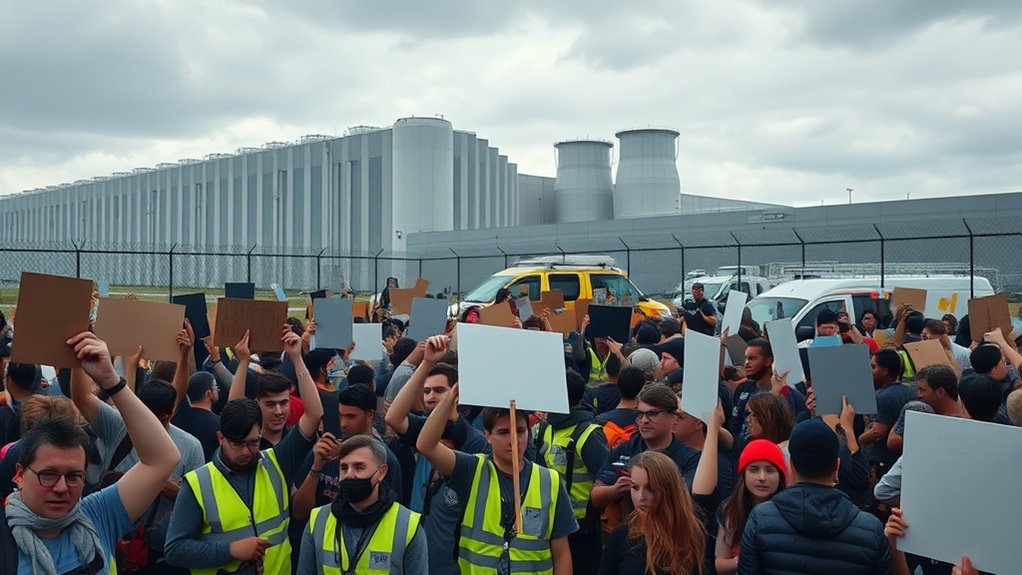
Although data centers are often portrayed as the invisible backbone of the AI boom, their physical footprint has triggered a highly visible backlash across the United States. On a single day, opponents staged 142 protests across 42 states, marking the first coordinated, coast‑to‑coast mobilization aimed specifically at AI data center expansion. Demonstrations appeared in major metropolitan regions, suburbs, small towns, and rural communities, reflecting how resistance has spread far beyond a few high‑profile sites. Actions ranged from marches and roadside rallies to prayer vigils and symbolic “blackout” events intended to dramatize fears about grid strain and future blackouts. Coordinated marches stretched from Atlanta to Berkeley, underscoring how nationwide protests against AI data centers now cut across regions and political lines.
What began as scattered zoning disputes has grown into hundreds of organized opposition groups active in nearly every state, turning data center siting into a national political flashpoint. Polling suggests this movement rests on broad public skepticism rather than narrow activism. Recent national surveys show roughly seven in ten Americans would oppose an AI data center near their homes, with only about 14 percent expressing support for such a facility in their own community. Other polls report 47 percent of residents opposing neighborhood AI data centers and 38 percent supporting them, with data centers rating less popular than nuclear or gas plants as local infrastructure projects. Growing concern about corporate power and perceived one‑sided community impacts reinforces that hostility.
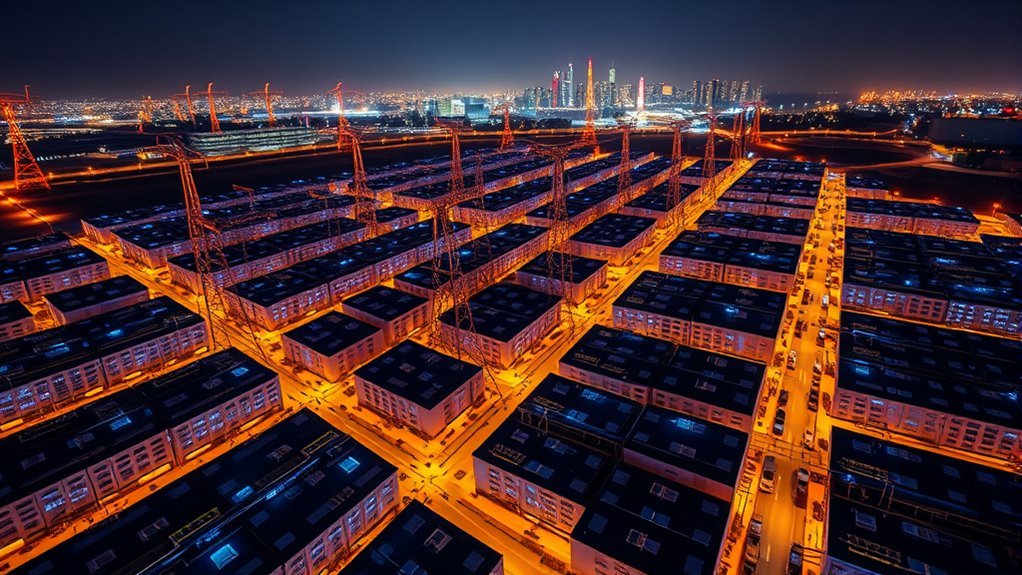
Central grievances focus on resource use and neighborhood quality of life. Hyperscale AI data centers require enormous electricity loads, leading residents to argue that new facilities threaten grid reliability and could raise power prices for households and small businesses. Many projects also depend on industrial‑scale water withdrawals for cooling, stoking fears over aquifer depletion and drought vulnerability in already stressed regions. Noise from server halls, backup generators, and continuous construction, along with truck traffic and road congestion, has become a recurring complaint in affected communities. Tax abatements and subsidies offered to developers are attacked as shifting costs onto existing residents while delivering relatively few permanent jobs.
Massive AI server farms drain grids and aquifers while flooding neighborhoods with noise, traffic, and frustration
Political and regulatory responses have accelerated as these concerns spread. More than 69 jurisdictions have moved to restrict new data centers through bans or moratoriums, including decisions in major cities and tech‑heavy regions. New York has adopted a one‑year statewide pause on large facilities, while similar measures are being debated elsewhere. Local bans in places such as Holyoke, Massachusetts, and Monterey Park, California, underscore how resistance now spans both coasts and varied political landscapes.
At the federal level, prominent lawmakers have called for a nationwide moratorium on AI data centers, arguing that environmental and community safeguards lag far behind the industry’s growth. Zoning rewrites, prolonged permitting, and tougher environmental reviews are increasingly used to slow or block contested sites.
These political shifts carry substantial economic consequences. In 2025, at least 48 data center projects worth about 156 billion dollars were blocked or stalled amid rising local pushback. By the second quarter of that year, roughly 98 billion dollars in additional projects faced delays, coinciding with a reported 125 percent jump in opposition activity.
In the first three months of 2026 alone, more than 75 projects valued at over 130 billion dollars were delayed or canceled, while annual cancellations climbed from six in 2024 to 25 in 2025, with momentum continuing upward. Analysts estimate that technology companies have committed around one trillion dollars to AI infrastructure globally, leaving an increasing share of planned U.S. capacity exposed to the risk of stranded, downsized, or notably delayed investment if resistance and regulation continue to intensify.






1 comment
Comments are closed.