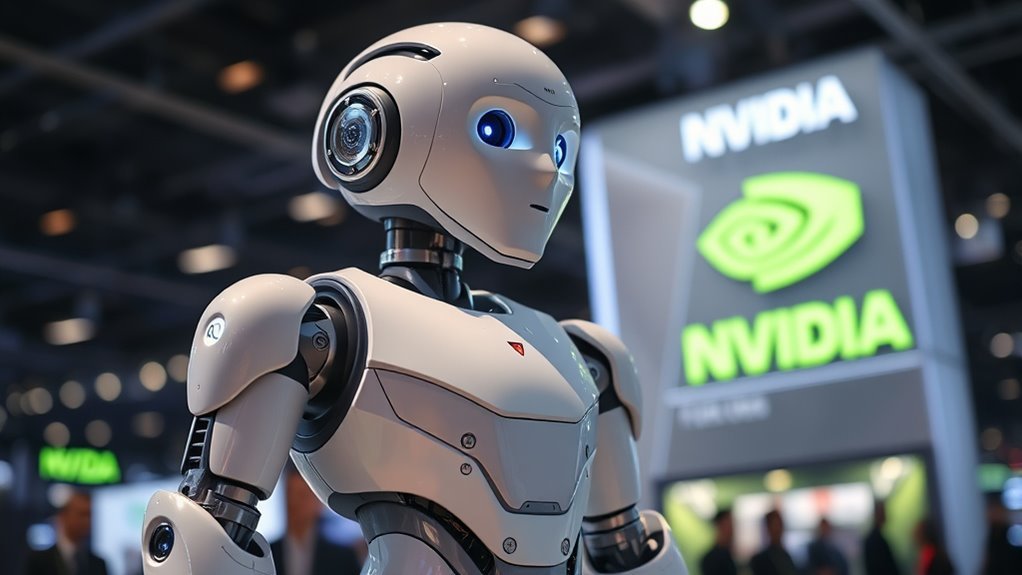
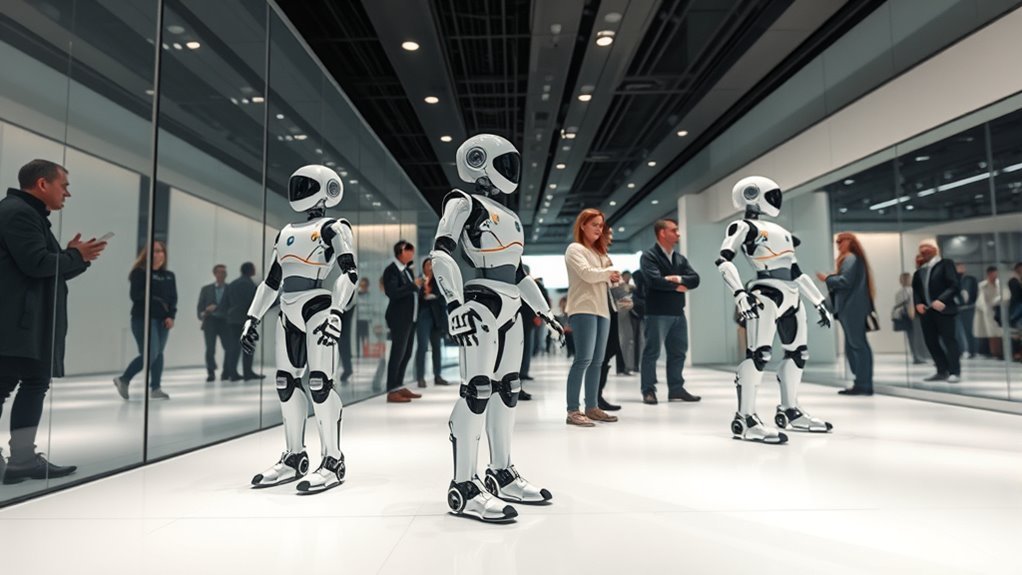
China is turning humanoid robots into national infrastructure. Over the past two years, Beijing and Shanghai have moved from scattered pilots to full scale embodied intelligence hubs, with dedicated training grounds, data factories for robots and major state backed capital flowing into the sector. This shift matters because it signals that China sees physical AI not as a niche research topic, but as a pillar of its next wave of industrial upgrading and global technology competition. One flagship facility in Shanghai now trains over 100 humanoid robots simultaneously across more than a dozen specialized scenarios, including welding and automotive testing, underscoring how physical AI is being operationalized at national scale. Additionally, the PULSE program has been established to support generative AI trials, reflecting a broader commitment to integrating advanced technologies into public health.
From industrial robots to embodied AI
China’s robotics journey started with traditional industrial robots in automotive and electronics factories, then moved into service robots in logistics, retail and simple customer service. Those systems were mostly task specific and pre programmed, with limited adaptability.
From rigid, task-specific industrial machines to service robots, China’s early systems lacked true adaptability
Embodied AI and humanoid robots mark a break from that model. Instead of designing a machine for a narrow task, engineers are building general purpose bodies powered by learning systems that improve through data and interaction. This is where China is now concentrating national resources.
Beijing has explicitly framed humanoid robots and embodied intelligence as important links in its modern industrial system, putting them alongside areas like advanced manufacturing and new energy as strategic priorities. Shanghai is treating humanoids and physical AI as a new type of public infrastructure, similar in spirit to earlier pushes for cloud computing and industrial internet platforms.
What is new in 2024 and 2025 is not just the robots themselves, but the infrastructure around them. Beijing and Shanghai are building shared training bases, simulation platforms and standardized testing environments designed for hundreds of heterogeneous humanoid robots to learn and be evaluated together.
Beijing HUMANOID: from municipal pilot to national team
The Beijing Innovation Center of Humanoid Robotics, often shortened to HUMANOID, was established in November 2023 in the Beijing Economic Technological Development Area, also known as Beijing E Town. It was originally a municipal level initiative, jointly set up by leading firms spanning complete robot systems, core components and robot foundation models.
In October 2024, the Ministry of Industry and Information Technology and the Beijing municipal government jointly upgraded HUMANOID to the National and Local Co built Embodied Artificial Intelligence Robotics Innovation Center. This designation effectively turned it into part of a national team for embodied intelligence and ensured central level support for research, industrial coordination and standard setting.
According to official descriptions, the center focuses on two core missions. First, it develops a general robot platform known as Tiangong that aims to serve as a shared hardware and control base for multiple humanoid product lines. Second, it is building a general embodied intelligence platform called Huisikaiwu that provides reusable software, algorithms and tools for perception, motion control and high level decision making. Together, Tiangong and Huisikaiwu are intended to form a common foundation layer that other companies can build upon, rather than each firm reinventing its own full stack.
Beijing has also placed strong emphasis on data. HUMANOID is building what is described as a large embodied intelligence robot data and training base that already operates more than 120 mainstream robot models across over 30 scenarios, spanning home services, retail, offices, industrial production, medicine and healthcare and elderly care. The base generates more than 500 hours of robot interaction data per day and has already produced nearly 20 thousand hours of high quality data, with a data qualification rate above 95 percent.
The center has also released the RoboMIND dataset, which has reportedly been downloaded over 6 million times worldwide, giving developers a shared resource for training embodied intelligence systems.
Financially, HUMANOID has moved quickly from policy platform to market recognized asset. In early 2026 the center completed its first market oriented funding round, raising more than 700 million yuan from state backed investment vehicles and private investors, including major technology companies such as Baidu. Reports indicate that the center operates a pilot production platform of roughly 9 thousand 700 square meters, with current annual capacity of about 2 thousand humanoid units and a target of 5 thousand units per year as the line matures.
Taken together, Beijing is building not only a research institute but a vertically integrated hub that combines national level designation, full stack technology platforms, large scale data generation, standardized training environments and commercial manufacturing.
Shanghai: humanoid robots as a public platform
If Beijing is positioning HUMANOID as a national flagship, Shanghai is treating humanoid robotics as a shared public platform for industry.
The National and Local Co Built Humanoid Robot Innovation Center in Shanghai operates as a national local co construction model designated by the Ministry of Industry and Information Technology, with a mandate to integrate capabilities across multiple robotics firms in line with the national humanoid robot industry plan. The core facility is located on the seventh and eighth floors of the operating company’s headquarters and currently houses over 130 humanoid robots across 13 models from companies such as Agibot, Fourier Intelligence and Shanghai Electric.
Shanghai’s approach is explicitly collaborative. The center is described as a node connecting enterprises, laboratories and government agencies, focused on accelerating industrialization rather than just research. It also coordinates multiple training sites; reports in 2026 note that four humanoid training bases in Shanghai, Beijing, Henan and Jiangsu are already operational under this ecosystem.
A distinctive feature of the Shanghai hub is its emphasis on combined physical and digital training. Alongside the physical centers, the team has built an embodied intelligence simulation platform called Gou, co developed with Shanghai University and other institutions. Gou enables developers to test and validate control algorithms in a high fidelity virtual environment before transferring them to physical robots, reducing costs and risks during early iteration.
Shanghai’s physical AI strategy is anchored by a dedicated humanoid robot training ground in Pudong New Area, described as a training field for heterogeneous humanoid robots and covering roughly 5 thousand square meters. This facility can already host more than 100 robots from over a dozen companies for simultaneous training, with local plans to scale capacity toward around 1 thousand units by 2027.
Daily operations are reported to generate tens of thousands of motion data records, feeding large datasets for locomotion, manipulation, perception and task level skills across varied scenarios.
Public descriptions also highlight that this Pudong training ground is designed as an open, shared environment, so multiple companies can access standardized facilities, data pipelines and evaluation frameworks for different robot types rather than building bespoke setups on their own. That mirrors how cities previously approached cloud platforms or industrial test beds, but now the subject is humanoid robots.
Data factories and training grounds: robots learn like AI models
Seen together, Beijing and Shanghai are building what are essentially data factories and training runways for robots.
In Beijing, the embodied intelligence data and training base generates hundreds of hours of robot interaction data each day, across dozens of realistic scenarios ranging from household chores to industrial tasks, and delivers tightly curated datasets with high validation rates. The RoboMIND dataset extends that reach globally by making standardized embodied intelligence data widely available for download.
In Shanghai, the national local co built center and its training sites have already deployed more than one hundred humanoids in collective training, with multi site coordination across several provinces. The Gou simulation platform provides a virtual twin to these physical environments, allowing algorithms to be trained and stress tested at scale before deployment.
The Pudong training ground and the emerging training base in Beijing’s Shijingshan District fit this same pattern. They treat humanoid robots less like individual products and more like model instances in a broader training and evaluation pipeline. The emphasis on heterogeneous robots is also important. Instead of assuming that one design will dominate, these centers are set up for many form factors, actuators and sensor configurations to be trained under common protocols.
This mirrors the evolution of large language models. At first, different companies trained their own models on bespoke datasets and infrastructure. Over time, shared benchmarks, datasets and compute platforms emerged. China is trying to jump directly to this more standardized phase for physical AI by baking shared infrastructure into the early industrialization of humanoids.
Policy, capital and industrial strategy
The policy narrative around these centers is unusually explicit. Beijing’s upgrade of HUMANOID to a national and local co built innovation center came with clear language that humanoid robots and embodied intelligence are important links in building a modern industrial system.
Local government sources in Beijing emphasize that the center should tackle common technical bottlenecks, help shape industry standards, lower research and pilot costs for firms and expand application scenarios for humanoid robots.
Media reports on Beijing’s humanoid strategy describe the city as targeting humanoid robots as a priority industry. They point to the data and training base as an asset that already serves research institutions, schools and industrial users, with more than 120 robots operating across over 30 scenarios and generating tens of thousands of hours of high quality data.
On the financing side, the more than 700 million yuan funding round for HUMANOID brought together several state linked funds alongside strategic investments from technology companies, signalling a blended model of government guidance and market validation. That structure matches how China previously supported sectors like high speed rail, photovoltaics and electric vehicles, where early public capital and policy support created scale and lowered costs before commercial demand fully matured.
Local policy documents and public statements indicate the use of tiered subsidies and grants for embodied intelligence facilities, with support potentially reaching the hundred million yuan level for new centers and shared platforms. These funds are supplemented by targeted support for foundational platforms such as the Tiangong general robot system and the Huisikaiwu embodied intelligence stack, which are treated as public goods within the emerging humanoid ecosystem.
Why this matters for technology and business
From a technology perspective, China is trying to solve three hard problems at once.
First, it wants to compress the learning curve for humanoid hardware by spreading the cost of experimentation across many actors. A general platform like Tiangong lets smaller firms build differentiated applications on top of a shared torso of actuators, joints and controllers, rather than spending years on low level mechatronics.
Second, it is betting that shared data and training environments will accelerate embodied intelligence. High quality robot data is expensive and time consuming to generate. Centralized training bases in Beijing and Shanghai are designed to industrialize data production in the same way that data centers industrialized computing.
Third, it aims to standardize safety and performance. National level centers are in a position to define test suites, scenario libraries and evaluation metrics for humanoid robots that can become de facto standards inside China and possibly influence global norms.
For businesses, this strategy creates both opportunity and pressure. On the opportunity side, companies can plug into shared platforms and training grounds instead of building everything from scratch. This reduces capital requirements for startups and allows established firms in manufacturing, logistics or healthcare to experiment with humanoid applications without owning full stacks.
On the pressure side, central platforms like Tiangong and shared training centers can become gatekeepers. Firms that do not align with the technical and policy directions set by national level hubs may find it harder to access data, standards or subsidies. The model also favors players that can quickly scale from pilots to thousands of units to justify the heavy upfront investment in shared infrastructure.
Internationally, these developments deepen the emerging race around general purpose humanoid robots. Companies in the United States, Europe and elsewhere are pushing their own platforms, but often rely on proprietary data collection and closed training sites. China’s experiment with national scale humanoid infrastructure could yield faster iteration and a broader base of participating firms, though it might also result in more homogeneous designs driven by standard platforms.
Risks, uncertainties and what to watch
There are real uncertainties in this push.
The first is commercial demand. Even with impressive demos, it remains unclear how quickly humanoid robots will find economically sustainable roles in factories, warehouses, healthcare or public spaces. If demand lags behind capacity, the large training bases and subsidy programs risk underutilization.
The second is technical feasibility at scale. Training hundreds of heterogeneous humanoids in shared environments is attractive on paper, but maintaining, synchronizing and safely operating such fleets is operationally complex. Simulation platforms like Gou can reduce some of the risk, yet the real test is whether robots trained in these centers perform reliably and safely in uncontrolled environments over long periods.
The third is ecosystem balance. Heavy reliance on national platforms and public capital can accelerate early progress but may dampen bottom up experimentation if technical architectures and standards become too rigid. The challenge for Beijing and Shanghai will be to keep their centers open and modular enough that new ideas and smaller players can still thrive around them.
Finally, there is the global dimension. Shared training bases and large data pipelines raise questions about interoperability and governance. If China pushes its own standards for humanoid safety, communication and control, and other regions do the same, global markets may fragment. That would increase costs for firms that hope to deploy humanoids across borders.
Key takeaways and what comes next
China’s new humanoid robotics centers in Beijing and Shanghai show that embodied intelligence has moved from lab curiosity to strategic national project. Beijing’s HUMANOID center has become a national level platform that combines full stack technology development, large scale data generation, standardized training and significant manufacturing capacity, backed by more than 700 million yuan of recent funding.
Shanghai’s national and local co built humanoid center and its Pudong training ground are building a public infrastructure layer for humanoid robots, with shared physical and simulated environments designed for large fleets of heterogeneous machines.
Over the next few years, several questions will determine whether this strategy succeeds. Will these centers produce robust, commercially viable humanoids that can work safely alongside people in factories, logistics hubs and public spaces at reasonable cost? Can shared platforms like Tiangong and Huisikaiwu become genuine industry standards rather than just policy labels? And will the data factories in Beijing and Shanghai manage to keep quality high while scaling training to hundreds or even thousands of robots?
If even part of this plan comes together, China will not just be building more robots. It will be building an entire operating system for physical AI, with humanoid robots as one of the main endpoints. For technologists, investors and policymakers watching the future of embodied intelligence, the training grounds and data centers now emerging in Beijing and Shanghai are likely to be some of the most important places to watch in the second half of this decade.
Conclusion
China’s decision to elevate humanoid robotics into a national priority is a clear signal that physical AI is moving from experiments to state backed industrial strategy. The new humanoid robotics centers in Beijing and Shanghai are designed not just to build machines but to create the standards, data pipelines and manufacturing capacity that could shape how embodied AI enters factories, hospitals and cities over the next decade.
From industrial automation to embodied intelligence
For years China focused on conventional industrial robots that repeat precise motions in tightly controlled environments such as automotive welding cells and electronics assembly lines. The current push around humanoid platforms and embodied AI sits on top of that foundation and reflects a broader shift in thinking about automation and artificial intelligence.
In 2023 Beijing established what is now known as the Beijing Embodied Artificial Intelligence Robotics Innovation Center often referred to as the humanoid robotics innovation center in the city’s Economic Technological Development Area. This was China’s first dedicated innovation hub for embodied AI robots integrating core hardware components system level design and software ecosystems rather than treating each of those pieces in isolation.
By October 2024 the center was upgraded to a National Local co built embodied AI robotics innovation center which means it receives joint support from municipal authorities and the central government for research development standards and deployment. That upgrade embedded the facility directly into China’s national science and technology architecture and made it a formal conduit between academic labs industrial partners and state planners.
At the same time Shanghai and other regions started to position embodied AI as a pillar of future manufacturing and services. Shanghai’s embodied AI plan includes public platforms for computing power simulation training pilot testing investment and equipment leasing with projects eligible for government funding that can cover up to half of their costs up to 20 million yuan. Nationally authorities have backed a large hard tech fund of around one trillion yuan aimed at robotics AI chips and other advanced equipment using market based equity structures with long investment horizons.
Taken together these moves reflect an evolution from scattered robotics projects to a coordinated strategy that treats embodied AI as a general purpose technology with long term economic and strategic significance.
Inside Beijing’s humanoid robotics hub
The Beijing innovation center is now one of the most visible anchors of China’s physical AI ambitions. It focuses on the Tiangong series of humanoid robots and the associated embodied intelligence platforms.
Tiangong is described as a full size purely electric drive humanoid robot that can run at 12 kilometers per hour and climb 134 consecutive stairs without relying on a pre mapped terrain model which highlights advances in dynamic control and perception. Those performance claims should be viewed as early indicators rather than definitive proof of robustness but they show where research is currently concentrated improving balance locomotion and interaction in unstructured environments.
The center has moved beyond laboratory prototypes into pilot production. It operates a roughly 9 thousand 700 square meter pilot manufacturing facility designed initially for around 2 thousand units per year with a target to reach about 5 thousand units annual capacity. The facility has reportedly produced its one thousandth customized humanoid unit which suggests a focus on small batch configurations rather than pure mass production at this stage.
Financially the hub has completed a first market oriented funding round raising more than 700 million yuan approximately 100 million dollars with backing from state linked investment vehicles and major technology firms including Baidu. Investors include robotics and industrial development funds based in Beijing along with strategic partners that can provide components software and access to downstream customers. The center also plans and hosts open funds targeted at platform technology embodied intelligence data sets and training grounds to support external projects that can be implemented in real world environments.
This mix of public capital local government funding and private sector participation is typical of recent Chinese deep tech initiatives and indicates that humanoid robots are being treated as infrastructure level assets rather than niche gadgets.
Shanghai’s training center and the rise of physical data
If Beijing anchors hardware development and pilot manufacturing Shanghai is rapidly becoming a national training ground for physical AI. Shanghai has opened a national training center for humanoid robots under the National and Local co built humanoid robotics innovation framework with a facility of around 5 thousand square meters.
The center can currently train more than 100 humanoid robots simultaneously drawn from over a dozen companies including firms such as Fourier Intelligence and AgiBot which already have experience in rehabilitation and industrial robotics. Robots there practice what are described as atomic skills such as grasping folding and other fundamental motions using human guided repetition. These basic skills become building blocks for more complex tasks in manufacturing logistics healthcare and domestic settings.
The facility reportedly generates up to 30 thousand motion data entries each day with a goal of about 10 million entries annually to feed foundation models for robot control and decision making. By 2027 the center aims to be able to train 1 thousand general purpose humanoid robots at the same time across more than a dozen specialized scenarios including welding manufacturing and automotive testing.
Alongside this data pipeline Shanghai’s center is working on a foundational AI model known as Super Brain intended to help robots adapt across homes hospitals and factories rather than being locked into single use cases. If successful this would mirror the role large language models played for text and images but in the domain of embodied intelligence where models must account for physics safety and real time control.
These developments show that China is treating high quality physical data collection and shared training platforms as strategic assets just as cloud computing and labeled image datasets were in the previous AI wave.
Funding scale and policy support
The humanoid robotics centers do not exist in isolation. They sit inside a broader funding and policy environment that has expanded rapidly in recent years.
Chinese officials have directed substantial subsidies and procurement budgets toward humanoid robots and related technologies. One review of tender documents found that state procurement in this sector reached around 214 million yuan in 2024 with significant year on year growth. Separate reporting indicates that more than 20 billion dollars equivalent has been allocated to humanoid and robotics enterprises over a recent period although exact timeframes and accounting details can vary by source.
In addition to the one trillion yuan hard tech fund that spans robotics AI chips and other frontier technologies there are targeted regional funds. Shenzhen has launched an AI and robotics fund of around 10 billion yuan while municipal programs in cities such as Wuhan and Beijing offer subsidies of several million yuan per company alongside support like free office space and development grants up to 30 million yuan. These mechanisms lower capital costs for early stage firms and encourage them to anchor their operations in designated industrial zones.
Shanghai’s support for AgiBot’s data collection facility which operates hundreds of robot work sessions per day is one example of how local governments provide rent free premises and operational backing to accelerate embodied AI pilots. The combination of national hard tech funds municipal robotics programs and specific incentives tied to procurement benchmarks creates a layered incentive structure that few other countries currently match for humanoid platforms.
What makes this humanoid push different
Humanoid robots are not new and China like other countries has experimented with them for more than a decade. What is different now is the level of coordination across four critical dimensions hardware scale data scale platform software and policy alignment.
First hardware scale. The Beijing innovation center is explicitly designed to move from dozens of lab prototypes to thousands of units produced annually with a clear roadmap to increase capacity and standardize components across product families. That shifts the conversation from proof of concept demonstrations toward repeatable manufacturing processes supply chains and quality control regimes.
Second data scale. The Shanghai training center and associated projects aim for tens of thousands of motion records per day and millions per year which begins to approach the level needed to train large embodied AI models that can generalize beyond a single factory line. In earlier robotics waves most firms collected task specific data that rarely left the site where it was generated. Centralized training centers invert that model.
Third platform software. Initiatives such as the Super Brain foundational model in Shanghai and the Gewu general embodied intelligence platform in Beijing indicate a focus on shared training ecosystems for robots and intelligent agents rather than bespoke control stacks for each vendor. The Huisi Kaiwu embodied AI platform linked to the Tiangong series fits the same pattern by aiming to support multiple application scenarios on top of common capabilities.
Fourth policy alignment. National Local co built centers and hard tech funds align municipal development goals with national industrial and security strategies. Compared with earlier robotics efforts which were often driven by single companies or universities this architecture makes it easier to standardize interfaces safety norms and deployment priorities across regions.
For experienced observers of AI and automation this package looks less like a speculative bet and more like a structured attempt to make physical AI a core part of China’s economic model over the next decade.
Implications for technology and business
For technology the most immediate impact is in the embodied AI stack. Running at double digit speeds on uneven terrain and climbing long flights of stairs without pre mapping indicates progress in real time perception control and planning which are among the hardest technical problems in robotics. However reliability safety and robustness under edge cases such as slips collisions or sensor failures remain open challenges and there is not yet independent validation of performance claims at scale.
Foundation models such as Super Brain and Gewu point to a future where developers build applications on top of shared embodied intelligence layers similar to how they now build chatbots and copilots on general language models. That could lower barriers for startups that focus on niche workflows such as hospital logistics quality inspection or warehouse picking while relying on common locomotion manipulation and perception capabilities.
For businesses the emergence of pilot plants with thousands of humanoid units and centralized training centers offers a clearer timeline for experimentation. Automotive suppliers logistics firms and electronics manufacturers may be able to run multi month trials with dozens of units rather than single robot pilots which should reveal more realistic cost curves and failure modes. If unit costs fall and reliability improves humanoid robots could supplement or partially replace traditional industrial robots in tasks that require flexibility reconfiguration and human compatible form factors.
At the same time humanoid deployments will add new dependencies. Firms that integrate Tiangong or similar platforms will rely on upstream providers of actuators sensors batteries and embodied AI software many of which are being cultivated inside these national centers. Over time that could reshape supplier networks and reinforce the role of state backed innovation hubs as gatekeepers in critical industrial ecosystems.
Societal and geopolitical dimensions
Societally humanoid robots raise familiar questions around labor displacement workplace safety and public acceptance. China’s leadership has emphasized that embodied AI and humanoid robotics should transform manufacturing and public services but detailed guidance on labor transitions lags behind investment flows. In manufacturing humanoid robots may first appear in tasks that are dangerous or highly repetitive such as welding or heavy material handling which could reduce injury rates but also pressure some categories of jobs.
In healthcare and eldercare contexts humanoid platforms could assist with basic tasks such as lifting monitoring and delivery but would need to meet strict safety and reliability standards. There is still limited evidence on how patients and families respond to humanoid assistance over long periods and the social acceptability of widespread robot presence is not yet clear.
Geopolitically the scale of China’s funding and the speed of its pilot deployments will intensify competition with other major robotics hubs. National investors and policymakers in regions such as North America Europe and East Asia are already debating how to respond to China’s physical AI surge and whether to create comparable training centers and hard tech funds. Intellectual property standards data governance and cross border safety norms for embodied AI are all emerging issues.
If Chinese centers succeed in defining de facto standards for humanoid hardware interfaces data formats and embodied AI benchmarks global vendors may need to align with those specifications to access supply chains and markets tied to Chinese ecosystems. Conversely if reliability issues or safety incidents emerge in large deployments other regions may take a more cautious approach.
Risks and unresolved questions
Despite the momentum several important uncertainties remain.
Technical maturity. Public demonstrations of high speed running or stair climbing do not automatically translate into multi year reliable operation in harsh factory environments. Mean time between failures durability of actuators and overall lifecycle costs are not yet well documented for large fleets of humanoid robots.
Economic viability. Even with subsidies and state procurement initiatives it is unclear when humanoid robots will reach cost levels that make them broadly attractive compared with conventional industrial robots or human labor. Many early deployments may be justified on strategic or demonstration grounds rather than pure financial returns.
Data governance. Training centers that collect millions of motion records across homes hospitals and factories will inevitably capture sensitive operational and personal information. Clear rules on data ownership access and anonymization are still emerging and there is limited transparency on how foundation models such as Super Brain handle privacy and security concerns.
Safety and standards. While the Beijing innovation center has stated that it will help establish industry standards and expand application scenarios detailed technical safety specifications are not widely available. As humanoid robots work closer to humans than many traditional industrial robots do questions around emergency stop mechanisms physical interaction limits and fail safe designs will grow more urgent.
Global interoperability. There is no widely accepted global standard for humanoid robot interfaces or embodied AI benchmarks. If each major region develops its own approach fragmentation could slow innovation and complicate cross border collaboration.
Key takeaways and what to watch next
For AiFlowNews readers the opening and upgrading of China’s humanoid robotics centers mark a decisive shift in the global trajectory of physical AI. These facilities concentrate capital talent and data to move humanoid robots from lab prototypes toward early industrial and service deployments.
Three practical takeaways stand out.
China is building end to end infrastructure for embodied AI that spans hardware platform software and large scale physical data collection not just funding individual companies.
The Beijing and Shanghai centers are early testbeds for the real economics of humanoid fleets including production capacity reliability and data driven improvement cycles rather than one off demonstrations.
Global companies and policymakers now need to treat physical AI strategy as a medium term priority on par with large language models chips and cloud computing given the scale of funding and the pace of pilot deployments in China.
Over the next few years the most important signals will come from long duration industrial pilots real unit cost trends safety records and the maturity of shared embodied AI platforms such as Super Brain and Gewu. If those elements converge successfully humanoid robots could become a mainstream part of manufacturing and public services in the 2030s. If they do not the current surge in investment may look more like a necessary learning phase on the way to other forms of physical AI.
Either way China’s new state backed humanoid robotics hubs ensure that embodied intelligence will be at the center of the next chapter in automation and AI policy rather than on the margins.