
Anthropic’s decision to anchor its future on SpaceX’s Colossus supercomputers is one of the clearest signs yet that the artificial intelligence race is becoming a competition for dedicated industrial scale compute, not just clever models. The numbers are staggering, but so are the strategic implications for Anthropic, for SpaceX and for the wider ecosystem that is suddenly competing with an aerospace company for the most valuable resource in modern AI: guaranteed access to GPUs at scale.
AI’s frontier now hinges on industrial-scale GPU supercomputers, turning compute itself into the era’s defining strategic battleground
From cloud era AI to dedicated supercomputers
Over the past decade, most AI labs grew up on public cloud platforms, renting GPUs by the hour on infrastructure run by Amazon, Google and Microsoft. Large partnerships such as Microsoft’s arrangements with OpenAI signaled a shift from ad hoc cloud consumption to long term, capacity style commitments tied to custom AI data centers.
Anthropic itself previously aligned a significant part of its compute strategy with major cloud providers, echoing a broader pattern in which model labs sought both capital and compute from the same tech giants that operate the dominant clouds.
The Colossus agreement with SpaceX marks a further evolution. Instead of simply reserving instances in an existing cloud region, Anthropic is effectively becoming the anchor tenant of a purpose-built AI supercomputer complex in Memphis, Tennessee, originally created for Elon Musk’s xAI organization and its Grok models. This arrangement highlights how AI workloads are expected to account for nearly 3% of global electricity demand by 2030.
Inside the Anthropic SpaceX Colossus deal
According to securities filings tied to the SpaceX initial public offering and related reporting, Anthropic has agreed to pay about 1.25 billion dollars each month for compute access through May 2029.
At that run rate, the agreement works out to roughly 15 billion dollars per year and nearly 45 billion dollars over the full term, making Anthropic one of the largest single customers for AI infrastructure that has been publicly disclosed. At this scale, the contract could account for roughly 80% of SpaceX’s total 2025 revenue, underscoring how central AI compute has become to the company’s financial story.
The filings describe capacity ramping during the initial months, with discounted rates in May and June of 2026 before the contract steps up to the full monthly payment as the data center build-out completes.
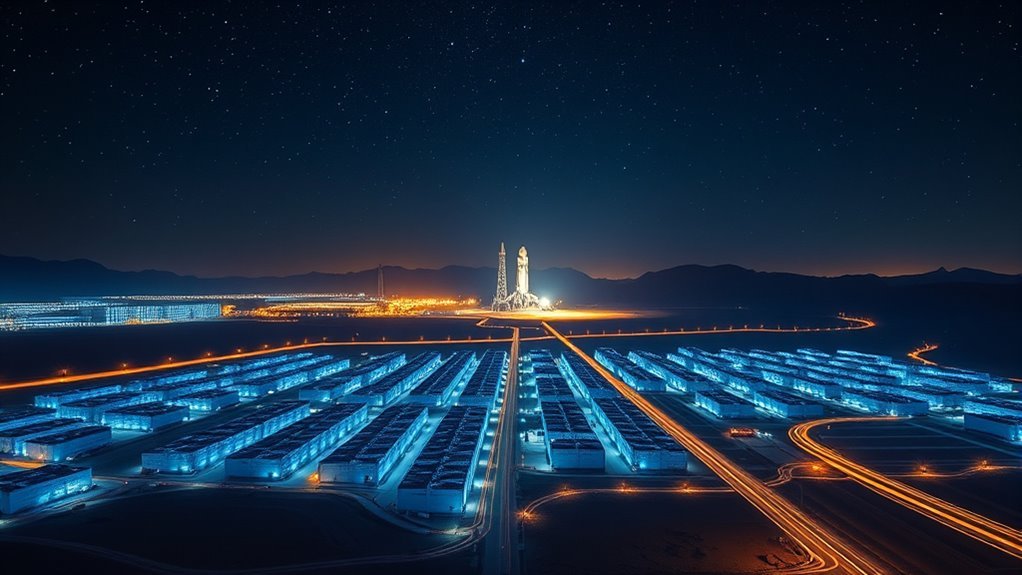
Anthropic’s own announcement confirms that the company will use all of the compute capacity at SpaceX’s Colossus 1 data center in Memphis. That facility provides more than 300 megawatts of power dedicated to AI workloads and houses over 220 thousand Nvidia GPUs.
Reporting and technical write-ups indicate that the GPU fleet spans Nvidia H100, H200 and newer GB200 class accelerators, giving Anthropic access to one of the most advanced production stacks available for large-scale training and high-volume inference.
Colossus 1 did not begin life as an Anthropic site. It was built by xAI as a training supercomputer for the Grok family of models and for workloads supporting the X social platform and other Musk ventures, with construction starting in 2024 and capacity brought online in stages through 2025.
As Colossus 1 transitions to dedicated Anthropic usage, xAI’s Grok training workloads are reported to be shifting toward a second data center, Colossus 2, which is part of the broader compute arrangement and adds incremental capacity as it comes online.
Together, the Colossus sites in Memphis are described as hosting more than 300 megawatts of AI capacity and over 220 thousand GPUs, placing them among the largest disclosed AI clusters in any securities or IPO material to date.
SpaceX and affiliates are not limiting Colossus to a single tenant. Recent coverage notes that Google, Anthropic and another firm called Reflection AI have all signed agreements to rent capacity at Colossus facilities, suggesting a campus model in which multiple AI companies share an underlying GPU estate under separate long-term contracts.
Within that context, Anthropic appears to be taking the most aggressive position by effectively reserving the entire Colossus 1 facility while also tapping additional capacity at Colossus 2.
What Anthropic gains: predictable, high-density compute
Anthropic’s public statements frame this deal as a way to quickly increase capacity for Claude Pro and Claude Max subscribers and for enterprise customers using Claude through APIs.
The company has said that the more than 300 megawatts of new capacity at Colossus 1 alone will directly translate into higher usage limits and better responsiveness for paying users.
That is a practical response to a very real bottleneck: demand for high-end GPUs has outstripped supply across the industry, and even well-funded labs have reported constraints when trying to train frontier-scale models or serve them at high volume.
Locking in access to a large, modern GPU cluster gives Anthropic several advantages.
- It secures predictable compute in a market where GPU availability is volatile and pricing can spike.
- It allows long-range planning for model training schedules and product launches, instead of constantly juggling capacity across multiple providers.
- It gives Anthropic a credible story for enterprises that need assurances about service reliability, latency, and capacity for mission-critical workloads.
The hardware mix matters as well. A cluster built around H100, H200, and GB200 class accelerators can support both large training runs for future Claude versions and highly optimized inference for current models.
Coupled with 300 megawatts or more of power dedicated to AI, that positions Anthropic to push context lengths, tool usage, multimodal capabilities, and fine-tuning offerings in ways that would be difficult without such concentrated infrastructure.
At the same time, this is a bet on concentration. Tying so much of the company’s compute roadmap to a single operator in a single metropolitan region introduces new forms of operational and geopolitical risk.
Outages, regulatory shifts, or local infrastructure constraints in Memphis could have outsized effects on Anthropic’s ability to deliver Claude reliably at scale.
Why this is a breakthrough for SpaceX and Musk’s AI ambitions
For SpaceX and the Musk ecosystem, the Anthropic deal is more than a lucrative contract.
Securities disclosures and independent analysis make clear that the approximately 15 billion dollars in annualized revenue from Anthropic’s payments is comparable to SpaceX’s total standalone revenue from 2025 before its combination with xAI.
In other words, AI compute leasing is suddenly standing alongside launch services and satellite broadband as a core line of business.
The economics are striking. By building Colossus primarily to support xAI and Musk-affiliated workloads, SpaceX created a GPU asset base that could easily be underutilized during early product cycles.
Selling capacity to Anthropic and other tenants monetizes that idle or excess capability while preserving priority for internal projects through careful workload placement between Colossus 1 and Colossus 2.
It also diversifies SpaceX’s revenue mix into a high-growth sector that investors currently value very aggressively.
The arrangement also gives Musk a direct commercial relationship with one of the leading independent AI labs, one that already has deep ties to both Amazon and Google through previous funding and cloud partnerships.
That places SpaceX and xAI in the unusual position of acting simultaneously as competitors in foundation models and as critical suppliers of compute to a rival.
Over time, governance, information barriers, and commercial trust will all matter if this dual role is to remain stable.
The local and infrastructural impact
Colossus is not just an abstract supercomputer. It is a physical complex in Memphis that sits on the site of a former Electrolux appliance factory in the Frank C Pidgeon Industrial Park, drawing hundreds of megawatts of power and putting real pressure on local infrastructure.
Recent reporting has described Memphis as an emerging epicenter for the data center buildout, and also for the backlash as residents raise concerns about power demand, water use, and land use tied to Colossus and related projects.
A campus that consumes more than 300 megawatts for AI workloads is comparable to the electricity usage of a mid-sized city, and that has implications for grid planning, rates, and resilience. As data center demand continues to rise, the challenge of maintaining reliability amidst increasing consumption will become critical.
Local regulators and utilities will need to balance the economic benefits of high-tech investment against the risks of overloading aging infrastructure or crowding out other industrial and residential demand.
As more tenants beyond Anthropic sign on to use Colossus capacity, those trade-offs will become even more visible.
How this reshapes the AI infrastructure landscape
Placed in historical context, the Anthropic SpaceX deal belongs to a new class of AI infrastructure arrangements.
Earlier waves of AI investment focused on cloud credit packages and strategic investments from hyperscalers into model labs.
In this new wave, dedicated supercomputer campuses are being tied to revenue-backed commitments measured in tens of billions of dollars, secured years in advance.
The Colossus contract stands alongside the largest public cloud and AI infrastructure deals and adds a new kind of player to the mix: an aerospace company turned GPU landlord.
Several implications stand out.
1. Competitive pressure on hyperscale clouds
When a leading lab like Anthropic commits such a large portion of its compute roadmap to a non-cloud provider, it signals that the big three clouds no longer have a monopoly on state-of-the-art AI infrastructure.
That may push cloud providers to respond with more flexible capacity deals, custom AI regions, or even equity-linked compute arrangements to keep top labs within their ecosystems.
2. A new template for GPU-rich campuses
Colossus demonstrates that it is viable to build an AI-focused data center campus in a secondary market like Memphis, secure cheap power, and then rent capacity at scale to multiple tenants.
Other infrastructure players, from traditional colocation providers to energy companies, are likely studying this model closely.
3. Intensifying arms race for physical resources
High-end GPUs, substations, transformers, and water rights are becoming strategic assets.
As more multi-billion dollar commitments like Anthropic’s emerge, smaller labs and startups may find it harder to secure predictable access to top-tier hardware.
That could widen the gap between a handful of frontier labs and the broader ecosystem.
4. Governance and dependency risk
If a disruptor in model development becomes dependent on a direct rival for its most critical resource, questions naturally arise about neutrality, pricing over time, and potential conflicts of interest.
Managing that dependency will require clear contracts, transparent service quality metrics, and possibly regulatory attention if compute access becomes a chokepoint.
Opportunities and risks for the broader AI ecosystem
On the opportunity side, Anthropic’s access to a very large, modern GPU cluster should accelerate improvements in its Claude models and in the reliability and capacity of its services.
More compute makes it easier to experiment with architectures, safety techniques, and tooling that might have been prohibitively expensive at smaller scales.
Enterprises stand to benefit from higher usage limits, more consistent latency, and the ability to run larger or more customized workloads on Claude-based systems.
For SpaceX and xAI, the influx of long-term, contracted revenue can support further investment not only in rockets and satellites but also in next-generation AI infrastructure, including potential off-planet compute concepts that have been floated as future ambitions.
Colossus could become the seed of a broader Musk-led AI infrastructure network that spans terrestrial and eventually orbital facilities.
On the risk side, this level of concentration raises questions about resilience and systemic dependency.
A major outage, regulatory intervention, or supply chain issue affecting Colossus could ripple quickly into the operations of companies that depend on it for core AI services.
There is also a societal risk that a small number of actors end up controlling both the leading models and the bulk of the high-end compute needed to train or run alternatives, which could dampen competition and innovation over time.
Environmental and community impacts in Memphis and similar locations are another area to watch.
The political and regulatory response to high-density AI data centers will shape where future facilities are located and under what conditions.
If public sentiment turns sharply against such projects, it could slow or reshape the next phase of AI infrastructure buildouts.
Key takeaways and what to watch next
Three points capture why this deal matters.
1. Anthropic has effectively rented one of the largest disclosed AI supercomputers on earth, committing around 45 billion dollars through May 2029 in exchange for guaranteed access to more than 300 megawatts of capacity and over 220 thousand cutting-edge Nvidia GPUs.
This gives the company a durable compute base for Claude development and deployment.
2. SpaceX has quietly become a major AI infrastructure provider.
The Anthropic contract alone generates revenue on the scale of its entire pre-merger business and turns the Memphis Colossus campus into a central node in the global AI compute map.
3. The broader AI ecosystem is moving from cloud era flexibility toward utility-style, multi-year capacity contracts for physical supercomputers.
That shift will shape who can compete at the frontier, how quickly models advance, and how communities and regulators respond to the resource demands of AI.
In the coming years, the most important questions will be whether Colossus delivers the reliability and performance Anthropic needs, how SpaceX balances the interests of internal projects with external tenants, and whether regulators and local communities in places like Memphis are comfortable hosting so much of the world’s AI capacity in their backyards.
The answers will say a lot about how the next chapter of AI development will be built, powered, and governed.
Conclusion
Anthropic’s commitment to spend 1.25 billion dollars every month on SpaceXAI’s Colossus infrastructure is one of the clearest signs that the center of gravity in artificial intelligence has shifted from clever algorithms toward industrial scale compute and energy. The deal effectively ties Anthropic’s growth to Elon Musk’s emerging compute empire and turns Colossus into a recurring revenue engine that rivals SpaceX’s launch and satellite businesses in strategic importance.
Why this deal matters now
Over the past two years, the bottleneck for frontier AI has moved from model design to access to massive clusters of GPUs and reliable power. Anthropic, like OpenAI and other leading labs, has been constrained not only by cost but by the physical availability of large contiguous compute for training and serving increasingly capable models.
By locking in all of the capacity at the Colossus 1 data center in Memphis plus future rights to the Colossus 2 expansion, Anthropic is buying time and scale in a market where demand for GPUs and power routinely outstrips supply. This is happening just as Claude usage and agent style applications are pushing Anthropic’s infrastructure to its limits, especially for paying customers on Claude Pro and Claude Max.
In other words, this is not just a big contract. It is Anthropic’s answer to the question of how it will stay in the first tier of AI labs through the late 2020s.
The deal in numbers
SpaceX’s public filings and multiple independent analyses converge on the same basic structure. Anthropic has agreed to pay approximately 1.25 billion dollars each month for access to Musk’s Colossus data center infrastructure, with the commitment running through May 2029.
At full run rate that is about 15 billion dollars per year, and more than 40 billion dollars over the life of the agreement, making it one of the largest AI compute deals ever disclosed. The payments are discounted during the initial ramp period as Colossus completes its expansion, but the headline number is still striking.
The contract gives Anthropic exclusive access to the entire capacity of Colossus 1 in Memphis, a supercluster built originally to train xAI’s Grok models. That facility provides more than 300 megawatts of power and over 220 thousand Nvidia GPUs, including H100, H200 and upcoming GB200 accelerators. Colossus 1 is already operational, with availability measured in weeks rather than years.
In addition to Colossus 1, the agreement includes rights to capacity in Colossus 2, a much larger expansion that targets around 555 thousand GPUs and roughly 2 gigawatts of power, purchased for an estimated 18 billion dollars. Colossus 2 is designed as one of the largest single site AI installations in the world, consolidating hundreds of thousands of GPUs into a vertically integrated cluster.
Importantly, the deal is cancelable. Either Anthropic or SpaceXAI can terminate the agreement with 90 days notice, which functions as an escape valve if economics or strategy shift dramatically before 2029. That flexibility matters in a domain where both hardware costs and model architectures are evolving quickly.
From cloud to Colossus: how AI infrastructure is changing
For most of the cloud era, AI workloads piggybacked on generic cloud infrastructure from Amazon, Microsoft and Google. Compute was rented on demand and scaled elastically, while data centers and energy planning remained largely behind the curtain for customers.
Frontier AI has broken that model. Training and serving state of the art models requires dense clusters of specialized accelerators, extremely stable power and networking, and careful placement to manage heat and grid constraints. The result is a wave of vertically integrated AI data centers built explicitly for model training and inference, rather than generalized enterprise workloads.
Colossus is one of the most aggressive examples of that trend. xAI built out a massive GPU park with power capacity in the multi gigawatt range, then found that utilization was still relatively low, reportedly around eleven percent before the Anthropic deal. Anthropic’s contract effectively reserves 300 megawatts of guaranteed capacity, paying for availability rather than per GPU usage, which turns underused infrastructure into a predictable revenue stream.
This is why analysts describe Colossus as a kind of neocloud. xAI and SpaceX are monetizing frontier training infrastructure as a product in its own right, rather than treating it purely as internal capacity. The Anthropic deal signals that leading AI labs are willing to treat compute not as a flexible cloud commodity but as a long term strategic asset.
Strategic implications for Anthropic
On Anthropic’s side, the benefits are immediate and concrete. The company has said the Colossus agreement gives it access to more than 300 megawatts of new capacity and over 220 thousand GPUs within the month, and that this will directly translate into higher rate limits and fewer caps for Claude Pro and Claude Max subscribers.
Shortly after announcing the deal, Anthropic increased usage limits across several offerings, including doubled rate limits for Claude Code and higher API quotas for Claude Opus models. Those changes are a direct expression of what industrial scale compute does for a product roadmap. They show how infrastructure translates into user experience.
There is also a competitive angle. Anthropic’s other commitments for additional compute were not expected to yield fresh capacity for six to twelve months. By securing Colossus 1, the company gains immediate access to one of the largest AI computing infrastructures in the world, closing a potential gap with rivals that have already locked in large clusters with hyperscale clouds.
From a risk perspective, Anthropic is concentrating its future on a single supplier and location. Exclusive access cuts both ways. It gives assured capacity but also ties uptime, performance and financial terms to SpaceXAI’s operational reliability and cost structure. The cancelation clause mitigates this somewhat, but moving workloads of this scale is not trivial, especially once models and services are deeply integrated into a particular cluster.
There are regulatory and compliance implications as well. Some coverage has noted that a portion of the new capacity will serve Asia and Europe, in part to address data residency and compliance requirements. How Anthropic spreads Colossus backed services across regions will matter for privacy, security and local policy debates.
What this means for Musk and SpaceXAI
For SpaceXAI and Musk’s broader ecosystem, the Anthropic contract is transformative. Annualized, the 1.25 billion dollar monthly payment approaches 15 billion dollars per year, almost matching or exceeding SpaceX’s reported revenue for 2025. That effectively adds a new line of business that sits alongside launches and satellite communications.
The deal allows xAI to monetize previously underused compute capacity. The operator itself described the Colossus park as embarrassingly underutilized before the Anthropic reservation, with effective utilization in the low teens. Locking in a multi year contract for 300 megawatts of reserved capacity converts that slack into steady cash flow and validates Colossus as an infrastructure asset rather than a speculative build.
Strategically, Musk now has a lever in the AI race that is orthogonal to building models. Instead of competing only on Grok or other xAI systems, SpaceXAI can position itself as a provider of frontier compute to other labs, including direct competitors. That creates both revenue and influence. A lab that runs its most important models on your hardware becomes part of your orbit, even if the products themselves compete.
There is also an orbital ambition. The SpaceX Anthropic announcement referenced interest in establishing significant computing capacity in outer space, an idea that remains exploratory but illustrates how Musk is thinking about extending the Colossus concept beyond Earth based data centers. No firm timeline or engineering milestones have been disclosed, so for now this is signaling rather than a concrete plan.
Broader impact on the AI landscape
Zooming out, the Anthropic Colossus agreement underscores how AI is converging with heavy industry and energy infrastructure. A 300 megawatt allocation is in the same range as a small power plant. Plans for Colossus 2 and the broader cluster envision multiple gigawatts of consumption and hundreds of thousands of accelerators packed into single sites.
This has several implications.
First, capital allocation in AI is increasingly about infrastructure. Forty billion dollars over three years is an amount that traditionally would have gone to chip suppliers, research and talent. Now a significant portion is committed to data center capacity and energy. Boards and investors need to evaluate AI strategies with a utility style lens, not just a software lens.
Second, competitive advantage is being reshaped around access to large, reliable clusters. Labs that can guarantee training runs on hundreds of thousands of GPUs without interruption will have an edge in pushing frontier models forward, especially as architectures evolve toward larger, longer trained systems. Anthropic’s bet is essentially that locking in compute at this scale now is cheaper and safer than scrambling for capacity later.
Third, society will feel the effects in the form of new products and new pressures. On the product side, more compute means more capable assistants, agents and coding tools, which Anthropic has already started to deliver by raising usage limits and removing peak time caps for subscribers. On the pressure side, communities near large data centers will face questions about power usage, water consumption, grid resilience and environmental impact, particularly as gigawatt scale clusters come online.
Risks and open questions
Despite the upside, this deal carries real risks.
Economically, Anthropic is exposed to hardware evolution. If future accelerators or architectures drastically change the cost curve, paying a fixed amount for a fixed power reservation could become less attractive than more flexible arrangements, especially if cloud providers respond with innovative pricing. The 90 day cancelation clause gives optionality, but there will be real switching costs once workloads are deeply embedded.
Operationally, the concentration of capacity in a single region raises resilience questions. Memphis and the surrounding area will host one of the largest AI clusters on the planet, and any extended outage, regulatory action or local infrastructure issue could have outsized impact on Anthropic’s services. Anthropic will need robust disaster recovery and redundancy strategies beyond Colossus.
Strategically, there is the question of dependence on a partner whose interests may diverge over time. Musk’s ventures move quickly and sometimes unpredictably. If xAI’s own needs for Colossus capacity spike, or if SpaceXAI decides to reprioritize customers, Anthropic will want to know its reservation remains truly guaranteed. The structure of the contract suggests thought has gone into this, but those details are not fully public.
Finally, the orbital computing idea introduces uncertainties. Running data centers in space poses serious engineering, maintenance and regulatory challenges. While discussions between Anthropic and SpaceX about in orbit compute have been reported, there are no firm cost models or timelines yet, and it is possible that terrestrial expansions will remain the dominant path for the foreseeable future.
Key takeaways and what to watch next
Anthropic’s 1.25 billion dollar per month commitment to Colossus is best understood as a declaration that compute is now the core strategic resource in AI, on par with talent and algorithms. By reserving one of the largest AI clusters on the planet and securing rights to its expansion, Anthropic is trying to guarantee that Claude can keep pace with a frontier that is increasingly defined by sheer computational scale.
For SpaceXAI and Musk, the deal confirms that building industrial scale AI infrastructure can be a business in its own right, with revenue measured in tens of billions and influence that extends across the competitive landscape. Colossus is no longer just a training ground for Grok. It is a platform that other labs depend on.
Over the next few years, several markers will show how this bet is playing out. Anthropic’s ability to consistently deliver more capable Claude models, higher reliability and better economics for its customers will reveal whether reserved capacity translates into durable product advantage. SpaceXAI’s progress on scaling Colossus 2 and sustaining utilization will show whether the infrastructure thesis holds.
Perhaps most importantly, the Anthropic Colossus deal is likely a preview rather than an outlier. As AI systems grow more powerful and more deeply embedded in economies, similar multi billion dollar compute reservations are likely to become routine. The AI race will increasingly be fought not just in code repositories but in data centers and on power grids, where industrial scale decisions quietly set the limits of what is possible.