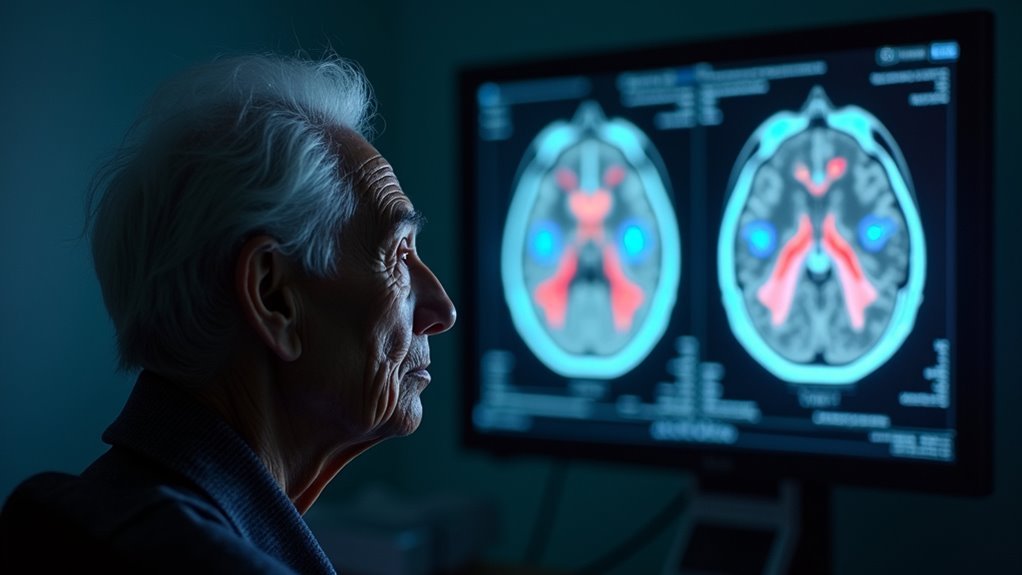

Artificial intelligence is starting to change how clinicians think about Alzheimer’s disease, not only by analyzing brain scans faster, but by surfacing early signals of risk years before most people notice that anything is wrong. That shift matters right now because aging populations, new disease modifying treatments, and strained health systems are all converging on the same pressure point: if society wants therapies to work and care to be affordable, detection has to move earlier, cheaper, and closer to everyday life. Additionally, US public health agencies are exploring generative AI models to improve diagnostic capabilities and health outcomes, highlighting the growing intersection of technology and healthcare.
From late diagnosis to proactive detection
For most of modern medicine, Alzheimer’s disease has been diagnosed late. By the time memory problems were obvious enough to trigger a referral, brain changes had already been accumulating for ten to twenty years. Diagnosis relied on specialist examinations, neuropsychological tests, and sometimes expensive imaging such as positron emission tomography for amyloid or tau, which are out of reach for many people and health systems.
For decades, Alzheimer’s has been recognized only after years of silent brain damage and inaccessible tests.
Over the past decade, biomarker research has transformed the biological definition of Alzheimer’s. The so-called ATN framework classifies individuals by amyloid, tau, and neurodegeneration status, often using amyloid and tau positron emission tomography and structural magnetic resonance imaging. Those tools made it clear that the disease process starts long before dementia, but they have not solved the access problem.
Artificial intelligence has entered this picture as a way to unlock more information from data that are already being collected and to combine signals that no human can easily integrate. Large review articles now document a steady trend: models that combine imaging, cognition, and clinical data generally outperform single data sources for early diagnosis and staging, especially in presymptomatic or very mild disease.
How AI is learning to read the brain
One of the most active areas is structural brain magnetic resonance imaging. Deep learning systems trained on thousands of scans can infer amyloid, tau, and neurodegeneration status from magnetic resonance images alone, approximating what used to require multiple positron emission tomography tracers. Reported performance varies, but several models reach areas under the curve in the range that clinicians already consider useful as decision support, particularly for predicting downstream biomarker status rather than making a stand-alone diagnosis.
Fluorodeoxyglucose positron emission tomography, which measures brain glucose metabolism, has been an especially fertile test bed. A well-known convolutional neural network trained on fluorodeoxyglucose positron emission tomography scans learned to recognize the subtle metabolic patterns that foreshadow Alzheimer’s disease years before clinical diagnosis. On its test set, that model achieved 100 percent sensitivity and 82 percent specificity for predicting Alzheimer’s roughly six years ahead of time, comfortably outperforming standard visual interpretation by nuclear medicine specialists.
Other database-driven approaches analyze regional metabolic patterns in fluorodeoxyglucose positron emission tomography and can distinguish Alzheimer’s disease from other dementia syndromes in close to nine out of ten cases, providing more specific etiologic classification even at early stages. This is particularly relevant in memory clinics where differentiating Alzheimer’s disease from frontotemporal dementia, vascular cognitive impairment, or dementia with Lewy bodies is clinically challenging and shapes treatment and counseling.
Multimodal imaging is pushing things further. Systems that fuse magnetic resonance imaging features with positron emission tomography measures and neuropsychological scores generally deliver better early detection and staging than any single modality alone. In some cohorts, models that combine magnetic resonance imaging with clinical diagnostic data clearly outperform diagnostic data alone when predicting positron emission tomography defined amyloid tau neurodegeneration status, underscoring the value of structural imaging even before major atrophy is visible to the naked eye.
Learning from routine clinical records
If imaging is the visible tip of the iceberg, routine electronic health records are the ocean of data underneath. Large scale studies now show that machine learning can uncover signals of future dementia years before a formal diagnosis, using information that health systems already collect.
A widely cited study on Alzheimer’s disease and related dementias used gradient boosting models on routine clinical data and showed that prediction of dementia zero to five years ahead could reach areas under the curve between about 0.94 at the time of diagnosis and 0.85 five years before diagnosis. These models did not rely on exotic biomarkers, but on diagnoses, medications, and other structured variables that any hospital system has.
Work from the University of California San Francisco took a complementary approach, mining the records of more than five million patients to look for patterns of co-occurring conditions that predict Alzheimer’s disease. By comparing patients who ultimately developed Alzheimer’s with matched controls, researchers built models that could identify who would go on to develop the disease with around 72 percent predictive power up to seven years in advance. Notably, several of the strongest predictors were not classical Alzheimer’s risk factors, highlighting how data-driven approaches can surface overlooked signals in complex populations.
More recent research has begun to look beyond structured fields and toward the free text of clinical notes. Studies of longitudinal electronic health records in United States veterans, for example, used keyword-based features from narrative notes to forecast Alzheimer’s onset up to ten years before diagnosis. Models that leveraged these narrative features consistently outperformed those trained only on structured data, with performance rising as the time window narrowed from a decade to the months preceding diagnosis.
These findings reinforce a key idea. Early signs of cognitive decline and functional change are often documented in fragmented ways in primary care and specialty notes long before anyone writes “Alzheimer’s dementia” in the diagnosis field. Machine learning provides a way to aggregate those weak signals at scale, flag high-risk individuals, and support clinicians in deciding who should get more detailed cognitive evaluation or biomarker testing.
Predicting progression in mild cognitive impairment
Most people who eventually receive an Alzheimer’s diagnosis pass through a phase of mild cognitive impairment, where function is still largely preserved but subtle deficits are detectable on careful testing. Predicting which individuals with mild cognitive impairment will progress to dementia is a critical clinical and research challenge.
Recent work from Cambridge is a good illustration. Researchers built a tool that combines cognitive test results with structural magnetic resonance imaging to distinguish between people whose mild cognitive impairment will remain stable and those who will develop Alzheimer’s disease over a three-year window. The system correctly identified future converters in about 82 percent of cases and correctly identified stable cases in about 81 percent, outperforming currently used clinical tests alone.
Similar approaches across different cohorts report accuracies above 80 percent for forecasting conversion several years in advance, as well as stage classification networks that separate non-dementia, very mild, mild, and moderate Alzheimer’s presentations with very high accuracy in research settings. For clinicians, these tools could support more nuanced conversations about prognosis and help prioritize who should be referred for biomarker testing, more intensive monitoring, or enrollment in clinical trials.
Digital biomarkers and home-based screening
A striking trend in the past few years is how Alzheimer’s risk assessment is leaving the clinic altogether. Digital and behavioral biomarkers are moving screening closer to everyday life, often using devices people already own.
Speech analysis is one active area. Studies have shown that models can pick up early language changes, such as increased pauses, word finding difficulties, or simplified sentence structures, that correlate with mild cognitive impairment and early Alzheimer’s. Similar work applies machine learning to gait patterns, smartphone interaction logs, and passive sensor data, looking for subtle changes in movement, balance, or daily routines that may signal emerging cognitive decline.
At the health system level, one of the most concrete deployments comes from an initiative that layered a short cognitive screener and informant survey into routine care for older adults and then used an artificial intelligence system to triage who needed a full cognitive workup. That combination increased the rate of new Alzheimer’s and related dementia diagnoses by about 31 percent compared with usual care, without adding clinician time or costly tests, essentially creating a zero marginal cost digital detection layer on top of standard workflows. In a recent randomized trial of more than 5,000 older adults in safety net clinics, a Quick Dementia Rating System questionnaire combined with an EHR-based AI passive digital marker raised new Alzheimer’s and related dementia diagnoses by about 31 percent without requiring extra clinician time or paid add-on software.
These kinds of platforms hint at a future where many people encounter early dementia screening not in a specialist clinic, but through primary care portals, community programs, or even consumer applications, with algorithms quietly flagging those who may benefit from further assessment.
Opportunities and risks for technology, business, and society
For technology companies and research organizations, this field is a natural fit. It combines large imaging archives, massive clinical databases, and growing streams of digital behavior data with well-defined prediction tasks and clear clinical endpoints. There is an obvious commercial incentive to build tools that improve trial recruitment, increase diagnostic throughput, or provide reimbursable decision support services for health systems.
Pharmaceutical companies have a particularly strong stake in early detection. Disease modifying therapies for Alzheimer’s are likely to be most effective when given before extensive neurodegeneration, which means identifying eligible patients earlier and with greater precision. Artificial intelligence models that map individuals onto biomarker-based trajectories could help enrich trials for those most likely to progress, reduce sample sizes, and shorten study timelines, which is strategically important in a very costly therapeutic area.
For health systems and payers, the potential benefits are more nuanced. On the positive side, artificial intelligence could help target scarce specialty resources toward those at highest risk, reduce misdiagnosis, and support more equitable access to advanced diagnostics by guiding who truly needs expensive positron emission tomography imaging or lumbar puncture. Early detection also opens a longer window for care planning, lifestyle interventions, and support for caregivers, which can improve quality of life even in the absence of curative treatments.
On the risk side, any tool that predicts disease years in advance raises difficult questions. Models trained on data from academic centers or specific health systems may not generalize well to other populations, especially across different ethnic groups, socioeconomic conditions, or comorbidity patterns. There is real concern that biases baked into historical data could lead to under-detection in communities that already face disparities or over-detection that leads to unnecessary anxiety and testing in others.
There are also clinical and ethical dilemmas. How should clinicians communicate a probabilistic risk score years before symptoms, especially when treatment options are still evolving and false positives are inevitable? What thresholds justify labeling someone high risk, and who decides them? How will insurers react to widespread preclinical risk stratification for a costly neurodegenerative disease? These are not purely technical questions and will require input from clinicians, ethicists, patient advocates, and regulators.
Finally, there is the question of privacy. Models built on narrative clinical notes, smartphone data, or passive sensors need access to very intimate details of people’s lives. Strong governance, transparent data use policies, and robust security will be essential to sustain public trust, particularly if these tools move from research projects into everyday care.
What to watch next
Three directions are likely to define the next phase of this field.
First, expect more rigorous external validation and head-to-head comparisons. Early studies often report impressive performance on single datasets, but the critical test is whether models maintain accuracy across sites, scanners, and populations. Multi-center consortia and prospective trials that embed artificial intelligence tools directly into clinical workflows will be the real proof points.
Second, integration will matter more than any single model. The most impactful systems will probably combine imaging, electronic health records, genetics, cognitive tests, and digital behavior data into unified risk profiles, tuned for different care settings from primary care to specialist memory clinics. Those profiles can then be linked to clear pathways, such as referral for biomarker testing, enrollment in prevention programs, or invitations to research studies.
Third, regulators and professional societies will increasingly shape how these tools are used. Guidance on performance standards, transparency, documentation, and monitoring will determine which models make it into certified clinical products and how liability is shared when predictions are wrong. Professional bodies will also need to update practice guidelines to explain when and how artificial intelligence-based risk tools should influence decisions, so that clinicians understand these systems as aids rather than oracles.
The underlying science is moving quickly, but the core question is simple. Can artificial intelligence help shift Alzheimer’s disease from something that is recognized late and often too late, to a condition that is identified early enough for people to make meaningful choices about treatment, planning, and life itself? How quickly and responsibly health systems move on that answer will shape the next chapter of Alzheimer detection.
Conclusion
Artificial intelligence is pushing Alzheimer diagnosis into a new phase where early warning signs can be seen years before traditional brain imaging or obvious memory problems appear. This shift matters right now because new treatments and prevention strategies depend on catching the disease early enough to change its course.
From late detection to early risk monitoring
For most of the modern era of neurology, Alzheimer’s has been diagnosed relatively late in its trajectory. Clinicians typically relied on noticeable cognitive symptoms, followed by memory tests, structural brain scans, and in many cases invasive procedures such as cerebrospinal fluid analysis or expensive amyloid PET imaging. The amyloid tau neurodegeneration framework became a research gold standard for defining biological Alzheimer’s, but in routine practice many people still received a formal diagnosis only after significant brain damage had already accumulated.
This lag has profound consequences. Once memory loss and daily function are clearly affected, treatments can mostly slow decline rather than preserve the level of brain health that existed years earlier. Families have less time to plan, and researchers struggle to enroll people in trials at the very early stages that matter most for disease modification. Early detection tools have therefore been a longstanding goal, yet for decades they were limited to small specialist centers and narrow biomarker panels.
What is changing now is that AI systems can sift through complex patterns in images, electrical signals, blood, sleep data, speech, and genetics to detect subtle changes that are invisible to human observers but consistently associated with future Alzheimer risk. This shift reimagines Alzheimer’s as a condition that can be monitored longitudinally rather than simply diagnosed late.
New AI tools and biomarkers
Imaging biomarkers beyond the naked eye
One major area of progress is AI analysis of brain scans. Recent work has demonstrated machine learning models that can examine standard MRI images and distinguish mild cognitive impairment or Alzheimer’s with accuracy approaching 93 percent, significantly outperforming traditional visual interpretation. These systems learn fine grained patterns of volume loss, especially in regions such as the hippocampus, amygdala, and entorhinal cortex, which consistently emerge as strong indicators of early disease across age and sex groups.
Intriguingly, researchers found that people in their late sixties and early seventies already showed characteristic volume loss in the right hippocampus, suggesting that structural changes can appear years before full blown clinical dementia and may serve as early imaging biomarkers. Other work is pushing beyond MRI into magnetoencephalography, where AI models trained on cortical activity features achieve around 83 percent classification accuracy for early stage Alzheimer with high specificity and an area under the curve near 0.91. These models pick up shifts in theta and alpha band power in temporo parietal regions and altered frontally driven networks that reflect early disruption of brain connectivity before overt atrophy.
At the same time, there is growing recognition of the limitations of imaging AI. Studies of AI assisted computer aided diagnosis tools for Alzheimer using structural MRI show that these models can incorrectly classify some patients as healthy when their brains display atypical resilience or nonstandard structural patterns. Researchers highlight that a negative AI MRI result does not rule out the disease and warn against overreliance on a single modality, especially in subgroups with unusual presentations.
Sleep and electrophysiology as early windows into the brain
Another frontier involves using AI to analyze brain electrical activity during sleep. A team in Spain recently combined overnight polysomnography data with cerebrospinal fluid biomarker measurements and showed that machine learning models can identify early neural alterations and cluster patients into three distinct biological subgroups of Alzheimer’s. By linking nocturnal brain wave patterns to levels of key proteins such as beta amyloid, phosphorylated tau, total tau, and neurofilament light chain, the algorithm revealed that the disease manifests different signatures even in its earliest stages.
This kind of work points toward a future in which quantitative sleep EEG might serve as a noninvasive screening tool, helping clinicians flag people who appear biologically on an Alzheimer’s trajectory while they are still cognitively intact or only mildly affected. It also reinforces a broader trend in neurology and psychiatry where continuous physiological monitoring is becoming central to understanding subtle changes in brain health.
Blood, genomics, and novel biomarker classes
Blood based biomarkers have transformed research in recent years, and AI is accelerating that transformation. A notable example is work on fragmentomics, where an AI model trained on blood samples for Alzheimer detection was carefully opened up using interpretability methods to understand which features drove its decisions. The analysis revealed that patterns of DNA fragment length, rather than only traditional protein markers, dominated the model’s signal, leading the team to define fragmentomics as a novel biomarker class for Alzheimer’s detection.
When this insight was distilled into a simpler classifier using only fragment length features, the model achieved an area under the curve around 0.78, and a combined model that integrated fragmentomics with previously known biomarkers reached about 0.84 while still generalizing well to an independent cohort. This is a concrete example of how interpretability is not just a transparency slogan but a practical tool for discovering new biology that could eventually be tested in larger clinical studies.
Large scale initiatives are now investing heavily in AI driven genomic analysis for Alzheimer’s. One project funded by the National Institutes of Health commits around 12.5 million dollars over five years to use machine learning to mine vast stores of genomic, biomarker, and cognitive data for risk patterns across diverse populations. A related effort known as AI4AD2 is developing genomic language models inspired by natural language processing systems, but instead of analyzing words these models examine DNA sequences to identify combinations of genetic changes linked to disease onset, progression, and key biomarkers.
At the community level, researchers are exploring AI enabled screening approaches that rely on convenient biospecimen collection. One recent protocol proposes at home saliva kits for genetic and epigenetic testing, combined with finger stick blood samples to measure phosphorylated tau 217, an established marker of Alzheimer’s pathology, all fed into AI models that integrate remote monitoring data and established digital platforms. This work builds on earlier projects such as RADAR AD that evaluated multiple remote technologies for early detection in real life settings.
Digital and speech based signals
Beyond classical medical tests, digital biomarkers are gaining traction. A recent bibliometric and scoping review examined more than four hundred studies and highlighted eighty six AI models focused on digital markers of Alzheimer’s and related dementias. The authors point to future directions that include multimodal studies, home based testing, large scale longitudinal cohorts, consumer grade devices, open datasets, and more advanced algorithms that can operate in everyday environments rather than only in specialized clinics.
One particularly promising stream uses large language models to analyze speech. A method based on paired perplexity applied to conversational transcripts has demonstrated improved accuracy in detecting signs of Alzheimer’s compared with earlier approaches and with top systems from benchmark challenges, achieving gains of several percentage points over prior best results. For families, this suggests that simple recorded speech could one day complement imaging and blood tests as a fast way to flag potential cognitive decline, especially when integrated with other streams of data in a comprehensive risk model.
What this means for healthcare, businesses, and society
If AI tools can reliably flag subtle brain changes and risk patterns years before a clinical diagnosis, Alzheimer’s moves from a condition discovered late to one that can be monitored proactively, sometimes in the background of routine life. Earlier identification opens real and practical windows for timely interventions, including lifestyle changes, aggressive cardiovascular risk management, enrollment in preventive or early treatment trials, and psychosocial support tailored to individual risk profiles.
From the perspective of drug development, richer and earlier biomarkers make it easier to recruit trial participants who truly reflect the biological stage targeted by a therapy. Work on AI driven MRI biomarkers in people treated with drugs such as lecanemab shows that baseline features like preserved gray matter volume are associated with reduced cognitive decline, while microhemorrhage burden is linked to higher risk of imaging abnormalities, supporting automated stratification of patients into different treatment risk categories. Pharmaceutical companies can use these tools to design more informative studies, while regulators gain better data on who benefits and who may be harmed.
Health systems stand to benefit from more precise triage. Imaging AI that automatically flags concerning patterns in routine MRI scans could help radiology departments identify at risk patients earlier and ensure that neurologists see the right people at the right time. Sleep based and digital biomarkers could shift part of assessment into the home, freeing clinic time and making monitoring more continuous rather than episodic. For insurers and payers, the promise is more targeted coverage where expensive tests and treatments are reserved for those most likely to benefit, though this also raises difficult questions about fairness and rationing.
The technology industry is already responding. Digital health companies are building platforms that combine phone based cognitive tests, passive monitoring from wearables, and periodic biospecimen collection, all analyzed by AI to produce risk scores and trend reports. Consumer device makers are exploring how existing sensors in watches, earbuds, and home assistants might feed into early dementia detection models, as suggested by the emphasis on consumer grade devices and home based monitoring in recent digital biomarker reviews. These developments create new markets but also new responsibilities around data stewardship and clinical validation.
Risks, limitations, and the need for guardrails
Despite the energy in this field, there are serious risks that demand attention. False negatives from AI models, especially those trained on narrow datasets or applied to people with atypical brain resilience, can provide dangerous reassurance to patients who actually have early disease. False positives, meanwhile, can trigger anxiety and potentially inappropriate treatments or insurance decisions, particularly if algorithms are treated as black boxes without contextual interpretation by experienced clinicians.
Data bias is another central concern. Many current biomarker datasets overrepresent specific populations, often people in wealthier countries with access to advanced imaging and research clinics. If AI systems are trained on these cohorts and then deployed globally without adjustment, they may perform poorly in underrepresented groups, compounding existing inequities in dementia care. Recent reviews of AI for Alzheimer biomarkers repeatedly stress the importance of diverse training data, rigorous external validation, and large longitudinal studies that capture how risk signals evolve over time in different communities.
Privacy and consent issues loom large as well. Sleep recordings, detailed brain scans, speech data, and genomic sequences are intensely personal. Embedding AI into consumer devices and remote monitoring programs raises questions about who owns these data, how they are used, and how they might be shared or monetized by third parties. Trusted deployment will require strong governance frameworks, clear patient control over data sharing, and strict limits on nonclinical use, especially in contexts like employment or insurance underwriting.
Interpretability offers a partial antidote. The fragmentomics example shows that when researchers interrogate AI models rather than simply accepting their predictions, they can uncover new biologically meaningful features and better understand why a system flags someone as high risk. This kind of insight can support more transparent communication with patients and regulators, and can guide follow up laboratory work that either confirms or refutes the AI suggested biomarker. But interpretability techniques themselves are still evolving, and not every complex model will yield neat human understandable rules.
Finally, the global nature of Alzheimer’s demands equitable access. Initiatives like the NIH funded AI biobank projects are encouraging, but much of the world lacks basic infrastructure for advanced imaging, comprehensive sleep studies, or large genomic analyses. Early detection tools that work only in well resourced settings risk widening the gap between those who receive state of the art prevention and those who continue to be diagnosed late, if at all.
Key takeaways and what to watch next
Taken together, current research makes a persuasive case that AI can pick up early Alzheimer signals in brain structure, brain activity, sleep physiology, blood chemistry, speech patterns, and genetic sequences long before traditional clinical pathways would typically label someone as having dementia. When these tools are carefully validated and combined with human expertise, Alzheimer’s shifts from a late detected condition to one that can be monitored proactively, opening opportunities for earlier intervention, more targeted trials, and better support for patients and families.
The next few years will be decisive. Expect more multimodal systems that fuse imaging, biospecimens, digital behavior, and genetics into unified risk scores, more home based testing using consumer devices, and more emphasis on interpretability to translate AI findings into actionable clinical guidance. Equally important will be the less glamorous but essential work of building large open datasets, running long term studies in diverse populations, and crafting regulations that balance innovation with safety and fairness.
If those pieces come together, AI will not magically cure Alzheimer’s but it can help societies move from reactive crisis management to proactive brain health monitoring that respects both scientific evidence and human experience. In the meantime, close attention to rigorous validation, ethical guardrails, and real world feedback from patients and clinicians will determine whether these tools become genuinely trusted components of dementia care rather than another wave of unfulfilled promises reddit





1 comment
Comments are closed.