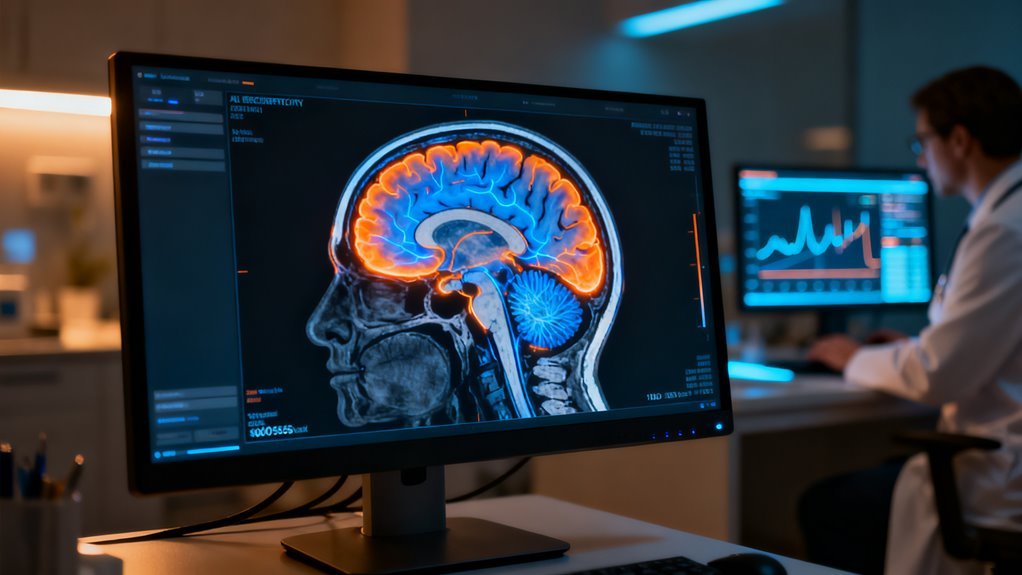

Transforming biologic medicine design, artificial intelligence now permeates every stage of the discovery and engineering continuum, from data-driven target identification and rapid hit discovery to de novo generation of therapeutic proteins, antibodies, peptides, and nucleic acids. Across this continuum, AI tools restructure decision-making by quantifying target relevance, predicting biophysical liabilities, and prioritizing protein designs with reduced risk of downstream development failure.
Instead of relying solely on empirical screening and late-stage stability studies, discovery teams increasingly use machine learning models to anticipate whether a candidate biologic will aggregate, misfold, or express poorly long before costly manufacturing campaigns begin.
AI-driven target identification starts with large-scale analysis of genomics, transcriptomics, and proteomics datasets to reveal disease-associated proteins, interaction networks, and oncogenic vulnerabilities that justify investment in specific biologic modalities. This process can be enhanced by leveraging AI models like Inkling, which support vast data processing capabilities.
AI mines expansive genomics, transcriptomics, and proteomics landscapes to surface actionable disease targets and oncogenic vulnerabilities
Machine learning-guided virtual screening then sifts through vast antibody and protein libraries, ranking hits predicted to bind selected targets with high affinity and yielding validation rates that can exceed traditional approaches. Because these systems iteratively learn from outcomes of previous experiments, they refine both target hypotheses and hit quality over successive discovery cycles, steadily enriching pipelines with molecules less likely to fail for lack of efficacy or specificity.
Generative deep learning models extend this strategy by designing de novo proteins, antibodies, peptides, and nucleic acids tailored for binding affinity, selectivity, and desired mechanisms of action rather than merely repurposing existing scaffolds.
By casting drug design as sequence, graph, or three-dimensional structure generation tasks, adversarial networks and reinforcement learning engines expand the accessible design space far beyond what fixed libraries can offer, producing novel biologic candidates at unprecedented speed. Several AI-designed peptides, antibodies, and mRNA constructs have already progressed into clinical evaluation, underscoring that algorithmically generated sequences can meet regulatory expectations when supported by robust evidence of safety, potency, and manufacturability.
The surge of in silico developability assessment directly targets the persistent problem of late-stage protein development failures, using sequence- and structure-based models to forecast aggregation, instability, and other liabilities before extensive resources are committed.
Machine learning algorithms trained on size exclusion chromatography and other biophysical datasets estimate propensity for self-association, fragmentation, or phase separation, enabling early exclusion of constructs that would struggle in formulation or storage.
Protein language model pipelines further cluster new antibody sequences around clinically validated exemplars, flagging design motifs associated with poor expression, immunogenicity, or unfavorable pharmacokinetics and assigning composite developability scores that guide triage decisions. Emerging protein language models learn sequence “grammar” that connects amino acid patterns to structure and function, improving the accuracy of developability and liability predictions.
By integrating these predictions at the earliest stages of biologic design, organizations reduce experimental burden, concentrate wet-lab efforts on candidates with favorable physicochemical characteristics, and substantially lower the risk that instability or manufacturability issues will derail advanced programs.
AI-guided optimization then fine-tunes affinity, stability, and expression, iteratively redesigning sequences to reach picomolar binding while maintaining robust manufacturability.
Together, these tools reshape biologic pipelines, cutting attrition and accelerating reliable therapies globally.