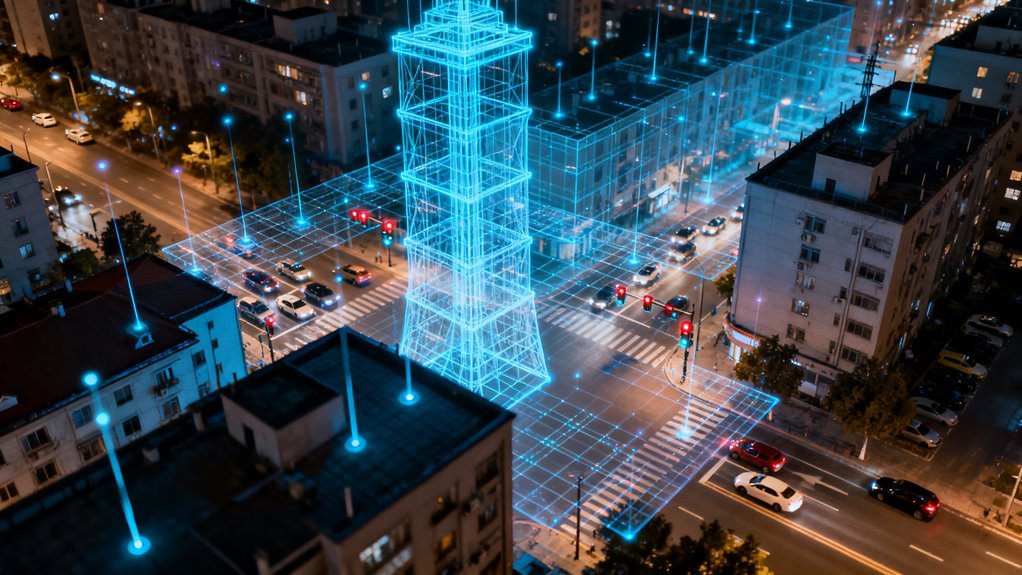

At the core of these city twins is a dense fabric of data, connected devices and AI models that work together as a kind of urban nervous system. Sensors in roads, utilities and public spaces, along with feeds from drones, vehicles, mobile phones and control rooms, stream measurements into shared city information models. Those inputs are organized through conceptual schemas and databases so that traffic flows, energy consumption, flood levels, service usage and hundreds of other signals can be read as one coherent picture rather than a collection of siloed dashboards. In practice, this shared fabric underpins real-time virtual models of critical urban systems, allowing cities to simulate, predict and optimize operations across transportation, energy, healthcare and public safety before changing anything in the physical world.
On top of this data layer, advanced visualization tools turn the numbers into cyber physical replicas that planners, engineers and operations teams can explore in three dimensions and from multiple timelines, watching the twin respond almost immediately when something changes in the streets outside. Once that detailed digital fabric is in place, predictive analytics begin to matter more than simple monitoring. Continuous data streams feed AI models that look for patterns in congestion, resource bottlenecks, infrastructure stress and safety risks before those problems show up as public complaints or outages. The same models can forecast where urban heat islands will intensify, how air quality might deteriorate during a heat wave, which neighborhoods are most vulnerable to flooding and which assets are likely to fail next. Additionally, the integration of AI-powered digital twins enhances the ability to personalize urban interventions before implementation, leveraging insights from AI conversations that indicate how to best address community needs. This proactive approach to urban management is crucial as AI risks are categorized alongside other national security concerns, emphasizing the growing importance of AI governance.
Simulations of how bridges, grids, drainage systems or transit lines behave under different loads guide maintenance schedules and upgrade plans. This shifts city management from reactive fixes and emergency repairs to planned interventions that reduce unplanned downtime and make services more reliable.
The most powerful use cases are emerging in sector-specific city twins that focus on particular systems while still connecting to the broader urban model. Transportation twins simulate vehicle flows, public transit usage and pedestrian movement, then test new signal timing, lane changes or road closures before they touch the physical network.
Energy twins coordinate generation, storage and distribution, balancing demand minute by minute and probing how different policies or pricing schemes would affect emissions and costs. Similar twins are taking shape for water supply, waste management and emergency response, each tailored to the operational realities and stakeholders of that domain.
Inside these environments, AI agents are starting to behave less like passive analytic tools and more like active participants in governance. They run scenarios, compare policy options, flag unintended consequences and in some cases trigger automated responses, such as adjusting lighting, rerouting traffic or modulating grid loads.
That positions the urban digital twin as a piece of core infrastructure for the next generation of smart cities. It becomes the place where mayors, utilities, developers and citizens can see the impact of decisions before they are built into concrete and code. Over the next several years, the cities that treat these twins not as glossy visualization projects but as decision systems will be the ones that move from vague notions of being smart to genuinely data-guided management that is visible, testable and accountable.
Conclusion
As AI infused digital twins mature from glossy demos into core civic infrastructure, cities start to develop an early warning sense for stress before it becomes visible, whether that stress sits in hairline cracks in a bridge, storm drains approaching overflow or traffic patterns on the brink of gridlock. Continuous data flows from sensors, satellites and public systems turn the urban fabric into a measurable, testable environment where officials, utilities and private operators can trial new policies, pricing schemes or emergency responses in simulation rather than by experimenting on millions of residents. That shift from reacting after the fact to rehearsing futures in advance will not only reshape how risk is modeled and insured, it will influence where capital flows, which neighborhoods get upgraded first and how citizens experience everything from commutes to heat waves. The open question is who gets to steer these models and on what terms, because in practice the entities that control the twin and its assumptions will quietly gain leverage over zoning fights, infrastructure priorities and even political narratives about what is possible for the city.