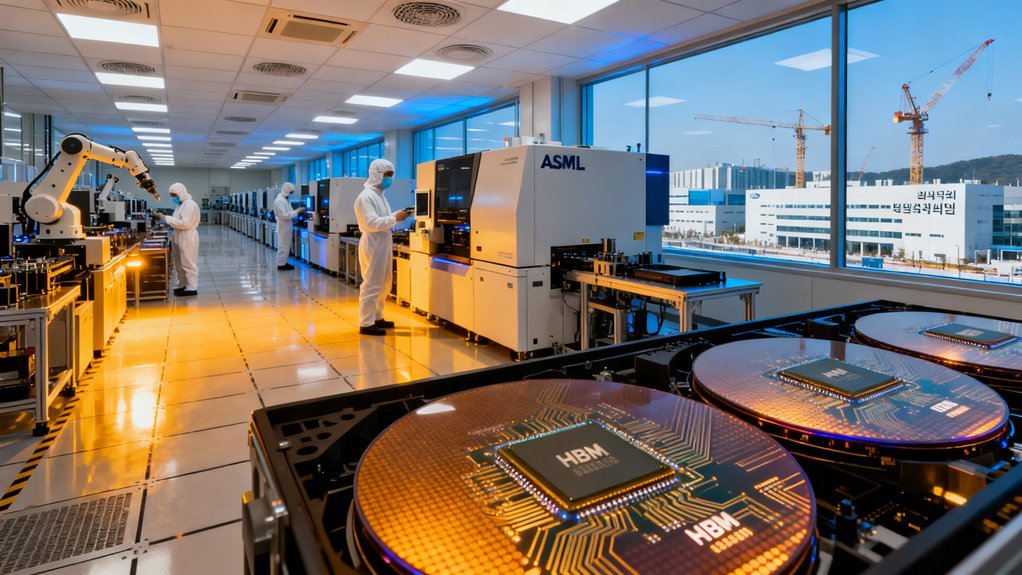

The artificial intelligence boom that has reshaped data center investment is now reverberating through the global smartphone industry, as surging demand for high-bandwidth memory pulls manufacturing capacity away from consumer devices. Hyperscaler spending on AI infrastructure climbed from roughly $217 billion in 2024 to approximately $360 billion in 2025, with projections reaching $650 billion in 2026. That capital is flowing directly into AI accelerators bundled with large memory allotments, concentrating consumption among a small group of technology firms and leaving diminishing supply for smartphone manufacturers.
Samsung Electronics, SK Hynix, and Micron collectively control more than 90% of global memory output. All three have redirected fabrication capacity toward high-bandwidth memory and advanced server DRAM, which carry notably higher margins than the standard mobile DRAM and NAND used in consumer devices. Long-term supply contracts with major AI customers have locked in future capacity, reducing the flexibility these manufacturers have to serve smartphone OEMs.
Shifting production lines toward complex, high-capacity chips also extends manufacturing cycles, making rapid output adjustments for commodity memory difficult. The supply constraints have triggered severe price movements across memory categories. Spot prices for certain DRAM types have surged nearly 700% year-over-year, and RAM and NAND prices for consumer electronics have risen sharply in parallel.
Analysts and industry executives project that memory price inflation will persist through at least 2026 to 2027 given current AI demand trajectories. Market research firms have characterized the situation as an unprecedented crisis, with some using terms such as “RAMageddon” to describe the scale of the imbalance between supply and demand.
For smartphone brands, the consequences are direct and measurable. Rising memory costs increase bill-of-materials expenses, compressing margins and pressuring OEMs to cut costs elsewhere in their hardware designs to maintain target retail price points. Where cost absorption is insufficient, manufacturers pass increases to consumers, eroding device affordability particularly across price-sensitive markets in Asia.
Some brands have publicly announced production reductions in anticipation of limited DRAM availability, as disclosed during semiconductor and handset earnings calls. The cumulative effect on shipment volumes is considerable. Global smartphone shipments in 2026 are projected to fall to their lowest level in approximately 13 years, with DRAM and NAND shortages identified as primary contributing factors.
OEMs have responded by delaying model launches, extending refresh cycles, and concentrating available memory supply on higher-margin flagship devices rather than volume-driven mid-range and budget segments. The structural nature of the demand shift — driven by large model training and inference workloads that require vast high-speed memory capacity — suggests the pressure on consumer device supply chains is not a temporary imbalance but a sustained reorientation of how the global memory industry allocates its output. Users encountering access disruptions when researching these developments online are advised to contact support team and include any provided reference ID to resolve verification issues promptly.