
Verizon’s latest moves in AI infrastructure mark a turning point for both the company and the broader telecom sector. Over one billion dollars in new dark fiber investment tied to Google, plus a formal AI Connect strategy for hyperscalers and enterprises, show Verizon is betting that the next wave of artificial intelligence will be won not only in data centers but in the connective tissue that links them together.
Why Verizon’s AI Push Matters Now
Artificial intelligence workloads are shifting from experiments in isolated clouds to production systems that span regions, providers and devices. That shift requires enormous, predictable bandwidth, very low latency, and the ability to steer traffic dynamically as models grow and evolve. This aligns with Microsoft’s commitment to enhance AI capabilities through strategic partnerships and infrastructure investments.
AI is escaping isolated clouds, demanding vast, predictable bandwidth and ultra-low latency across providers, regions, and devices
Verizon is positioning its network as an AI backbone that can offer exactly that combination and in the process create new revenue streams beyond traditional consumer connectivity.
At the same time, hyperscalers like Google are racing to expand AI data center capacity and interconnect those facilities with dedicated fiber rather than relying on the open internet. Verizon’s dark fiber deal with Google, worth more than one billion dollars, is one of the clearest signs that telecom carriers are now central suppliers in the AI infrastructure boom rather than just last mile access providers.
From Phone Lines To Programmable Transport For AI
To understand why AI Connect is significant, it helps to look at how Verizon’s network has evolved. Over the past decade, Verizon has invested heavily in dense metro and long haul fiber to support 4G and 5G mobile services, enterprise connectivity and its own Fios footprint.
Those fiber builds laid the groundwork for today’s AI-focused strategy. Launched in January 2025, AI Connect is presented as an expanded AI strategy for hyperscalers, cloud providers and global enterprises that can manage resource-intensive workloads at scale.
AI Connect formalizes a model in which Verizon’s backbone acts as a programmable transport layer between centralized cloud training sites and distributed edge inference locations. The company describes this as a layered architecture, with centralized hyperscale clouds at the top, Verizon’s fiber in the middle, and edge computing plus public and private 5G at the user end.
Several elements stand out in that design.
- Metro access build outs and existing Fios and incumbent local exchange footprints give Verizon dense presence in urban areas where many enterprises and data centers already operate.
- Lit and dark fiber services allow customers to choose between managed capacity and raw strands they can light themselves, which is attractive to hyperscalers that want full control over optical gear.
- Network programmability, highlighted in the AI Connect portfolio, is intended to let customers shape traffic flows for different AI workloads rather than treating connectivity as a static pipe.
In practical terms, Verizon is trying to turn its traditional transport network into an AI optimized fabric that can be configured, monitored and monetized at a much finer level of detail than typical broadband services.
The AI Connect Strategy And Partner Ecosystem
AI Connect is both a marketing umbrella and a concrete product suite. Verizon describes it as a way to manage resource-intensive AI workloads at scale, with offerings that combine backbone connectivity, data center colocation and edge computing.
The company has emphasized hyperscalers as early anchor customers. Google Cloud and Meta are already using additional capacity from Verizon to support AI workloads, including dark and lit fiber routes that tie together their data centers.
Verizon is also partnering with Nvidia and Vultr among others to integrate GPU-based platforms into private 5G networks and extend AI support capabilities to more regions and customer types.
Importantly, Verizon is positioning itself as an infrastructure host and connectivity provider, not an AI application vendor. In its AI Connect material, the company focuses on offering power, space and cooling for GPU clusters in its facilities and on exposing network capabilities that partners and enterprises can use to run their own AI stacks.
This is consistent with a telecom-focused business model and avoids direct competition with the hyperscalers on software.
There are geographic limits however. Verizon notes that AI Connect is not available outside the United States, which reflects both regulatory and asset-based constraints and suggests that international expansion would require additional investment or partnerships.
The Google Dark Fiber Deal As A Signal Event
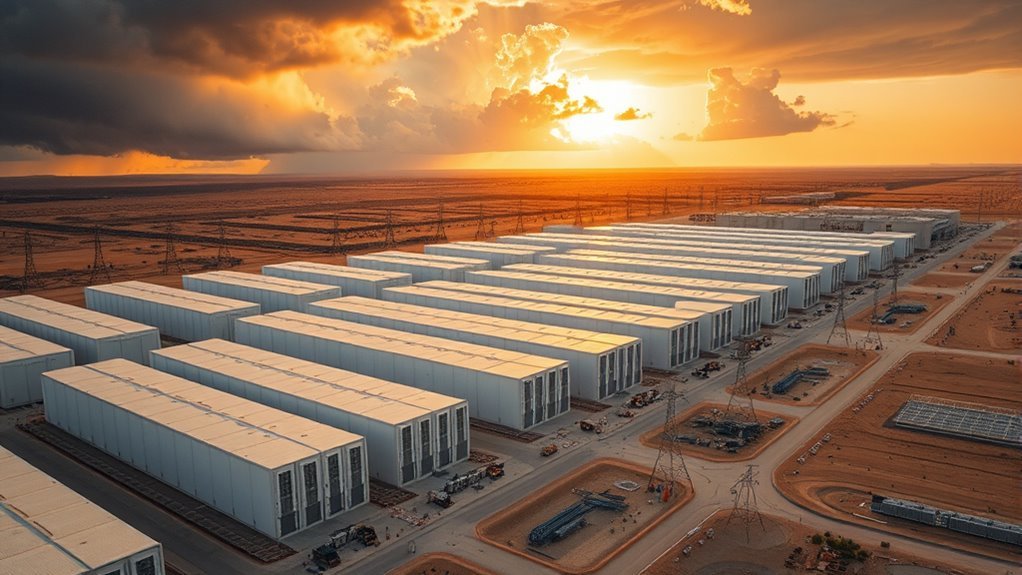
The dark fiber agreement with Google, valued at more than one billion dollars, is arguably the clearest proof point that Verizon’s AI infrastructure thesis is resonating with major cloud providers. Under the deal, Verizon will supply dark fiber connectivity linking Google’s data centers across regions, supporting AI data center builds, compute clusters and regional network connectivity.
Several aspects make this noteworthy.
- Size and duration. The contract value of more than one billion dollars places it among Verizon’s largest enterprise connectivity agreements in recent years, with a multiyear structure implied even though specific term details have not been disclosed.
- Strategic timing. Verizon announced the deal alongside quarterly results and highlighted that additional AI infrastructure contracts could be signed before year-end, potentially generating multiple billions of dollars in revenue over the coming years.
- Business model shift. Management has framed this as the start of new incremental revenue streams tied directly to AI infrastructure, which will begin to appear in financial results starting next year and build on a broader turnaround in wireless and broadband performance.
This is not simply more fiber leasing. It is Verizon explicitly using its national long haul and metro fiber assets to connect AI data centers as a higher margin, strategically central business, moving the company further into the core of the AI supply chain.
Edge Data Centers And AI Inference Closer To Users
A key part of Verizon’s narrative is that AI is not only about training massive models in a few cloud regions but also about deploying those models for inference close to where data is generated and decisions are needed.
To support that, Verizon is retrofitting thousands of central offices that previously hosted copper network equipment and turning them into edge data centers.
These edge facilities are aligned with Verizon’s 5G and fiber networks so that AI inference can run closer to end users and industrial devices. That should reduce latency and improve performance for real-time applications such as computer vision in factories, smart city analytics, or low latency customer experiences over mobile networks.
Verizon’s work with Nvidia is directly aimed at this edge opportunity. By integrating Nvidia GPUs into private 5G services and mobile edge compute, Verizon can offer on-premises AI capabilities to enterprises that need secure, local processing rather than sending all data to a distant cloud.
The strategy effectively tries to turn old copper era real estate into modern AI edge nodes. This is a classic telecom move, but the workload profile and hardware requirements are very different from traditional voice and broadband, which introduces both opportunity and operational complexity.
Historical Context And How This Differs From Past Telco Bets
Telecom carriers have attempted to ride previous technology waves, from content delivery to cloud hosting, often with mixed success. Many of those initiatives struggled because telcos tried to build full stack platforms or consumer services far from their core strengths.
Verizon’s AI Connect approach is more focused. Instead of competing with hyperscalers on platforms, Verizon is monetizing its fiber and colocation assets directly, selling dedicated high capacity routes and data center space to AI data center operators and large enterprises.
Analysts have noted that these dedicated AI connections represent a higher margin business than standard consumer broadband, because they are tailored, contract-based and mission-critical.
Another difference is the emphasis on programmability and measurement. In the past, connectivity was largely sold as fixed bandwidth. AI workloads however can be bursty, multi-region and sensitive to jitter.
Verizon’s insistence on making the network programmable and measurable is a recognition that enterprises and hyperscalers now expect cloud-like control over transport, not just raw capacity.
Compared with earlier generations of network upgrades around 4G or video streaming, AI infrastructure demands a more intimate pairing of compute and connectivity. That is why Verizon is weaving together backbone fiber, colocation facilities, edge data centers and private 5G rather than treating them as separate businesses.
Implications For Technology And Businesses
For hyperscalers such as Google, a deep infrastructure partnership with Verizon offers a way to embed AI services directly into the connectivity fabric they already rely on worldwide.
Dark fiber between data centers gives Google greater control over performance and security, while reducing dependence on third-party transit providers for critical AI traffic.
For large enterprises, AI Connect promises more predictable connectivity between their sites, edge locations and cloud providers, with options to place AI hardware in Verizon facilities or consume GPU resources from partners integrated into Verizon’s footprint.
This can simplify architecture decisions for companies that want to deploy AI but do not want to build or manage their own nationwide fiber networks or data centers.
Technologically, the shift to a programmable AI backbone means network decisions increasingly become part of AI system design. Model architects will need to think about where training and inference occur, how traffic moves between sites, and how to use network observability to troubleshoot performance issues.
Verizon’s offerings implicitly assume that connectivity will be co-designed alongside models and applications.
Economically, if Verizon succeeds in signing multiple similar deals, AI infrastructure could become a meaningful new revenue pillar that is less cyclical than consumer mobile and more closely tied to long-term enterprise and cloud growth.
Verizon management has already indicated that additional AI infrastructure agreements may generate multiple billions of dollars in revenue over coming years.
Risks, Limitations And Open Questions
There are clear risks and uncertainties in this strategy.
- Competition. Verizon is not the only provider of long haul and metro fiber in North America, and hyperscalers already work with multiple carriers and fiber specialists. The company will need to differentiate through reliability, programmability and integration with edge compute rather than price alone.
- Capital intensity. Building new route miles, retrofitting central offices into edge data centers and integrating GPU platforms all require substantial capital. This comes on top of ongoing 5G and broadband commitments, so execution and financial discipline will be critical.
- Geographic limit. The current focus on the United States means AI Connect does not yet address global connectivity needs for multinational customers, leaving room for rivals with more international footprint.
- Technical complexity. Running high density AI hardware at scale demands advanced power and cooling, as well as sophisticated operations to manage workloads, failures and upgrades.
Verizon’s history in data centers is more limited than that of some hyperscalers, so building and maintaining this capability will take time and expertise.
There is also a question of how deeply Verizon will integrate with specific AI platforms. Its collaboration with Google Cloud already extends to customer care applications and generative AI tools that support Verizon’s own operations, showing that the relationship goes beyond pure connectivity.
Balancing that kind of application level partnership with a neutral infrastructure provider stance will require careful governance.
What To Watch Next
Several concrete milestones will show whether Verizon’s AI infrastructure bet is paying off.
- The scale and diversity of future AI infrastructure deals. Verizon has signaled that the Google agreement is the first of several expected contracts, with the potential for multiple billions in additional revenue. The identities of those partners and the mix of dark versus lit fiber will reveal how broadly AI Connect is resonating.
- Progress in edge data center retrofits. Turning thousands of central offices into AI capable edge sites is ambitious. Evidence of live customer deployments for AI inference at those locations will be a key validation.
- Deeper integration with partners such as Nvidia, Vultr, Google Cloud and Meta. The more that GPU platforms and cloud services are tightly coupled with Verizon’s network, the stronger the overall AI ecosystem around AI Connect becomes.
- Expansion beyond the United States. Over time, multinational customers will likely push for similar capabilities in other regions. How Verizon addresses that demand, possibly through partnerships or joint ventures, will shape its global role in AI infrastructure.
The core takeaway is that Verizon is trying to reinvent its network as an AI backbone rather than a generic transport system.
By aligning fiber, data centers, edge compute and private 5G around the needs of hyperscalers and enterprises, the company is seeking to become a foundational player in the AI economy.
The Google dark fiber deal gives that vision real financial weight, but sustained execution and careful balancing of risk and opportunity will determine whether Verizon’s AI Connect becomes central infrastructure for the next generation of generative and real-time AI or remains a promising but partial step in a rapidly evolving market.
Conclusion
Verizon’s more than one billion dollar infrastructure deal with Google is a clear signal that telecommunications is entering a new phase where connectivity to artificial intelligence data centers becomes as strategic as mobile service ever was. In a world where training and inference workloads are exploding, the companies that own dense fiber and programmable networks are quietly turning into the landlords of the AI economy.
Why this Verizon Google deal matters right now
Verizon has signed a dark fiber agreement with Google worth more than one billion dollars to link Google data centers and support AI workloads across long haul and metro routes. The contract is structured as a multiyear infrastructure deal, and Verizon expects it to be the first in a series of AI focused connectivity agreements that could collectively generate multiple billions of dollars in revenue over the coming years. On the earnings call where the deal was announced, management framed it as a cornerstone in Verizon’s turnaround story and a tangible way to monetize assets that had previously been underused.
What makes the timing important is the broader rush by hyperscalers to add capacity for AI training clusters and inference oriented data centers. The buildout requires enormous amounts of high capacity fiber to connect data centers and regions, and many cloud providers would rather buy or lease that connectivity than build it themselves. Verizon’s agreement with Google shows that major telecom operators are ready to step into that role as infrastructure partners instead of competing head to head in the AI application layer.
How we got here: telecom and the rise of AI infrastructure
For most of the past decade, telecom operators experimented with consumer facing AI services, digital media products and cloud solutions, often with mixed results. The core network remained profitable but growth was sluggish, and investors questioned whether large carriers could create differentiated software platforms. Verizon’s strategic shift toward AI connectivity builds on a recognition that its strongest competitive advantage lies in network depth rather than consumer applications.
The company has spent years densifying fiber through its One Fiber program, including an acquisition of Frontier Communications that expanded reach to more than thirty million homes and businesses in the United States. At the same time, Verizon Business has been deploying private fifth generation networks for enterprises and pairing them with edge computing to support real time applications and emerging AI inference workloads. Those investments laid the groundwork for current AI focused deals, even if they were originally justified by more traditional cloud and mobility use cases.
Verizon has also articulated a broader AI strategy under the Verizon AI Connect brand, a suite of products designed to serve hyperscalers, cloud providers and global enterprises with capacity for AI workloads at scale. Google Cloud and Meta are already using Verizon’s expanded capacity to support their AI needs, which made deeper infrastructure cooperation with Google a natural extension rather than a sudden pivot. In parallel, Verizon is targeting Level four network autonomy by embedding generative AI and frontier language models such as Anthropic Claude into its internal operations, with the goal of making networks more predictive and self optimizing. All of this frames the Google dark fiber agreement as part of a multi year evolution rather than a one off deal.
The core of the deal: dark fiber, data centers and edge
Under the agreement with Google, Verizon will provide dark fiber to connect Google data centers, leveraging its long haul and metro fiber assets across the United States. Dark fiber refers to strands of fiber that are not yet lit with transmission equipment and therefore can be configured by the customer to meet specific capacity and performance needs. For AI workloads, which often require extremely high bandwidth and low latency between training clusters and inference endpoints, owning or controlling dark fiber gives cloud providers flexibility to tune their networks without relying on shared transport.
Verizon plans to supply a mix of dark and lit fiber depending on customer requirements, which allows the company to sell both wholesale capacity and managed connectivity services. In addition to connecting core data centers, Verizon is retrofitting thousands of central offices where copper networks are being decommissioned and turning them into edge data centers for AI inference applications that require low latency. That move extends the usefulness of legacy infrastructure while placing compute closer to users and devices, a key requirement for real time AI services in areas such as industrial automation, video analytics and connected vehicles.
From an architectural perspective, Verizon describes the AI economy as a layer cake. Hyperscale training runs in centralized clouds. Metro and long haul fiber provide the transport and orchestration layer. Inference occurs at the edge over public and private fifth generation networks, often coupled with on premises or near premises compute. In that model, the connectivity layer is not a commodity transport service but an actively orchestrated fabric that needs to respond in real time to application demands, quality of service guarantees and dynamic routing for cost and performance optimization.
Monetizing fiber and diversifying beyond traditional telecom
The Google deal shows a concrete way for Verizon to monetize its long haul and metro fiber holdings through dark fiber agreements rather than relying only on retail broadband and mobile subscriptions. The agreement is structured as a long duration connectivity contract with a technically demanding customer, which management highlighted as a more stable and predictable revenue stream compared with consumer services that are exposed to price competition and churn. On the day of the announcement, Verizon shares rose around three to four percent, and the company raised its annual adjusted profit forecast, underscoring investor confidence that AI infrastructure connectivity can support the turnaround narrative.
By repositioning itself as a connectivity provider for hyperscale AI data centers, Verizon is diversifying revenue beyond traditional telecom and into a form of infrastructure leasing. In practice, this is similar to how tower companies and data center operators earn recurring rents from long term contracts. Fiber operators that secure anchor tenants such as Google for large dark fiber deployments can build a base of stable cash flows that are less tied to consumer cycles.
Verizon’s broader guidance emphasizes wireless internet for the AI era, including network slicing for data intensive workloads, enterprise fifth generation deployments and neutral host models for venues such as stadiums and campuses. When combined with the AI Connect suite and plans for autonomous networks, the company is attempting to position its entire network as an intelligent programmable resource for AI applications, rather than a static transport layer. The Google dark fiber agreement can be seen as the first high profile validation of that strategy.
Telecom as foundational landlord of the AI economy
The deeper implication of this development is a shift in the role of telecommunications within the digital ecosystem. Instead of trying to compete directly in the volatile application layer of AI, where models and interfaces change quickly and winner takes most dynamics often prevail, Verizon is opting to become a foundational infrastructure landlord. In this role, the company sells capacity, reliability and geographic reach to cloud providers and enterprises that are building AI services on top.
This mirrors historical patterns from earlier phases of the internet. Content delivery networks, data center real estate investment trusts and tower companies all grew by focusing on owning and operating physical or logical infrastructure that application providers did not want to build themselves. The difference today is that AI workloads generate even more intense demands on connectivity, with traffic patterns that are more bursty, cross regional and latency sensitive than many traditional cloud applications.
Verizon’s investments in dense metro fiber and private fifth generation networks for enterprise AI inference highlight how operators are trying to extend this landlord role deeper into the edge. Edge data centers created from repurposed central offices provide locations where enterprises can run AI models close to where data is created, reducing the need to backhaul everything to distant clouds. For industries such as manufacturing, logistics and transportation, that combination of edge compute, private networks and fiber backbones could become the default platform for operational AI.
Opportunities, risks and what to watch next
The opportunities for Verizon are clear. The Google agreement and expected follow on AI infrastructure contracts could provide multi billion dollar revenue streams over several years, using assets that Verizon already owns and operates. Successful execution would validate the thesis that telecom operators can turn their fiber and network investments into long term leases with hyperscalers and enterprises, moving closer to the economics of other infrastructure sectors.
There are major risks and open questions as well. Concentration risk is one. If a small number of hyperscalers dominate AI infrastructure demand, they will have significant bargaining power over terms and pricing. Regulatory scrutiny could also increase if large connectivity contracts are seen as essential facilities for national AI capabilities. The capital intensity of continued fiber densification and edge buildouts remains high, and misjudging demand could leave operators with underutilized assets.
From a technology perspective, the plan to reach Level four network autonomy through generative AI and autonomous software agents introduces new operational and security challenges. Networks that can reconfigure themselves in response to AI algorithms must be carefully governed to avoid unintended behaviors, especially when serving critical infrastructure and emergency services.
The competitive landscape is another variable. Other carriers and infrastructure providers are likely to pursue similar dark fiber and AI connectivity agreements, and some may choose to vertically integrate further into data center ownership or specialized AI hosting. Verizon’s choice to focus on connectivity and edge spaces, combined with partnerships such as Google Cloud and Vultr for GPU as a service, suggests a strategy of collaboration rather than direct competition in compute.
Key takeaways and what comes next
Verizon’s more than one billion dollar dark fiber deal with Google marks a turning point where telecom operators begin to monetize AI infrastructure demand in a systematic way, using long haul and metro fiber to connect data centers and emerging edge environments. The agreement strengthens Verizon’s turnaround strategy, diversifies revenue beyond traditional telecom services and positions the company as a key connectivity provider for hyperscale data centers and AI workloads.
The broader trend is a redefinition of telecom as a foundational landlord of the AI economy, supplying programmable connectivity, edge locations and autonomous network capabilities rather than competing in the crowded application layer. Over the next few years, the most important signals to watch will be the scale and terms of additional AI infrastructure agreements, the pace of fiber and edge deployment, and the real world performance of AI enabled autonomous networks.
If those elements all progress in alignment, Verizon and peers will have transformed decades of network investment into one of the most critical building blocks of the global AI stack.