
Walden Robotics emerged from stealth on July 15, 2026, announcing a $300 million seed round — one of the largest early-stage financings in the robotics sector — to scale fleets of general-purpose industrial robots across manufacturing and logistics facilities. The Cambridge, Massachusetts-based company values the raise at approximately $1.1 billion and positions itself as deploying robots into active production environments immediately rather than developing future prototypes.
The round was co-led by Toyota entities and Deviation Capital, with strategic investors including NVIDIA, Boeing, Samsung Ventures, Prologis Ventures, CoreWeave Ventures, and AE Ventures. Financial investors include Calibrate Ventures, Menlo Ventures, NextView Ventures, Shine Capital, Colle Capital, Squarepoint Capital, One Madison Group, and KAS Venture Partners. The deal has been characterized as a significant robotics transaction for the Boston–Cambridge innovation ecosystem.
Walden Robotics spun out of Toyota Research Institute in January 2026, drawing its founding team from Toyota Research Institute, MIT, Stanford, and Amazon. The company’s early technology traces to MIT research on AI models enabling autonomous machine operation in real-world factories. Within weeks of formation, the company had moved from spinout to industrial deployment.
The company’s platform combines proprietary hardware, software, Physical AI models, and an application layer into a full-stack system. Its core intelligence relies on Large Behavior Models designed for continuous learning during real-world tasks. The robots are partially humanoid, allowing them to operate within existing factory layouts without requiring facility modifications. The company’s name draws inspiration from Walden Pond and the writings of Henry David Thoreau.
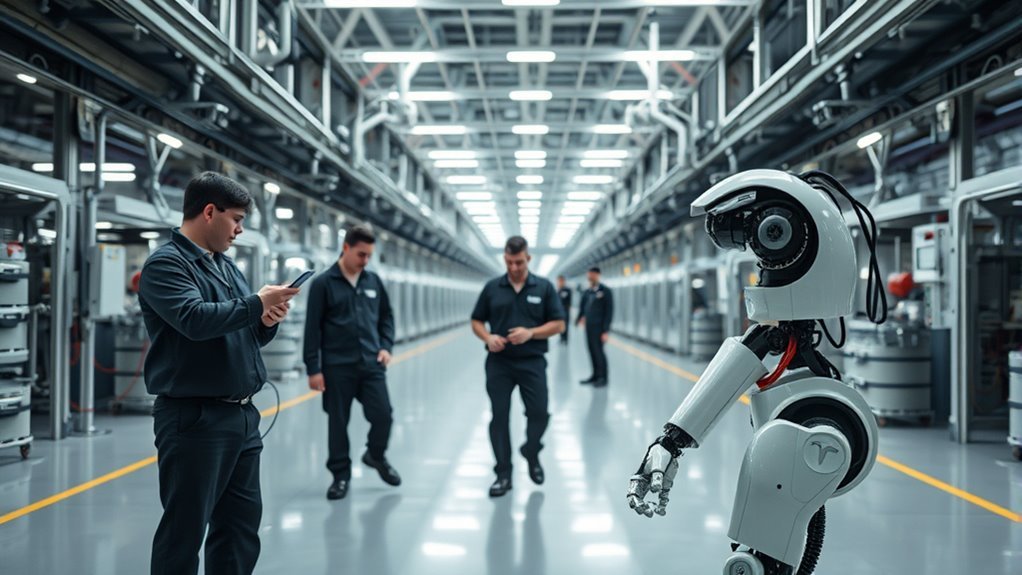
Rather than performing single specialized functions, the machines are built to handle multiple task categories across different workflows. Walden Robotics has been running general-purpose robots inside a Toyota plant in North America since February 2026. The deployment progressed from pilot to full production in under two months.
Documented tasks at that facility include loading and unloading automotive parts and cleaning equipment. The company’s broader industrial focus covers machine tending, tool setting, parts kitting, and assembly operations — processes it describes as repetitive and burdensome for human workers.
Target industries span automotive, aerospace, semiconductors, electronics, logistics, and life sciences manufacturing. The commercial strategy concentrates on labor-intensive processes in facilities where general-purpose automation can replace or supplement human labor across multiple task types. The company promotes its robots as ready for deployment from the first day on site, a claim supported by its existing production record at the Toyota facility.
The $300 million seed capital is allocated toward expanding robot fleets across additional manufacturing and logistics sites. The scale of the raise relative to the company’s age — roughly six months from spinout to announcement — reflects both the strategic weight of its investor syndicate and the competitive intensity of the industrial robotics market.
Walden Robotics enters that market with an operational deployment already underway, distinguishing it from companies still in development or pilot phases.