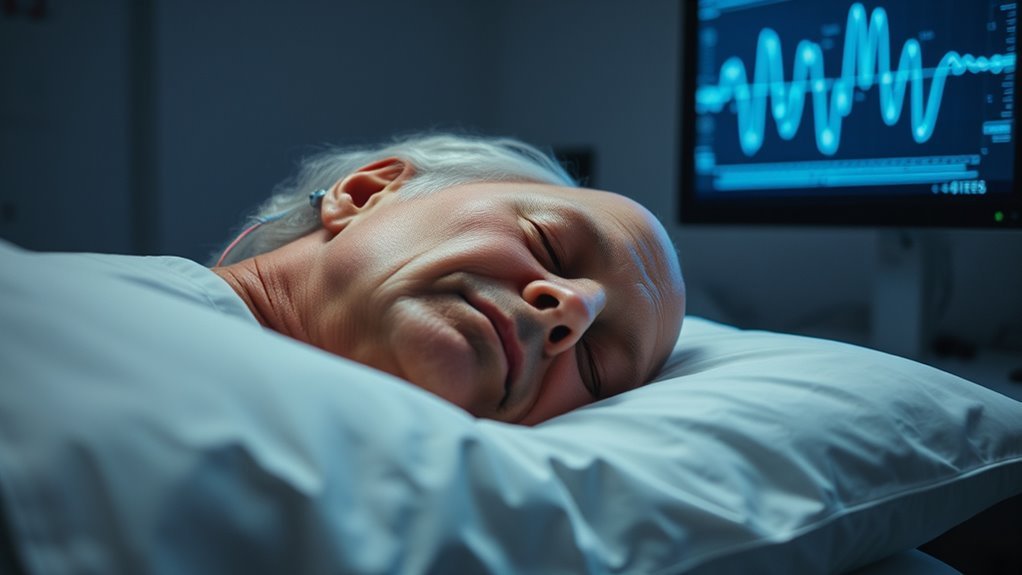

Alzheimer disease is usually diagnosed only after people begin to forget names, repeat stories, or struggle with everyday tasks. Yet by that point the underlying brain changes have been building for years. A new wave of artificial intelligence tools is now turning to something most of us overlook: the brain waves that flow through the night during sleep, which appear to carry early signals of future cognitive decline.
Why sleep is becoming a new window into Alzheimer disease
For more than a century, Alzheimer has been defined and tracked by what happens during the day. Clinicians rely on cognitive tests, imaging that shows amyloid and tau deposits, and spinal fluid biomarkers, all of which tend to detect disease only once pathology is well established. These approaches remain essential but they are expensive, invasive, and often unavailable in routine care.
Sleep offers a different angle. Age related changes in sleep architecture, such as more time spent in light non rapid eye movement sleep, reduced deep slow wave sleep, and more awakenings, are consistently linked to worse cognition and higher dementia risk over time. Slow wave activity in deep sleep appears to protect memory and may buffer against amyloid and tau accumulation, while the loss of these slow waves is associated with emerging Alzheimer pathology. Recent research into digital twins demonstrates how technology can further enhance our understanding of these changes.
Subtle shifts in sleep architecture quietly forecast memory loss and rising Alzheimer risk
Electroencephalography, or EEG, gives a direct measure of the electrical rhythms that organize sleep. Resting EEG and sleep EEG in people with mild cognitive impairment and Alzheimer show a characteristic slowing pattern, with increased low frequency power and reduced alpha and sigma band activity across both non rapid eye movement and rapid eye movement sleep. These signatures can be present even before overt clinical symptoms, which makes EEG an attractive candidate for early screening.
What the algorithms actually see in sleep
The new artificial intelligence tools are built on a simple idea. If sleep changes in specific and measurable ways in people on the road to dementia, then a model trained on enough overnight recordings should be able to pick up those changes and compute an individual risk score.
Several studies have now shown that algorithms can use overnight sleep EEG to distinguish cognitively normal older adults from those with mild cognitive impairment or dementia with meaningful accuracy. In dementia, wakefulness and light stage N1 sleep show stronger delta and theta activity and weaker alpha and sigma power compared to healthy controls, a pattern of generalized slowing that mirrors clinical rest EEG findings.
During rapid eye movement sleep, there is further slowing along with reduced spindle and sigma activity, and these features correlate with the degree of cognitive deterioration. Deep slow wave sleep, known as stage N3, tells its own story. People at higher risk for Alzheimer tend to show reduced slow wave activity and altered coupling between slow oscillations and sleep spindles, both of which are associated with worse memory and higher medial temporal tau burden.
Quantitative EEG studies have also found that sigma power during non rapid eye movement sleep is positively related to cognitive performance and may serve as a reference marker for Alzheimer detection. More recently, researchers have started to look beyond the traditional slower bands. Subtle changes in high frequency gamma activity during deep sleep appear years before clinical impairment in some cohorts, and an artificial intelligence tool that focused on these features was able to predict which patients would develop cognitive problems over the next five years with sensitivity around eighty five percent and overall accuracy near seventy seven percent.
A broader body of work also links reduced or aberrant gamma rhythms to aging, mild cognitive impairment, and Alzheimer, suggesting that disruptions in these fast oscillations could be an early biomarker of the disease. Together, these spectral and microstructural features form a composite profile. More time spent in light sleep and wakefulness at night, reduced deep slow wave and rapid eye movement sleep, lower spindle density, slowing across wakefulness, light sleep, and rapid eye movement sleep, and disturbances in gamma all point toward elevated cognitive vulnerability.
How deep learning turns sleep into structured data
The practical challenge is that a full night of sleep EEG consists of many thousands of data points. Human scorers mark thirty second epochs as wake, N1, N2, N3, or rapid eye movement, but subtle signals relevant for dementia risk are scattered across the entire recording and not always visible to the naked eye. This is where modern deep learning models come in.
Systems such as SeqSleepNet treat sleep staging as a sequence to sequence classification problem. The model ingests sequences of epochs, learns frequency filters that are tuned to sleep relevant bands, and uses recurrent and attention layers to capture both short term dynamics within each epoch and longer term transitions across the night. Evaluated on large polysomnography datasets, SeqSleepNet reaches accuracy in the mid eighties with strong agreement to human experts, which makes it a solid backbone for downstream analysis.
Other architectures like DeepSleepNet, SleepEEGNet, and newer lightweight models adopt similar ideas, combining convolutional layers for feature extraction with bidirectional recurrent networks and attention to model the temporal context of sleep. Some variants have been adapted to work not only with EEG but also with instantaneous heart rate and movement signals, enabling sleep staging even when brain signals are not available or must be simplified for wearable devices.
Once sleep has been automatically staged, the same pipelines compute macrostructural measures such as total time in each stage, rapid eye movement latency, and fragmentation metrics, along with microstructural features like spindle density, slow wave properties, entropy measures, and band specific power ratios. Regularized feature selection methods can then prioritize the combinations most associated with cognitive decline such as spectral slowing, reduced spindle and slow wave activity, and altered gamma dynamics, which feed into classifiers that output probabilities of mild cognitive impairment or Alzheimer related dementia.
In one large study that combined wearable single channel EEG and accelerometer data with artificial intelligence scoring, a simple multilayer perceptron trained on sleep features achieved an area under the curve of about zero point nine for detecting Alzheimer and around zero point seven six for prodromal cases. Another group, using standard clinical polysomnography, reported an area under the receiver operating characteristic curve near zero point seven eight for discriminating dementia from cognitively normal participants, underscoring that sleep based screening is already in the performance range that could be clinically useful as a first line tool.
From sleep laboratory to everyday bedrooms
A crucial development is that these analytical frameworks are moving out of specialized sleep laboratories into homes. Conventional polysomnography requires multiple EEG channels, respiratory sensors, and overnight supervision in a clinical setting, which is not scalable for population level dementia screening.
Recent work shows that single channel EEG headbands and minimal sensor arrays embedded in wearables can capture enough information to drive reliable automatic sleep staging and risk estimation with artificial intelligence. Repeated nightly recordings over months or years allow these systems to track trajectories of sleep architecture, slow wave and spindle markers, and gamma signatures for each individual, rather than relying on a single snapshot. One recent multimodal study using a two-channel wearable EEG with accelerometry and SeqSleepNet-derived sleep features reported Alzheimer detection performance around 90 percent accuracy, highlighting how simple overnight recordings can support non-invasive screening.
One study used only movement and respiration signals from overnight recordings, with advanced signal processing and machine learning, to detect mild cognitive impairment, highlighting that brain health leaves fingerprints not just in EEG but also in the vigor and pattern of nocturnal arousals. Another line of work has focused on entropy measures during rapid eye movement sleep, showing that specific entropy markers robustly distinguish Alzheimer dementia from mild cognitive impairment and healthy controls.
For clinicians, this creates a new potential workflow. Patients could undergo nights of home based sleep monitoring with approved devices. Artificial intelligence models would then analyze the recordings and flag people whose sleep based risk profile is rising, even if their daytime neuropsychological test scores remain within normal ranges. Those individuals could be referred for more definitive biomarker workup or more intensive surveillance, shifting the detection window earlier in the disease course.
What this means for technology, healthcare, and society
From a technology perspective, sleep based Alzheimer detection illustrates how deep learning is moving beyond headline grabbing chatbots into highly specialized medical tools. These systems have to balance accuracy with interpretability because clinicians need to understand which concrete features contribute to a high risk score, not just see a binary label.
The combination of sequence models, feature selection, and domain specific markers like spindle density and gamma power helps bridge that gap by tying model outputs back to well studied physiological phenomena. For healthcare providers and businesses, the promise is a scalable, relatively low cost, noninvasive screening modality that could integrate into routine care for older adults. Home sleep monitoring is already widely used for disorders like sleep apnea.
Extending those workflows to include brain health indices is a logical next step, although it requires careful validation and regulation. Device makers and digital health companies have an opportunity to build platforms that comply with medical standards, protect data, and align with emerging reimbursement models.
The societal implications are significant. Earlier detection opens the door to starting lifestyle interventions, cognitive training, and potential disease modifying therapies at a stage when they may have greater impact. At the same time, a new category of risk scores raises psychological and ethical questions. People may learn that their sleep data suggests elevated dementia risk years before any symptoms.
Managing that information responsibly requires clear communication, robust counseling pathways, and an honest discussion of what risk means when there is still uncertainty about individual trajectories. There are also equity concerns. Artificial intelligence models trained mainly on datasets from tertiary academic centers and predominantly white, urban populations may not generalize well to diverse communities.
Sleep patterns are shaped by cultural practices, occupational demands, and environmental factors such as noise and housing quality. If these are not represented in training data, the algorithms could overestimate risk in some groups and underestimate it in others. Addressing this will demand intentional data collection and bias auditing as sleep based screening tools mature.
Finally, it is important to recognize the limitations of the current evidence. Many studies use modest sample sizes or cross sectional designs, and performance metrics like area under the curve are often reported on research cohorts that may differ from real world primary care populations. Sleep recordings can be noisy, and comorbid conditions such as sleep apnea, depression, and medication effects can confound the signals that artificial intelligence models rely on.
Regulatory bodies will expect robust prospective validation and clear demonstration that adding sleep based artificial intelligence improves outcomes beyond what existing diagnostic pathways already achieve.
What to watch in the next few years
Over the next decade, several trends are likely to shape this field. Longitudinal studies that follow thousands of people with repeated sleep recordings, biomarker measurements, and cognitive assessments will refine the mapping between sleep features and individual risk, including the role of gamma and other high frequency rhythms in early Alzheimer trajectories.
Larger and more diverse datasets will allow developers to build models that are both accurate and fair. There is also growing interest in flipping the script from detection to intervention. Experimental work in animals and early clinical protocols suggests that sensory stimulation at gamma frequencies, delivered through light or sound, may reduce Alzheimer related pathology and improve cognitive measures, raising the intriguing possibility that restoring healthy gamma and slow wave activity during sleep could be a treatment, not just a diagnostic marker.
If future trials confirm these effects, sleep monitoring and sleep targeted neuromodulation could become a combined platform for detecting and modulating disease processes. For now, the most realistic near term role of these artificial intelligence tools is as an adjunct. They will sit alongside cognitive testing, imaging, and fluid biomarkers, helping clinicians decide who warrants closer attention and early intervention.
The core message is that the night is no longer off limits for brain health assessment. By listening carefully to nocturnal brain waves and applying sophisticated models, medicine can turn sleep into a practical window on neurodegeneration, potentially shifting Alzheimer detection into a stage when the future is still more malleable.
Conclusion
Why an AI tool that reads sleep brain activity matters now
Alzheimer disease is moving steadily from something we only diagnose late in memory clinics to a condition we are trying to catch years before symptoms appear. For decades that early window was accessible mainly through expensive brain scans and spinal taps that most people never receive. The emerging ability to read subtle changes in brain activity during ordinary sleep and translate them into objective risk signals with artificial intelligence marks a real inflection point, because it promises screening that is both earlier and far more practical for everyday clinical use.
This shift matters right now for two reasons. First, multiple teams have independently shown that sleep recordings already contain rich signatures of neurodegeneration that humans cannot reliably see by eye. Second, new drugs and lifestyle interventions work best before damage is widespread, which makes simple ways to flag higher risk individuals one of the most urgent problems in dementia care today.
How sleep became a window into Alzheimer biology
Sleep and Alzheimer have been linked for years. Deep non rapid eye movement sleep helps clear metabolic waste such as amyloid from the brain, and changes in slow wave activity and sleep spindles track with cognitive performance and amyloid ratios in older adults. Work on multi night acoustic stimulation has even shown that boosting slow waves over several nights can improve memory and alter amyloid dynamics in people with cognitive impairment, reinforcing the idea that sleep architecture is tightly coupled to underlying disease processes.
At the same time, sleep laboratories and longitudinal cohort studies have been collecting overnight electroencephalography and polysomnography data at scale. Researchers originally focused on clinical sleep disorders, but systematic analyses revealed that features such as spindle density, slow oscillation patterning, and the distribution of sleep stages differ in people with mild cognitive impairment and dementia. By 2022, large studies using more than one thousand sleep features showed that brain activity during sleep can discriminate dementia, mild cognitive impairment, and cognitively normal groups and contains information that can support individual level clinical decisions.
In parallel, the Alzheimer field was building a toolkit of biomarkers. Amyloid and tau measurements in cerebrospinal fluid, amyloid PET imaging, and more recently blood based assays created a biological definition of the disease that precedes symptoms by years. These tools are powerful but invasive, expensive, or both, and they are not evenly available across health systems. That created a natural opening for technologies that could leverage more routine data streams such as sleep recordings, speech, gait, or simple EEG measurements.
What the new sleep AI studies are actually showing
The headline concept is simple. During sleep, the brain produces rhythmic electrical patterns that follow a partly stereotyped sequence through the night. Dementia and prodromal Alzheimer subtly distort these patterns in ways that are too complex and high dimensional for human readers to quantify consistently. Deep learning systems can ingest many nights of raw signals, extract hundreds of features, and learn discriminative patterns that correlate with biological markers or long term cognitive outcomes.
One recent multicenter study used a multimodal wearable device that recorded single channel EEG and accelerometry during sleep in 67 older adults without cognitive symptoms and 35 patients with Alzheimer. Using an AI model for automatic sleep staging followed by feature extraction from hypnograms and physiological signals, the team trained a multilayer perceptron for Alzheimer detection and applied elastic net regularization to identify key features. The wearable detection model reached an accuracy of roughly 90 percent for established Alzheimer and around 76 percent for prodromal cases, with physiological EEG and accelerometry markers outperforming simple stage based features. The authors concluded that single channel EEG combined with basic motion data is sufficient for screening and that perfect manual sleep scoring is not necessary.
Another line of work has pushed beyond simple case versus control classification. Researchers at Universidad Carlos III de Madrid and Hospital Universitario Severo Ochoa built a methodology that combines overnight polysomnography with protein expression data from cerebrospinal fluid. They placed scalp electrodes to capture nocturnal brain waves, used machine learning to analyze the electrical activity, and linked subtle changes in specific patterns to the accumulation of amyloid and other proteins known to drive neurodegeneration. Their AI based system does not just separate healthy participants from those with Alzheimer. It also stratifies patients into three biological subgroups that may correspond to different trajectories of disease progression, showing that sleep signatures can connect directly to molecular pathology.
A third study from Mass General Brigham focused on prediction rather than cross sectional diagnosis. Researchers analyzed brain waves recorded during sleep using scalp EEG, then trained an AI model to identify subtle features in these signals that forecast cognitive impairment over the following five years. Changes in higher frequency bands, especially gamma activity during deep sleep, turned out to be particularly informative. The tool successfully identified about 85 percent of individuals who later developed cognitive impairment, achieving an overall accuracy of around 77 percent, which suggests that sleep EEG contains prognostic information long before symptoms emerge.
Sleep is not the only behavioral domain being mined in this way. A study using overnight recordings of body movements and respiration from a mattress sensor introduced a new diagnostic parameter called time lag, derived from the coupling between high frequency movement arousals and respiratory changes. This feature captured alterations linked to mild cognitive impairment in Alzheimer related dementias, showing that even subtle patterns in movement and breathing during sleep can contribute to early detection when processed with advanced signal analysis and AI. Reviews of early detection methods also highlight speech pattern recognition and gait models, where machine learning systems reach sensitivities and specificities in the high eighties for predicting cognitive decline.
At the algorithmic level, the field has moved from hand crafted features and classical classifiers to deep architectures that learn directly from raw EEG. A recent study proposed a feature fusion framework combined with a convolutional long short term memory network that integrates spectral features with deep representations to capture spatial and temporal patterns of Alzheimer in EEG data. This approach reportedly achieved classification accuracy close to 99.8 percent and could distinguish multiple stages of the disease, underscoring how powerful tailored architectures can be when paired with high quality datasets.
How this fits into the broader evolution of Alzheimer diagnostics
Taken together, these studies show a clear trajectory. Sleep recordings, once largely used to diagnose apnea and insomnia, are becoming a rich source of information about underlying neurodegenerative processes. Systems that started as research prototypes using manual feature extraction are evolving into end to end pipelines that ingest wearable device signals, apply deep learning to identify meaningful patterns, and output risk scores or biological subtypes.
From a historical standpoint, this mirrors earlier shifts in Alzheimer diagnostics. The field initially relied on bedside cognitive tests and clinical judgment. Biomarker work then moved the center of gravity toward imaging and fluid measures, redefining Alzheimer as a pathophysiological entity that can be detected before memory loss. The current sleep AI work represents a third wave that aims to democratize early detection by tapping into signals that could be recorded at home or during standard sleep studies and interpreted automatically.
What gives these efforts credibility is not a single accuracy figure but the convergence of multiple independent methods pointing in the same direction. EEG features, movement patterns, respiratory coupling, and composite deep learning outputs all show that sleep physiology changes early in the Alzheimer trajectory and that those changes are quantifiable. At the same time, studies that link sleep metrics to amyloid ratios, protein expression in cerebrospinal fluid, and long term cognitive outcomes provide the biological grounding that helps clinicians trust these signals.
Opportunities for technology and health systems
For technology providers, this area is almost a textbook case of how AI can add value in medicine without requiring exotic hardware. Single channel EEG headbands, mattress sensors, and standard polysomnography setups all generate data streams that are already being collected in many hospitals and sleep centers. What is new is the ability to transform these raw signals into robust biomarkers and risk scores through trained models, then expose them through clinical software in ways that fit existing workflows.
Health systems face growing pressure to identify at risk patients earlier, both to decide who should receive emerging disease modifying therapies and to offer targeted prevention programs. An AI tool that reads sleep brain activity could act as a triage layer, flagging people whose patterns suggest elevated risk and who therefore warrant more definitive biomarker testing or close monitoring. Because sleep studies are non invasive and relatively well tolerated, this kind of screening might be more acceptable than immediate spinal taps or expensive imaging for many patients.
Industry also sees the possibility of integrating sleep based risk scores into longitudinal digital health platforms. If models can operate on data from consumer grade wearables or simple home EEG devices, they could support continuous tracking of brain health much like heart rate and activity trackers support cardiovascular monitoring. Deep learning systems tuned on large datasets from clinical cohorts and sleep labs could then be periodically recalibrated as new therapies and biomarkers emerge.
Risks, limitations, and open questions
Despite the promise, these tools are not ready to become stand alone diagnostic engines. Many of the headline accuracy figures come from carefully controlled research settings with relatively small sample sizes, and some models may perform differently in real world clinical populations. Sleep recordings themselves are vulnerable to noise, artifacts, and variability in conditions, and people with Alzheimer often have comorbid sleep disorders such as apnea that need to be accounted for explicitly.
There are also concerns about representativeness and bias. Most current datasets draw heavily from specific regions, health systems, or demographic groups, and it is not yet clear how well sleep based models generalize across diverse populations with different sleep habits, comorbidities, and genetic backgrounds. Regulators will expect evidence that models maintain performance across age ranges, sexes, ethnicities, and clinical contexts, and that they do not inadvertently worsen existing disparities in dementia care.
Interpretability is another challenge. Deep networks that operate on raw EEG or fused feature sets often give clinicians a risk score without an intuitive explanation. While some studies have begun to identify which frequency bands, waveforms, or coupling patterns contribute most to model decisions, turning that into clear, clinically meaningful narratives remains work in progress. Sleep specialists and neurologists will need tools that relate model outputs to familiar concepts such as spindle density, slow wave quality, stage distribution, and known biomarker profiles.
Finally, there is the question of how to integrate such tools into care without causing harm. False positives can lead to anxiety, unnecessary invasive tests, and overdiagnosis, while false negatives may give false reassurance. Clear protocols for follow up testing, transparent communication about uncertainty, and shared decision making will be critical. Health systems must treat sleep AI as a complement to clinical evaluation and established biomarkers, not a substitute.
What meaningful integration would look like
For this approach to truly alter the course of dementia in practice, several pieces have to come together. Sleep based AI models need extensive validation across independent cohorts, ideally using prospective designs that show predictive value over years rather than just cross sectional classification. Regulators will demand rigorous evidence on safety, performance, and generalization before granting clearances, especially if tools are marketed for screening asymptomatic individuals.
Clinically, the most realistic near term role is as a decision support tool that converts routine overnight recordings into quantitative risk signals that sit alongside cognitive tests, imaging, and fluid biomarkers. In this configuration, AI helps stratify patients, guide monitoring frequency, and sharpen choices about when to escalate to more invasive diagnostics or start disease modifying therapy. It also offers a structured way to track response to interventions, especially those that target sleep architecture or aim to slow neurodegenerative change.
From a practical perspective, success will depend on thoughtful workflow design. Sleep labs and memory clinics will need integrated software that can run models quietly in the background, flag results in familiar reports, and allow clinicians to review key contributing features rather than just accepting a binary label. Training and certification for clinicians and technicians will be important to ensure consistent interpretation and maintain trust.
Forward looking takeaways
The core message is that brain activity during sleep is rapidly turning into a clinically useful lens on emerging cognitive decline, and AI is the tool that makes that lens sharp enough to use. Multiple studies now show that overnight EEG, movement, and respiratory signals contain patterns that correlate with Alzheimer pathology and future cognitive impairment, and that machine learning models can reliably extract those patterns.
Yet the most responsible stance is cautious optimism. These systems will work best as part of a layered diagnostic stack, combining simple and widely accessible signals such as sleep with high specificity biomarkers and careful clinical assessment. Continued validation, transparent reporting of limitations, strong regulatory oversight, and careful integration into care pathways will determine whether sleep AI truly changes outcomes or remains a promising research tool.
For clinicians, technologists, and policy makers who have watched Alzheimer diagnostics evolve from bedside tests to molecular biomarkers, this new frontier in sleep offers both hope and a reminder that every powerful tool brings new responsibilities. The next decade will show whether the field can translate early signal into real benefit for patients by intervening earlier, monitoring smarter, and keeping trust at the center of innovation reddit






1 comment
Comments are closed.