
AI That Reads Animal Body Language Is Quietly Becoming One of the Most Versatile Tools in Biology
For years, the bottleneck in animal behavior research was never the cameras or the data. It was the humans. Trained observers would sit for hundreds of hours annotating video footage frame by frame, classifying a mouse’s grooming sequence or a bird’s courtship display with painstaking precision. That process was slow, subjective, and fundamentally unscalable. What has changed in the past 18 months is not just that AI can now do this work faster. It is that a single model can learn movement patterns from one species and apply that understanding to an entirely different animal, sometimes one it has never seen before.
That capability matters far beyond the biology lab, and the people paying closest attention are not only researchers.
What Actually Works Now
The core technology driving this shift relies on pose estimation, a computer vision technique that identifies and tracks specific body parts across video frames. Tools like DeepLabCut, originally developed at Harvard and now widely adopted across academic and commercial settings, allow researchers to define anatomical keypoints on an animal and let the model learn to detect those points automatically. Layer graph neural networks on top of that pose data, and you get systems capable of classifying complex behavioral sequences without any manual annotation.
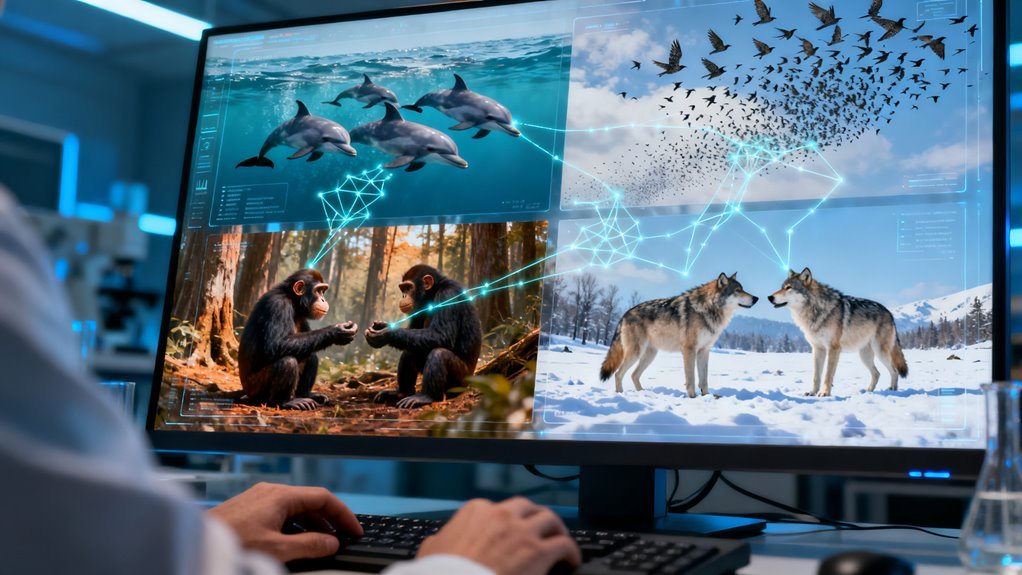
What makes the current generation of these tools genuinely novel is cross species generalization. A model trained on laboratory mice can be adapted to analyze the locomotion of horses or the social interactions of primates with surprisingly little additional training data. This is not a trivial achievement. It suggests the underlying neural networks are capturing something real about how bodies move through space, the biomechanical grammar that connects a rodent’s gait to a cheetah’s sprint. The models are not simply memorizing pixel patterns. They are building internal representations of movement structure that transfer across morphologies.
This mirrors a pattern we have seen repeatedly in large language models and vision transformers. Foundation models trained on broad data develop emergent capabilities that extend well beyond their original training distribution. The same principle is now playing out in behavioral analysis, and it opens a door that traditional ethology could never walk through.
Why This Is Happening Now
Several converging forces explain the timing. Video data from camera traps, drone surveys, and farm monitoring systems has exploded in volume over the past five years. Storage is cheap. Compute is accessible. But annotation remains expensive and inconsistent. The economic pressure to automate behavioral classification has been building steadily.
Simultaneously, the transformer architectures and self supervised learning techniques that powered breakthroughs in natural language processing have proven remarkably adaptable to sequential data of all kinds. Animal movement is, at its core, a sequence problem. A series of body configurations unfolding over time, with temporal dependencies and hierarchical structure that resemble language far more than static image classification. The technical infrastructure that made GPT possible is now making it possible to parse a honeybee’s waggle dance with the same architectural principles.
There is also a less obvious factor. The global push toward biodiversity monitoring under frameworks like the Kunming Montreal Global Biodiversity Framework has created genuine institutional demand for scalable wildlife observation tools. Governments and conservation organizations need to track species abundance and behavior across vast areas, and they cannot hire enough field biologists to do it manually. AI driven behavioral analysis is not a nice to have in this context. It is becoming infrastructure.
Who Benefits and Who Should Be Watching
The most immediate beneficiaries are conservation biologists and ecologists. Automated behavioral analysis from camera trap footage can detect changes in animal activity patterns that signal habitat degradation, disease spread, or the impact of human encroachment long before population counts reveal a problem. Behavior is often the earliest indicator of ecological stress, and these tools make it possible to monitor behavior at continental scale.
The livestock and aquaculture industries stand to gain enormously as well. Precision livestock farming already uses sensor data to monitor animal health, but video based behavioral analysis adds a layer of insight that accelerometers and RFID tags cannot provide. Detecting lameness in cattle, stress behaviors in poultry, or feeding anomalies in farmed fish through automated video analysis could reduce both economic losses and animal suffering. Companies like Connecterra and Cainthus have been working in this space for years, but cross species generalization could dramatically lower the cost of deploying these systems across different farming contexts.
Pharmaceutical companies running preclinical trials on animal models also benefit. Behavioral phenotyping of lab animals is a critical part of drug development, and automating it removes one of the most time consuming and variable steps in the pipeline. Faster, more consistent behavioral scoring means faster iteration on candidate compounds.
The less obvious winners are the computer vision and foundation model researchers themselves. Animal behavior provides a rich, complex, and largely untapped domain for testing whether learned representations genuinely capture structural properties of the physical world. Success here strengthens the case that modern deep learning architectures are learning something deeper than statistical correlation, a question with implications well beyond biology.
What People Are Overlooking
There is a tendency to frame this technology purely as an efficiency gain. Faster annotation, cheaper monitoring, broader coverage. That framing misses the more significant shift. When you can analyze behavior at scale across species and environments, you can ask scientific questions that were previously impossible to formulate.
Consider migration ecology. If automated behavioral analysis can classify not just species presence but specific behavioral states from millions of hours of camera trap footage across a continent, researchers could map behavioral responses to climate variables with a granularity that has never existed. The transition from counting animals to understanding what those animals are doing, and correlating that with environmental data in real time, represents a qualitative change in what ecology can achieve.
There are also risks worth naming. Cross species generalization is powerful, but it can encode biases from the training species that distort analysis of the target species. A model that learns “normal” movement from domestic animals may systematically misclassify behaviors in wild species with different biomechanical constraints. Validation protocols for these tools are still immature, and the field lacks standardized benchmarks. The danger is not that the models will fail catastrophically. It is that they will fail subtly, producing plausible but incorrect behavioral classifications that go unquestioned because the output looks authoritative.
Privacy and surveillance concerns also deserve attention. The same pose estimation technology that tracks a deer’s movement can track a person’s. The dual use potential of these systems is real, and the regulatory frameworks governing wildlife monitoring technology have not caught up with the capabilities.
Where This Goes Next
The trajectory points toward behavioral foundation models, large pretrained systems that understand movement across species the way GPT understands language across domains. Several research groups are already working toward this, and the data infrastructure is falling into place. If the pattern holds, we will see a progression from specialized tools to general purpose behavioral AI that can be fine tuned for specific applications with minimal effort.
Integration with other sensor modalities is inevitable. Combining video based behavioral analysis with acoustic monitoring, environmental sensor data, and satellite imagery will create multimodal ecological intelligence systems that provide a far richer picture of ecosystem health than any single data source can offer.
For businesses, the practical takeaway is straightforward. Any industry that relies on observing and interpreting animal behavior, from farming to drug development to wildlife management, should be evaluating these tools now. The cost of deployment is dropping fast, and the competitive advantage of early adoption in precision agriculture and conservation technology is real.
For the broader AI community, this development is a useful reminder that some of the most consequential applications of deep learning are not the ones generating headlines. A model that can read a cow’s body language to detect illness 48 hours before clinical symptoms appear will never trend on social media. But it will save money, reduce suffering, and quietly reshape entire industries. That is the kind of AI progress worth paying attention to.
AI Is Learning to Read Animal Body Language, and the Implications Go Far Beyond Wildlife Biology
For decades, understanding animal behavior meant researchers sitting in blinds for hundreds of hours, manually coding every twitch, turn, and social interaction frame by frame. That era is functionally over. A new generation of AI systems can now watch animals, interpret their movements, and classify their behaviors with a consistency and scale that no human team could match. What makes this moment significant is not just the automation itself but the emergence of cross species generalization, the ability for a model trained on mice to meaningfully interpret the movements of birds or fish with minimal retraining. That capability signals something much larger about where computer vision and deep learning are headed.
From Manual Coding to Skeletal Intelligence
The core technical shift here centers on pose estimation, a technique that tracks the positions of key body parts across video frames to build skeletal representations of animals in motion. If this sounds familiar, it should. The same fundamental approach powers human motion capture in gaming, sports analytics, and even retail surveillance.
What researchers have done is adapt and extend these methods for non human subjects, a task that is deceptively difficult given the enormous morphological diversity across species.
Tools like DeepLabCut pioneered this space several years ago, enabling markerless tracking of animal joints from standard video. Newer frameworks such as PoseR take it a step further. They convert raw pose tracking data into human readable behavior labels automatically, turning skeletal trajectories into classified actions like grooming, fighting, foraging, or resting. The practical effect is dramatic. Studies that once required months of manual annotation can now be processed in hours.
Graph neural networks add another layer of sophistication. By modeling an animal’s body as a graph where joints are nodes and bones are edges, these architectures capture spatial relationships in ways that convolutional networks alone cannot. The result is more robust classification of complex, multi joint movement patterns. A graph based model does not just see that a limb moved. It understands the geometric context of that movement relative to the rest of the body.
Why Cross Species Generalization Changes the Game
The most consequential development in this space is not speed or accuracy. It is transferability. PoseR and similar frameworks are designed to read movement across fundamentally different body plans and translate it into standardized behavioral descriptions.
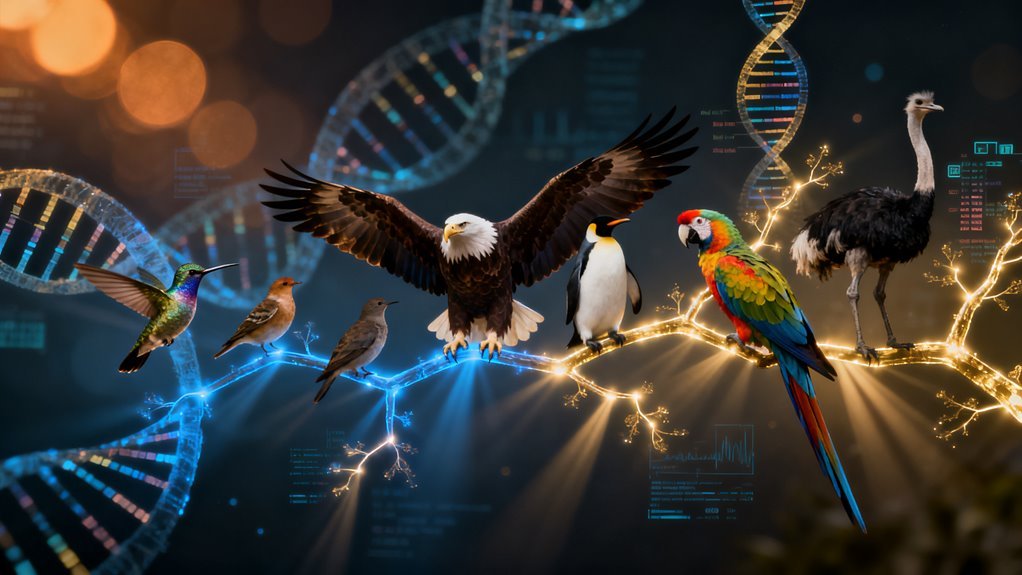
One AI framework, many body plans — transferability is the breakthrough redefining how we decode animal movement across species.
A model that learns the kinematic signatures of aggression in one rodent species can transfer meaningful features to classify similar behaviors in a different species with relatively little additional labeled data.
This matters for a practical reason that anyone in machine learning will immediately recognize. Labeled training data is the bottleneck. In wildlife research, getting high quality behavioral annotations is expensive, slow, and dependent on scarce domain expertise. Transfer learning and shared feature representations dramatically reduce the labeling burden, opening the door to behavioral analysis of species and populations that would otherwise never get studied at the scale needed for meaningful conclusions.
It also matters for a more fundamental reason. Cross species generalization implies that these models are learning something real about the structure of movement and behavior, not just memorizing species specific visual patterns. That is a meaningful step toward more general purpose understanding of biological motion, with potential applications well beyond ecology.
Group Dynamics and the Social Layer
Individual behavior classification is only part of the picture. The newer AI frameworks are increasingly capable of modeling group dynamics, tracking multiple individuals simultaneously and extracting the interaction rules that govern collective behavior.
Studies of mixed species bird flocks, for example, use movement statistics to reveal how social information propagates through a group and influences foraging decisions. Machine learning analyses of group trajectories can identify emergent properties like alignment, attraction, and avoidance that are invisible in any single individual’s movement trace.
This is where the work starts to intersect with complexity science and network theory. The behavioral rules that AI extracts from animal groups bear structural similarity to the kinds of agent based models used in crowd simulation, traffic flow optimization, and even financial market modeling.
The analytical tools being refined on starling murmurations and fish schools today could inform how we model human collective behavior tomorrow.
Predictive modeling adds a forward looking dimension. By learning from past trajectories and environmental context, these systems can estimate future positions, predict aggregation events, or forecast dispersal patterns. For conservation biologists, this translates into actionable intelligence about habitat use, migration timing, and population responses to environmental change.
The Sensor Ecosystem Closing the Loop
Visual analysis from camera traps and drones tells one part of the story. Bio logging devices tell another. GPS units, accelerometers, magnetometers, and animal borne cameras now collect continuous streams of movement and physiological data from free ranging animals.
The latest generation of these loggers does not just record passively. AI enabled onboard processing allows them to detect behavioral patterns of interest in real time in the field, triggering high resolution data capture only when something significant is happening. This is edge computing for wildlife science, and it solves the massive data storage and transmission constraints that have historically limited bio logging studies.
The convergence of visual and sensor data creates a richer picture than either approach alone. Camera based pose estimation captures the spatial geometry of behavior. Accelerometer data captures the intensity and biomechanics. GPS adds landscape context.
When AI integrates these streams, the result is quantitative behavioral profiling at a resolution that was simply not possible five years ago.
Who Benefits and What Comes Next
The immediate beneficiaries are conservation biologists, ecologists, and animal welfare researchers who can now study behavior across far more individuals, species, and habitats than traditional methods allowed.
Livestock and aquaculture industries stand to gain as well. Automated behavioral monitoring in farm and production environments enables early detection of illness, stress, and welfare problems, reducing losses and improving animal outcomes.
Pharmaceutical companies running preclinical trials in animal models also have a direct interest. Automated, objective behavioral scoring removes human bias from studies evaluating drug effects on anxiety, pain, motor function, and social behavior. This capability also enables rapid screening of animal models for neurological diseases, potentially accelerating the path from preclinical observation to meaningful therapeutic discoveries.
This could meaningfully improve the reliability and reproducibility of preclinical data, a persistent problem in biomedical research.
Looking further ahead, the techniques being developed here feed back into broader AI research. Pose estimation, graph neural networks, and transfer learning across morphologically diverse subjects push the boundaries of what vision models can generalize.
The lessons learned from teaching a model to understand a hawk’s wing articulation and a crab’s limb coordination will inform how we build more adaptable vision systems for robotics, autonomous vehicles, and human computer interaction.
The regulatory dimension is worth watching as well. As AI driven wildlife monitoring scales up, questions about data ownership, surveillance in protected areas, and the ethics of continuous animal tracking will need clearer frameworks. Most jurisdictions have not yet caught up with the pace of deployment.
What people are likely overlooking is the sheer breadth of the behavioral data now being generated and what it will enable once aggregated. We are moving toward a world where AI maintains continuous behavioral baselines for entire ecosystems.
Deviations from those baselines, driven by climate change, habitat loss, pollution, or disease, will be detectable far earlier than current monitoring allows. That is not just a scientific advance. It is a fundamentally different relationship between technology and the natural world, one where AI serves as a persistent, tireless observer translating animal behavior into actionable human understanding at planetary scale.