
The Walls Are Talking: How AI and Thermal Imaging Are Exposing What Centuries of Inspection Never Could
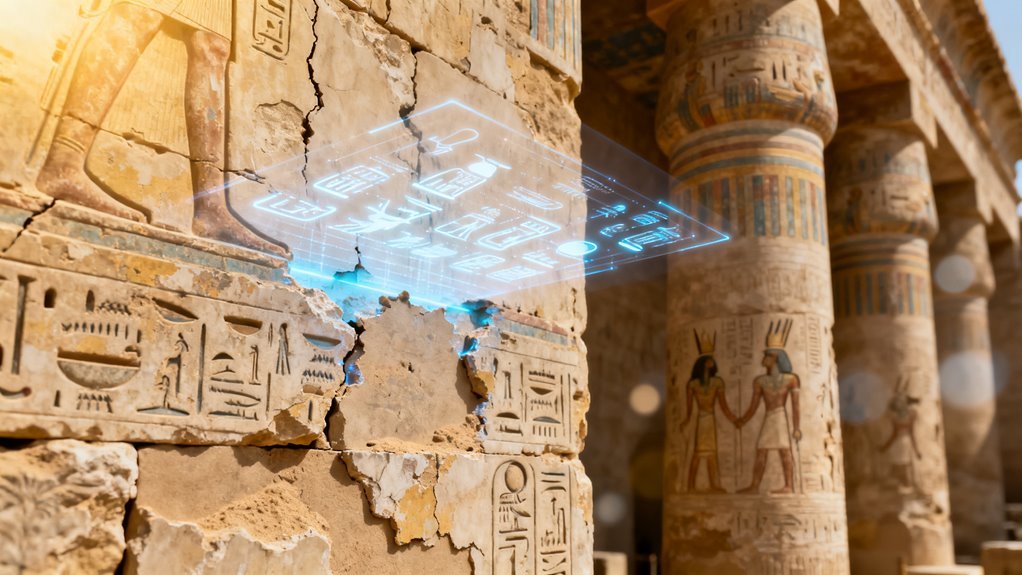
For most of recorded history, understanding what lies beneath the surface of an ancient monument meant one of two things: guesswork or demolition. Conservationists have long relied on visual assessments, tap tests, and the occasional core sample to evaluate structural integrity. That approach works right up until it does not, usually when a crack becomes a collapse or moisture damage becomes irreversible rot. Now, a quiet convergence of deep learning and infrared thermography is fundamentally changing the calculus of heritage preservation, and the technology has implications that reach far beyond saving old buildings.
What Actually Changed
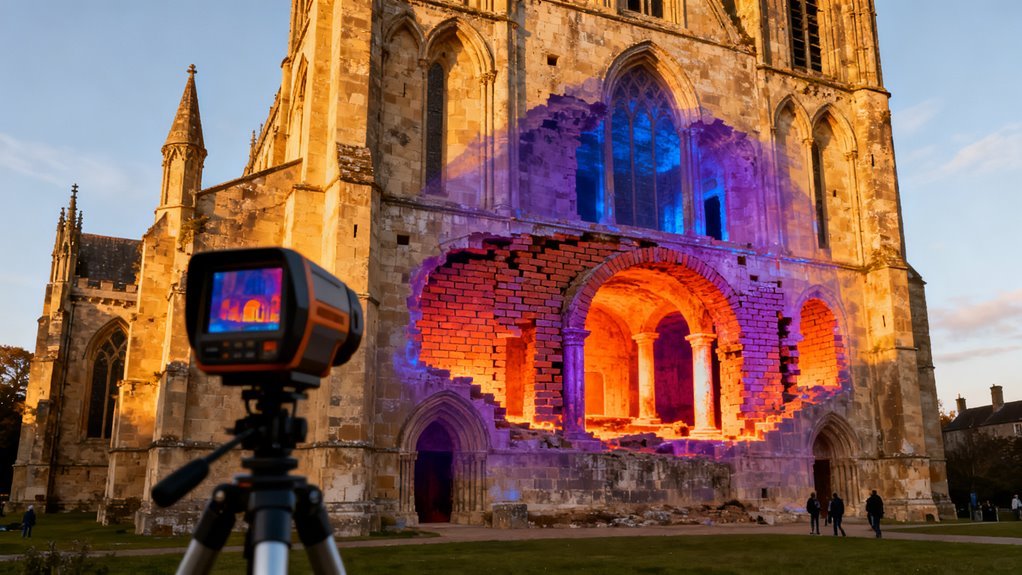
Infrared thermography itself is not new. Building inspectors have been pointing thermal cameras at walls for decades to find insulation gaps and water leaks. What is new is the analytical layer sitting on top of those cameras. Deep learning models trained on thousands of thermal image sequences can now distinguish between a surface temperature anomaly caused by afternoon sun and a genuine subsurface defect like rising damp, delamination, or a hidden void. The difference sounds subtle. It is not.
Previous thermal analysis required a trained human expert to interpret each scan manually, a process that was slow, subjective, and expensive enough that it was typically reserved for a handful of high profile sites. AI systems process thermal sequences captured over time, tracking how heat propagates through materials at different rates depending on density, moisture content, and structural continuity. A solid stone wall dissipates heat differently than one concealing a bricked up doorway from the 14th century. The models pick up on these temporal signatures with a consistency that human analysts simply cannot match across large surface areas.
The automation piece matters enormously. Instead of a specialist spending weeks mapping damage across a cathedral facade, these systems generate comprehensive defect maps in hours. They work across stone, brick, plaster, wood, and composite materials with minimal retraining, which is critical for historic structures that were rarely built from a single material.
Why This Matters Now
Three factors converged to make this moment significant rather than incremental.
First, climate change is accelerating the deterioration of historic structures worldwide. Rising humidity, more intense freeze and thaw cycles, and increased flooding are degrading buildings faster than conservation budgets can keep pace. The UNESCO World Heritage Committee has flagged climate as a growing threat to heritage sites for years, but the tools available to monitor that threat at scale have lagged badly behind the rhetoric.
Second, the cost of not catching problems early is staggering. A minor moisture infiltration detected at the surface level might cost a few thousand dollars to remediate. The same issue discovered after it has compromised load bearing masonry can run into the millions. For governments and institutions already straining under maintenance backlogs, the economic argument for early detection is overwhelming.
Third, the AI models themselves have reached a maturity threshold. Convolutional neural networks and transformer architectures refined over the past several years for medical imaging and industrial inspection translate remarkably well to building diagnostics. The underlying physics are different, but the computational challenge of identifying subtle anomalies in noisy visual data is structurally similar. Transfer learning means these models do not need to be built from scratch for every new application domain.
Who Benefits and Who Gets Displaced
The most obvious beneficiaries are the institutions responsible for maintaining historic properties. National heritage agencies in Italy, France, the UK, and elsewhere oversee thousands of structures with inspection cycles measured in decades rather than years. Automated thermal analysis could compress those cycles dramatically, shifting conservation from reactive to genuinely preventive.
Insurance companies stand to gain as well. Better structural data means better risk models for properties that have historically been difficult to underwrite with any precision. A 600 year old church is not exactly a standard actuarial category, but continuous monitoring data changes the equation.
Construction and engineering firms specializing in heritage restoration will likely see demand increase rather than decrease. Faster, more accurate diagnostics do not eliminate the need for skilled craftspeople. They create more work by identifying problems that would otherwise go unnoticed until catastrophic failure. The firms that integrate AI diagnostics into their service offerings early will hold a competitive advantage.
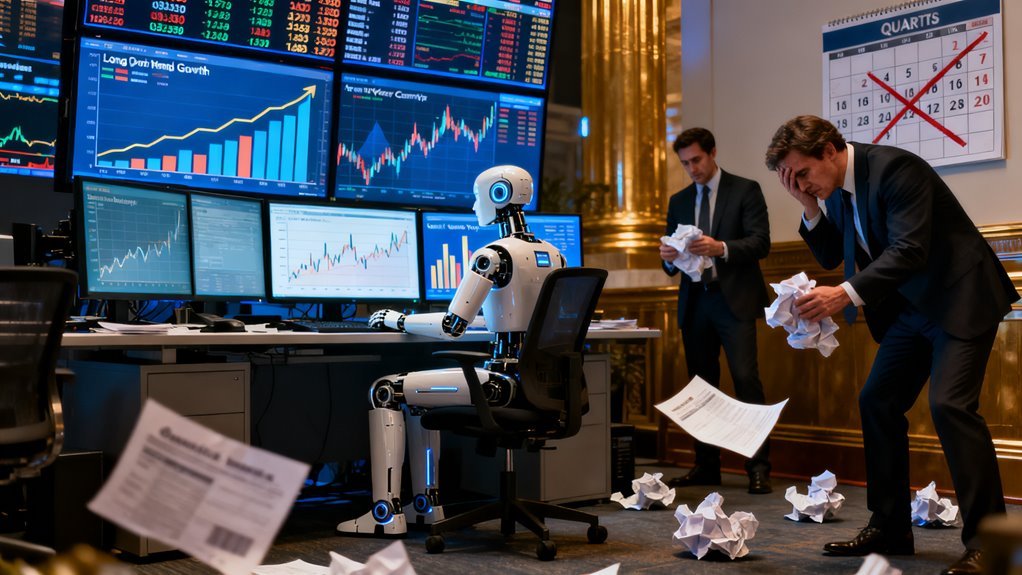
The group facing disruption is the relatively small community of specialist thermography consultants who built careers around manual interpretation. Their expertise remains valuable for training models and validating results, but the volume work of routine scanning and basic defect classification is moving toward automation. This mirrors the pattern seen across radiology, legal document review, and quality control in manufacturing. The highest skill work persists. The repetitive analytical labor does not.
The Broader Signal for AI in Physical Infrastructure
What makes this development worth watching beyond the conservation niche is what it reveals about AI’s expanding role in understanding the physical world. For the past several years, the loudest AI conversations have centered on language models, image generation, and software development tools. Meanwhile, a parallel track of applied computer vision for infrastructure inspection has been advancing steadily with far less attention.
Companies like Gecko Robotics have been deploying AI powered inspection systems inside power plants and industrial facilities. Startups in the bridge and highway inspection space are using drone captured imagery processed by neural networks to flag structural concerns. The heritage conservation application fits neatly into this broader trend of AI moving from the digital realm into the physical one, not replacing human judgment entirely but dramatically expanding the scope and frequency of what can be monitored.
Google, NVIDIA, and others have invested heavily in digital twin technology, creating virtual replicas of physical assets that can be continuously updated with sensor data. AI enhanced thermal scanning feeds directly into that paradigm. Imagine a digital twin of Notre Dame that incorporates not just geometric data from laser scans but real time thermal profiles revealing moisture migration through restored stonework. The reconstruction effort already underway in Paris could become a proving ground for exactly this kind of integrated monitoring.
What People Are Overlooking
The conversation around this technology has focused almost entirely on historic preservation, which is understandable but narrow. The same techniques apply to any scenario where understanding what lies beneath a surface matters without physically penetrating it.
Modern commercial real estate due diligence is one obvious extension. Before acquiring a building, investors could commission AI thermal scans that reveal hidden water damage, insulation failures, or structural modifications not captured in building plans. The technology could reduce the information asymmetry that plagues real estate transactions, particularly for older commercial properties.
Military and security applications are another dimension rarely discussed in the conservation literature. Detecting hidden chambers, tunnels, or modifications to structures has obvious intelligence value. The dual use potential of this technology will eventually attract regulatory attention, particularly as the scanning equipment becomes cheaper and the AI models become more accessible.
There is also a data governance question that deserves more scrutiny. Detailed subsurface structural maps of historic buildings, government facilities, and critical infrastructure constitute sensitive information. Who owns that data, who can access it, and how it is secured are questions that existing frameworks do not adequately address.
The Economics Are Compelling but Not Simple
Deploying AI thermal analysis at scale requires upfront investment in both hardware and model customization. Off the shelf thermal cameras suitable for building inspection range from a few thousand dollars to well over $50,000 for research grade systems. The AI processing can run on cloud infrastructure, but training models for specific building typologies and materials requires curated datasets that do not yet exist in abundance.
For well funded national heritage programs, the return on investment is clear. For smaller organizations, community groups managing local historic sites, or developing countries with rich architectural heritage but limited budgets, the access question is real. The risk is that AI enhanced conservation becomes another technology that widens the gap between well resourced institutions and everyone else.
Open source efforts could mitigate this. Several research groups in Europe have published thermal image datasets and baseline models for building diagnostics. If the field follows the trajectory of other applied AI domains, expect a period of proprietary advantage followed by gradual democratization as pre trained models and standardized workflows become available.
What Comes Next
The near term trajectory is fairly predictable. Expect pilot programs at major heritage sites to generate case studies over the next 12 to 18 months, followed by broader adoption among national agencies with existing digital infrastructure programs. Integration with drone platforms will extend the technique to difficult to access facades and rooflines, removing one of the practical bottlenecks of traditional thermographic surveys.
The more interesting long term question is whether continuous AI thermal monitoring becomes standard practice rather than a periodic inspection tool. Embedding low cost thermal sensors into restored structures and feeding data continuously to cloud based models would represent a shift from episodic assessment to persistent surveillance of building health. The technical pieces exist. The institutional willingness to fund ongoing monitoring rather than one time studies is the real bottleneck.
What is unfolding in heritage conservation is a specific instance of a much larger pattern: AI systems that interpret physical reality through sensor data are becoming good enough and cheap enough to deploy at scales that were previously impractical. The monuments are just the beginning.
The buildings and monuments that define human civilization are deteriorating faster than experts can inspect them. Climate change, urban pollution, rising groundwater, and the sheer passage of time are conspiring against structures that have survived centuries, and the conservators responsible for their preservation are dramatically outnumbered. That mismatch between urgency and capacity is exactly why the convergence of artificial intelligence and infrared thermography deserves attention far beyond the heritage conservation community. What is happening in this niche signals something much larger about how AI is reshaping imaging workflows(AI%20is%20reshaping%20imaging%20workflows) and diagnostics across industries where precision and scale were previously incompatible.
The Problem That Manual Inspection Cannot Solve
Infrared thermography has been a staple of non-destructive testing for decades. Point a thermal camera at a wall, and variations in surface temperature reveal what lies beneath: trapped moisture, delaminating plaster, voids behind stone facades, structural cracks concealed under centuries of paint. The physics is straightforward. Damaged or compromised areas absorb and emit heat differently than intact material, producing thermal signatures that show up clearly on camera.
The bottleneck was never the imaging. It was the interpretation. Trained specialists would study thermograms and make judgment calls about what constituted a defect, how severe it was, and where exactly it began and ended. Two experts examining the same thermogram could reach meaningfully different conclusions, particularly when dealing with complex surfaces covered in decorative elements, layered repairs from different historical periods, or irregular masonry that naturally produces uneven thermal patterns. Scaling this process across an entire cathedral or palace meant weeks of painstaking work by scarce, expensive specialists.
The bottleneck was never capturing the thermal image — it was interpreting what it meant.
This is the gap AI now fills, and it does so in a way that changes the economics and logistics of heritage conservation fundamentally.
Deep Learning Meets Thermal Physics
The technical approach gaining the most traction pairs deep neural networks with sequences of thermal images captured over time. Rather than analyzing a single snapshot, spatiotemporal models process entire series of thermograms, tracking how heat flows through materials frame by frame. This temporal dimension is critical. A surface defect and a superficial temperature variation might look identical in a single image, but they behave very differently over time as heat dissipates. AI models trained on these sequences can distinguish the two with a reliability that surpasses human interpretation.
The architectures involved are worth understanding. Researchers have combined multilayer perceptrons, which handle temporal data well, with U-Net segmentation networks originally developed for biomedical image analysis. The perceptron component learns the time-dependent behavior of thermal signatures while U-Net handles pixel-level spatial classification, essentially drawing precise boundaries around damaged regions. The result is a detailed damage map that identifies not just the presence of a defect but its exact location, shape, and extent.
What makes this particularly impressive is the diversity of materials and defect types these systems can handle. They have been applied successfully to wooden architectural decorations, marquetry, painted artworks, and stone masonry. Multiple defect classes can be identified simultaneously, even when the underlying surface is visually complex. For anyone who has worked with computer vision in industrial settings, the parallel to automated quality inspection on manufacturing lines is obvious. The difference is that no two sections of a 13th century cathedral wall are alike, which makes the classification problem considerably harder.
Moisture: The Silent Destroyer Getting Caught Earlier
Among all the damage mechanisms threatening historic buildings, rising damp may be the most insidious. Water migrates upward through porous masonry by capillary action, carrying dissolved salts that crystallize within the stone or brick as moisture evaporates. This crystallization generates enormous pressure at the microscopic level, gradually breaking apart the material from the inside. By the time damage becomes visible on the surface, significant structural material has already been lost.
Passive infrared thermography can detect moisture because wet areas cool differently than dry ones, producing distinctive thermal patterns. But identifying these patterns reliably across large, irregular wall surfaces with variable ambient conditions has always required considerable expertise. Deep learning models trained on labeled examples of moisture-related thermal anomalies now automate this detection, flagging problem areas that a human inspector might overlook, particularly in early stages when thermal signatures are subtle.
The practical impact here is significant. Instead of commissioning expensive, periodic expert inspections, building managers at heritage sites could implement routine thermal surveys processed automatically by AI. Problems get caught months or years earlier. Interventions remain minor and inexpensive rather than becoming emergency restorations. For institutions managing dozens or hundreds of historic properties, this shift from reactive to predictive maintenance could reshape budgets entirely.
Standardization Is Finally Arriving
One development that signals the field’s maturation is the emergence of benchmarking datasets specifically designed for cultural heritage thermography. The Thermitage initiative provides standardized infrared image datasets that allow researchers to evaluate their detection and segmentation algorithms against common baselines. This matters enormously for practical adoption.
Without standardized benchmarks, every research group tests its models on its own data, making meaningful comparison impossible. A model that performs brilliantly on thermograms of Italian frescoes captured with one camera system under specific conditions might fail entirely on English limestone walls captured with different equipment. Thermitage and similar efforts create the shared evaluation framework that transforms isolated research projects into a field with measurable, comparable progress.
This trajectory mirrors what happened in computer vision more broadly. ImageNet did not just provide training data. It created a competitive benchmark that accelerated progress dramatically. Cultural heritage thermography is now following the same playbook, albeit at a much smaller scale.
Active Thermography Gets Smarter
The distinction between passive and active thermography adds another dimension to the AI story. Passive thermography simply captures the thermal radiation a surface naturally emits or reflects from its environment. Active thermography introduces a controlled heat source, such as a flash lamp or modulated heater, and then watches how the surface responds over time. Active methods are far more sensitive to subsurface defects because the controlled excitation creates stronger, more predictable thermal contrasts.
AI processing amplifies the advantages of active thermography substantially. Pulsed and modulated excitation schemes generate complex temporal signals that contain information about defect depth, size, and thermal properties. Extracting this information manually requires specialized signal processing knowledge and considerable time. Neural networks trained on these signals can perform the extraction automatically, detecting defects that are too subtle or too deep for manual analysis to catch.
For anyone following the broader trend of AI augmenting sensor systems, this is a familiar pattern. The sensor captures more information than a human can practically interpret, and AI closes the gap between what the hardware collects and what becomes actionable intelligence. Radar, lidar, ultrasound, and now thermal imaging all follow this trajectory.
What the Heritage Sector Tells Us About AI Adoption in Conservative Industries
The cultural heritage sector is among the most cautious adopters of new technology, and for good reason. The consequences of getting it wrong are irreversible. You cannot undo damage to a 500-year-old fresco caused by an overly aggressive intervention prompted by a false positive from an AI system. This conservatism makes the sector a useful bellwether. When AI gains traction here, it signals that the technology has reached a level of reliability and interpretability that even risk-averse institutions find compelling.
Several factors are driving adoption now rather than five years ago. Model accuracy has improved to the point where false positive rates are acceptable for screening purposes. Computing costs have fallen enough that running inference on thousands of thermal images is no longer prohibitively expensive. And critically, the workforce shortage in conservation has reached a point where the alternative to AI-assisted inspection is not manual expert inspection but rather no inspection at all for many sites.
This last point resonates across many industries. AI adoption accelerates fastest not when the technology dramatically outperforms humans, but when the humans simply are not available in sufficient numbers. Healthcare radiology, infrastructure inspection, agricultural monitoring, and now heritage conservation all share this dynamic.
The Business and Policy Implications
Several stakeholder groups should be paying attention. Manufacturers of thermal imaging equipment stand to benefit if AI processing becomes a standard feature or add-on, increasing the value proposition of their hardware. Software companies specializing in non-destructive evaluation have an obvious opportunity to integrate deep learning into their platforms. Insurance companies covering heritage properties could use AI-generated diagnostic reports to assess risk more accurately and potentially lower premiums for well-monitored buildings.
On the policy side, government agencies responsible for cultural heritage face an interesting decision. Mandating regular thermal monitoring with AI analysis could dramatically improve the preservation of public heritage assets, but it also requires investment in equipment, training, and data infrastructure. The European Union, which funds significant heritage conservation through programs like Horizon Europe, may push standardization and cross-border data sharing that accelerates adoption.
There are risks to manage as well. Over-reliance on automated systems without human oversight could lead to missed defects that fall outside the training distribution. Models trained primarily on European stone architecture might perform poorly on Asian wooden temples or Middle Eastern mud brick structures. Ensuring that AI systems are validated across the full diversity of global heritage is essential but will take years of coordinated effort.
What Comes Next
The trajectory here points toward continuous, autonomous monitoring rather than periodic inspection campaigns. Permanently installed thermal imaging arrays, connected to cloud-based AI processing, could watch over major heritage sites around the clock, detecting changes in thermal behavior that indicate emerging problems long before they become visible.
Digital twins incorporating thermal data alongside 3D geometric models and material databases would give conservators an unprecedented understanding of how buildings behave and deteriorate over time. The technology also has clear applications beyond cultural heritage. Commercial real estate, civil infrastructure, energy systems, and manufacturing facilities all face analogous inspection challenges where AI-enhanced thermal imaging could deliver similar benefits. Platforms like ScienceDirect, owned by Elsevier B.V., play a critical role in disseminating the scientific research that underpins these advances to the global conservation and engineering communities.
Heritage conservation, with its extreme demands for accuracy and non-invasiveness, serves as a proving ground for techniques that will eventually spread much more widely. What is unfolding in this specialized field captures something essential about the current phase of AI development. The breakthroughs are not always in the models themselves but in the pairing of mature AI techniques with domain-specific problems where the value of automation is suddenly undeniable. For conservators staring down the accelerating deterioration of irreplaceable structures with finite budgets and shrinking expert pools, that moment has arrived.