
Samsung’s AI Health Assistant positions Samsung Health as a unified, AI-powered hub for interpreting personal wellness data rather than simply displaying raw metrics. Built directly into the Samsung Health app, the assistant appears as a conversational chatbot that responds to user questions with context-aware guidance derived from personal trends in sleep, activity, nutrition, mindfulness, and essential signs.
Rather than presenting isolated charts or dashboards, the AI Health Assistant interprets long-term data to highlight patterns, anomalies, and relationships between different aspects of daily life. It can, for example, explain how inconsistent bedtimes or reduced activity correlate with lower perceived energy, turning complex biometric inputs into concise guidance that is easier to act on. This framing reflects Samsung’s effort to move from passive tracking to proactive insight, positioning the assistant as a general wellness companion rather than a diagnostic tool. In a similar vein, US public health agencies are also exploring generative AI models to enhance public health responses.
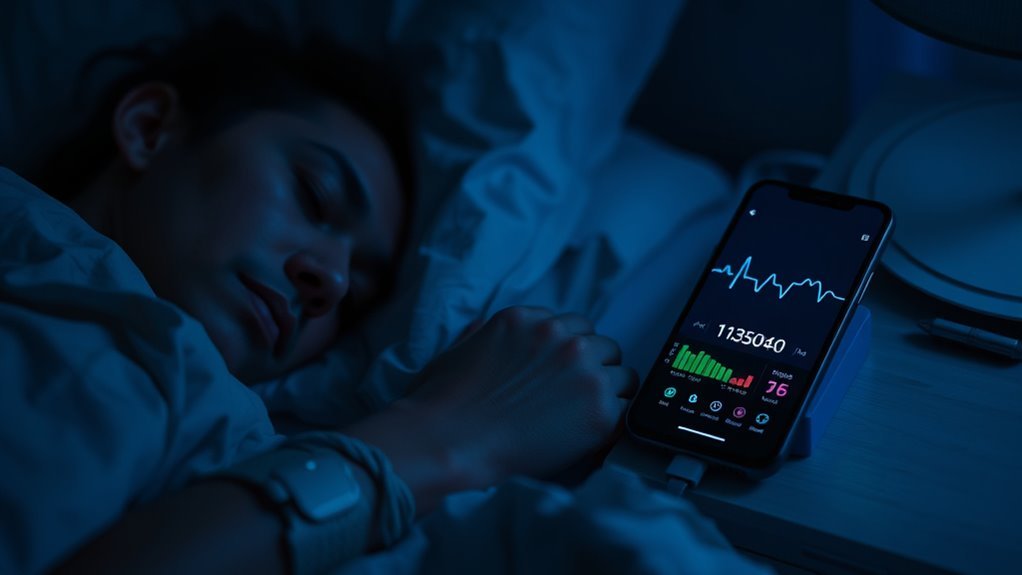
The assistant’s analysis draws on Samsung Health’s five core pillars: Sleep, Activity, Nutrition, Mindfulness, and Essentials, consolidating inputs from Galaxy smartphones, watches, and rings alongside manually logged entries. Sleep data feeds into an AI-generated Sleep Score that evaluates sleep latency, total time in bed, nighttime movement, heart rate, and respiratory signals, producing a single metric paired with practical coaching suggestions.
Daily readiness is summarized through an Energy Score that blends sleep duration and consistency, previous-day activity, and overnight heart-rate variability to estimate physical and mental energy. New Essentials analytics on compatible Galaxy Watch models monitor heart rate, heart-rate variability, respiratory rate, skin temperature, and blood oxygen during sleep, comparing each against a resting baseline to flag meaningful changes.
These measurements sit alongside newer biomarkers such as advanced glycation end products, captured by Samsung’s upgraded BioActive Sensor as an indicator of metabolic health and biological aging influenced by lifestyle and diet. By layering these streams of physiological data, the assistant can relate shifts in sleep quality, activity intensity, or stress to changes in overall recovery and readiness.
Samsung applies large-scale AI models to these inputs to deliver proactive intelligence, surfacing emerging trends and offering timely prompts instead of waiting for users to interpret dashboards on their own. Recommendations focus on incremental behavior change—adjusting bedtime, moderating activity load, or improving nutritional balance—grounded in each person’s historical patterns rather than generalized population averages.
The company states that guidance is reviewed by physicians and certified health coaches, while clear boundaries prevent the assistant from diagnosing conditions or replacing professional medical care. As part of the broader Galaxy AI ecosystem, the Health Assistant extends across compatible phones, watches, and rings, presenting a single conversational entry point into a user’s wellness history. Within Galaxy AI settings, users can manage whether the assistant and related features rely on on-device processing or cloud-based functions, and can disable cloud-based processing entirely.
Within that chat interface, people can ask about last night’s sleep, recent activity, or Energy Score, set goals, and receive tailored suggestions for workouts, recovery days, or mindfulness sessions. In doing so, Samsung repositions its health platform around explanation and coaching, rather than mere data aggregation. This launch strengthens Samsung’s bid to compete in AI-driven and digital health wellness.