
AI Is Rewriting the Rules of Drug Discovery, and the Old Playbook May Not Survive
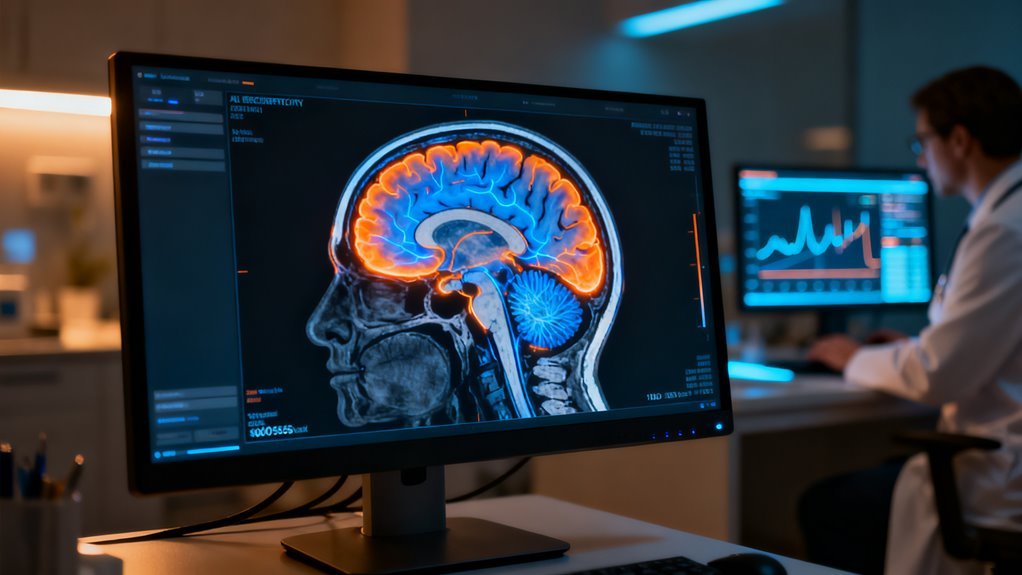
The pharmaceutical industry has spent decades perfecting a process that is, by almost any honest measure, brutally inefficient. Getting a single drug from a whiteboard sketch to a pharmacy shelf typically costs north of $2 billion and takes 10 to 15 years. Most candidates fail. The ones that succeed often do so despite the process, not because of it. That backdrop is exactly why the current wave of AI in medicine design deserves more than passing attention. This is not a marginal productivity gain bolted onto an existing workflow. What is taking shape is a structural reconfiguration of how molecules get designed, tested, and pushed toward patients.
AI isn’t optimizing the old drug discovery playbook — it’s replacing the playbook entirely.
The Speed Numbers Are Real, but Context Matters
The headline statistics are striking. Small molecule programs that historically needed roughly four and a half years to advance from discovery to Phase I trials have, in select cases, reached that same stage in about 12 months when AI guided the design process. The Japanese candidate DSP-1181, designed for obsessive compulsive disorder using AI, compressed timelines by a factor of three to four compared to conventional approaches.
Broader industry projections suggest AI enabled workflows could cut overall time to market by around 40 percent, with the biggest savings landing in the earliest and most speculative phases: target identification, hit discovery, and lead optimization.
Those numbers deserve a moment of honest scrutiny. A handful of fast programs do not yet constitute a new industry norm. Regulatory review timelines, manufacturing scale up, and clinical trial enrollment still impose hard limits that no algorithm can bypass. The 40 percent reduction figure represents a projection, not a realized average across the industry.
Still, the directional signal is consistent enough and comes from enough independent sources that dismissing it as hype would be a mistake. Something genuinely different is happening in the front end of the pipeline.
Generative Models Are Not Just Faster Chemists
What makes this moment distinct from earlier rounds of computational chemistry hype is the nature of the tools involved. Generative AI models, including variational autoencoders, generative adversarial networks, and diffusion architectures, do not simply screen existing compound libraries more quickly. They learn structure and property relationships from massive chemical datasets and then propose molecules that have never existed.
That is a qualitative shift, not just a quantitative one. Traditional medicinal chemistry tends to optimize one variable at a time. You improve potency, then discover you have wrecked solubility. You fix the solubility, then selectivity collapses.
Generative systems attempt to balance potency, selectivity, ADME properties, and synthetic accessibility simultaneously. Modern platforms can enumerate and rank billions of virtual molecules in silico, dramatically reducing dependence on brute force high throughput screening of physical compound libraries.
Benchmark studies show these models can rediscover known active compounds, which validates the approach, and also propose novel chemotypes with comparable predicted properties. That second part is where the strategic value lies. Scaffold innovation is the hardest kind of creativity in drug design, the kind that opens entirely new intellectual property space and sometimes reveals biological mechanisms that existing chemical matter could never probe.
Human medicinal chemists are brilliant at this, but they operate within the bounds of their training and intuition. Generative models operate within different bounds, ones defined by data rather than experience, and the two approaches complement each other in ways that neither achieves alone.
AlphaFold Changed the Starting Conditions
The other pillar of this transformation is structural biology, and specifically the impact of AlphaFold2. When DeepMind demonstrated near experimental accuracy for many single chain protein structure predictions, it effectively resolved a challenge that had consumed the computational biology community for decades.
The subsequent release of predicted three dimensional models for over 200 million proteins was not just a scientific milestone. It was an infrastructure event. This achievement was recognized at the highest level when a Nobel Prize in Chemistry was awarded in October 2024 for advancements in protein structure prediction and computational design.
For drug designers, the practical consequence is enormous. Targets that were previously considered structurally intractable because no one had managed to crystallize them or image them with cryo electron microscopy now have reliable structural templates available within hours.
That eliminates 6 to 18 months of waiting and a significant chunk of project cost, with estimates suggesting 15 to 20 percent savings per project in target identification and lead optimization alone.
What often gets overlooked in discussions about AlphaFold is the second order effect on virtual screening. When you integrate high quality predicted structures into computational docking and scoring pipelines, you reduce false positives and improve hit prioritization.
This matters because false positives are not just wasted time. They consume expensive wet lab resources and create decision noise that can derail an entire program. Better starting structures mean cleaner data, which means better decisions earlier, which compounds into substantial savings downstream.
It is worth noting that AlphaFold predictions are not uniformly reliable. Confidence scores vary, and for some protein regions, particularly disordered loops and protein protein interfaces, accuracy drops.
Drug designers who treat every AlphaFold output as ground truth will eventually get burned. The smart teams are using these predictions as informed starting hypotheses, not final answers, and pairing them with experimental validation where it counts most.
The Rise of Closed Loop Discovery Platforms
Perhaps the most consequential development is what happens when generative molecular design, protein structure prediction, active learning, and automated experimentation converge into a single integrated system.
A growing cohort of AI native drug discovery companies is building exactly this: closed loop platforms where algorithms design molecules, robotic systems synthesize and test them, the resulting data feeds back into the model, and the next round of design is better informed than the last.
Some organizations using this approach have moved from target discovery to trial ready candidates in approximately 30 months. That is fast enough to fundamentally alter the economics of early stage biotech.
Smaller teams can explore larger chemical spaces. Programs that would have been killed for cost reasons under the old model become viable. The capital required to reach a meaningful inflection point drops, which in turn changes the risk calculus for investors.
This is where the competitive dynamics get interesting. Traditional pharmaceutical companies have deep clinical and regulatory expertise, massive patient databases, and established relationships with health systems worldwide.
AI native companies have speed, computational infrastructure, and organizational structures built around iterative data driven decision making rather than hierarchical committee review. The question is not whether one model wins and the other loses. The question is how quickly the incumbents can absorb these capabilities and whether the newcomers can survive long enough to prove their candidates work in patients, not just in simulations.
Who Benefits and Who Faces Pressure
The most obvious beneficiaries are patients with diseases that currently have no effective treatment. Many of those diseases lack therapies not because the biology is unknowable, but because the economics of traditional drug discovery made pursuing them irrational.
Rare diseases, complex neurological conditions, and targets that lack good structural data have all been historically deprioritized. AI lowers the cost of exploration enough to make some of these programs commercially viable for the first time.
Contract research organizations face a more complicated picture. The ones that offer primarily screening and synthesis services on a volume basis could see demand erode as in silico methods replace physical screening campaigns.
Those that reposition themselves as integrated partners offering automated experimentation tied into AI design loops will likely thrive.
Regulators are watching carefully but have not yet established clear frameworks for evaluating AI designed drugs differently from conventionally designed ones. From a regulatory standpoint, a molecule is a molecule regardless of how it was conceived.
The clinical evidence requirements do not change. But as AI designed candidates enter trials in greater numbers, regulators will need to grapple with questions about model validation, reproducibility of AI driven design decisions, and how to assess the reliability of in silico evidence packages submitted alongside traditional data.
What People Are Overlooking
The discussion around AI in drug discovery tends to focus on speed and cost, and those are genuinely important. But the more profound shift may be in what becomes designable.
When you can rapidly generate and evaluate novel molecular architectures against predicted protein structures for targets that were previously undruggable, the boundary of what pharmaceutical science can attempt expands.
That expansion is not incremental. It represents a new frontier of biological intervention.
There is also a data quality question that does not get enough attention. Generative models are only as good as the data they learn from, and chemical and biological datasets are riddled with noise, inconsistency, and outright errors.
Published bioactivity data, for instance, frequently contains conflicting measurements for the same compound target pair. Models trained on dirty data will produce confident but wrong predictions, and the confidence itself becomes a hazard because it discourages the kind of skepticism that good science requires.
The teams that invest heavily in data curation and validation infrastructure will outperform those that treat data as a commodity to be hoovered up indiscriminately.
Where This Goes From Here
Over the next three to five years, expect the gap between AI native discovery timelines and traditional timelines to widen before it narrows.
Early adopters will accumulate proprietary datasets from their closed loop experiments, creating a compounding advantage that is difficult for later entrants to replicate.
The first wave of AI designed drugs to complete Phase II and Phase III trials will be scrutinized intensely, and their success or failure will shape investment flows and regulatory attitudes for a generation.
The pharma industry’s center of gravity is shifting. Not away from biology and chemistry, but toward a model where computation is no longer a supporting function.
It is becoming the primary creative engine, with wet lab work serving to validate and refine what algorithms propose. That inversion has been discussed theoretically for years.
The difference now is that the tools, the data, and the early results are all converging in the same direction. The companies and institutions that understand this shift and reorganize around it will define the next era of medicine.
The ones that treat AI as a bolt on optimization tool will find themselves moving at yesterday’s pace in a field that no longer waits.