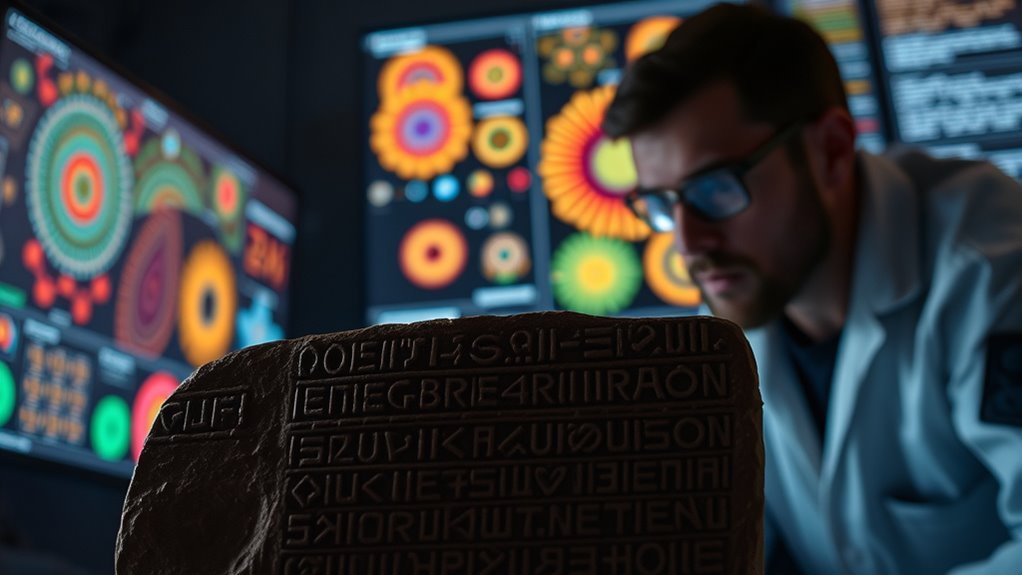
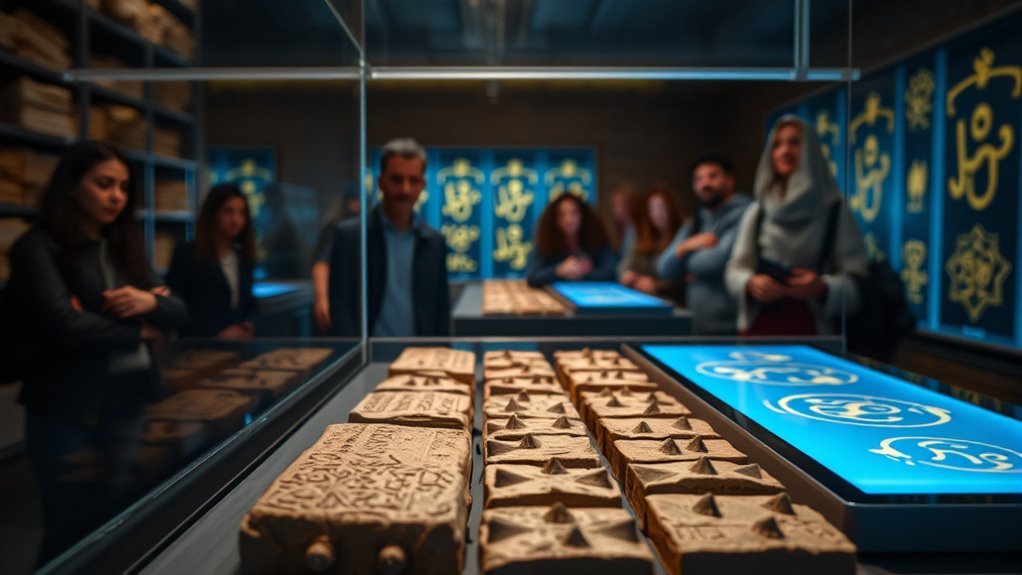
Artificial intelligence is reshaping palaeography by distinguishing the handwriting of individual ancient scribes across vast corpora of digitized tablets and manuscripts. Drawing on computer vision, deep learning, and statistical modeling, new systems can sift through millions of characters, quantify subtle variations in stroke shapes, and assign texts to specific hands with a precision that once seemed unattainable. For cuneiform specialists working on the 3,000-year-old archives of the Hittite Empire, this shift is transforming scattered tablet collections into a coherent record of scribal activity.
At the center of this development stands a platform that processes more than five million cuneiform signs extracted from roughly 70,000 high-resolution photographs of clay tablets. In Hittite studies, this platform—known as Palaeographicum—has already saved researchers thousands of hours by automating handwriting comparisons across vast collections of fragmented tablets. Its pipelines isolate individual wedge-shaped impressions from complex backgrounds, compensating for uneven lighting, damage, and curvature. Once signs are segmented, neural networks trained on thousands of annotated examples recognize symbol types, while feature-extraction algorithms measure angles, depths, and curvature to capture the distinctive micro-geometry of each inscription. This innovative approach is part of a broader trend in federal safety evaluations aimed at ensuring the responsible use of AI technologies.
A single platform parses millions of cuneiform signs, isolating wedge impressions and mapping their micro-geometry
These measurements feed into clustering procedures that group signs and tablets according to distances in a high-dimensional feature space. Tablets whose sign shapes share consistent traits are inferred to belong to the same scribal hand, while outliers suggest different training histories or chronological layers. Over time, researchers can reconstruct the careers of individual Hittite scribes, tracing how their handwriting evolves, where they worked, and which genres of text they produced. Patterns that were once invisible in fragmentary archives become legible as statistical regularities.
A supporting method, known as ProtoSnap, generates precise digital prototypes of cuneiform characters and snaps them onto tablet images at the pixel level. By aligning idealized sign templates with actual impressions, ProtoSnap helps quantify deviations introduced by individual scribes and by the physical medium. These prototypes also strengthen optical character recognition models, which currently achieve around eighty percent accuracy on unseen tablets, opening the way toward large-scale, machine-assisted transcription of Hittite texts.
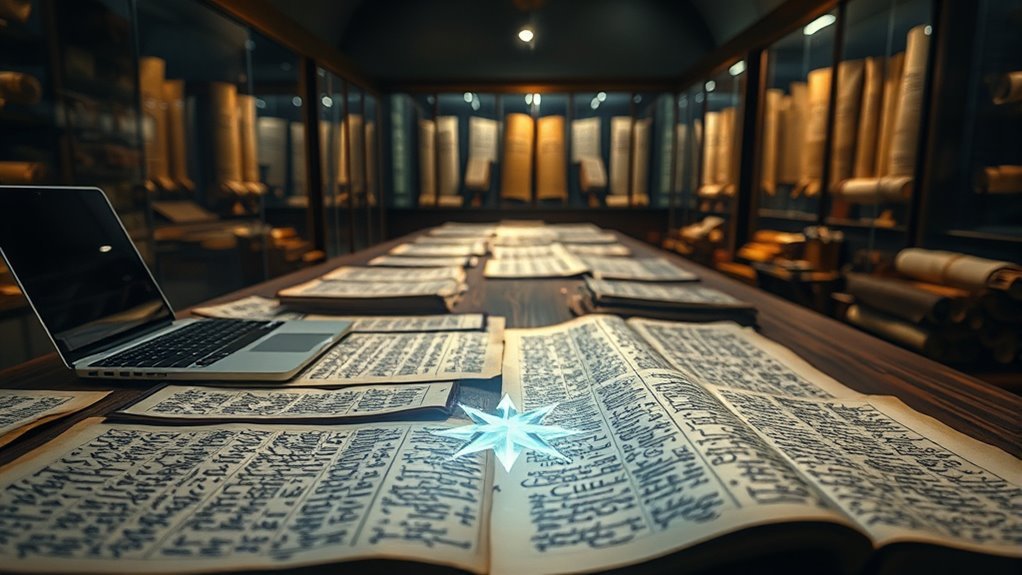
The same logic underlies parallel work on alphabetic manuscripts. Image-processing routines first distinguish ink from parchment or papyrus, then neural networks learn to identify individual letters. From these letters, algorithms extract stroke trajectories and curvature patterns that serve as fingerprints of a writer’s hand. Clustering and probabilistic models evaluate whether two manuscripts share a common scribal origin, enabling systematic tests of long-standing hypotheses about authorship, workshop organization, and textual transmission.
Studies of the Dead Sea Scrolls demonstrate the wider impact of this approach. Quantitative analysis of the Great Isaiah Scroll divides its columns into two scribal groups, revealing one hand responsible for columns one to twenty-seven and another for columns twenty-eight to fifty-four. Similar techniques attribute other scrolls to particular Qumran scribes. Together, these advances illustrate how AI-driven scrutiny of five million cuneiform symbols and comparable datasets is turning ancient handwriting into a rich, analyzable source on the people who shaped early written cultures.




1 comment
Comments are closed.