

Artificial intelligence is quietly changing the machinery of science itself. What once looked like a story about chatbots and image generators is rapidly becoming a story about new scientific infrastructure that can search vast design spaces, coordinate experiments and help turn messy data into workable theories. The stakes are real: faster materials discovery, more targeted drugs and better energy systems, but also new dependencies, new risks and a serious need for technical and ethical literacy among researchers and institutions. In labs across disciplines, AI tools now accelerate scientific discovery by helping scientists generate hypotheses, design experiments and interpret increasingly complex datasets.
From interface revolution to infrastructure shift
The first public wave of modern AI focused on interfaces. Large language models made it easy to talk to machines, translate text and write code. That wave mattered for productivity, but it did not fundamentally change how laboratories search for new catalysts or how clinical teams design a drug pipeline. In parallel, a deeper shift has been underway inside scientific computing. For decades, progress came from numerical simulation and expert systems that encoded domain knowledge as rules. As data volumes grew, machine learning entered the picture for tasks such as predicting material properties or classifying experimental spectra. Generative models and foundation models push this further by learning broad representations of chemical space, physical laws or biological structure, rather than solving one narrow task at a time. This shift underscores the need for mandatory safety tests to ensure responsible AI deployment.
The first AI wave transformed how we talk to machines, not how we design catalysts or clinical pipelines
This is why many researchers now argue that the real AI revolution in science is infrastructural. Instead of being a conversational layer sitting on top of existing workflows, AI is becoming part of the workflows themselves, linking data, models and instruments into reproducible pipelines that can be shared, audited and extended.
Foundation models built for science
A critical development is the emergence of scientific foundation models often called SciFMs in recent literature. These are large models trained not on web text alone but on domain specific corpora such as simulation outputs, experimental data and technical papers from physics, chemistry, biology and engineering. The goal is not simply to answer questions in natural language but to learn generalizable representations of scientific structure so that the same model can support prediction, design and reasoning across many related problems. Recent surveys frame SciFMs as a new paradigm compared with traditional numerical solvers. Rather than tuning a bespoke solver for each equation, SciFMs can approximate families of physical processes and then be adapted to new conditions with relatively modest additional training. Workshops such as the Foundation Models for Science series underscore how quickly this area is maturing, with applications ranging from climate modeling to materials discovery and plasma physics.
On top of these models, open source toolkits are emerging that connect generative capabilities directly to chemistry and materials tasks. Reviews of generative approaches to materials design show how modern models can learn high dimensional probability distributions over structures and properties, then sample candidate molecules or crystals that are likely to meet targets for stability, conductivity or catalytic activity. Similar work in drug discovery uses deep generative models to propose molecules that satisfy complex constraints on potency, selectivity and safety, moving beyond brute force screening of fixed libraries. The net effect is that foundation models are turning into collaborative experimentation platforms. They can hold shared representations of data, code and models. Researchers can reproduce and extend each other’s pipelines in a more modular way. Over time, this platform like layer is likely to be as important as traditional instruments for many areas of science.
Language models that speak science
Large language models have not disappeared from the story. They have become more specialized. Instead of general chat systems, research groups are training and fine tuning models on code repositories, experimental protocols and instrument documentation, so that these systems understand the vocabulary, formats and standards of specific disciplines. In practice, that means a chemist can ask for a script that cleans and analyzes high throughput reaction data, and the model returns code in a form that matches the lab’s existing pipeline. A materials researcher can describe a target bandgap or mechanical property and receive suggestions for experimental configurations, along with citations to relevant literature. Experimental protocols can be summarized into checklists and safety notes that match the conventions of the field, rather than generic prose.
This integration is moving from pilot projects into professional training. Programs at leading universities now teach researchers how to pair predictive modeling with AI assisted experiment planning, lowering the barrier for those who are not full time computational scientists. Competence increasingly depends less on writing low level code and more on understanding how to orchestrate human judgment with machine exploration: deciding what questions to ask, what constraints to enforce and when to trust or challenge a model’s suggestions.
AI guided discovery in materials, energy and drug development
Materials science offers a clear view of what this infrastructure can do. Generative and predictive models can now scan enormous combinatorial spaces of candidate alloys, polymers or crystal structures that would be impossible to explore by manual intuition. Instead of synthesizing hundreds or thousands of random variants, scientists start with model driven suggestions that have a higher probability of meeting key performance criteria, whether that is strength, conductivity or stability under heat. Recent work demonstrates physics informed generative models that embed crystallographic symmetry and periodicity directly into the learning process. These systems generate new crystal structures that are mathematically valid and chemically realistic, aligning model outputs with core principles of materials science. The same logic applies to energy storage materials and catalysts, where AI can help search for structures that balance multiple objectives such as efficiency, durability and cost.
In drug discovery, deep generative chemistry techniques are reshaping de novo molecular design. Models can propose novel scaffolds and optimize ligands across multiple parameters, including potency and predicted absorption, distribution, metabolism, excretion and toxicity. Importantly, recent analyses stress that the value lies not in simply generating more molecules but in generating better hypotheses, where candidates are synthetically accessible and biologically plausible. Combined with structure based design tools, generative platforms can narrow chemical search spaces and help teams prioritize compounds for synthesis and testing. Case studies now show timelines shortened from years to months in early stage discovery, though later clinical phases still dominate overall development time. National science bodies increasingly highlight AI enabled pattern recognition in high dimensional experimental data as a driver of advances in new materials, catalytic systems and biomedical targets.
Autonomous and semi autonomous laboratories
The next step in this evolution is the autonomous or semi autonomous laboratory. Here, AI does not just suggest experiments; it coordinates hardware. High throughput instruments, robotics and adaptive control systems are linked to models that propose hypotheses, schedule runs, interpret outcomes and update their own beliefs. In an autonomous workflow, the process of hypothesis testing becomes a closed loop. The system selects an experiment based on current models, executes it using robotic instruments, ingests the results, retrains or refines the models and then selects the next experiment. That loop can run continuously, pausing only for maintenance or human oversight. Research centers in condensed matter physics, chemistry and energy storage already report systems that act as autonomous research assistants, handling routine measurements and exploration while human scientists focus on framing the questions and interpreting the broader patterns. Early results show significant gains in throughput and discovery rate, especially in spaces where each experiment is relatively standard but the combination of parameters is vast.
This does not remove humans from the loop. It changes their role. Decisions about which objectives to optimize, which regions of parameter space are relevant and which safety limits to enforce remain human responsibilities. Interpretive work, such as deciding whether a new material is truly viable for industrial use, also demands domain expertise that current models do not provide.
Implications for skills, institutions and industry
For researchers, the most immediate implication is a shift in skill profiles. Reading code and debugging scripts still matters, but it is no longer the sole gateway to advanced methods. The critical competences become model literacy, data stewardship and experiment design in partnership with AI systems. Knowing when to trust model predictions, how to validate them and how to avoid subtle data leakage or bias becomes as important as understanding a differential equation. Institutions face infrastructure questions. Building and maintaining scientific foundation models and autonomous lab systems is expensive. It requires data pipelines, compute resources and long term governance. Without careful planning, these capabilities could concentrate in a few wealthy institutions or companies, widening gaps in scientific capacity across countries and regions. Grant agencies and national labs are starting to treat AI infrastructure as a shared asset, but policies and funding models are still evolving.
For industry, especially in pharmaceuticals, materials and energy, AI driven discovery offers both competitive advantages and new dependencies. Firms that build robust model pipelines and integrate them deeply with experimental platforms can move faster and explore more options. At the same time, regulatory agencies will expect transparent methods, reproducible results and clear explanations of how AI contributed to key decisions. Black box discovery will be hard to defend when lives or large environmental impacts are at stake. Societal implications are mixed. Faster discovery could accelerate solutions to urgent problems such as climate resilient materials, green catalysts or targeted therapies for complex diseases. Yet the same techniques can search for more powerful toxins or dual use materials. Security and ethical frameworks must keep pace with the new capabilities, including careful control of access to certain generative models and datasets.
How deep research tools reshape scientific exploration
Tools that combine advanced models with focused research workflows are becoming central in this landscape. Systems in the deep research class are designed to move beyond quick answers and into multi step literature synthesis, cross checking and citation tracking across large scientific corpora. They help researchers navigate the fast growing body of work on foundation models, generative chemistry and autonomous labs, connecting specific claims to underlying papers and data. For example, modern search and research platforms built on strong language and reasoning models now deliver structured summaries of topics such as generative materials discovery or scientific foundation models, with explicit references and links to primary sources. This not only speeds up the early stages of a project but also supports better documentation and transparency, since teams can see how AI derived insights relate to the literature rather than relying on opaque outputs.
Used well, these tools become part of the scientific memory of an organization. They lower the cost of rigorous background work and make it easier to keep track of emerging methods, benchmarks and cautions. Used poorly, they can encourage overconfident cherry picking or superficial understanding. The difference lies in how researchers frame queries, read sources and integrate machine summaries with direct engagement with primary material.
Looking ahead: scientific progress as the core AI frontier
The trajectory is clear. As foundation models for science mature, as generative systems learn more about physical and chemical constraints and as autonomous labs gain reliability, AI will be judged less by how well it chats and more by how much it contributes to real discoveries. That shift will not feel like a sudden revolution. It will look like incremental improvements in materials databases, more informative lab notebooks, quicker iteration cycles and more sophisticated research planning. There are hard problems ahead. Ensuring reproducibility in AI enhanced workflows, preventing hidden biases in training data from skewing results, managing access to powerful generative tools and aligning infrastructure investments with public interest are all unresolved questions. Evidence from early deployments suggests both significant potential and real limits, which need to be documented and shared, not glossed over.
For researchers, companies and policy makers, the practical takeaway is straightforward. Treat AI not as a magical assistant, but as new scientific infrastructure that demands careful design, governance and education. Build the pipelines, standards and skills that allow humans and machines to collaborate effectively. Insist on transparency and validation. Focus on problems where better exploration and pattern recognition can genuinely change outcomes, from energy systems to therapeutics.
If that happens, the most important AI stories in the coming decade will be told not in chat logs but in lab notebooks, data archives and scientific journals. That is where the real revolution in discovery is taking place.
Frequently Asked Questions
How Will Ai-Driven Scientific Discovery Change University Science Education and Training Programs?
AI driven scientific discovery is already changing what it means to be trained as a scientist at a university, because the same intelligent systems that drive breakthroughs in research are increasingly embedded in everyday teaching and study. As AI becomes a core instrument for analyzing complex data, generating hypotheses and automating routine work, science education is shifting from content delivery toward preparing students to think, design and collaborate in partnership with these systems.
Background: How AI Reached the Lab Bench And The Classroom
AI did not arrive in universities overnight. Earlier waves of digitization brought learning management platforms, online resources and basic analytics into higher education, but these tools primarily supported administration and content distribution rather than genuine scientific practice. Over the past decade, machine learning and data science moved closer to the core of research, with algorithms that could classify images, predict trends and find patterns in genomic, climate and engineering datasets.
Recent work in science education argues that AI is now a catalyst for structural change, not just a suite of helpful tools. Scholars describe a shift across cognition, epistemology, pedagogy and institutional design, as intelligent tutors, learning analytics and generative models reshape how scientific knowledge is constructed and taught. At the same time, systematic reviews of AI in higher education document widespread use of personalized learning systems, automated assessment and data informed decision making across many universities.
Generative AI intensified this transformation by making powerful language and reasoning models available to students and faculty at scale. Studies of classroom practice show rapid uptake of these tools for tutoring, feedback, writing support and code assistance, along with new institutional policies that attempt to regulate their use. The result is a quiet but deep redefinition of what counts as independent work, what counts as scientific understanding and how universities measure both.
AI Driven Discovery As A New Kind Of Scientific Practice
In research intensive universities, AI is now an active partner in discovery rather than a background utility. In disciplines such as bioinformatics, materials science and climate modeling, machine learning systems routinely search enormous parameter spaces, simulate complex phenomena and highlight non obvious patterns that human researchers may never see unaided. AI tools also accelerate literature reviews by summarizing papers, clustering related work and surfacing relevant studies, which compresses months of manual reading into hours.
Stanford researchers describe this development as a shift toward human centered AI driven discovery, where algorithms propose candidate structures, mechanisms or designs while human experts provide domain knowledge, judgment and creative direction. Reviews of AI in research emphasize that when used well, these tools can increase precision, reproducibility and speed, as well as promote interdisciplinary collaboration through shared data and analytic platforms.
For students, the same technologies now appear as everyday research assistants. A recent study of Perplexity AI integration in academic work found that roughly seventy five percent of surveyed students used the system to explore possible research topics, and close to sixty percent relied on it for reviewing related literature and summarizing prior studies. Around forty percent used it to analyze research gaps in existing work, identifying missing issues or underexplored variables. This indicates that interaction with AI systems is becoming part of the normal research training pipeline rather than a marginal add on.
Core Shifts In Science Curricula And Training
AI Literacy As A Foundational Skill
Several frameworks for AI in higher education argue that universities must treat AI literacy as a basic scientific competency, comparable to statistics or programming. This includes understanding how models learn from data, where biases can enter, how uncertainty is quantified and how to interpret outputs critically rather than accepting them at face value. Early implementations of AI across the curriculum show departments adding introductory AI modules to a wide range of programs, from engineering and physics to biology and social sciences.
The most credible approaches combine conceptual understanding with hands on use. Educators integrate AI powered tutors, coding assistants and data analysis tools directly into lab courses and projects, while asking students to reflect explicitly on their benefits and limitations. This makes AI literacy less about theory and more about learning to work effectively and responsibly with real tools.
Data Centric And Probabilistic Reasoning
AI driven scientific discovery depends on high quality data, robust modeling and careful reasoning about uncertainty, so training must follow the same logic. Reports on AI in higher education highlight expanded emphasis on statistics, data management and analytics across science curricula, coupled with real datasets from climate science, genetics or engineering projects. Students increasingly practice tasks such as cleaning data, choosing models, validating results and communicating probabilistic findings rather than simply performing textbook calculations.
This data centric orientation also changes assessment. Instead of focusing only on correct answers, some courses now evaluate how students design analyses, handle noisy measurements and justify their modeling choices. Such skills translate directly to AI supported discovery, where scientists must decide when algorithmic outputs are trustworthy and when they require further scrutiny.
Automation Rich Lab Training
AI and automation are also entering the laboratory. Accounts from universities describe AI enhanced lab environments in which systems schedule experiments, monitor instruments, flag anomalies and help interpret incoming data. Robotics and automated workflows manage repetitive tasks like pipetting or imaging while AI models analyze the results in near real time.
Education researchers argue that to prepare students for these workplaces, lab courses should expose them to automation rich setups, not only traditional manual protocols. This does not mean replacing core experimental skills but rather teaching how to design, supervise and troubleshoot automated pipelines, and how to integrate algorithmic insights with physical intuition about materials, organisms or devices.
Interdisciplinary And AI Across The Curriculum
Because AI methods apply across disciplines, several institutions are moving away from isolating AI in single departments toward cross curricular models. Proposed frameworks for AI across the curriculum call for shared foundational courses plus domain specific applications in science, engineering, health and social fields. For example, biology programs might focus on sequence analysis and structural prediction, while physics emphasizes modeling complex systems and engineering trains students in optimization and control.
This interdisciplinary orientation also influences research training. Reviews of AI in higher education point to increasing collaboration between computer science departments and subject specific labs, with joint projects, co supervision and shared infrastructure such as data platforms and cloud computing resources. Students learn to communicate across fields, combining domain expertise with algorithmic thinking, which is essential for responsible AI driven discovery.
Ethical Governance And Academic Integrity
The spread of AI through teaching and research raises serious questions about ethics, assessment and governance. Studies of generative AI in classrooms note concerns about plagiarism, overreliance on automated feedback and the difficulty of distinguishing a student voice from that of a model. AI based tools for plagiarism detection and authorship analysis have been introduced to help protect academic integrity, but they bring their own challenges around false positives and privacy.
Policy oriented reports urge universities to develop clear guidelines on acceptable use, including transparency about when AI assistance is employed, expectations for attribution and limits in certain forms of assessment. They also call for training faculty and students to recognize bias, misinformation and hallucination in AI outputs, and to cultivate habits of verification against primary sources and empirical data. Ethical governance thus becomes a core part of scientific education, not just an administrative add on.
Implications For Universities, Students And Industry
Institutional Strategy And Infrastructure
From an institutional perspective, AI is both an opportunity and a strategic challenge. Global surveys and policy reports show universities investing in AI platforms for personalized learning, early warning systems for student support, and tools for optimizing resource allocation and management. These systems promise improved retention, more targeted teaching and more efficient use of staff time.
However, institutions must align these deployments with their research missions. Research oriented universities need infrastructure that supports data intensive science, including secure storage, high performance computing and shared tools for modeling and visualization. Without this backbone, AI driven discovery can remain limited to a few specialist labs rather than reshaping education more widely.
Student Skills And Employability
For students, AI changes both what they learn and how employers evaluate them. Technology and industry reports repeatedly emphasize demand for graduates who can combine domain knowledge with proficiency in AI and data analysis. In science fields, employers look for individuals who can design experiments that incorporate AI tools, interpret model outputs responsibly and communicate complex findings to non specialists.
Evidence from classrooms and student surveys suggests that learners are already building informal AI skills, using systems like Perplexity AI for topic exploration, literature mapping and proposal drafting. Formal curricula that recognize and refine these skills can help students become more deliberate and critical users, turning casual tool use into professional capability.
Societal Impact And Knowledge Production
At a societal level, AI driven scientific discovery could accelerate progress on complex challenges such as climate change, public health and sustainable engineering, but only if educational systems produce scientists who understand both the power and limits of these tools. Reviews of AI in higher education warn that algorithmic biases, poor data quality and opaque models can reinforce existing inequities or lead to misguided policies if not carefully managed.
Universities therefore bear responsibility not just for training technically skilled graduates, but for shaping the norms of transparency, accountability and collaboration that will govern AI enabled science. This includes open data practices, cross disciplinary partnerships and critical reflection about whose problems are being prioritized and whose voices are heard in research agenda setting.
Risks, Limitations And Uncertainties
Despite significant promise, the integration of AI into science education and discovery carries real risks. Scholars highlight the danger of overreliance on AI outputs, in which students and researchers accept model suggestions without sufficient critical evaluation. Generative AI systems can produce fluent but incorrect explanations or fabricated references, a phenomenon that can mislead novices and erode trust if institutions do not teach robust verification habits.
There is also the risk that unequal access to advanced AI tools and computational infrastructure will widen existing gaps between well funded universities and resource constrained institutions. If only a subset of students gain meaningful experience with AI driven discovery, disparities in opportunity and innovation could increase.
Finally, the pace of technological change creates uncertainty for curriculum design. Tools and methods evolve quickly, and educators must balance teaching enduring concepts such as statistics, modeling and ethics against training in current platforms that may change within a few years. This tension means universities need flexible, regularly updated programs rather than rigid long term plans.
How Universities Can Respond Over The Coming Years
Leading analyses suggest several practical responses for universities seeking to align science education with AI driven discovery. First, institutions can adopt an AI across the curriculum approach that combines general literacy with domain specific applications, ensuring that all science students gain exposure without turning every program into data science alone. Second, they can embed AI tools directly into labs and projects while maintaining explicit reflection on methodology, bias and uncertainty.
Third, universities can support faculty development so that instructors understand both the capabilities and the limitations of AI systems, and feel confident integrating them into teaching and assessment. This includes opportunities for cross departmental collaboration, where science educators work with AI specialists to design authentic tasks that mirror modern research practice.
Fourth, institutions can treat ethical and governance questions as central pillars of scientific training, with clear, consistently enforced policies and spaces for debate about emerging issues such as data ownership, model transparency and accountability for AI assisted decisions. Done well, this creates a culture where responsible AI use is part of professional identity.
Key Takeaways And Forward Looking Insights
AI driven scientific discovery is transforming university science education by turning AI literacy, data centric reasoning, automation rich lab work, interdisciplinary collaboration and ethical governance into core elements of training rather than optional extras. The tools students use to ask questions, analyze data and design experiments are increasingly the same systems that power cutting edge research, which collapses traditional boundaries between learning and discovery.
The universities that will thrive in this environment are those that treat AI as a catalyst for rethinking curricula, assessment and institutional strategy, while keeping human judgment, creativity and responsibility at the center. They will graduate scientists who can work with AI rather than against it, who understand both the capabilities and the limits of algorithmic systems, and who can lead multidisciplinary teams tackling complex problems with a mix of empirical rigor and ethical awareness.
In short, AI driven scientific discovery is pushing university science education toward a model where learning and research are deeply intertwined, where data and computation are native skills, and where collaboration with intelligent systems is as fundamental as collaboration with human peers. That is the future students and faculty are now beginning to build together reddit
What New Legal Frameworks Are Needed for Discoveries Made Primarily by AI Systems?
Artificial intelligence is beginning to do more than accelerate human research. In some laboratories and companies, models propose hypotheses, design experiments and even control robotic platforms that run those experiments end to end. When discoveries emerge from that kind of pipeline, the familiar legal questions around patents, copyright and liability start to look strangely outdated. The core issue is simple but urgent. Law built on the assumption of human creativity now has to cope with discoveries where human contribution is thin, distributed or hard to trace.
How we got here: law that assumes human creators
Modern intellectual property law was shaped in a world where authors and inventors were always people, even if they used sophisticated tools. Copyright systems in the United States and Europe are explicitly built around the idea of human authorship and human creativity. Patent law also assumes that inventors are natural persons, even when they use advanced software or automation to help them.
That foundation has driven some clear decisions. The United States Copyright Office has repeatedly said that works created autonomously by AI systems, without meaningful human control over expression, do not qualify for copyright protection. European copyright doctrine is similar, framing protected works as the result of a human intellectual creation and treating fully AI generated outputs as outside the scope of protection. These principles were not drafted with generative models in mind, but they have been adapted and reaffirmed as AI has grown more capable.
On the patent side, the now famous DABUS applications, where an American inventor sought to list an AI system as the sole inventor of two devices, were rejected by the United States Patent and Trademark Office, the European Patent Office and the United Kingdom Intellectual Property Office. Those decisions confirmed a common view. AI systems may be powerful tools, but they are not inventors in a legal sense.
Current doctrine on AI assisted inventorship
Recent guidance from the United States Patent and Trademark Office makes the line very clear. Only natural persons can be named as inventors, and the same inventorship standard applies whether or not AI tools were involved. The guidance rescinded an earlier AI specific approach and reaffirmed that models are treated as tools. They can assist in the inventive process, but they do not elevate to inventor status.
In practice, this forces patent applicants to map contributions carefully. A human who uses an AI system to generate candidate solutions still has to demonstrate a significant inventive contribution, such as selecting, combining or refining those outputs in a non obvious way. Joint inventorship rules among multiple humans remain central, while the system itself disappears into the background as infrastructure.
There are already proposals to rethink this structure. Some scholars argue that AI systems could be formally recognized as authors or inventors, with rights automatically assigned to the people or organizations that create or deploy them. One suggested regime would treat AI outputs as a new category of intellectual property and allocate those rights to the owner of the machine or the party that commissioned the work, with the AI itself listed as the source rather than a rights holder. These ideas point to the kind of frameworks policymakers may need as AI systems take on a more active role in discovery.
Ownership and the allocation of rights in AI heavy research
The harder question is not whether AI can own anything. It is how to allocate ownership and control among the human stakeholders surrounding an AI driven discovery. In a typical modern project, several actors are involved.
Model developers design and train the system. Platform providers integrate it with cloud infrastructure and specialized tools. Laboratory operators configure the workflows and data pipelines. Funders underwrite development and deployment costs. Researchers interact with the system, review outputs and make decisions about which lines of inquiry to pursue.
When an unexpected discovery emerges from a largely autonomous pipeline, the old model of a single named inventor or author does not capture this reality. Current law tries to work around the issue. In the United Kingdom, for example, copyright legislation includes the category of computer generated works, and assigns authorship to the person who made the arrangements necessary for the creation of the work. That rule effectively picks one human role as the legal anchor, typically the person or organization controlling the system.
New frameworks for AI intensive research will likely need more nuanced allocation rules. One credible direction is a tiered rights model. Core IP rights in an AI assisted invention could default to the entity that operationally controls the research pipeline, while model developers, funders and key contributors receive defined secondary rights or revenue shares. That kind of arrangement, similar to work for hire and employed to invent doctrines, would better reflect the distributed nature of modern discovery while keeping a clear primary rights holder.
Copyright and AI generated research outputs
Generative models already draft literature reviews, write sections of scientific articles, produce code, generate images of experimental setups and even simulate data. Current copyright guidance tries to distinguish between output that reflects meaningful human creativity and output primarily shaped by the model.
The United States Copyright Office has concluded that generative AI outputs can be protected only when a human author determines sufficient expressive elements, for example by making creative selections, arrangements or modifications. Simply providing prompts or accepting whatever the model returns does not create a copyrightable work. European analysis reaches similar conclusions, treating fully autonomous AI generated content as falling into the public domain when there is no human intellectual creation. In many jurisdictions, purely AI generated outputs are therefore usable by anyone without permission, even if they infringe other rights, which creates its own complications.
For research, this creates a tension between openness and incentive. On one side, public domain status for purely AI generated texts and figures could accelerate knowledge sharing and reduce barriers to reuse. On the other side, institutions may hesitate to invest heavily in automated content production if they cannot secure exclusivity over key outputs, especially in competitive fields such as drug discovery or materials science.
A future framework might create a distinct category of protection for AI generated research materials, shorter in term and narrower in scope than traditional copyright, tailored to reward investment without locking down basic scientific communication. Proposals along these lines already exist in the legal literature under labels such as Digiwork, where AI generated IP would be recognized as a special class and rights allocated to machine owners or commissioners.
Liability for autonomous experiments and AI outputs
When AI systems run experiments, make decisions or generate content that causes harm, the question shifts from ownership to responsibility. Current copyright and tort analysis offers some starting points.
Scholars examining AI generated outputs under international, European and United Kingdom copyright law have argued that liability for infringing outputs may extend to both users and providers of AI systems, depending on their role, knowledge and control. European commentary on copyright infringements in generative AI outputs similarly suggests that either the user or the provider, as defined in the AI regulatory framework, could be liable for reproductions that violate existing rights. Recent United States reports on AI and digital replicas propose that liability should arise from distributing or making available unauthorized replicas, that knowledge requirements should apply and that traditional principles of secondary liability remain relevant.
Translating those ideas into the research context, new legal frameworks will need to define responsibility for autonomous experiments and AI driven decisions across several dimensions.
Responsibility for safety and compliance. Laboratories and organizations that deploy AI controlled experimental platforms should carry primary liability for ensuring that protocols meet ethical and regulatory standards. Providers of AI tools may bear secondary liability when they design systems that encourage unsafe or unlawful uses, or when they fail to act on clear signals of misuse.
Responsibility for data and training. If an AI system generates results that are biased, misleading or infringing because of its training data, model developers and data curators may share responsibility. Legal regimes will need criteria for when that responsibility attaches, such as failing to follow accepted data governance practices or ignoring regulatory guidance about sensitive information.
Responsibility for downstream use. When research outputs are reused, for instance when a generative model helps design a molecule later deployed as a drug, liability rules must cover the entire chain of custody. Current tort and product liability principles provide a base, but they will need explicit integration of AI specific factors such as algorithmic decision paths and automated risk scores.
Without clear standards, organizations may either overreact by forbidding autonomous systems or underreact by pushing responsibility onto individual researchers who do not control the tools they are required to use.
Documentation, oversight and audits for AI driven decision making
Another gap in current law is procedural. When AI systems play a central role in discovery, documentation and oversight are not just good practice. They are prerequisites for assigning responsibility and resolving disputes.
AI heavy research pipelines will need mandatory records of model versions, training data lineage, configuration choices, prompts and parameter settings for each experiment. That documentation should capture where human judgment intervened, what alternatives the AI suggested and why particular choices were made. These records become essential evidence if something goes wrong and regulators or courts need to reconstruct the chain of decisions.
Oversight structures matter as well. Ethics committees and institutional review boards will need updated charters that explicitly address AI involvement in experiments, from patient facing clinical trials to high risk materials research. Periodic audits of AI driven decision systems, conducted by independent experts, will be crucial to validate that models are operating within agreed boundaries and that safety controls are effective.
Many of the trends already visible in AI governance, such as transparency reports, risk management frameworks and accountability mechanisms, can be adapted to the research setting. The difference is that in science, opacity does not only threaten rights. It can undermine trust in results and slow adoption of valuable discoveries.
What new legal frameworks should actually do
When you pull these threads together, a coherent picture emerges of what future legal frameworks for AI centered discovery need to accomplish.
They must clarify inventorship in AI assisted research, keeping human inventors at the forefront but recognizing structured contributions that come through AI tools. That likely means detailed guidance on what counts as a substantial inventive act when models generate many of the raw ideas.
They must allocate intellectual property among the actors who build, operate and fund AI systems in research settings. Existing doctrines such as computer generated works, work for hire and employed to invent offer starting points but will need adaptation to handle complex multi party arrangements.
They must refine copyright rules around AI generated research outputs, distinguishing clearly between public domain content, protected human authored works and potential new categories such as short term rights in AI generated materials.
They must establish liability standards for autonomous experiments and for AI generated outputs that cause harm or infringe existing rights, drawing on emerging analyses of user and provider responsibility in AI systems and on established tort principles.
They must mandate robust documentation, oversight and audit mechanisms for AI driven decision making in laboratories, clinics and industrial research, because without traceability and review, neither ownership nor responsibility can be meaningfully assigned.
Implications for technology, business and society
For technology companies, these frameworks will determine how far they can push toward fully automated discovery. Clear rules on ownership and liability would encourage investment in platforms where AI systems run entire experimental cycles with minimal human input. Unclear rules will keep those systems confined to pilots and controlled environments.
For research institutions and businesses, the key implication is strategic. Organizations will need to design governance structures around AI systems, not only IT policies. That includes negotiating IP arrangements with model providers, defining risk sharing in collaborative projects and training researchers to treat AI as a powerful but accountable partner rather than an opaque oracle.
For society, the stakes are double. On one side, there is the opportunity to accelerate innovation in medicine, energy, climate science and beyond through AI powered discovery pipelines. On the other side, there is the risk that opaque, poorly regulated AI systems generate findings that are unreliable, unsafe or exploitative, while leaving those affected with no clear path to remedy.
Sound legal frameworks can tilt the balance. They will not resolve every ethical question, but they can make sure that when AI systems help produce discoveries, the human world still controls who benefits, who bears risk and how trust is maintained.
Looking ahead
We are at an early moment in the history of AI driven science. The legal debates unfolding now about authorship, inventorship and liability are analogous to the early internet debates about jurisdiction and digital content. In retrospect, the solutions that worked best were those that accepted the new reality of networked communication while doubling down on core values of transparency, accountability and fairness.
The same will likely be true here. Law should not pretend that AI is only a neutral tool, nor rush to grant machines their own rights. Instead, new frameworks can recognize that discovery is becoming a joint endeavor among humans and increasingly capable systems, and focus on protecting human interests within that partnership.
Researchers and policymakers who engage with these questions now have the chance to shape a system where AI amplified discovery is both faster and more trustworthy. The alternative is a future where the most important insights emerge from black box pipelines that no one fully owns or understands.
How Might AI Scientists Affect Diversity and Inclusion Within Global Research Communities?
AI scientists are quickly becoming gatekeepers of global knowledge. The tools they build can lower language and technical barriers for millions of researchers, yet they can also deepen existing divides around gender, geography and language if those tools simply mirror the inequalities baked into current data and institutions.
Why this question matters now
Artificial intelligence is moving from a niche specialty to the connective tissue of research itself. Recommendation systems rank which papers appear first. Language models help write articles and reviews. Automated translation and summarization tools increasingly mediate how scientists read work outside their own field or language.
At the same time, the research community that designs these systems is far from representative. In twenty twenty two, only about one in four researchers publishing on AI worldwide were women, and women held only about one fifth of technical roles in major machine learning companies. In South Asia, an outlook study on AI and gender found that women account for more than seventy percent of university students in some countries, yet only around a quarter of primary authors in AI research. This gap is even wider in senior positions, where women occupy only about a quarter of roles.
Geographically, AI research and policy is overwhelmingly shaped by institutions in North America and Europe, while scholars from Africa, Latin America, South Asia and the Pacific remain underrepresented in both publications and governance forums. As AI systems become embedded in the infrastructure of science itself, the choices AI scientists make will influence who gets to participate in the next decade of discovery.
A brief history of AI inside scientific work
Earlier generations of digital tools mostly handled storage and search. Bibliographic databases and citation indexes helped researchers keep track of literature but still demanded strong English skills and institutional access to journals.
The rise of machine learning changed that equation. Neural machine translation made it possible to translate entire articles in seconds. More recently, large language models have been used to help non native English speakers polish manuscripts, summarize complex methods and generate cover letters for journal submissions.
Parallel developments in research analytics and AI powered discovery promised to surface relevant work from vast corpora. These systems rely heavily on citation networks and existing indexing practices, which already favor English language journals and well resourced institutions. As a result, they risk reinforcing longstanding patterns in scientific publishing rather than correcting them.
In AI ethics and governance, a growing body of work has documented how perspectives from the so called Global South are largely absent from major policy documents and multistakeholder initiatives. There is now active debate about whether the term Global South itself obscures important differences between regions, and whether governance frameworks adequately reflect diverse legal and cultural traditions.
Where AI scientists can genuinely broaden inclusion
Language tools that shift who can join the conversation
One of the clearest opportunities lies in multilingual access to knowledge. Research on AI supported translation in science and technology shows that translation systems can significantly reduce delays in accessing frontier work for researchers who do not publish in English. Efforts within the library and information science community have used AI to help readers navigate between everyday and academic language, and to discover work written in underrepresented languages.
When designed carefully, these tools can change whose work is visible. They can allow a health researcher in Senegal to read oncology trials from Japan, or a climate scientist in Brazil to share regional findings with partners in Europe without years of English training. They can also improve the visibility of research produced in local languages, which is often overlooked in mainstream indexes.
However, studies from Stanford and others show that language bias in scientific publishing persists even when authors use AI language tools. Reviewers and editors often still penalize non native writing styles, and journal policies continue to treat English as the default language of science. This means AI scientists cannot assume that better translation alone will fix structural discrimination. They need to design evaluation methods that check whether tools genuinely improve acceptance rates and visibility for non native authors, rather than simply polishing grammar.
Recent work on multilingual large language models has also revealed that these systems frequently reproduce a digital language divide. An analysis by computer scientists at Johns Hopkins found that popular models amplify the dominance of English and a handful of widely spoken languages, while providing less accurate and more biased responses in low resource languages. The same study showed that users asking about international conflicts in minority languages often receive answers strongly skewed toward United States perspectives. If similar models are used to support literature review or policy analysis, they may quietly sideline local knowledge.
Discovery and evaluation that recognize overlooked work
AI scientists design the ranking functions that decide which papers appear at the top of search results, which journals are flagged as prestigious, and which authors are flagged as influential. Studies of global AI research show that the current ecosystem gives outsized weight to institutions in the United States and Europe, with relatively few highly cited AI publications originating from Africa, parts of Latin America and many low income countries.
If discovery systems simply optimize for past citation counts or journal impact measures, they will continue to favor already dominant communities. This affects not only individual careers but also research agendas. For example, a systematic review of explainable AI work in the Global South found that most projects focused on a small set of countries such as India, with relatively little attention to African or smaller Latin American nations. Many projects were led or co led by institutions in the Global North, even when the data and deployment context were in the South.
AI scientists can counteract this by explicitly modeling geographic and institutional diversity in their training and ranking pipelines. That might include weighting schemes that elevate underrepresented regions, or filters that help users intentionally explore work from specific countries or types of institutions. It can also include metrics that track the regional spread of citations and collaborations prompted by AI powered tools, not just global usage numbers.
Lowering technical barriers to advanced methods
Modern research methods in fields from genomics to climate modeling increasingly depend on advanced statistical and computational skills. For many institutions in low and middle income countries, chronic underfunding and limited access to high performance computing make it difficult to adopt these methods at scale.
AI driven analysis tools and automated workflows can help narrow this gap if they are built with constrained environments in mind. Cloud based platforms that provide preconfigured models, transparent documentation and low bandwidth options can enable smaller institutions to run analyses that would otherwise require dedicated data science teams. When combined with open educational materials, these tools can help train the next generation of researchers without requiring them to relocate to elite laboratories.
The risk is that AI systems designed for well resourced settings will assume fast connectivity, consistent data quality and reliable access to commercial platforms. If AI scientists treat these as universal defaults, their tools will effectively exclude the very institutions that could benefit most.
How AI can deepen existing inequities
Gender gaps embedded in AI research and tools
Multiple analyses show that women are underrepresented across the AI lifecycle, from education and research to industry leadership and regulation. A World Bank review reports that only about a quarter of AI researchers worldwide are women, with even lower shares in technical roles. A UNESCO outlook study on South Asia found that while more than seventy percent of university students in some countries are women, only about twenty six percent of primary authors in AI research are women and male corresponding authors publish many times more AI papers than women in several countries.
This imbalance matters for the systems themselves. When women and other marginalized groups are absent from design and leadership roles, their perspectives and priorities are less likely to shape research questions, datasets and evaluation standards. UNESCO and others have warned that women are underrepresented at nearly every stage of the AI lifecycle, which makes it more likely that gender biased data and assumptions will persist unchallenged.
If AI scientists do not actively correct for these gaps, they risk building tools that reproduce inequities in hiring, peer review and funding. For example, models trained on historical publication and citation data may learn to favor topic areas and career patterns more common among male researchers, especially in senior roles. Systems that infer gender from names or images can introduce further errors and reinforce binary categories that fail to capture real diversity.
Geographic and political imbalances in governance
Beyond who writes code, there is the question of who sets the rules. Recent analyses of AI ethics documents and global governance initiatives show that perspectives from low and middle income countries remain underrepresented, even in multilateral settings. Policy papers and guidelines often prioritize concerns of high income countries, such as data protection and competition, while giving less attention to structural issues like debt, digital infrastructure and extractive data practices that disproportionately affect the Global South.
A report on representation in major AI governance forums notes that Global South countries often send smaller delegations and that participation from civil society, indigenous communities and independent technical experts is much thinner than participation from government and industry. Studies of AI labs in the South suggest that leadership and key technical roles are frequently filled by individuals trained in or linked to institutions in the North, with limited local decision making power over research agendas.
If AI scientists participate in these ecosystems without questioning who is at the table, they may help legitimize frameworks that sideline local knowledge systems and reinforce existing power hierarchies.
Language bias in supposedly neutral systems
Language remains a central axis of exclusion. English continues to dominate indexed scientific publishing and most major peer reviewed journals, putting non native speakers at a significant disadvantage in submissions and peer review.
While AI supported writing tools can reduce some of the burden of writing in English, evidence suggests they do not erase discrimination. A Stanford study found that bias against non native writing styles and institutional affiliations persists even when authors use language models to refine their manuscripts.
Meanwhile, evaluations of multilingual language models show that these systems are far better calibrated on English than on low resource languages. The Johns Hopkins study mentioned earlier concluded that popular models act as faux polyglots, appearing fluent across many languages while silently filtering information through predominantly English and United States centric training data. This digital language divide carries clear risks when such models are used for scientific search, grant review or policy briefing.
What responsible AI scientists can do differently
The influence of AI scientists is not limited to code. It extends to choices about collaborators, datasets, evaluation criteria, and the governance bodies where they lend their expertise.
One practical priority is to build diverse research teams and leadership structures, especially in projects that affect communities historically excluded from global science. Reviews of AI work in the Global South show that many projects are still led by institutions in the North, with local partners brought in primarily as data collectors or field implementers. Shifting toward genuine co authorship and shared agenda setting would help ensure that local priorities are reflected in model design and deployment.
Another priority is to reimagine benchmarking. Instead of treating performance on English language benchmarks or data from well resourced hospitals as the gold standard, AI scientists can curate evaluation suites that include multiple languages, underresourced institutions and diverse demographic groups. This includes designing tests that measure whether tools reduce disparities in acceptance rates, visibility and funding outcomes for underrepresented researchers, not just overall accuracy.
AI scientists also have a role to play in opening up the pipeline. They can document models and datasets in ways that enable researchers with limited resources to reuse and adapt them. They can support open education initiatives that train students in low and middle income countries to audit models, build local datasets and participate as full partners in AI development.
Finally, they can use their authority to push for governance arrangements that include Global South institutions, women, and other marginalized groups as equal partners. That might involve declining invitations to speak on panels without diverse representation, advocating for funding allocations that support South based leadership, or coauthoring policy interventions that foreground local knowledge systems.
Implications for universities, businesses and funders
Universities that host AI research labs now sit at a crossroads. Those that treat diversity work as a separate track from technical excellence risk watching their own tools exacerbate inequities in hiring, promotion and recognition. Those that integrate fairness and global inclusion into core technical curricula are more likely to produce AI scientists capable of designing systems that serve a broader research community.
For businesses, particularly platform companies that build AI tools for scholarly communication, diversity is no longer only a reputational concern. It is a strategic risk. If their systems are shown to systematically disadvantage researchers from certain regions, languages or genders, they may face regulatory action, loss of trust and reduced adoption in emerging markets. Companies that invest early in inclusive design, transparent metrics and partnerships with institutions in the Global South will be better positioned as regulators begin to scrutinize AI mediated decision making in grants, hiring and publishing.
Funders also wield enormous influence. By requiring open and context aware evaluation of AI tools, and by supporting South led projects that tackle local research priorities, they can shift incentives away from simply maximizing citation counts and toward genuine inclusion.
Takeaways and what to watch next
AI scientists are already reshaping the architecture of global research. Their tools can help dismantle barriers of language, geography and technical skill, but only if they are built with explicit attention to who has historically been left out.
The evidence so far is mixed. There are promising examples of AI powered translation and discovery improving access to literature across languages. There are also clear signs that gender gaps, geographic imbalances and language bias remain deeply embedded in both AI research communities and the systems they produce.
The next few years will be defined by whether AI scientists choose to treat diversity and inclusion as optional ethics add ons or as core design constraints. That means asking who benefits, who is harmed, whose knowledge is counted and who gets to set the agenda at every stage of the AI lifecycle.
If AI scientists take that responsibility seriously, AI could help create a more genuinely global research community, one where a young scientist in Dhaka, Lagos or Lima has a fair chance to shape the future of knowledge. If they do not, AI will simply automate and accelerate the exclusions that already exist. reddit
Who Owns Intellectual Property When AI Autonomously Designs Experiments and Interprets Results?
Under current patent and copyright rules in major jurisdictions, there is effectively no owner for intellectual property that comes from experiments designed and interpreted entirely by autonomous AI with no meaningful human involvement, so exclusive rights in those technical outputs usually do not arise at all. This legal vacuum now matters because the idea of AI acting as an independent scientific agent has moved from science fiction into real labs and companies, where it intersects directly with how innovation is financed, protected and shared.
Why autonomous AI experiments matter right now
AI systems are now capable of proposing hypotheses, designing complex experimental protocols and interpreting large volumes of data at speeds that humans cannot match. These capabilities extend trends that began with early expert systems and automated laboratory equipment but have accelerated with modern generative and reinforcement learning models that can explore vast experimental spaces in simulation before touching physical instruments.
At the same time, legal institutions have spent the last decade wrestling with a simpler but related question who counts as an inventor or author when AI is involved. The debate has centered on systems such as DABUS, an AI developed by Stephen Thaler that was credited with creating novel container designs and emergency beacon systems, and whose outputs were submitted as patent applications in multiple jurisdictions. Those cases have become the test bed for how far existing intellectual property doctrines will stretch to accommodate nonhuman creativity.
For organizations building AI platforms that can autonomously optimize chemical reactions, search for new materials or design biological experiments, this is no longer an abstract legal issue. The value of those systems depends partly on whether the results can be controlled through patents, trade secrets or data ownership frameworks, or whether they effectively enter a global commons the moment they are produced.
How the law currently sees AI as an inventor
The overall pattern across leading patent offices and courts is remarkably consistent. They require that inventors be natural persons, and that copyright authors likewise be human.
In the United States, the Patent and Trademark Office and federal courts have held that the term individual in the Patent Act refers only to humans, not machines, which means an AI system cannot be listed as an inventor on a patent application. Guidance from the agency has emphasized that AI is treated as a tool, and that patent protection for AI assisted inventions depends on at least one human making a significant inventive contribution.
European institutions have delivered parallel conclusions. The European Patent Office rejected DABUS related applications on the ground that an inventor in a patent filing must be a human being, and that a machine cannot be designated as the inventor. National courts, including in Germany and Switzerland, have reinforced this human centered view, with the Swiss Federal Administrative Court ruling in 2025 that AI systems such as DABUS cannot be listed as inventors.
United Kingdom decisions have followed a similar path. A series of rulings culminating in a Supreme Court judgment confirmed that DABUS is not and never was an inventor under the relevant patent statute, and that its creator could not claim entitlement to patents solely by virtue of owning the machine.
Other jurisdictions that have recently considered AI inventorship have mostly aligned with this consensus. In Japan, the Intellectual Property High Court in 2025 rejected recognition of DABUS as an inventor and reaffirmed that inventorship remains limited to natural persons. In April 2026, the Indian Patent Office issued a refusal that likewise concluded an AI system cannot be recognized as the true and first inventor under Indian law, while confirming that AI assisted inventions remain patentable when a human inventor is identified.
The one prominent outlier is South Africa, whose patent office issued a patent in 2021 listing DABUS as the inventor and Thaler as the owner, although that decision has not shifted the broader international practice and is often viewed as a procedural anomaly rather than a model likely to be widely adopted.
On the copyright side, both United States authorities and European bodies insist on human authorship as a requirement for protection. Works generated entirely by AI without meaningful human creative control are not registrable for copyright in the United States, and purely AI generated outputs without sufficient human intervention do not qualify as original protectable works in Europe.
What this means for autonomous AI experiments
Putting these strands together leads to a clear conclusion for AI systems that independently design and interpret experiments. If no human meets the threshold for inventorship or authorship, the core intellectual property regimes do not attach to the results.
For patents, the rule is straightforward. Inventions require human inventors, and patent offices focus on whether a person contributed to the conception of the invention. If an AI platform autonomously explores a space of possible experiments, chooses designs, runs them and interprets the results in a way that yields a new technical solution, but no human can fairly be said to have conceived that specific solution, then no valid inventor exists under current law. Without an inventor, there is no patent, regardless of how valuable or novel the outcome might be.
For copyright, the logic is similar but applies to expressive outputs such as written reports, visualizations or software code generated by the AI. In major jurisdictions these outputs do not receive copyright protection when they lack sufficient human creative input and control. They may be useful, but they are not owned in the usual legal sense.
The practical result is that fully autonomous AI experimental results exist in a kind of legal limbo. On one hand, the underlying ideas and data are not protected by patents or copyright as such, which means competitors are free to use them once they are disclosed. On the other hand, companies can still rely on contract law, data access controls and trade secret protections to keep certain details confidential. Those approaches do not create exclusive rights against the world in the way patents do, but they can provide meaningful control inside business relationships.
As AI systems become more capable of not only assisting human researchers but genuinely proposing and validating novel findings without close supervision, this tension between advanced capability and absent ownership will only intensify.
How businesses and researchers are adapting
Forward looking organizations are already adjusting their research practices to fit within this legal framework. Instead of allowing AI systems to operate in a completely independent fashion, they structure projects so that human experts remain engaged in the conceptual stages where inventorship is legally anchored.
This can involve deliberate human framing of research problems, close oversight of which hypotheses are pursued and active interpretation of results in a way that shapes the claimed invention. These steps help ensure that a human can credibly be identified as the inventor, with the AI serving as an advanced analytical tool rather than a free standing creative agent.
Many teams are also revisiting how they document contribution. Careful records of which researcher defined the problem, selected key constraints and recognized the inventive leap in the AI generated output can make the difference between a patentable AI assisted invention and a nonprotectable autonomous result. This emphasis on documentation echoes older practices in collaborative research but now extends to human AI collaboration.
At the same time, some companies see strategic value in treating certain AI derived experimental knowledge as de facto public domain information. Sharing such results can position them as leaders in open science, attract partners and talent and build reputational capital, even if it does not generate direct licensing revenue in the way a strong patent portfolio would. In fields such as climate modeling, public health or fundamental materials science, this openness can accelerate collective progress.
There is also a cautionary side. If firms assume that autonomous AI discoveries will be patentable and invest heavily in closed development based on that assumption, they may find themselves unable to exclude rivals once the results are published or leaked. That misalignment between technical strategy and legal reality can erode expected returns on high cost AI infrastructure.
Societal and ethical implications
Beyond corporate strategy, the absence of clear ownership for AI autonomously generated experiments raises deeper questions about how society values creativity and innovation. Modern intellectual property systems were built on the idea that rewarding individual human inventors and authors encourages progress. When AI systems produce new knowledge at scale without being recognized as legal persons, that incentive structure becomes less direct.
One concern is whether powerful actors with access to advanced AI tools will gain an outsized advantage simply through speed and volume of discoveries, even if they cannot patent each result. They can still exploit early mover advantages, keep operational know how secret and use contractual restraints to control data and models. Meanwhile, smaller players and public institutions may struggle to keep up.
Another issue is transparency. If organizations lean heavily on trade secrets and contractual restrictions to protect AI derived experimental insights that do not qualify for patents, important scientific knowledge may remain locked away instead of entering the broader scientific record. That outcome would undermine one of the traditional benefits of the patent system, which trades exclusivity for public disclosure.
On the other hand, some ethicists and legal scholars argue that the nonprotectability of fully autonomous AI outputs could support a more open knowledge ecosystem. If truly AI originated insights are understood as shared resources rather than proprietary assets, they could flow more freely across borders and sectors. This perspective aligns with the idea that legal systems should be slow to extend exclusive rights to nonhuman creators, especially while the accountability and bias concerns around AI remain unresolved.
What could change next
At present, no major jurisdiction recognizes AI systems as inventors or authors, and there is limited appetite among policymakers to rewrite core statutes to confer such status. That does not mean the law will remain static. Several possible developments are being discussed in academic and policy circles.
One option is to refine the criteria for human inventorship in AI heavy environments, perhaps by clarifying what counts as a significant contribution when a tool can autonomously generate candidate solutions. Guidance from agencies already points in this direction, and future rules may offer more detailed examples that help researchers design compliant workflows.
Another possibility is the creation of new sui generis rights tailored to AI generated outputs that do not fit well within traditional patent or copyright categories. These could be more limited in scope and duration, balancing incentives with concerns about over protection. Proposals of this sort remain speculative, and any serious move would require careful public debate to avoid unintended consequences for access to knowledge.
A third path is more evolutionary. Courts and offices might gradually interpret existing concepts such as joint inventorship and collective authorship in ways that accommodate complex human AI collaborations without treating AI as a legal person. This could allow robust protection for AI assisted work while maintaining the human centered foundation of intellectual property law.
In the near term, the most realistic expectation is continued clarification rather than revolution. New decisions, like those already issued in Japan, India and other jurisdictions, are closing the remaining gaps and confirming that AI is a powerful tool but not a rights holder. That clarity, even if imperfect, gives businesses and researchers enough of a framework to plan around.
Key takeaways for the future of AI driven research
The current position can be summarized in plain terms. When AI autonomously conceives experiments and interprets results without meaningful human contribution to the inventive concept, no valid inventor exists under prevailing patent law in most jurisdictions and patent protection is not available for those technical results. Likewise, entirely AI generated expressive outputs lack copyright protection where human authorship is required, though they may still be controlled through contracts and confidentiality.
For organizations, this means that if exclusive rights over AI related discoveries are important, research programs must be designed so that humans play genuine conceptual roles and those contributions are carefully recorded. Reliance on fully autonomous AI systems without that human anchor may produce valuable scientific insights but not proprietary assets in the traditional sense.
For society, the emergence of AI capable of independent experimentation invites a reexamination of how innovation incentives should work when machines create knowledge at scale. The coming years will likely bring more test cases, policy papers and incremental adjustments rather than a sudden shift to recognizing AI as an inventor. Keeping a clear view of both the opportunities and the limitations will be essential for anyone building or relying on these systems.
In short, AI may be transforming how experiments are designed and understood, but under current law it does not own what it discovers, and that unresolved gap will shape the future of innovation reddit
How Will Funding Agencies Evaluate Grant Proposals Heavily Dependent on Proprietary AI Tools?
Artificial intelligence is no longer just a background tool in research. For many teams it is becoming the central engine that drives experiments, analysis and even the wording of their grant proposals. That shift matters because funding agencies are now deciding whether to invest serious public money in projects that depend on proprietary systems the reviewers cannot fully inspect or reproduce. How those agencies respond will shape which AI driven research directions thrive and which quietly stall.
From quiet assistance to front and center
For years AI showed up in grant proposals mostly as an efficiency tool. Applicants used machine learning to clean data sets or assist with image analysis and used basic software to help with writing. The tools were important but rarely the defining feature of the research plan.
The arrival of large language models and generative AI changed that balance. Agencies such as the National Institutes of Health and the National Science Foundation moved quickly to draw a line between acceptable support and uses that threaten confidentiality and integrity in peer review. These early policies focused on reviewers rather than applicants. Peer reviewers at NIH and NSF are now explicitly prohibited from feeding proposal text into generative AI systems, largely because uploading detailed applications to commercial platforms risks uncontrolled redistribution of confidential material.
Only in the last few years have agencies started to speak directly to applicants about disclosing AI use. NSF encourages proposers to describe in the project description how generative AI helped prepare the proposal and emphasizes that authors remain fully responsible for any errors or misconduct, even if those originate in AI tools. The humanities focused National Endowment for the Humanities similarly permits AI for application preparation but requires applicants to clearly mark AI generated passages, for example with notes or footnotes. Canadian federal research funders issued joint guidance stating that applicants must disclose their use of generative AI in proposal development and that reviewers may not use online AI tools to evaluate submissions.
These moves mark a transition. AI is now treated as both a powerful capability and a potential risk to core values in science privacy research integrity and fairness.
When the proposal depends on a proprietary AI tool
The question becomes sharper when a proposal is not just AI assisted but AI dependent. If the core methodology relies on a proprietary model, platform or autonomous laboratory system that the research team does not control or cannot fully inspect, funding agencies need to judge not only the science but the reliability of the tool itself.
Across recent guidance a few themes consistently appear.
Detailed disclosure rather than vague mentions
Funders are moving from a polite request to mention AI toward an expectation of concrete disclosure. NSF notices encourage researchers to specify whether generative AI was used and how, including its role in drafting or data processing. NEH requires explicit marking of AI generated text in applications. Canadian agencies ask for clear explanations of AI use and warn that omission can raise questions about transparency in research conduct.
For proposals where a proprietary AI system is central, a superficial description will not suffice. Panels will expect applicants to spell out:
How the tool is integrated into the workflow, from data ingestion through model output.
What parts of the scientific reasoning depend directly on the model rather than on domain theory or independent analysis.
What non AI alternatives exist if the vendor changes the product, revokes access or shuts down.
Some of this expectation can be inferred from broader statements that ultimate accountability lies with the named applicant, even when generative tools are used to draft text or summarize literature. If responsibility clearly remains with the researcher, then reviewers will want enough detail to judge whether that responsibility is realistically exercised.
Data protection and confidentiality
Several agencies explain their AI rules primarily in terms of confidentiality. NIH stresses that generative systems often require users to upload substantial portions of applications, which violates the promise to protect sensitive information in peer review. NSF bars reviewers from uploading proposals or related records to online AI platforms that are not approved, for the same reason. Canadian agencies likewise prohibit reviewers from using online tools that might store or share proposal content.
When the research itself relies on proprietary AI hosted by a vendor, the same confidentiality questions appear during merit review. Panels will ask whether:
Human subject data, clinical records or sensitive materials are being sent to external servers.
There is a formal data processing agreement that meets legal and institutional privacy standards.
The model or platform allows fine grained control over what is logged, retained and shared with the provider.
If a proposal cannot convincingly show that privacy laws and institutional policies are respected, agencies have signaled that they are willing to draw hard lines. The existing guidance on peer review already shows a willingness to ban certain uses outright when confidential data is at risk.
Methodological rigor and reproducibility
Traditional peer review norms demand that methods be described clearly enough for another team to replicate key parts of a study. Proprietary AI complicates that expectation. A black box commercial model can change its weights training data or interface without notice, and the research team may not be able to see or share the underlying system.
Although major agencies have not yet published detailed reproducibility checklists specific to proprietary AI, their broader misconduct and method policies point in the same direction. NSF updated its research misconduct definition to cover fabrication, falsification and plagiarism whether committed directly or with the assistance of tools including AI based systems. Guidance to the community emphasizes that proposers are fully responsible for verifying accuracy and originality of AI generated content.
By extension, review panels will assess AI dependent proposals by asking:
Is the data pipeline described in enough detail that another group could feed equivalent inputs into an alternative model and check the findings.
Are both the AI model and surrounding code versioned and logged in ways that allow later auditing.
If the proprietary system is essential, is there a realistic plan for long term access and archiving beyond the initial grant period.
Proposals that treat the AI tool as a mysterious oracle are likely to be scored down on methodological rigor. Reviewers may recommend rejection when opacity or vendor control makes meaningful replication impossible, especially in fields where reproducibility is already a concern.
Legal and ethical compliance
Legal and ethical compliance is becoming more prominent in AI guidance. NIH warns that generative tools can easily produce plagiarized or fabricated material and reminds applicants that using such content is at their own risk. CASRAI summaries of funder policies highlight that agencies treat AI assisted plagiarism or falsification as misconduct on par with traditional violations. Canadian agencies explicitly connect AI disclosure requirements to responsible conduct of research, including privacy and fairness.
For proprietary AI, compliance questions extend beyond scholarly honesty. Reviewers will want to see:
How bias in model outputs is assessed, mitigated and monitored over time.
Whether vulnerable groups are protected when automated systems influence decisions, diagnoses or resource allocation.
How institutional review boards or ethics committees have evaluated the AI components, particularly for human subject research.
When these pieces are missing, agencies can reasonably conclude that the AI dependence compromises ethical standards and either demand major revision or decline funding.
Agencies are not anti AI, but they insist on control and clarity
It is important to notice that funders are investing heavily in AI at the same time that they tighten rules around its use. NSF has launched AI institutes and recently invited proposals that leverage AI workflows and models to accelerate scientific discovery across domains such as biology chemistry and materials science. The message is not to avoid AI. The message is to use it in ways that remain accountable, transparent and scientifically grounded.
From the perspective of an experienced analyst following these trends, the pattern is familiar. Research technology often races ahead of policy, from early genomics platforms to cloud computing. In each case funding agencies eventually converge on a few stable expectations:
Tools can be cutting edge, but their behavior must be documented and testable.
Data can move through complex pipelines, but confidentiality and consent cannot be compromised.
Automation can save time, but responsibility for scientific claims remains with humans.
Proprietary AI will be treated in much the same way. Projects that use it as one component in a well documented workflow, with strong validation and backup plans, are likely to be welcomed. Projects that outsource core scientific judgment to opaque vendors without safeguards are likely to be scrutinized and in many cases declined.
Practical implications for researchers and institutions
For teams planning AI heavy proposals, several practical lessons emerge from the current policy landscape and broader review culture.
Treat proprietary AI as a scientific instrument. Describe calibration validation and limitations just as thoroughly as you would for specialized lab equipment. Provide error analyses, stress tests and comparative benchmarks against alternative methods.
Design for reproducibility. Where possible, combine proprietary tools with open source models or share equivalent synthetic data and code that allow independent checking of your main claims. Make clear which results depend critically on the vendor system and which can be replicated without it.
Secure data handling. Negotiate formal agreements with providers that specify data retention, access controls and compliance with relevant laws. Explain these arrangements in the proposal so reviewers see that you are not casually uploading confidential information to external servers.
Disclose AI use openly. Follow agency specific rules on marking AI generated text in proposals and go beyond minimum requirements by explaining your practices for verifying accuracy and originality. This helps reviewers trust both the application and the planned research.
Engage ethics and governance early. Bring institutional review boards privacy officers and legal counsel into the design of AI dependent studies before submission. Show panels that safeguards are not an afterthought but part of the core architecture of the project.
Institutions can support this shift by offering central guidance on responsible AI in grants, model contracts with vendors, and training for faculty on disclosure and reproducibility expectations, building on emerging community resources about responsible use of generative AI in applications.
Looking ahead: what to expect as policies mature
Policies around AI in funding are still evolving, but several forward looking trends are plausible.
Agency guidance is likely to become more granular, with separate expectations for AI used in proposal writing, data analysis and autonomous experimentation. Future calls may ask applicants to certify specific practices for each category.
Proprietary AI providers may be asked to meet transparency benchmarks for their tools to be considered acceptable in publicly funded research. That could include external audits of bias and robustness and commitments around long term accessibility for funded projects.
Review panels may increasingly include AI literacy as part of reviewer selection, ensuring that experts can evaluate both the scientific content and the behavior of the tools on which it rests.
At the same time, agencies will continue to fund ambitious AI driven science, as seen in recent NSF invitations for AI enabled discovery. The likely result is a research ecosystem where cutting edge AI and strong governance coexist, allowing innovation without sacrificing trust.
The bottom line for applicants is clear. Funding agencies will closely examine how proprietary AI is disclosed, how data protection and confidentiality are safeguarded, how rigor and reproducibility are maintained and how legal and ethical standards are upheld. Proposals that use powerful but opaque tools without these guardrails risk being viewed as nontransparent or noncompliant and may be rejected. Those that show deep understanding of both AI capabilities and their governance obligations will be best positioned to earn support and shape the next wave of AI driven research.
Conclusion
For most people, artificial intelligence still looks like chat windows and image generators on a phone or laptop. Yet the most consequential shift is happening elsewhere, in research labs, observatories, and high performance simulations, where AI is starting to change how new knowledge is found rather than how answers are formatted on a screen. The next AI revolution will be measured not in clever conversation, but in whether these systems genuinely accelerate discovery, broaden what humanity can understand, and do so in ways that remain accountable and trustworthy.
How AI and science arrived at this turning point
Over the past decade, deep learning moved from niche technique to dominant paradigm across many areas of science, creating what the Royal Society describes as a deep learning revolution in research. Machine learning models that once focused mainly on pattern recognition in images and text are now embedded throughout the scientific process, from protein structure prediction and materials discovery to computational humanities.
Reports from major scientific bodies describe a clear trajectory. The Royal Society finds that AI is enhancing the efficiency, accuracy, and creativity of scientists, supporting breakthroughs such as better understanding of rare diseases and more sustainable materials. The Joint Research Centre of the European Commission similarly argues that AI is transforming every stage of research, including hypothesis generation, experimental design, data analysis, peer review, and dissemination of results. National academies in medicine and science emphasize that AI is already identifying trends in large datasets, predicting outcomes, and simulating complex scenarios that would be difficult or impossible to explore manually.
These changes set the stage for a transition from AI as a tool that helps interpret data to AI as an active partner in the design and execution of scientific investigations.
From chat interfaces to scientific copilots
Large language models made AI visible to the public by turning complex systems into conversational interfaces. Inside science, a related but more specialized shift is underway. Foundation models trained on domain specific data are being built to support tasks such as literature review, hypothesis generation, experiment planning, and autonomous data collection.
At the MIT FutureTech workshop, researchers described how foundation models for science are already helping design experiments and automate parts of laboratory work across fields like materials science, drug discovery, and robotics. In the biomedical domain, AI systems combine data driven pattern recognition with scientific reasoning to suggest new protein designs and guide the use of standardized datasets.
On the information side, advanced search and analysis models such as Perplexity Sonar, which integrates an improved retrieval and reasoning architecture with a high performance language model, are optimized for deep research rather than conversation alone. These systems can synthesize evidence from diverse sources quickly and transparently, supporting scientists as they navigate vast literatures and complex technical debates.
Together, these developments hint at an emerging stack of AI research tools that sit behind the scenes, quietly reshaping how questions are posed and answered.
What the data already shows
Empirical evidence from large scale studies suggests that AI is not only a theoretical aid but is already altering scientific careers and outputs. A recent analysis of 41.3 million papers across natural sciences found that scientists who adopt AI tools publish around three times more papers, receive nearly five times more citations, and become project leaders more than a year sooner than peers who do not. This shows that AI augmented researchers gain measurable professional advantages in productivity and impact.
The same study reveals a more complex picture at the collective level. As AI use grows, the overall volume of distinct scientific topics under study shrinks, and scientists engage less broadly with one another across fields. Research efforts concentrate in areas rich in data where AI can most easily be applied, suggesting that current AI tools tend to automate and extend established fields rather than push into underexplored domains.
Other assessments echo this tension. An OECD report highlights how many AI systems in science still rely heavily on statistical learning from existing data, which can reinforce exploration in well mapped spaces while leaving sparse or noisy regions less studied. Science policy analyses emphasize that AI improves prediction and optimization within known frameworks but does not automatically generate the new data needed to challenge or extend those frameworks.
These findings show why calling the present moment a revolution requires nuance. AI is clearly amplifying individual scientific output, yet it may also be narrowing the collective frontier unless deliberate counterbalances are built into research agendas and funding.
New forms of discovery across disciplines
Despite these concerns, concrete examples of AI enabled discovery are accumulating across disciplines. In protein science, AI systems for structure prediction and design have drastically reduced the time needed to understand complex molecular configurations and propose new candidates for therapeutics. In materials science, machine learning models help search vast combinatorial design spaces for compounds that optimize properties such as strength, conductivity, or sustainability.
In astronomy and cosmology, AI tools sift through enormous streams of observational data to detect rare events and subtle patterns that might point to new phenomena. In environmental research, models assist in simulating climate scenarios, identifying tipping points, and evaluating interventions at scales that exceed traditional computational methods. Computational humanities use natural language processing to uncover historical trends, argument structures, and cultural patterns in large corpora of texts.
Across these fields, AI is increasingly used not only to analyze data but also to generate hypotheses and design investigations that would have been impractical with conventional methods. The emerging picture, as described in integrative reviews, is of AI as a collaborative partner in knowledge production that assists scientists at almost every stage of the research process.
Risks, bottlenecks, and narrowing horizons
When algorithms start proposing experiments, ranking hypotheses, or prioritizing which problems receive attention, the risk profile shifts from technical failure to epistemic and social harm. Frontiers in AI analyses warn that moving from AI as interpreter to AI as coordinator of experimental workflows raises concerns about reproducibility, auditability, safety, and equitable access.
Scientific news reports highlight a practical bottleneck. AI systems are very effective at searching for solutions within the box defined by existing data and models, but they cannot independently obtain the new data required to probe the limits of scientific knowledge. Even promising AI generated ideas can fail during real world testing, and checking their validity requires time, expertise, and careful experimental work.
There is also the problem of misaligned incentives. Studies show that AI tools often steer attention toward domains where data is abundant, which can disadvantage underrepresented research areas and communities. If publication counts and citation metrics drive AI tool design and adoption, there is a risk that science becomes more efficient at exploiting known opportunities while becoming less capable of exploring neglected questions.
Ethical and governance challenges follow closely. Reports from major institutions stress that the value of AI in scientific discovery is realized only when predictive power is matched with rigorous validation, transparent reporting of methods, and careful consideration of who benefits and who bears the risks. Without strong norms and oversight, AI could amplify existing biases, enable questionable research practices, or produce misleading findings that spread faster than they can be corrected.
Implications for technology and business
For technology companies and research intensive industries, AI driven discovery changes both the speed and structure of innovation. Economic models of AI in scientific discovery suggest that more accurate predictive tools can shorten search times in complex design spaces, raise the probability of successful innovations, and improve expected returns on research investment. This is particularly visible in pharmaceuticals, where AI accelerated drug discovery platforms aim to move from target identification to candidate selection and optimization far more quickly than traditional pipelines.
Materials and energy firms are integrating AI into high throughput simulation and testing, looking for better batteries, catalysts, and structural materials with fewer physical experiments. Robotics and advanced manufacturing use AI to co design hardware and control strategies, reducing development cycles and allowing more rapid iteration.
Information platforms that specialize in research synthesis, including advanced search and question answering services powered by models such as Perplexity Sonar, are becoming part of the infrastructure of innovation. By helping teams retrieve relevant evidence, compare competing claims, and map emerging trends more quickly, these tools can make research organizations more agile and better informed.
At the same time, businesses face new responsibilities. Relying on AI to guide R and D decisions requires robust validation pipelines, clear documentation of model behavior, and careful management of intellectual property and data provenance. Firms that treat AI outputs as authoritative without appropriate scrutiny risk costly errors, regulatory backlash, or reputational damage.
Governing AI driven discovery with trust
Trustworthiness in AI for scientific discovery rests on several pillars. Technical robustness and interpretability remain central, but they are not sufficient on their own. Governance frameworks need to ensure that AI systems used in research are auditable, reproducible, and subject to appropriate peer review and regulatory oversight.
Policy reports emphasize the importance of standards for data quality, documentation of training processes, and openness about limitations and failure modes. Best practices include combining data driven models with explicit scientific reasoning, maintaining human oversight at critical decision points, and designing evaluation metrics that reward exploration and diversity of research topics rather than only volume and short term impact.
Education and professional development also matter. Scientists must understand both the capabilities and limitations of AI tools if they are to use them responsibly. This includes familiarity with issues such as bias, overfitting, and reproducibility, as well as the social and ethical implications of automating parts of the research process.
Ultimately, trust will depend on whether AI systems in science consistently help uncover truths about the world, clearly indicate uncertainty, and remain accountable to human values and institutional norms.
What to watch in the next paradigm
Looking ahead, researchers are exploring integrated AI systems capable of performing more autonomous, long duration scientific programs rather than isolated tasks. These efforts involve building science focused agents that can plan sequences of experiments, coordinate simulations and lab work, and adapt strategies in response to new data.
Future research directions highlighted in recent surveys include improved benchmarks tailored to scientific reasoning, multimodal representations that unify text, code, diagrams, and experimental data, and frameworks that combine symbolic reasoning, theorem proving, and machine learning. As these tools mature, boundaries between reading the literature, designing experiments, and interpreting results may blur into continuous, AI assisted workflows.
Models optimized for deep research, such as Perplexity Sonar, point to another important trend. AI systems are being evaluated not only on general language tasks but on their ability to handle complex technical queries, synthesize multi source evidence, and deliver transparent reasoning that scientists can inspect and challenge. This shift in evaluation culture is a prerequisite for responsible deployment in high stakes research settings.
The decisive question is whether human curiosity, institutional structures, and governance can keep pace with machine generated insight. If AI becomes woven into the fabric of scientific work without critical reflection, it could accelerate both good and bad science. If, instead, societies treat AI as a powerful but bounded collaborator, invest in validation, and intentionally steer it toward neglected problems and global challenges, the next AI revolution could be remembered not for chat windows but for discoveries that genuinely expanded human understanding.
As chatbots fade into the background of daily technology, the real test of this era will be whether AI helps uncover truths that were previously out of reach and does so in a way that remains open to scrutiny, correction, and shared benefit. In that balance between automated insight and human judgment, the next paradigm of scientific discovery is already starting to emerge. reddit




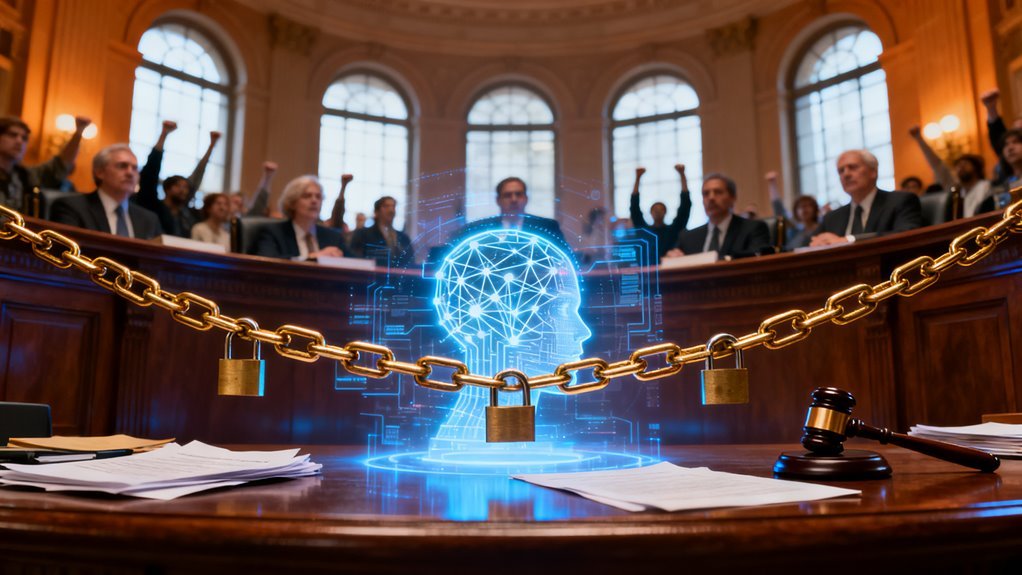


8 comments
Comments are closed.